
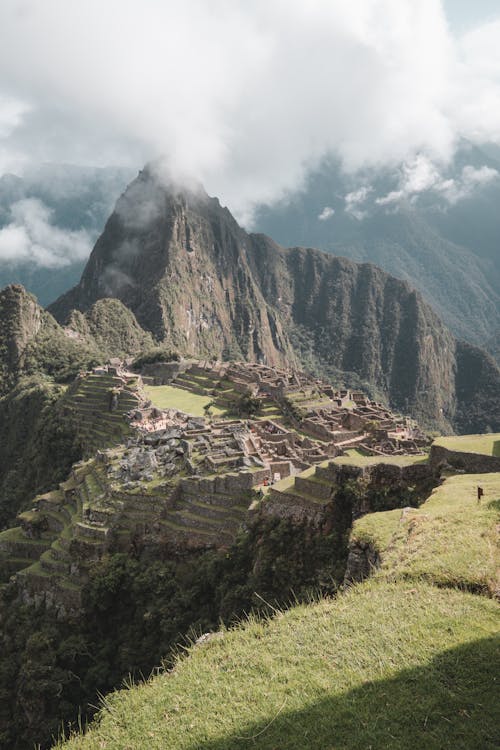
The journey begins. All packed and ready to go departing Perth at 10:50pm December 24. Scored Business upgrade so a little sleep was welcome. In the Qantas lounge with 5 hours to kill until LATAM flight departs for Santiago. Some 25 hours later it’s Christmas Day and I land at Santiago International where I was met by my guide, Gary James, and driven to the hotel.
We arranged to meet at 2:00pm and set off on a walking tour of the city. Santa Lucia is an important historical and cultural landmark for the city. It represents the arrival of the Spanish in 1541 who use the “hill” as their defensive fortification. In the late 1800s the park commenced the transformation into the green space it is today as it continues to evolve into the city hub it is today.
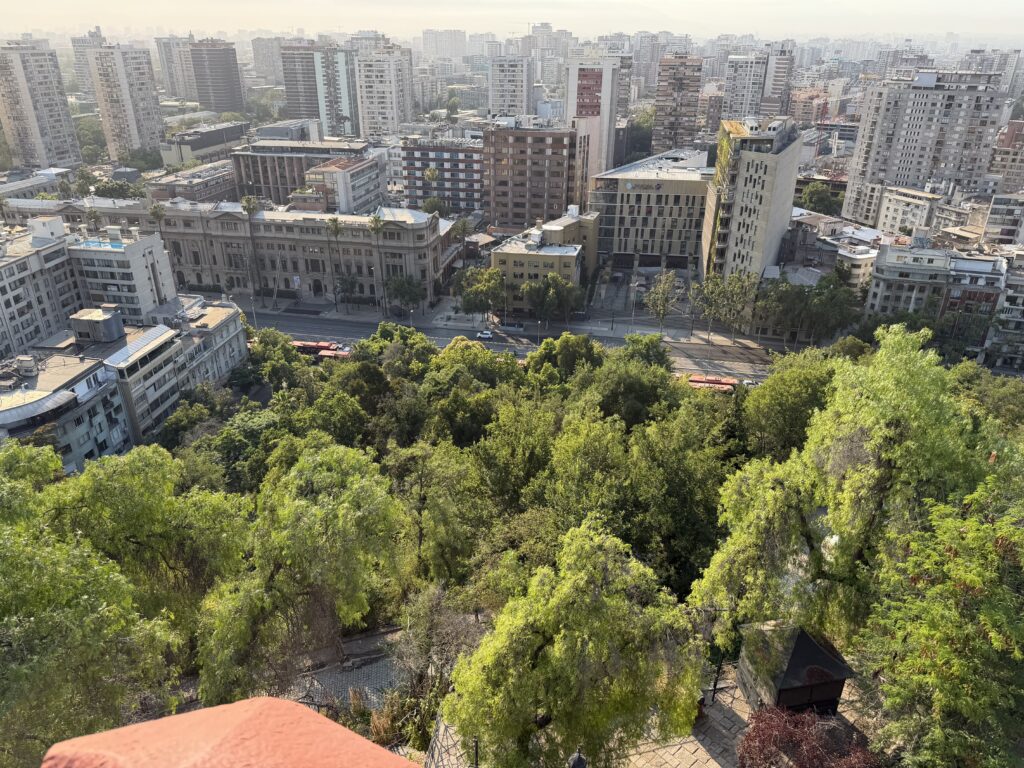
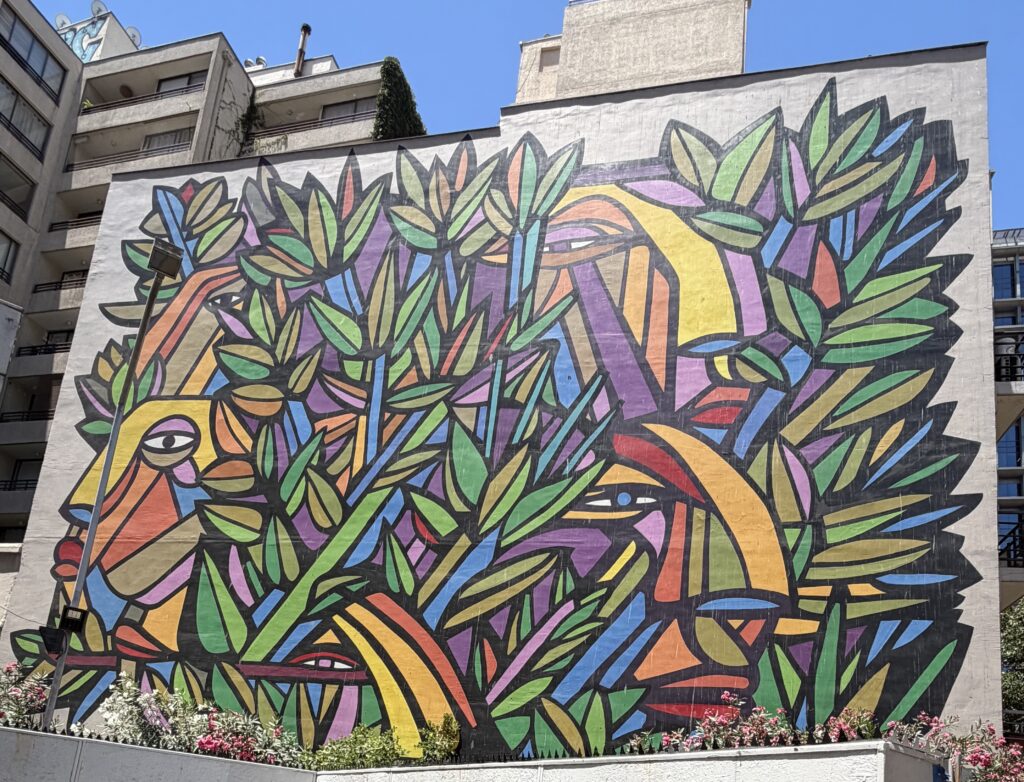
Street art, architecture and Chilean flags stood out for me on first notice. Large public murals by Mono Gonzales known for his vibrant and socially conscious public art. During the politically charged era of Pinochet he went underground using his art as a tool for resistance.
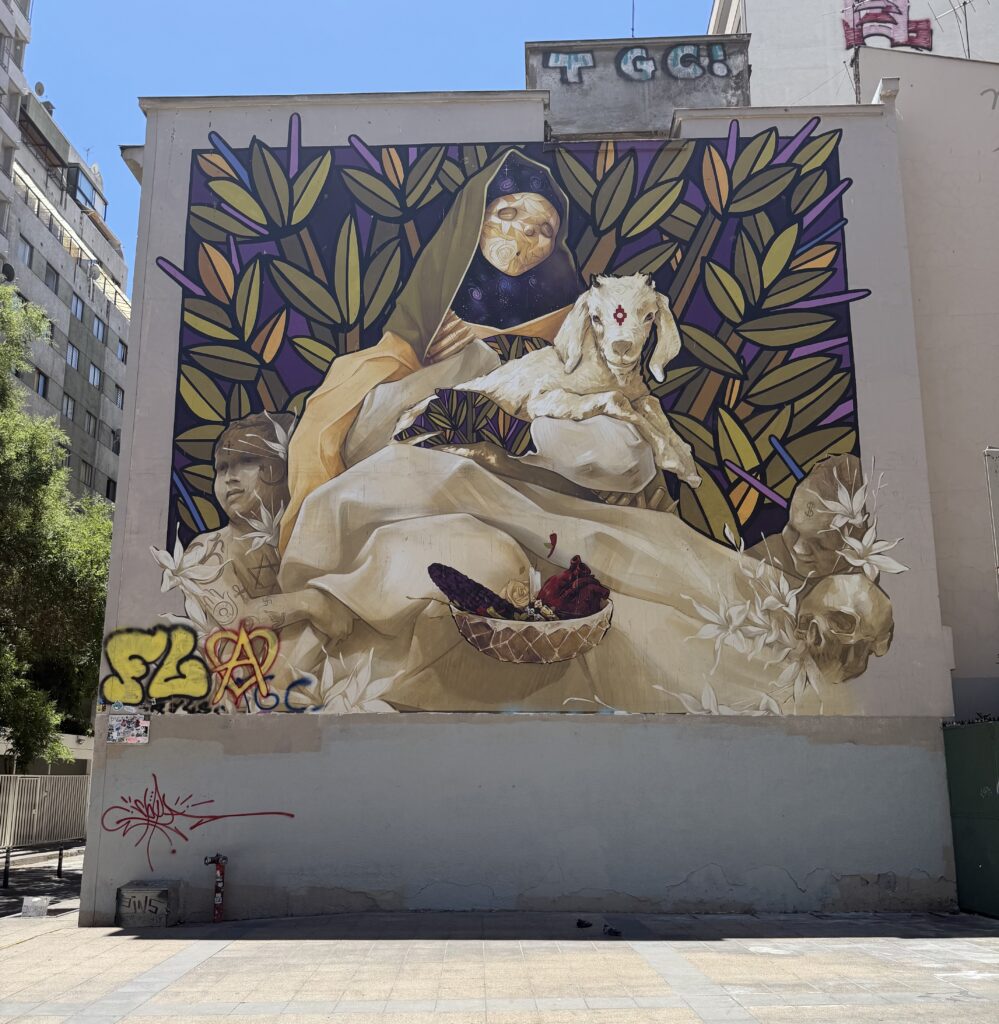
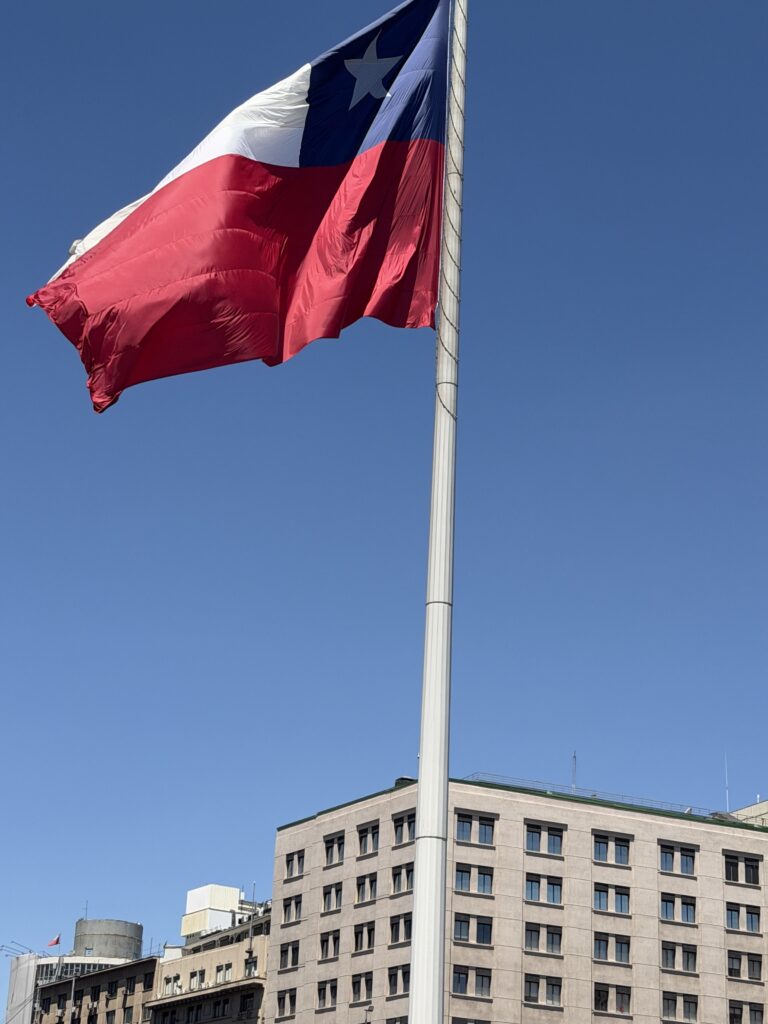
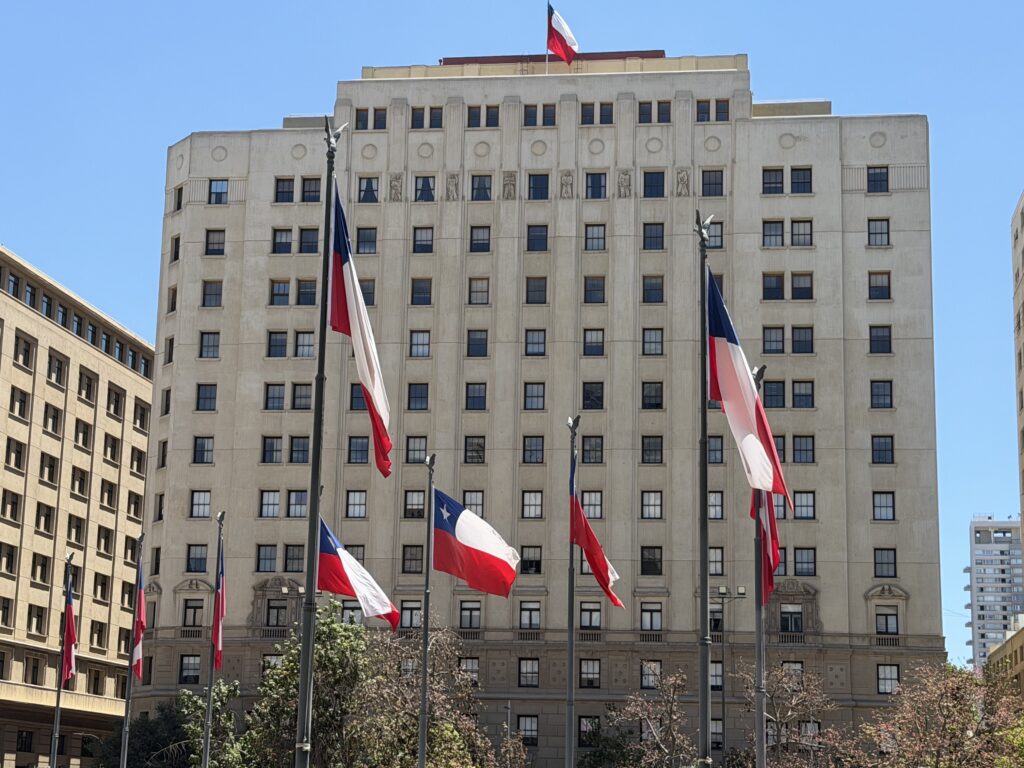
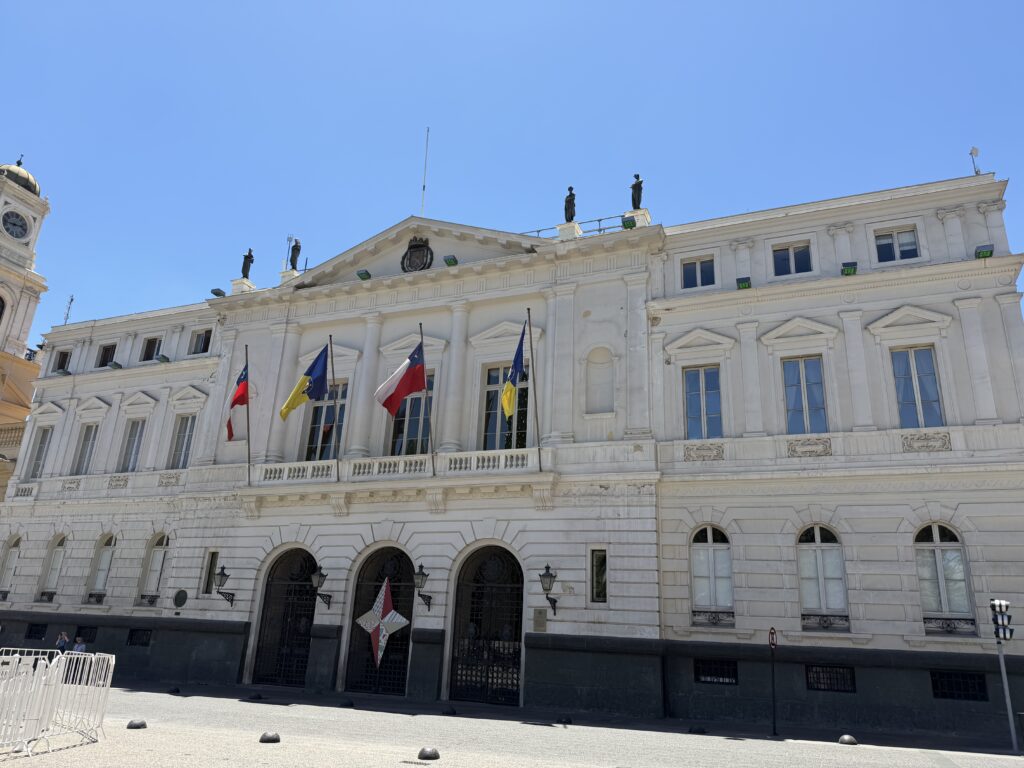
Chilean flags are everywhere with the largest flag I have seen is to be found at the central Plaza de Armas which is surrounded by stunning Government buildings showcasing their architecture.
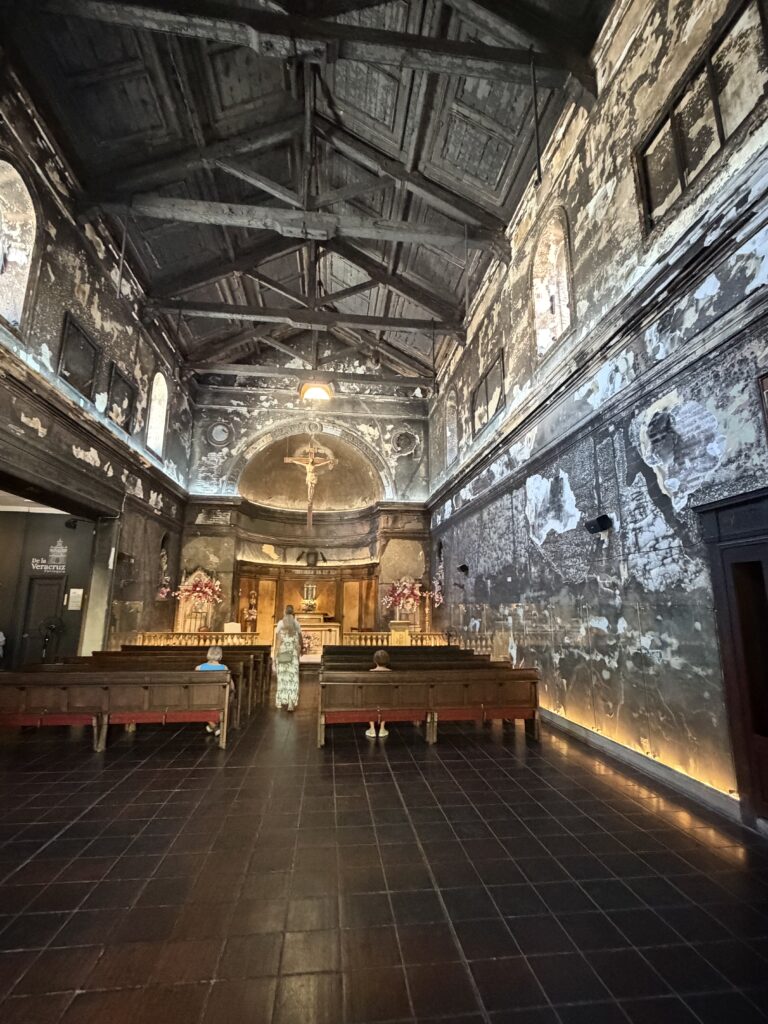
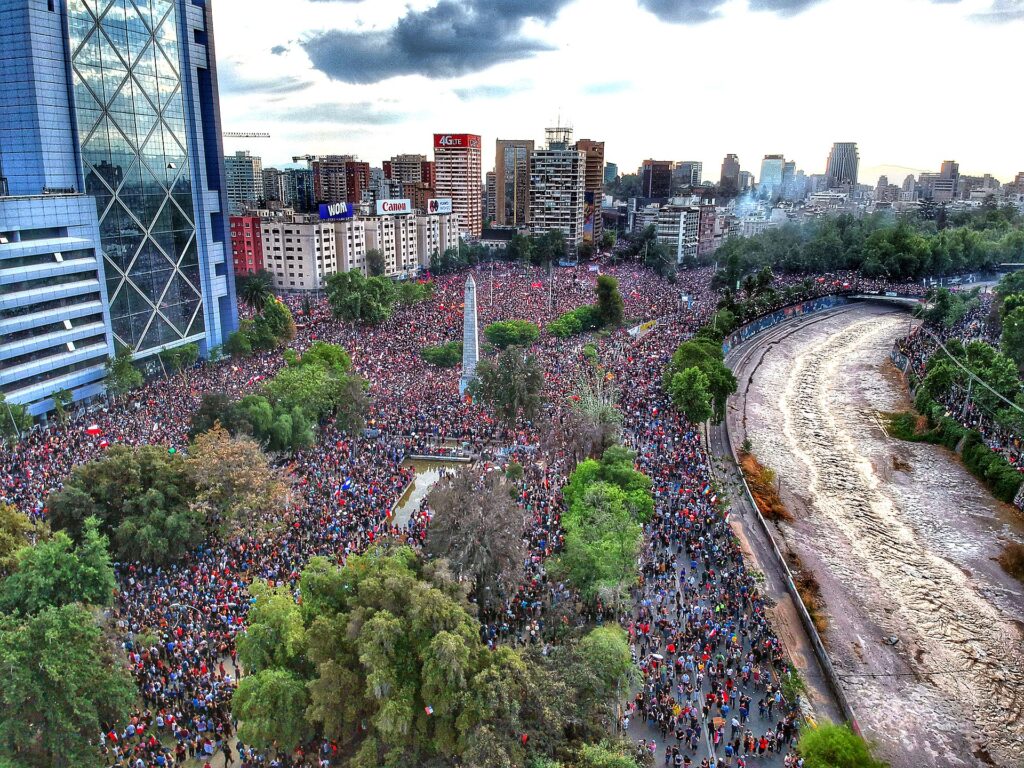
2019 is marked as the year of Chile’s Social Outburst which saw the largest peaceful march in Chilean history with over 1.2 million people demanding social change. The time was also characterised by violence and destruction of buildings, churches and facilities. The photos below show a church interior I visited which was restored but leaving the marks of damage as a memorial of the times. The historic photo I found showing the massive day of protest centred on the Plaza Baquendano where two years of protests were maintained.
The temperature remained in the mid 30s so time to refresh.

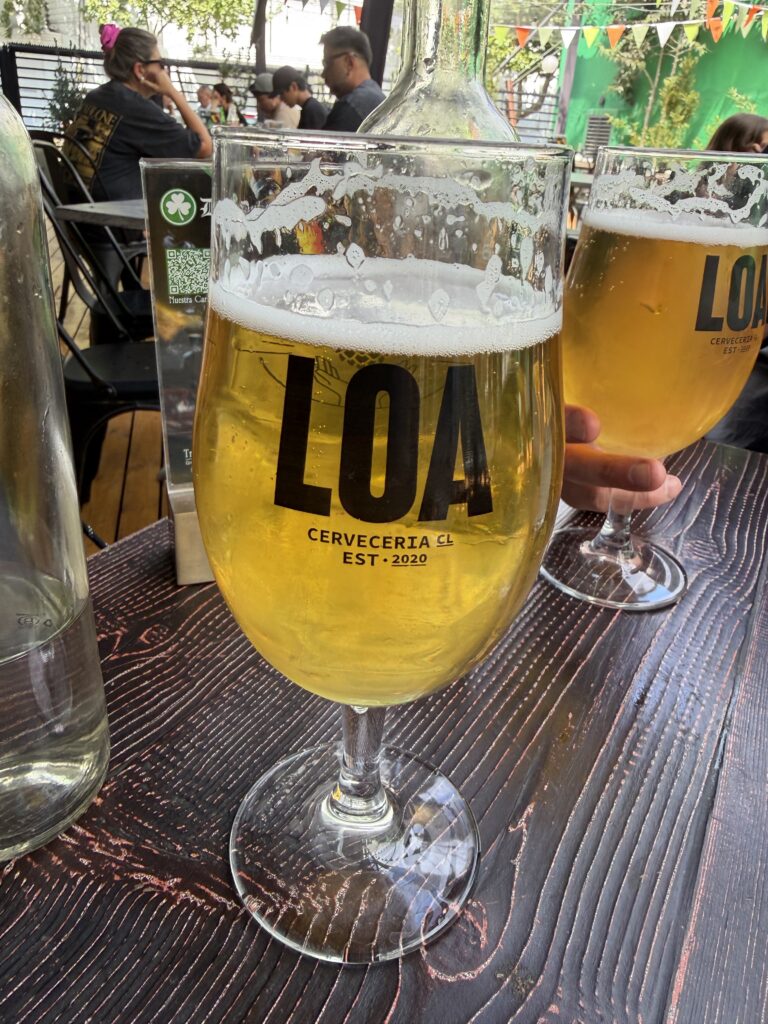
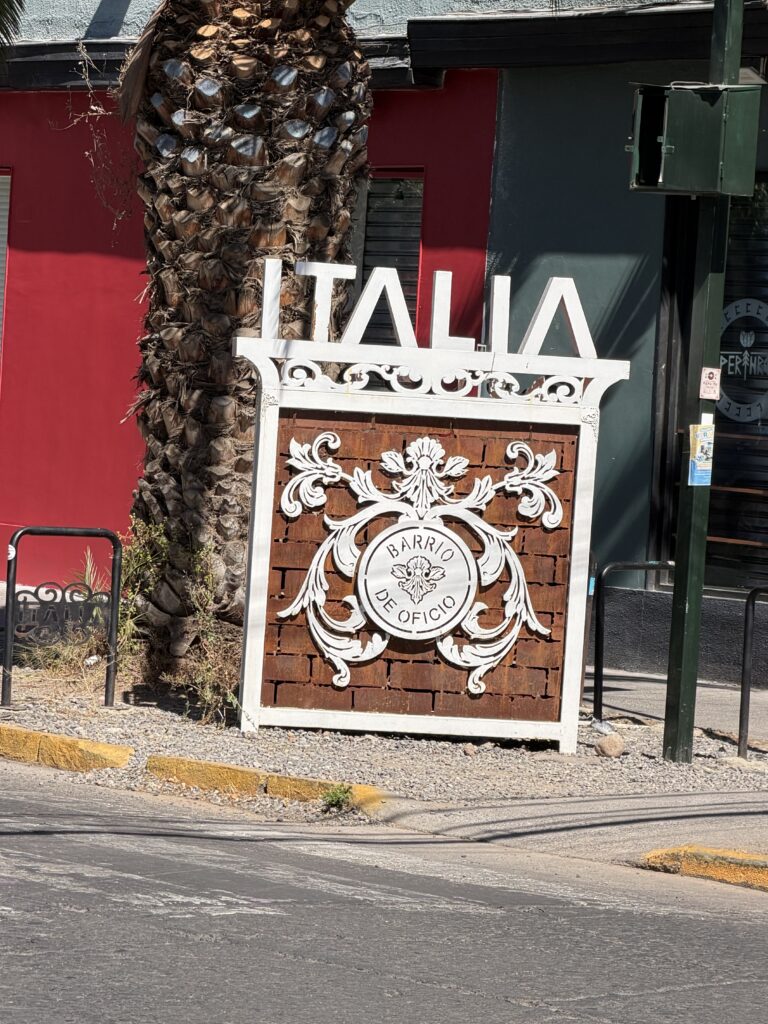
This bar was the entrance into Italia Avenue part of Barrio Italia a trendy artistic neighbourhood featuring antique shops, bars and boutiques with many restaurants. Being Christmas Day it was fairly deserted but I will return.
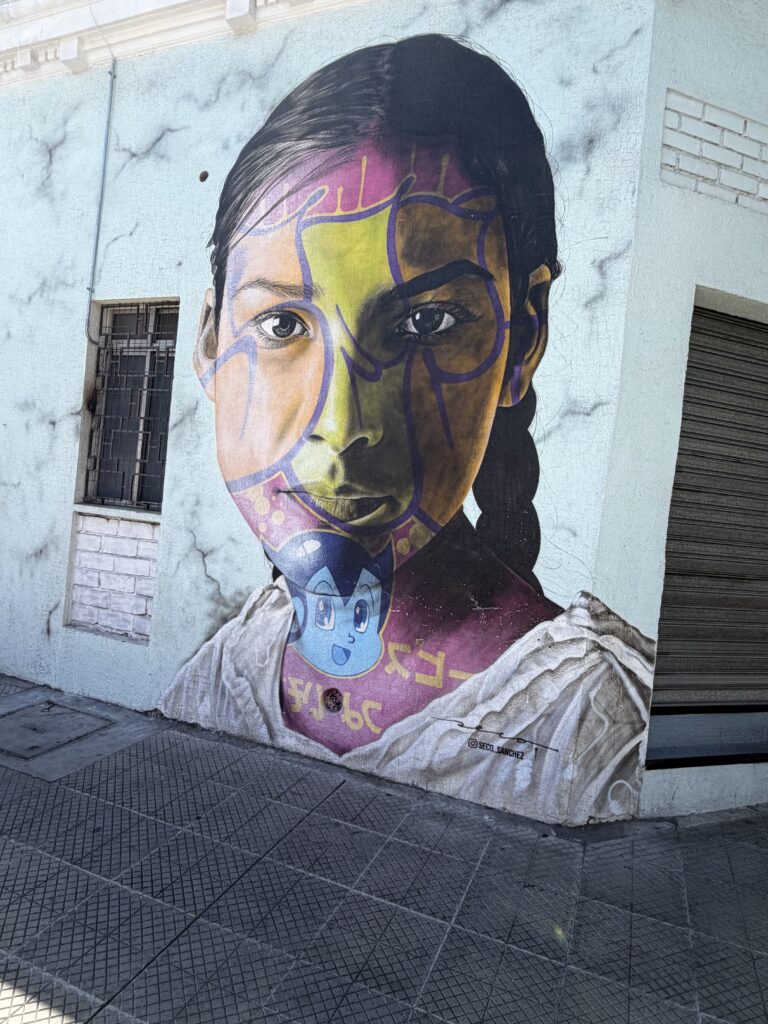
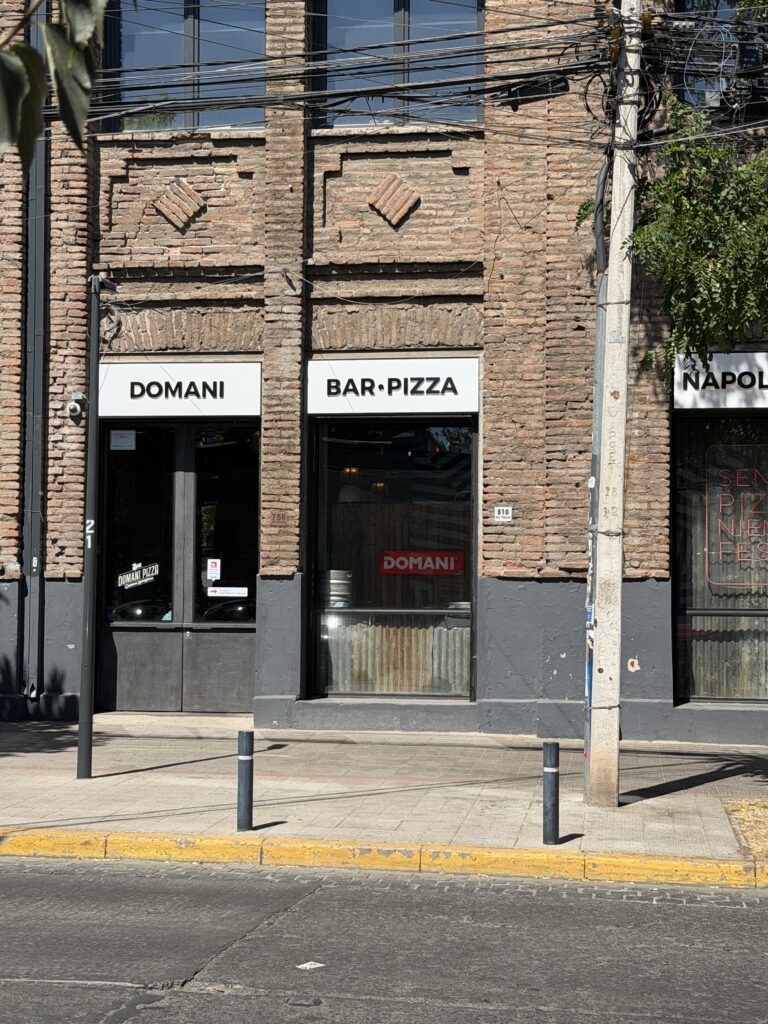
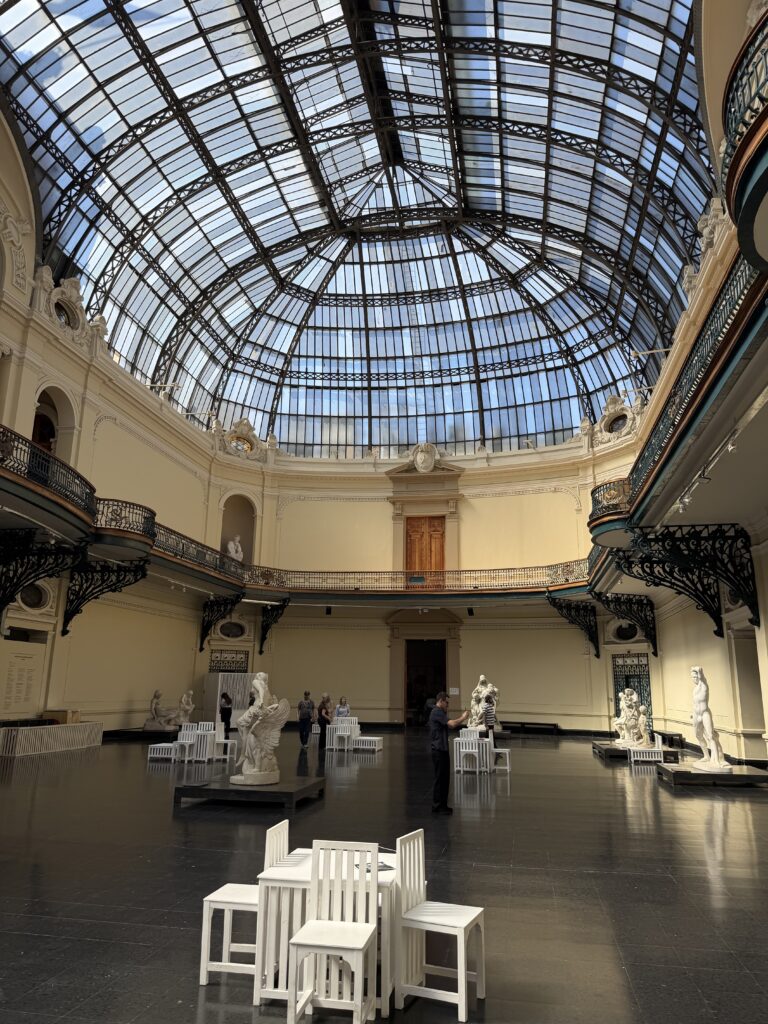
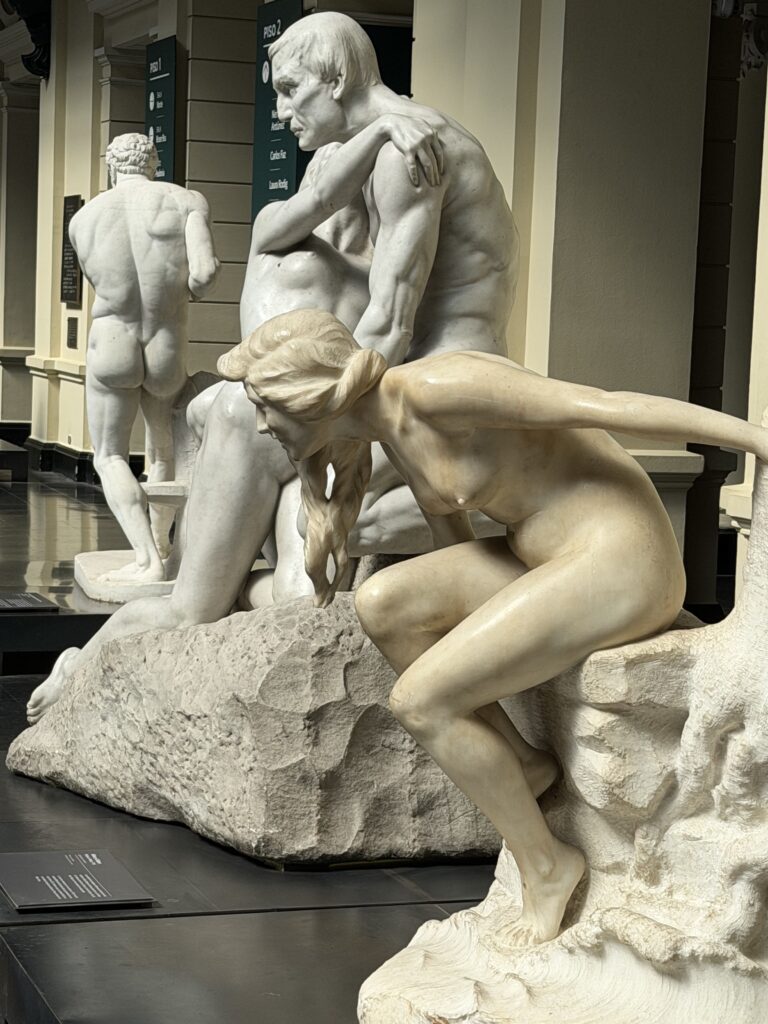
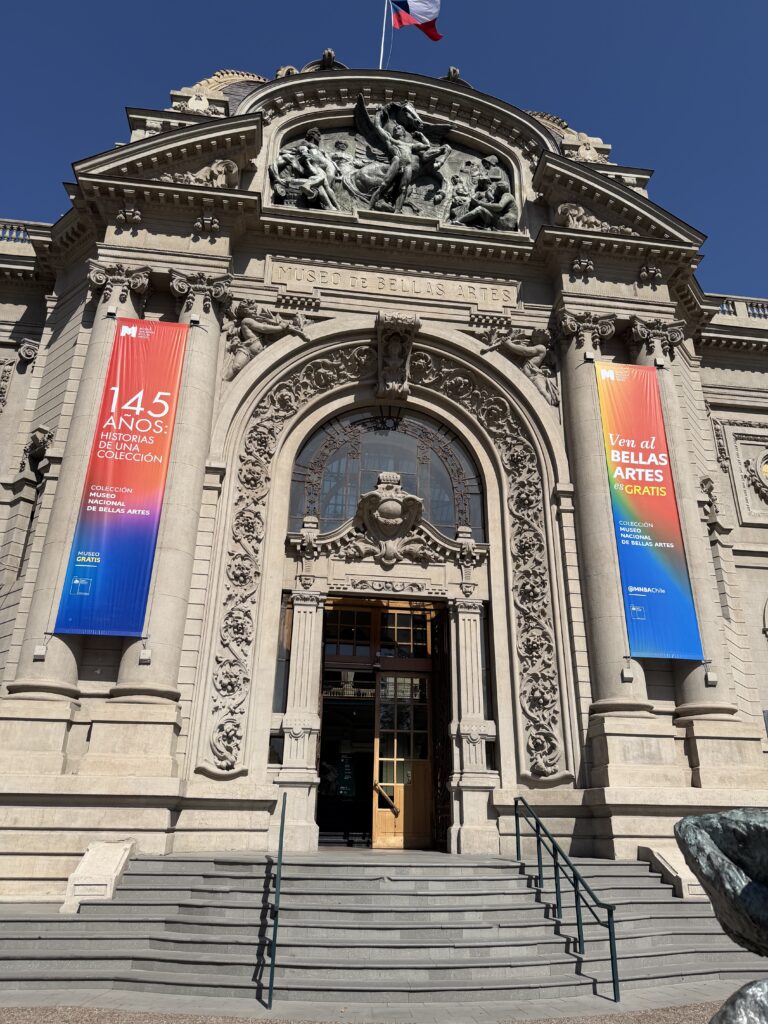
After a quiet night and early sleep i wake up refreshed to Boxing Day which is not a public holiday in Chile. I met up with Gary ( my guide) at 10:00am and we headed out with the art gallery on the way.
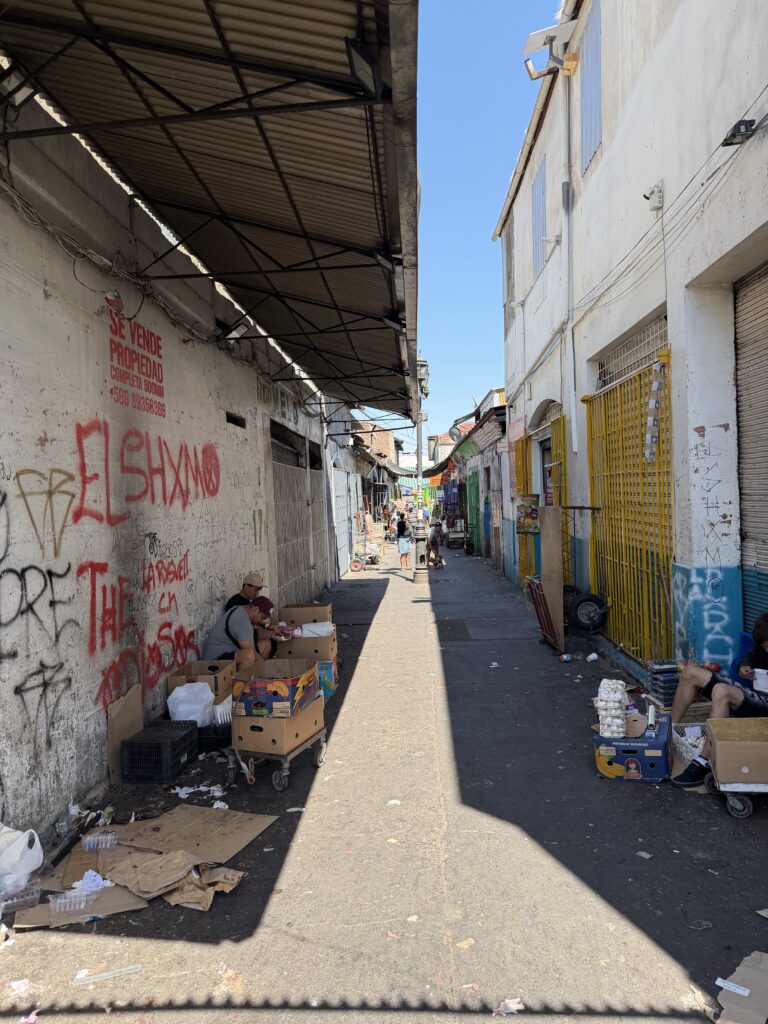
Next stop the Vega markets our first stop. With over 1400 stalls it is massive. Fresh food prices are generally around half compared to Perth. Our first tasting was a hot dog style role. Food in Chile is influenced by the Spanish the Germans and the indigenous peoples thus hot dogs styles ( more then a a red dog sauce and role are everywhere. They call it a sandwich.
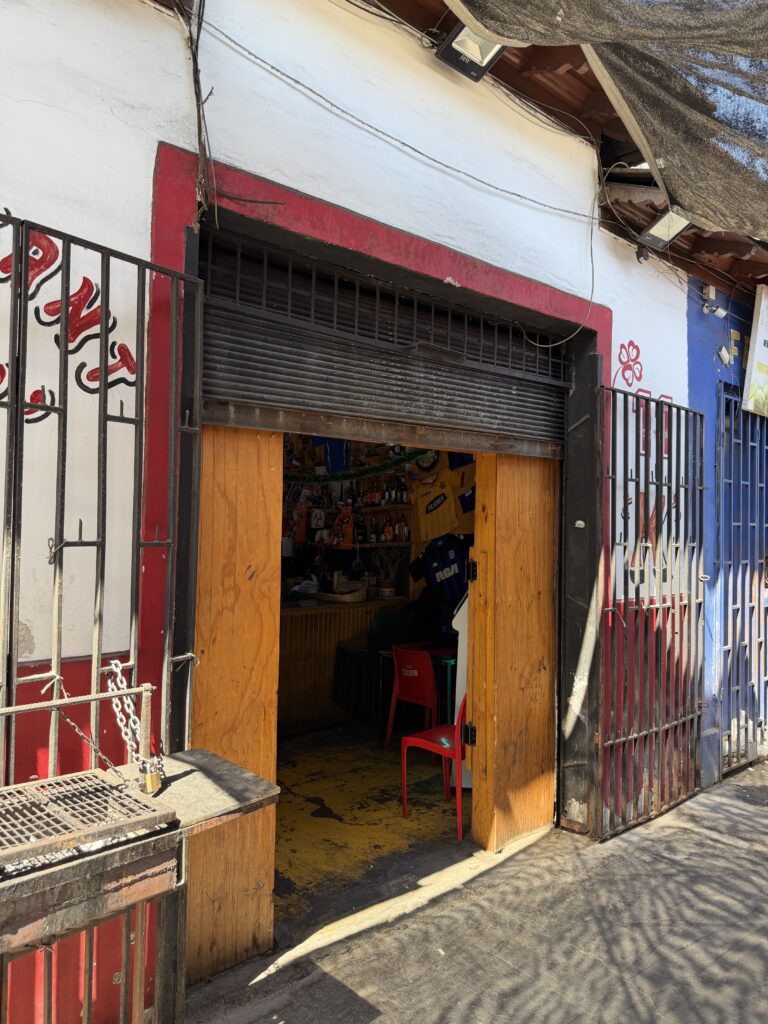
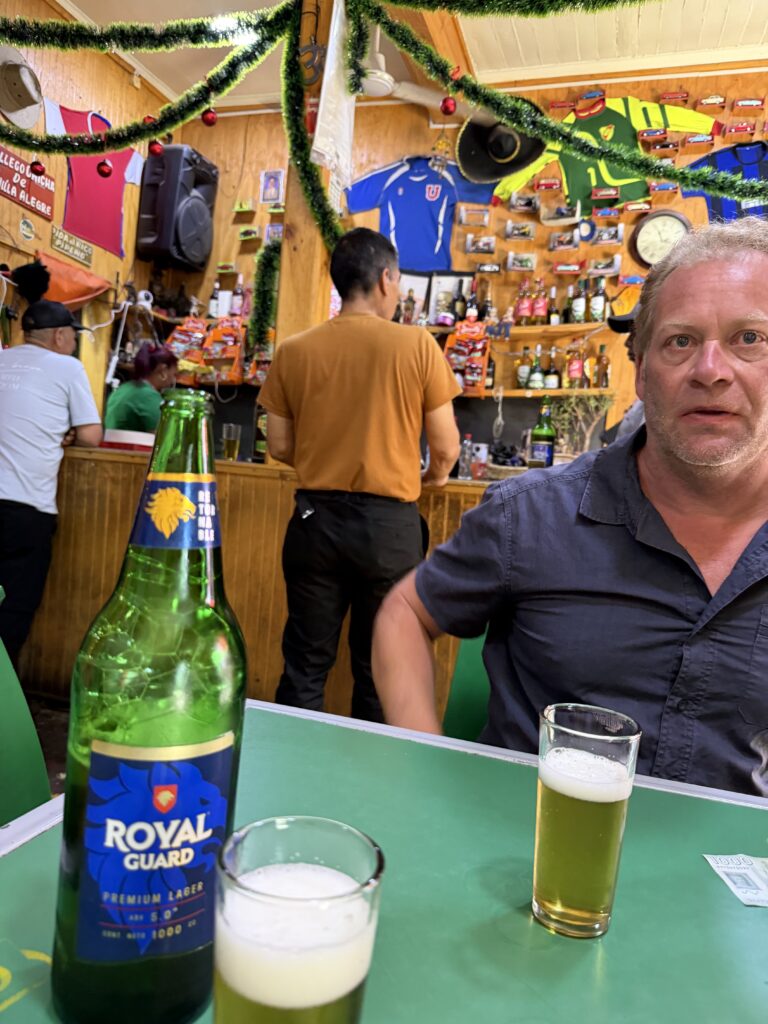
Local knowledge goes a long way. Gary pointed out a nondescript alley and said we go there. Halfway down we enter through a non inviting doorway into a bar. This is allowed to open at 5:00am to service market personnel. It was full of happy customers all men and all well and truly “on the way”. We had a beer here and around 12:30 headed out for our next stop.
As we walked across a crowded bridge potential trip disaster struck. A young man ripped my phone out of my hand from behind and took off but unbelieveably I have it back.
FULL STORY
there are two separate law enforcements in Chile: the Carbineros and the investigation police
I went straight to the investigation police and filed a report I needed for insurance. They took all my details including passport number etc. From there I went to an Apple Store but they only have Mac online stores and could not block my phone. Returning to my apartment I used my iPad to get on line and block the phone some two hours later. I was about to head out and buy a new phone when I saw a na email from my son Daniel.
Backtracking, around an hour after the theft and 5 kms away coincidentally under cover Carbinieros (at this point they have no idea about me being mugged) randomly decide to raid a known phone repairs/second hand sales shop which they regularly raid as they were aware it deals stolen goods. As they walk in they come accross a young guy trying to sell a phone and arrest him. Checking the police computer system they see my report which has just been filed with a stolen iPhone 17. Confirming with the investigation branch they then go to immigration where on checking my passport details they find my son Daniel as emergency contact and call him around 2:00am (Perth time) and he emails me which I pick up on my iPad. Gary calls Dan and we get police station details and head there. Sure enough it’s my phone opening with facial recognition.
CARBINIEROS YOU ARE A FANTASTIC POLICE FORCE. THANK YOU.🥇🏆🥇🏆
After a beer and sandwhich we had time to visit a Cafe con Piernas a specialty coffee shop behind blackened windows😛.
Saturday 27th
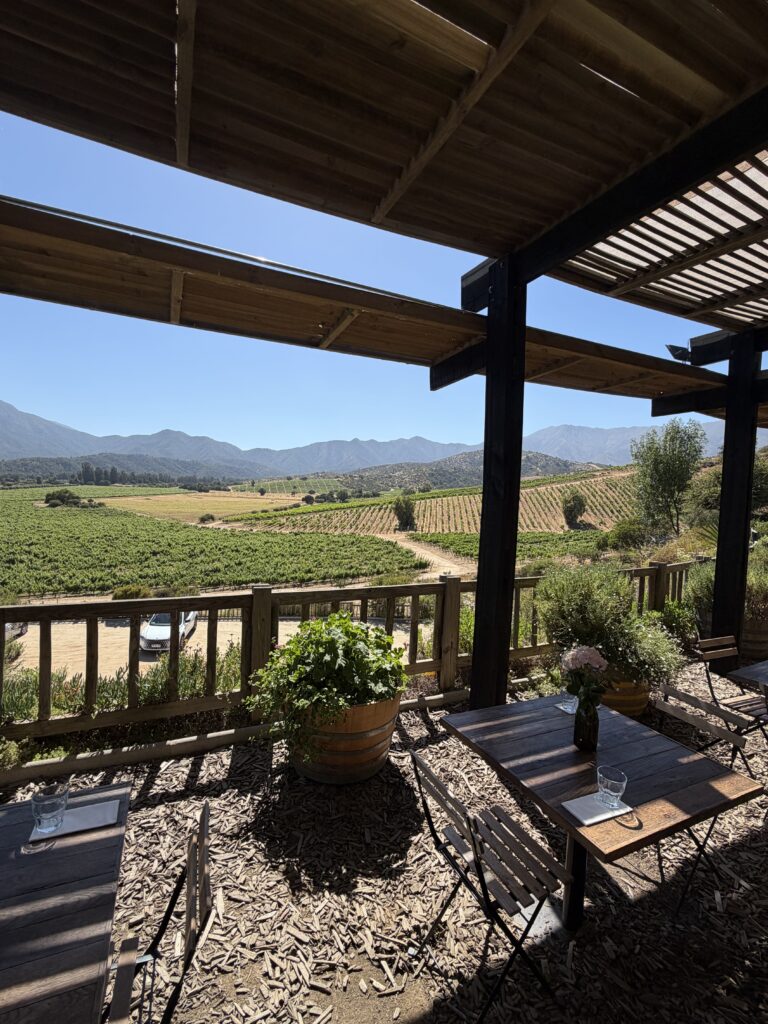
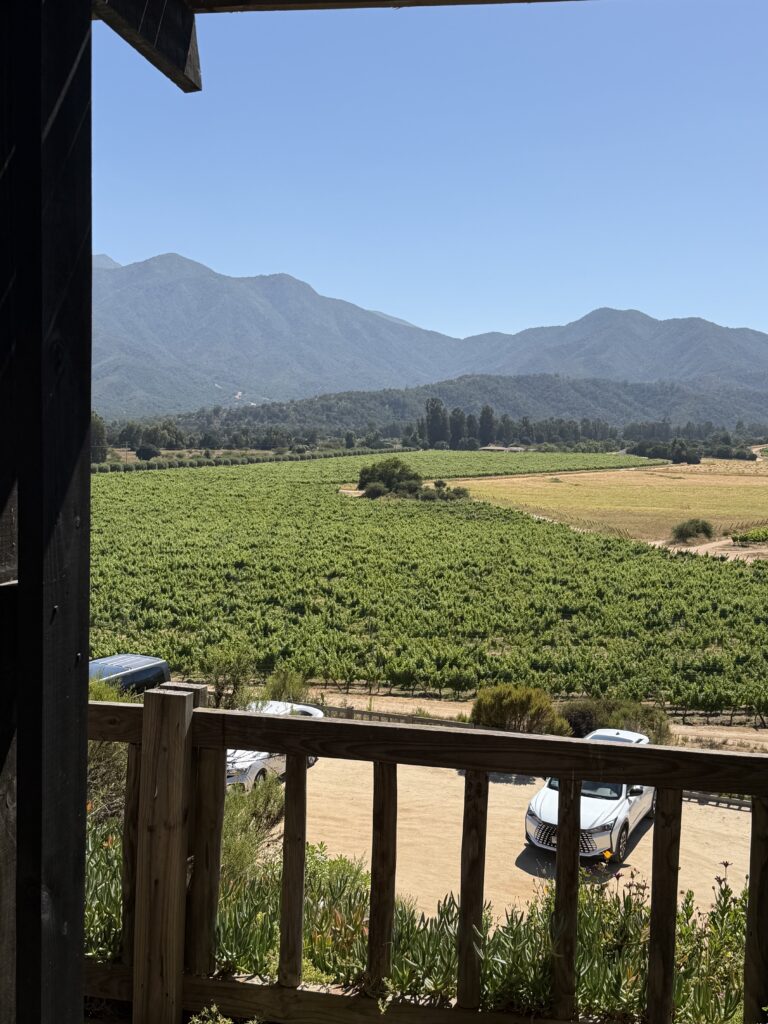
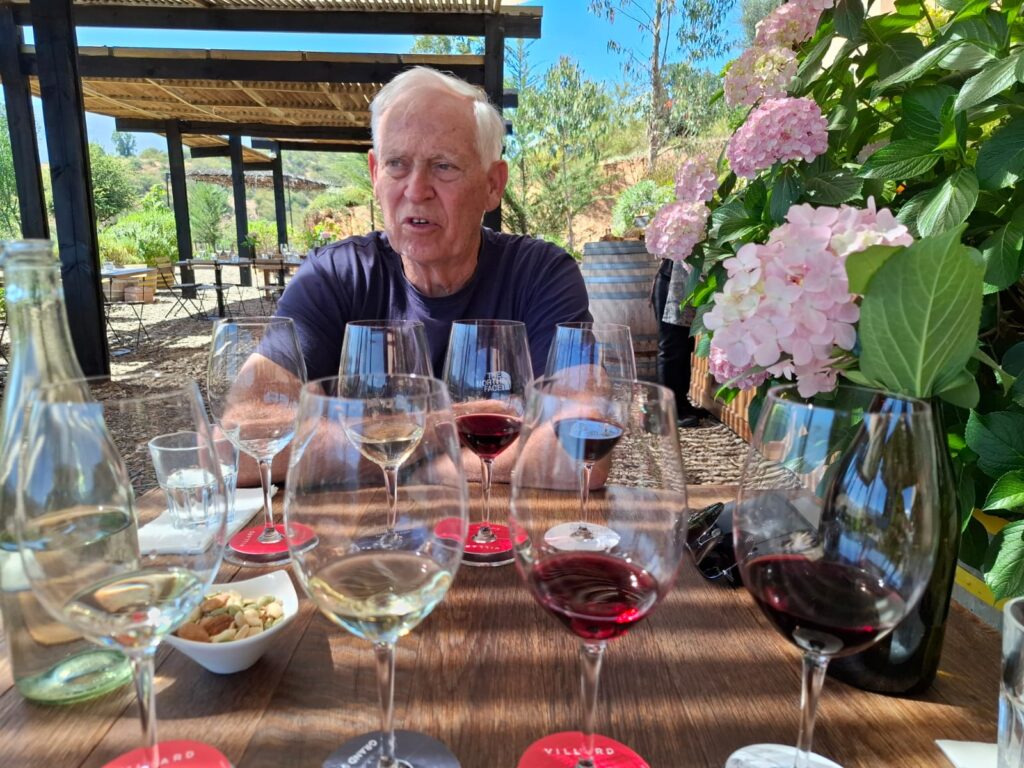
Picked up by Gary and his driver Alfredo at 9:39m and headed to Casablanca, which is on the way to Valparaiso our main objective. As a newly established wine region in the early nineties and famous for its Sauvignon Blanc it represents the experimental wines of Chile as most of the wine makers have studies and worked abroad. Besides Sauvignon Blanc the other commonly grown wines are Chardonnay, Syrah and Pinot noir. We visited beautiful winery called Villard whose owners fled to Australia during the uprisings, living there for many years. After the fall of Pinochet they returned and this winery is the result.
Valparaiso a city of over 1000000 inhabitants. Established as a Spanish outpost in 1536, it became South Americas most important Port for ships rounding Cape Horn. It has never recovered from its former glory when the Suez Canal was opened in 1914. Built on and around 343 hills, it has preserved its unique hillside architecture and is known for its colourful buildings, funiculars and vibrant street art.
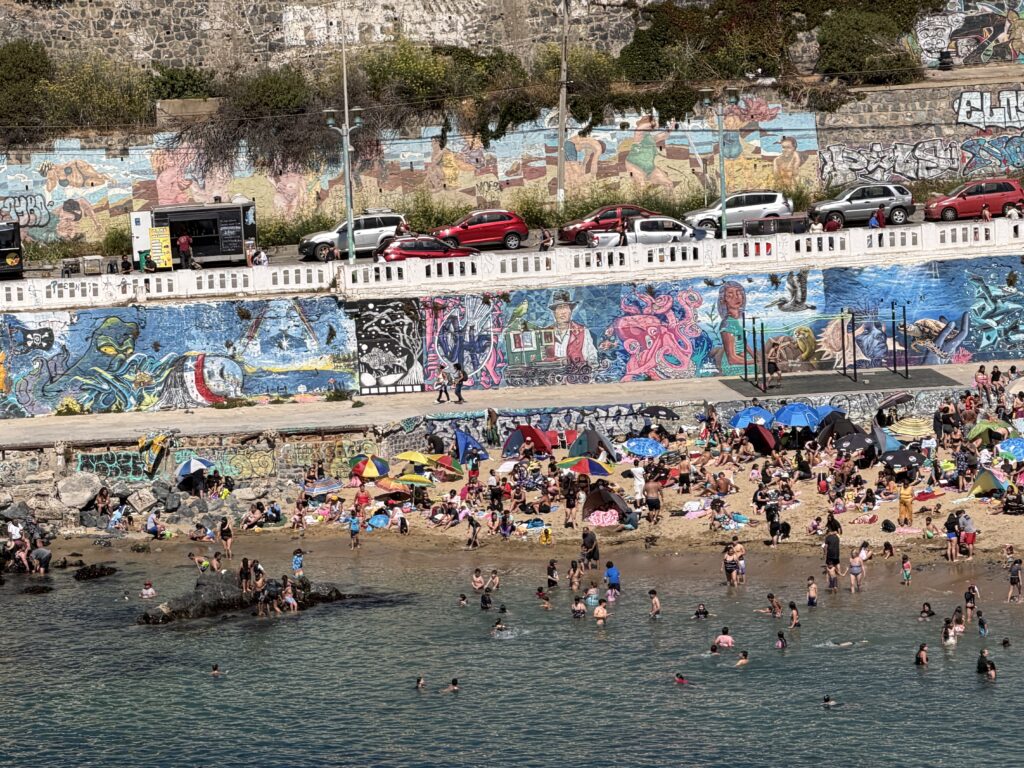
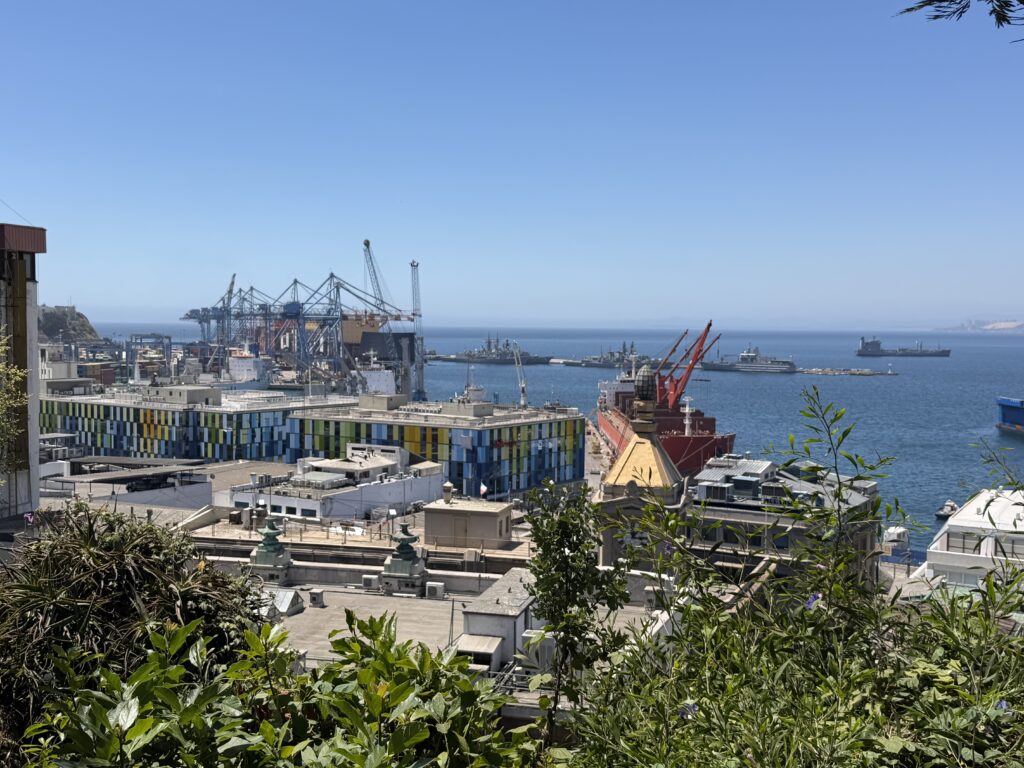
Above a popular beach with street art above and the current port.
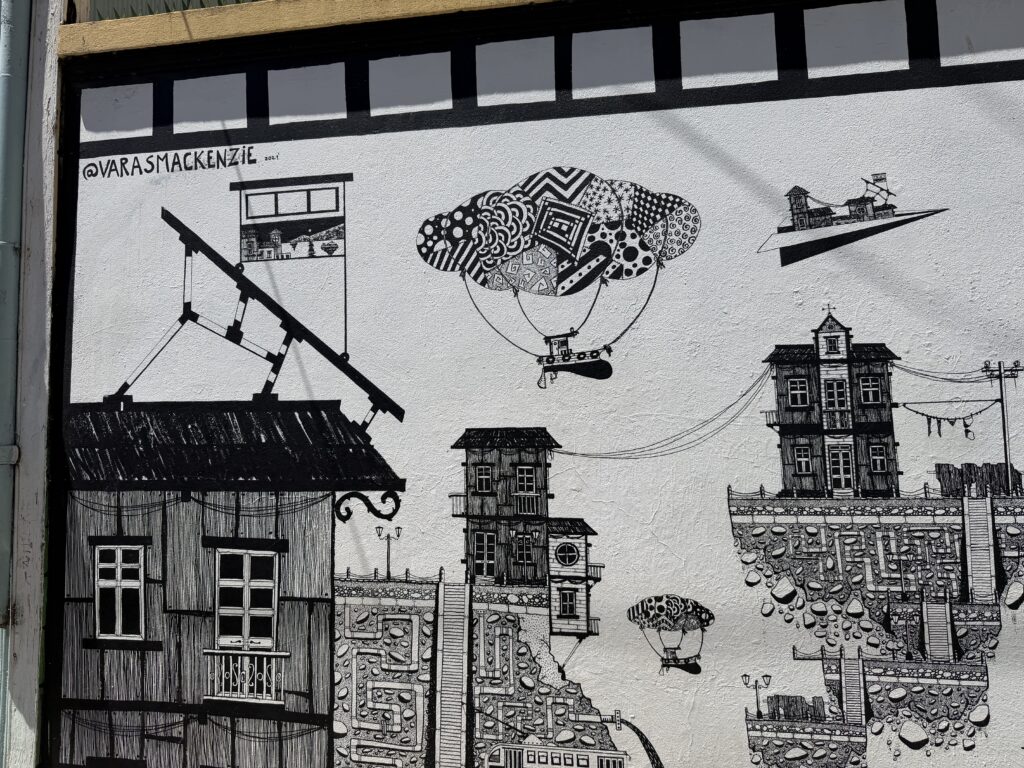
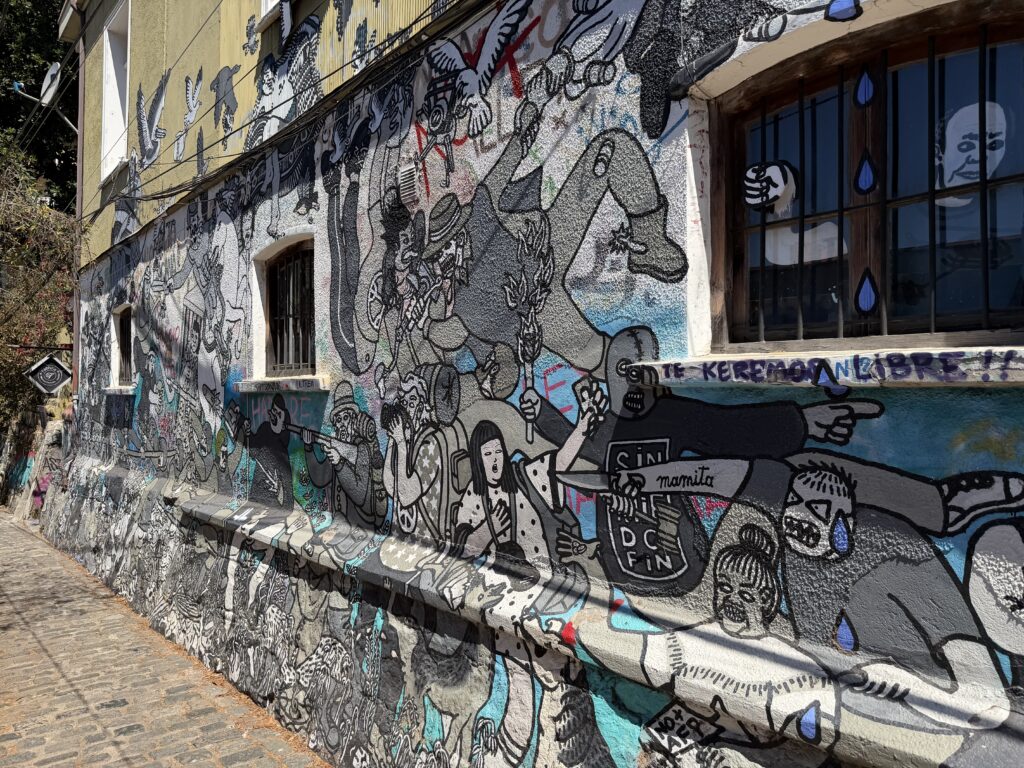
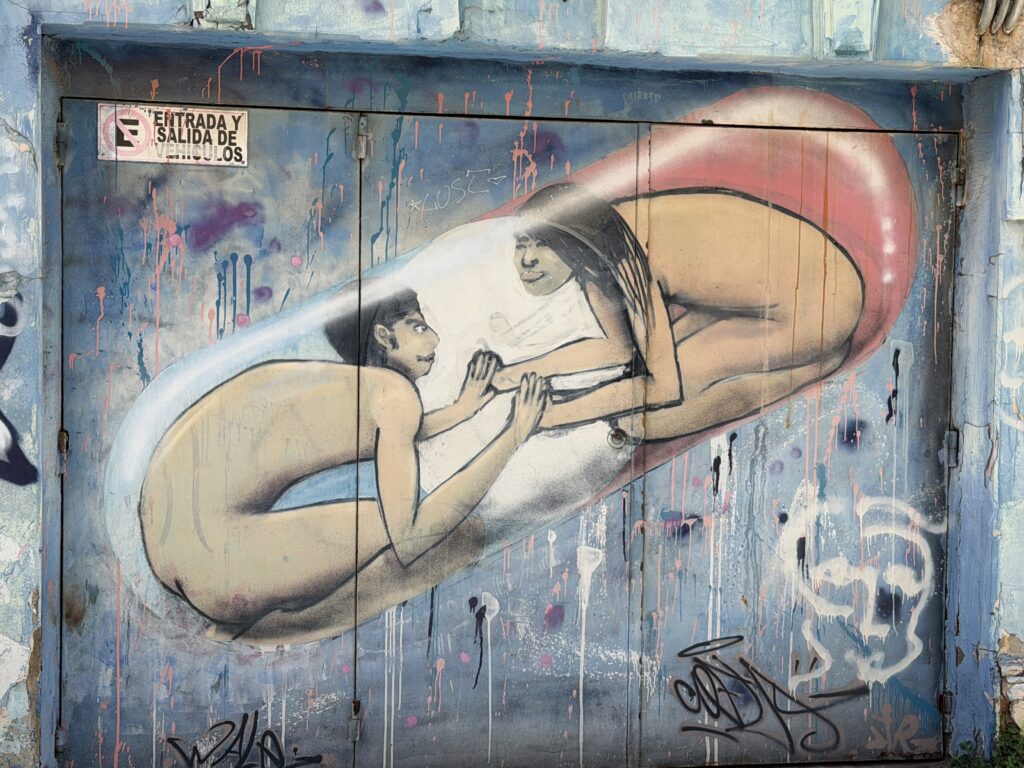
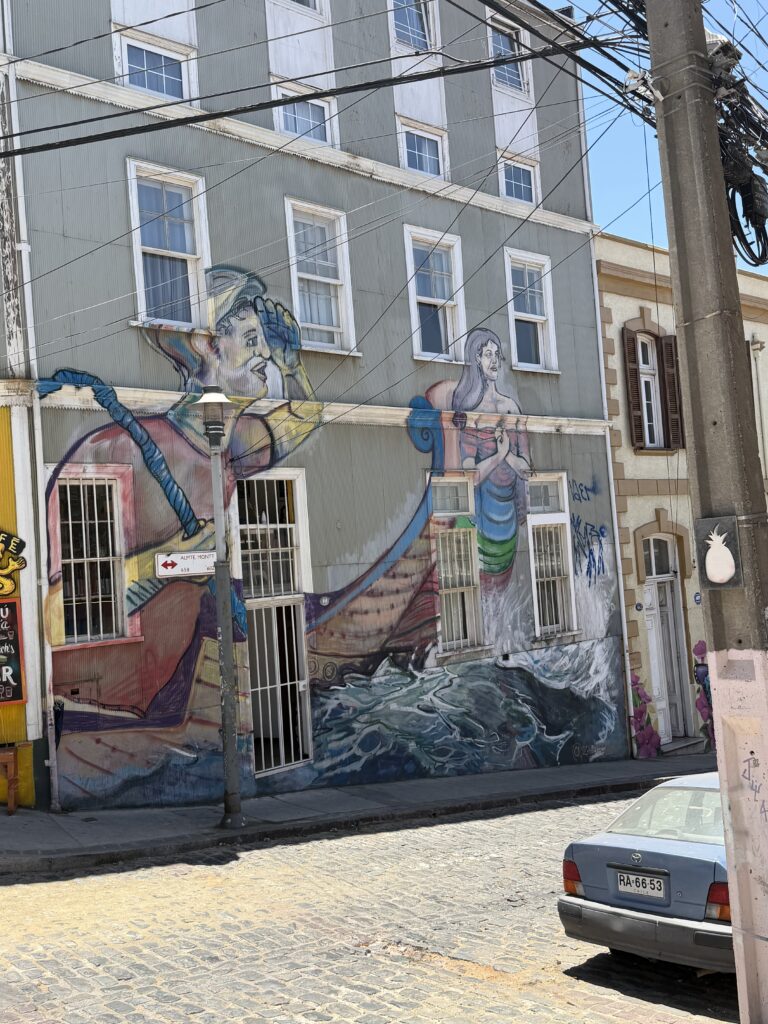
Below samples of street art. As you wander the streets you get the feeling every wall is a canvas.
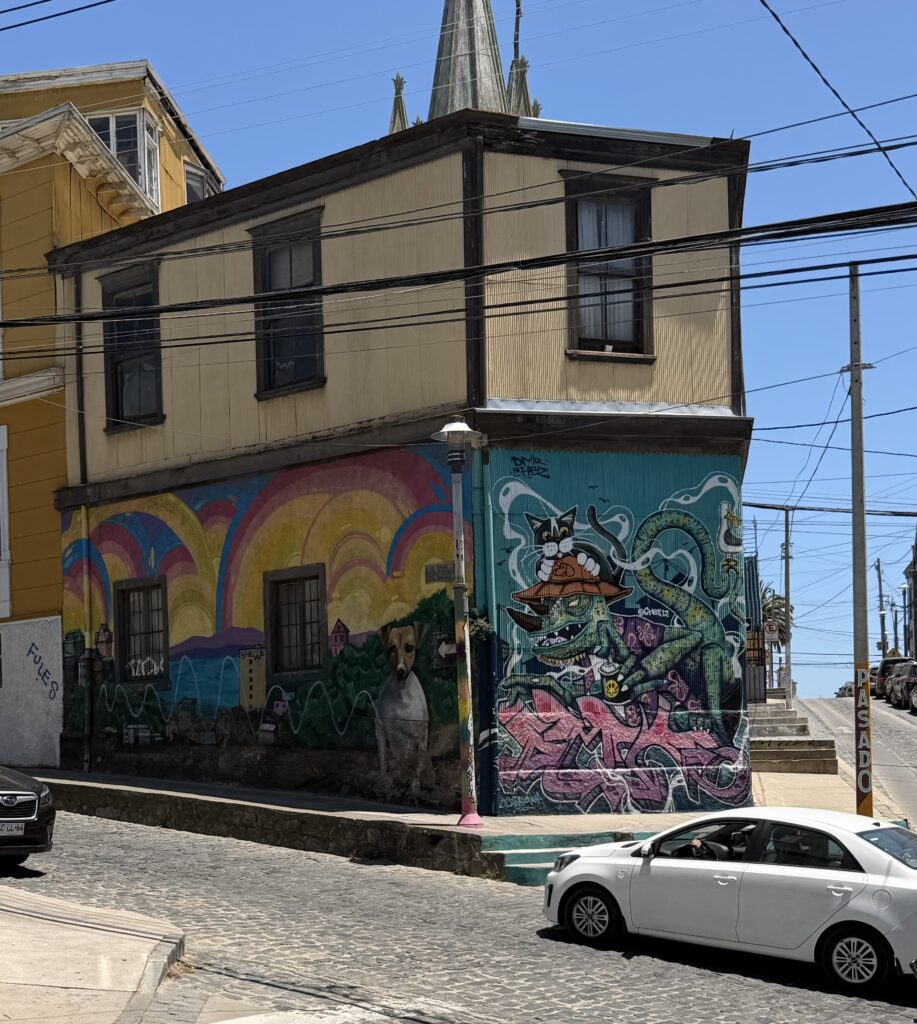
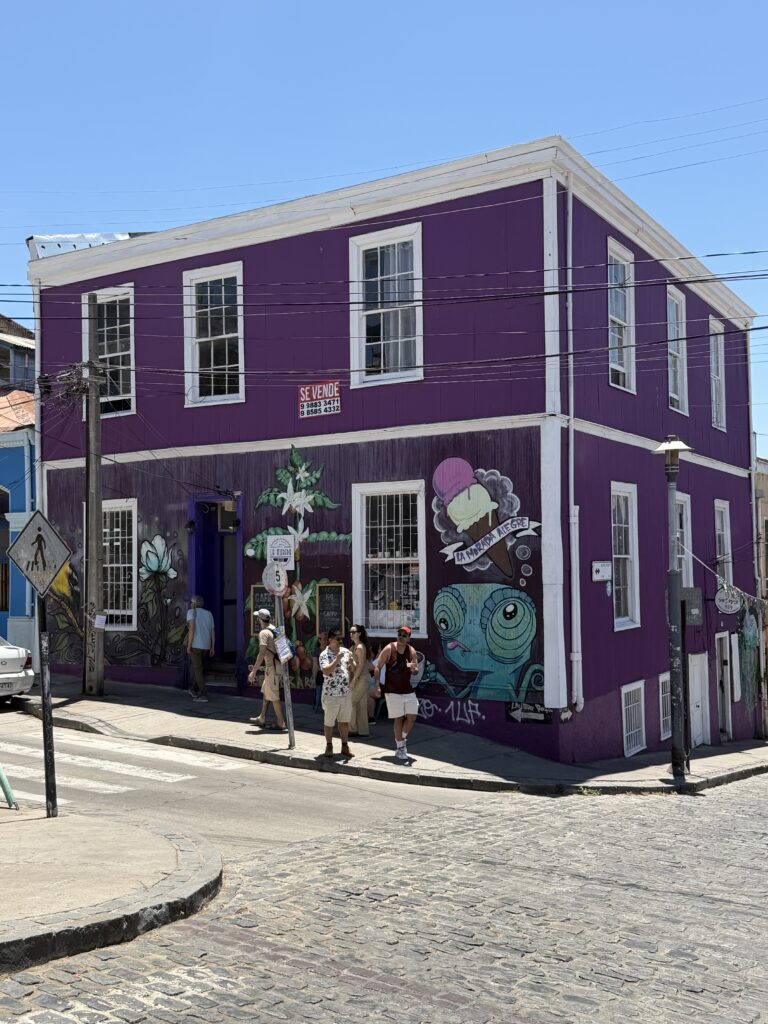
Artistic activism. Valaparaiso is known internationally for this, particularly during the 17 years of Pinochet’s dictatorship. Use of murals , graffiti and artillery’s were all used to denounce injustice, foster community and reclaim public space.
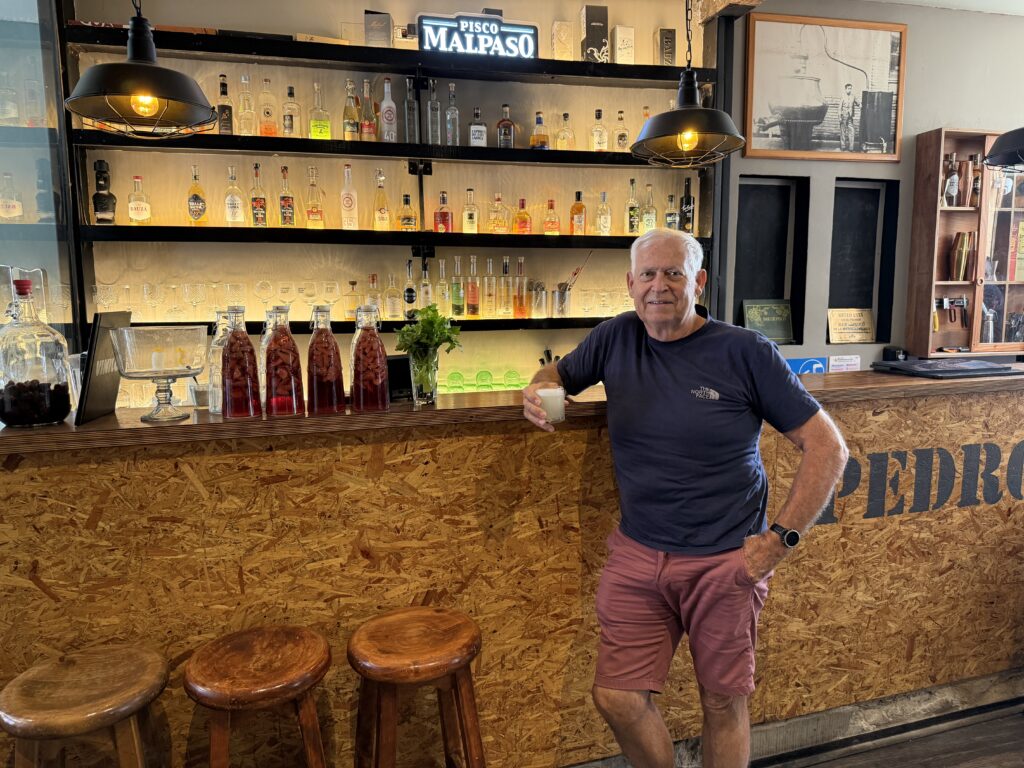
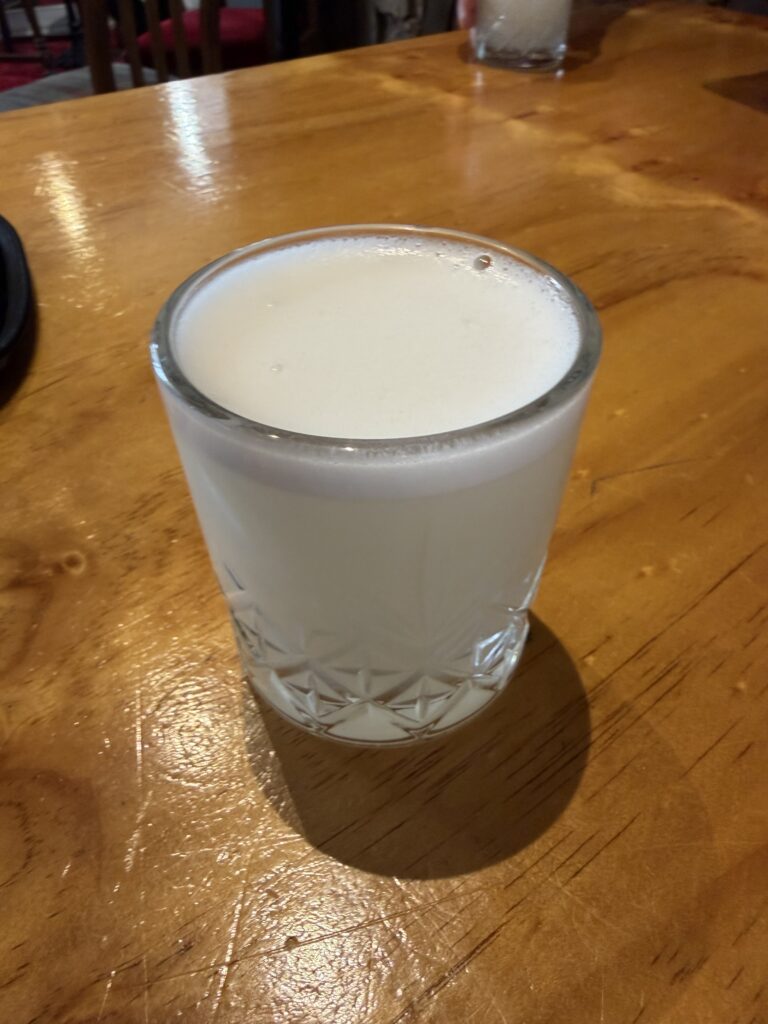
Among the art there is of course food and drink. I had my first “pisco sour” the traditional drink of Chile and Peru followed by a lovely tapas share plate with Gary. The tapas plate consisted of a shared empanada, ceviche, clams with parmesan cheese and calugas (battered fish chunks)
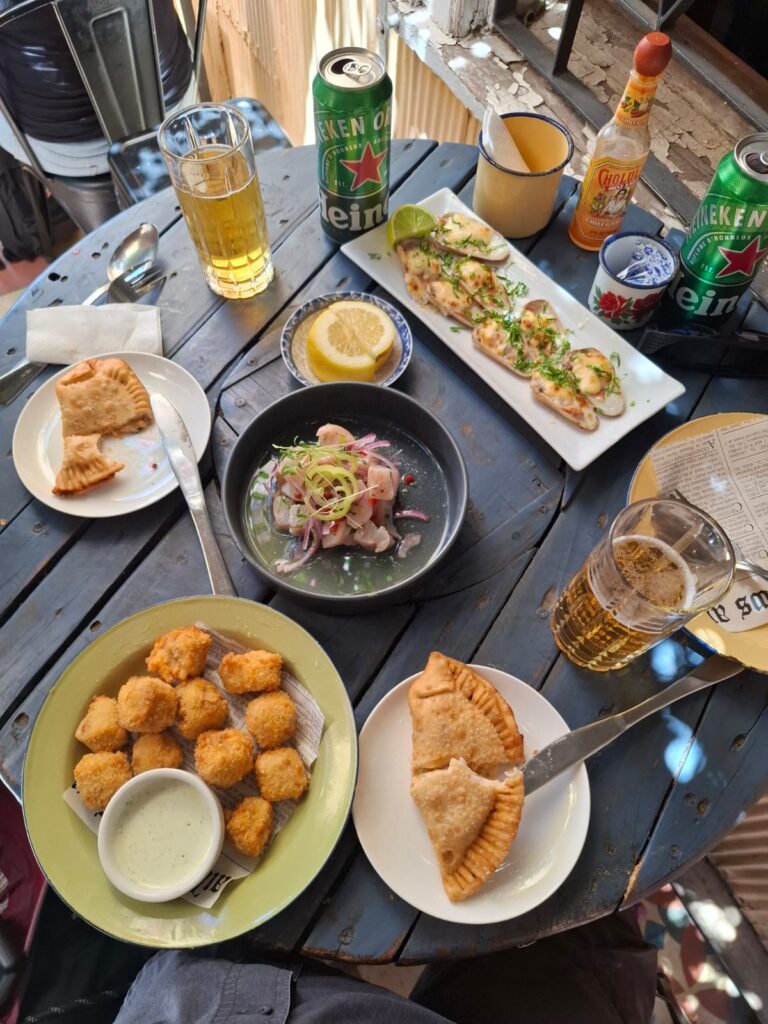
Valparaiso is a city where one can walk for days with something new around every corner or up every hill. A tiring day as we head back to Santiago for the 90 minute drive and planning for a relatively quiet night.
SUNDAY 28th
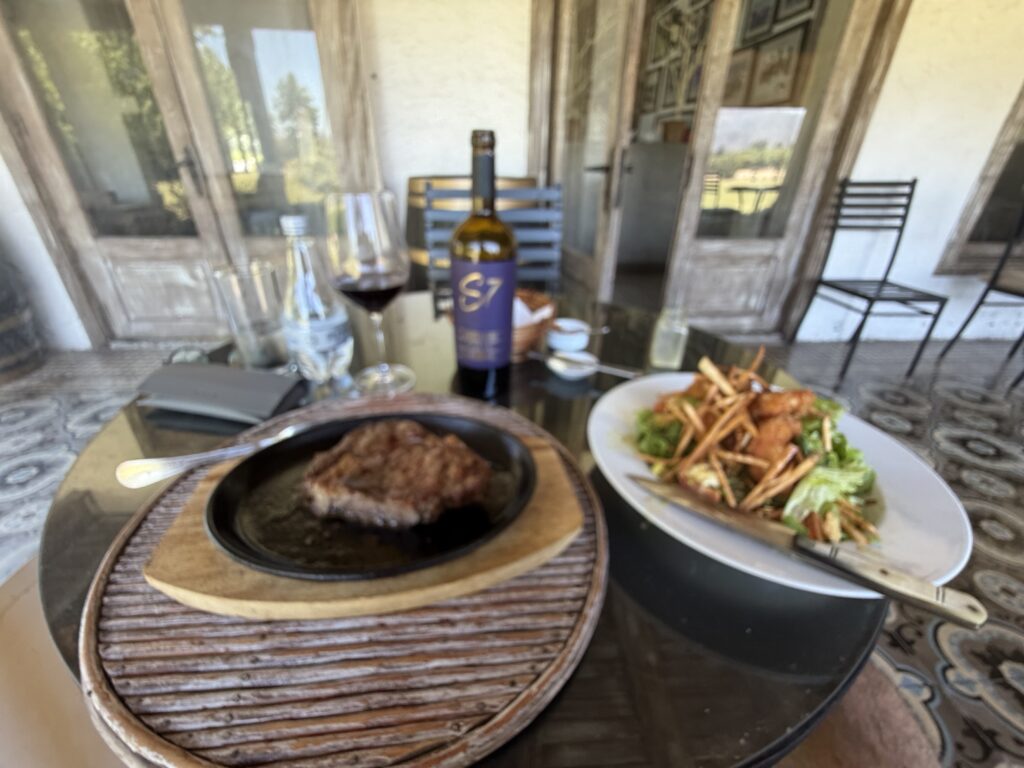
today we leave Santiago heading south to the Colchagua valley. Our first stop is Casa Silva for a midday tour tasting and lunch. It is now a 6th generation winery established by a Frenchman in 1887, though no longer in the original families hands. Producing on average 8.5 million bottles annually its wines range from low price commercial style wines to their super premium wines at over $200 per bottle. At the mid level $35 to $50 a bottle the wines were superb and I had my first glass of Carmenere. A berry driven fruit flavoured red wine with lots of body.
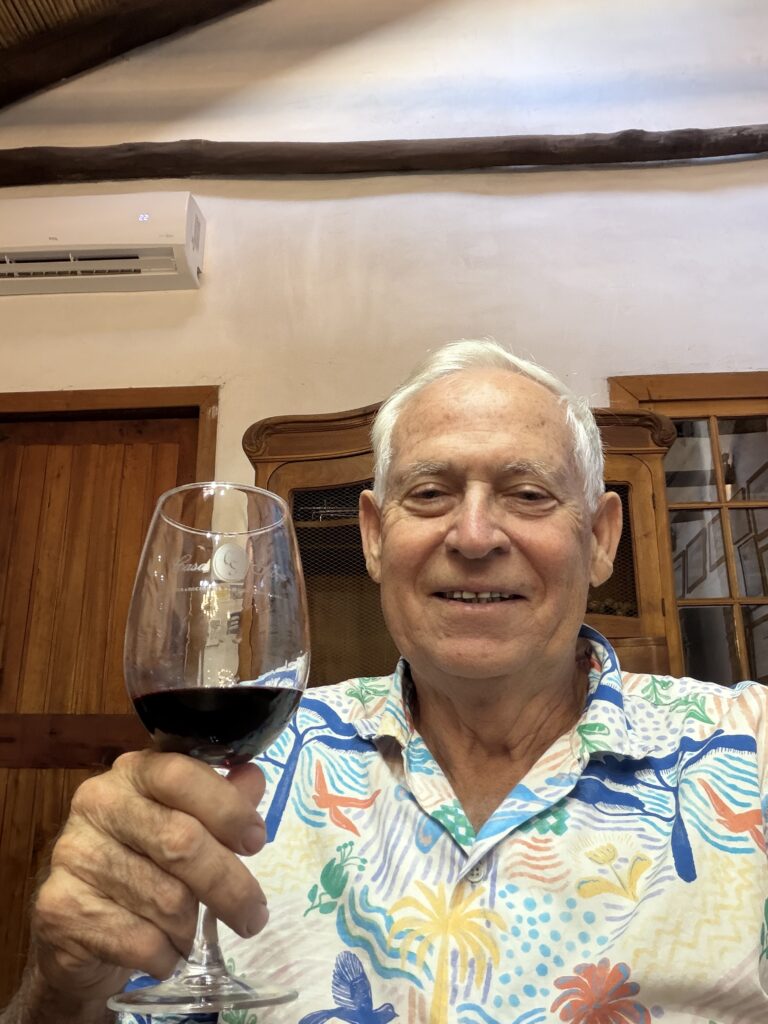
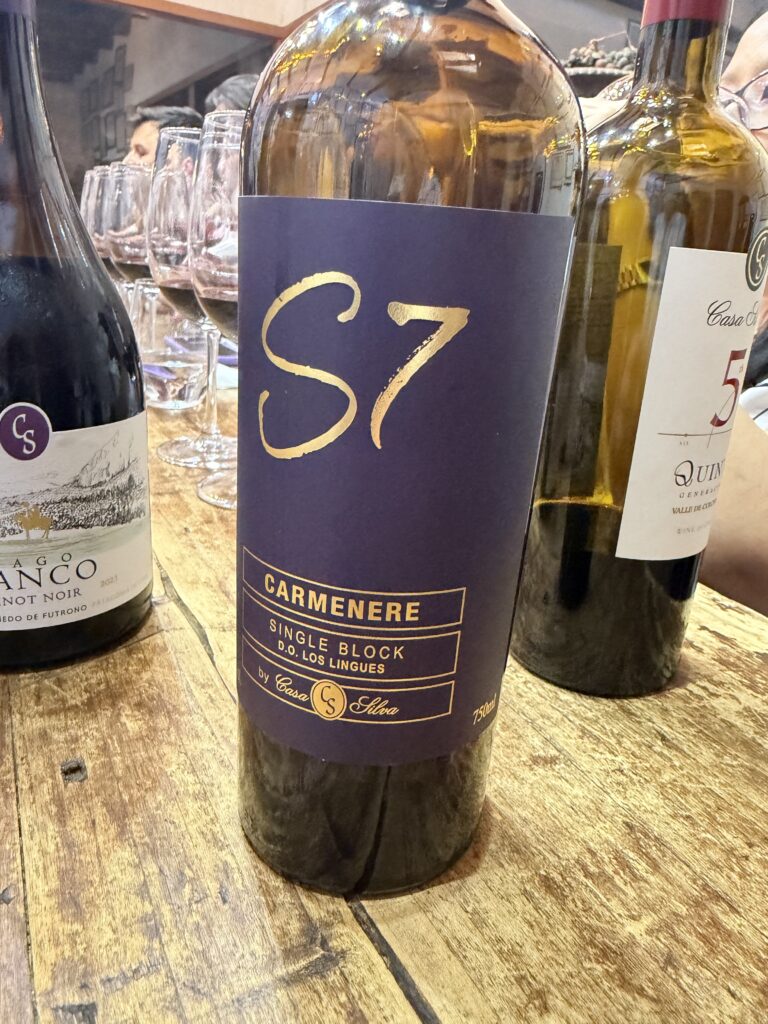
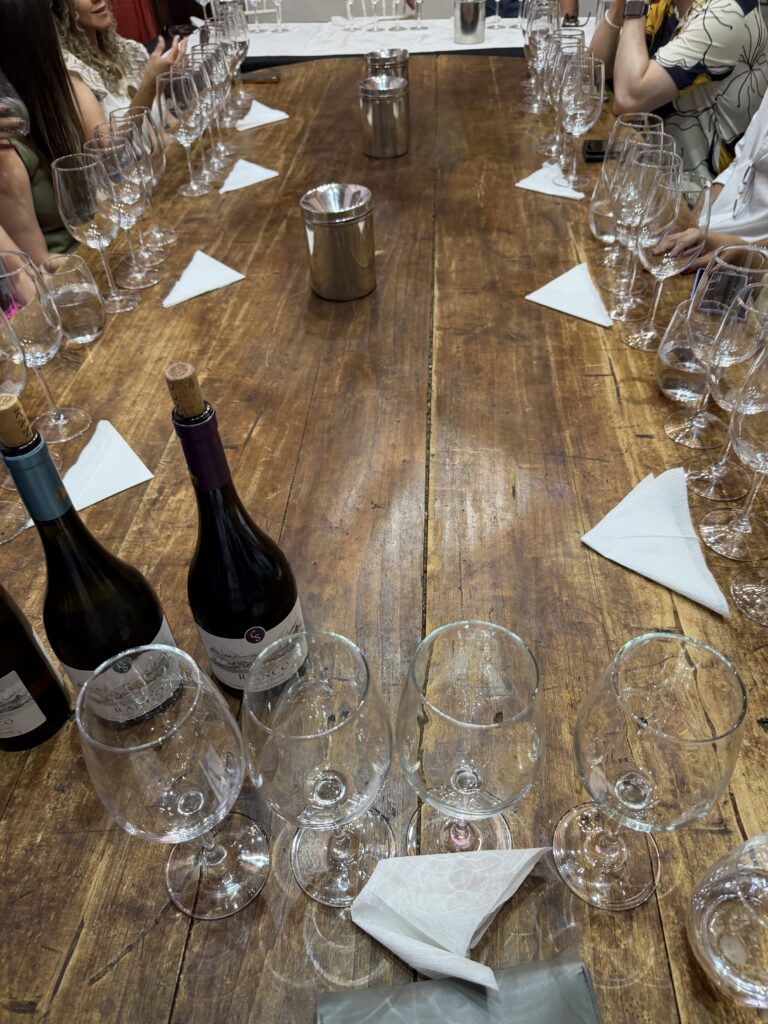
after the tasting I went to the wineries restaurant for lunch. I treated myself to a delicious steak, salads and bought a bottle of carmenere to compliment the food. I was able to take the remains (half bottle) home with me which I finished off that night.
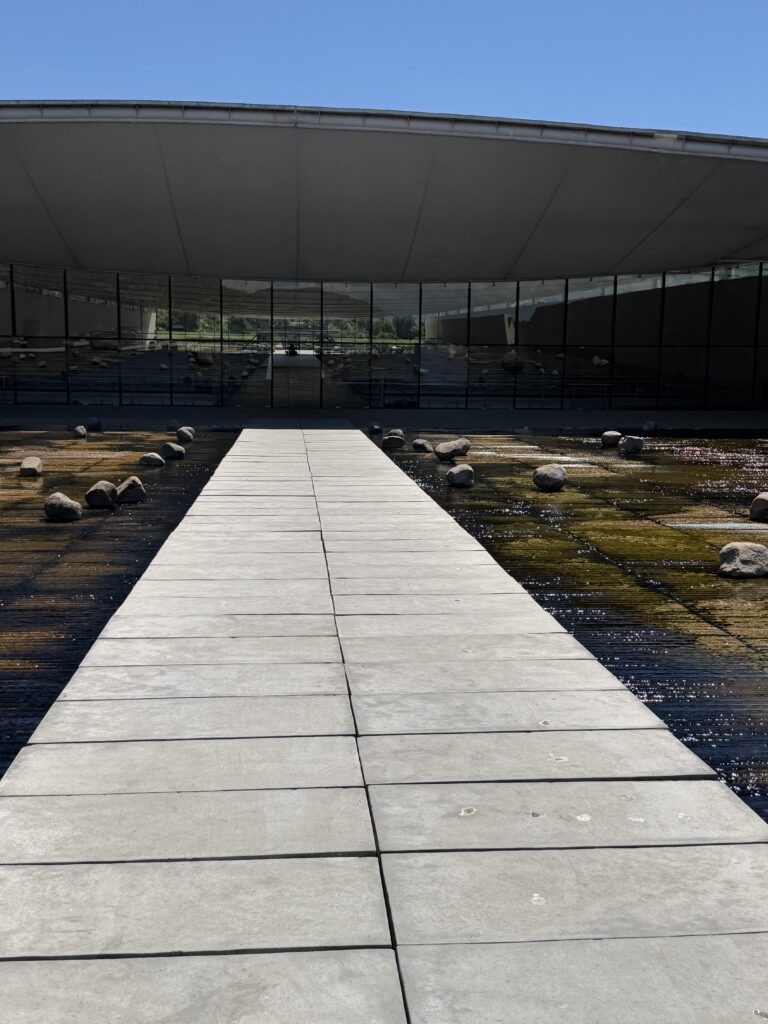
From here we drove further south to VIK, a highly rated winery with a stunning entrance, but had to wait 75 minutes for the next tour and tasting alone was not available. I chose to give this a miss and we returned to Santiago.
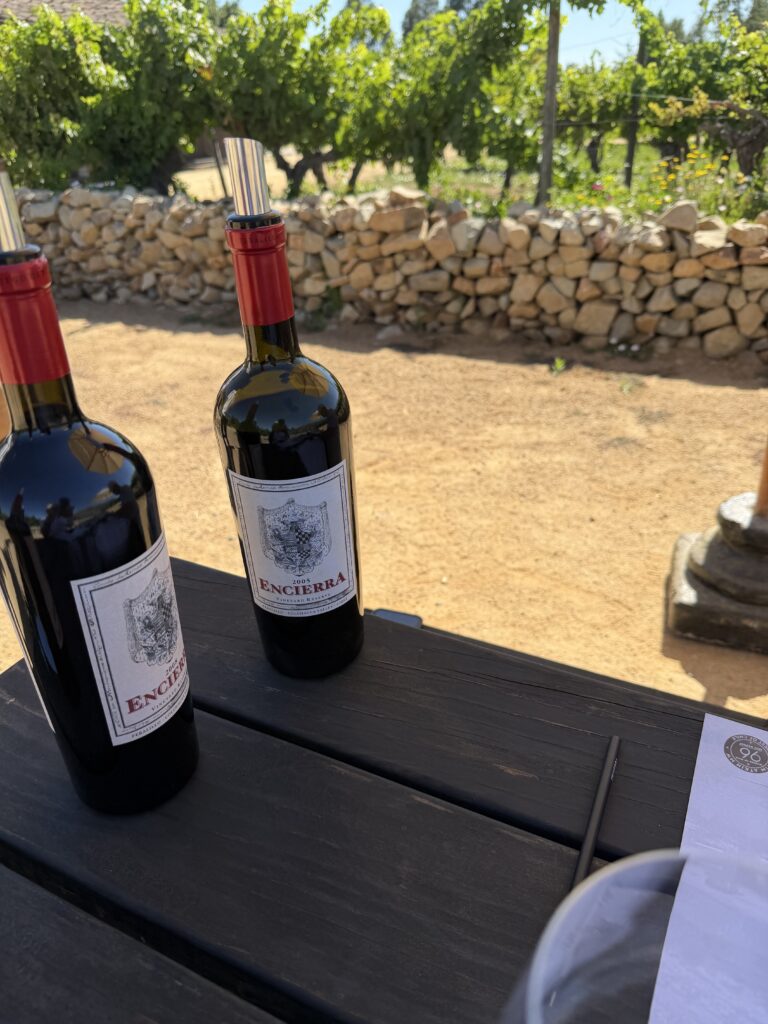
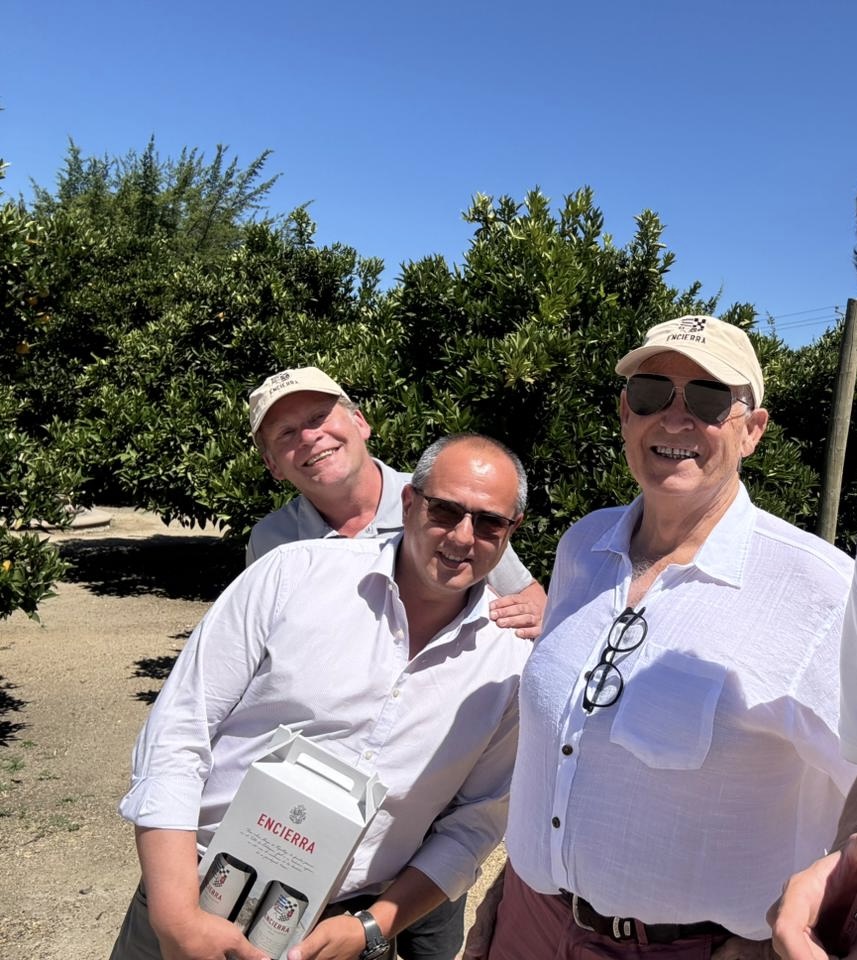
December 29 saw an early start leaving Santiago at 7:45 and heading back to the Colchagua Valley. After a quick coffee stop we arrived at Encierra winery, a 3rd generation family owned concern established in 2000. We were treated to a vertical tasting of 5 bottles of their blend from 2005 to 2023 with the 2008 my favourite. All wines were drinking well with further cellaring possible.
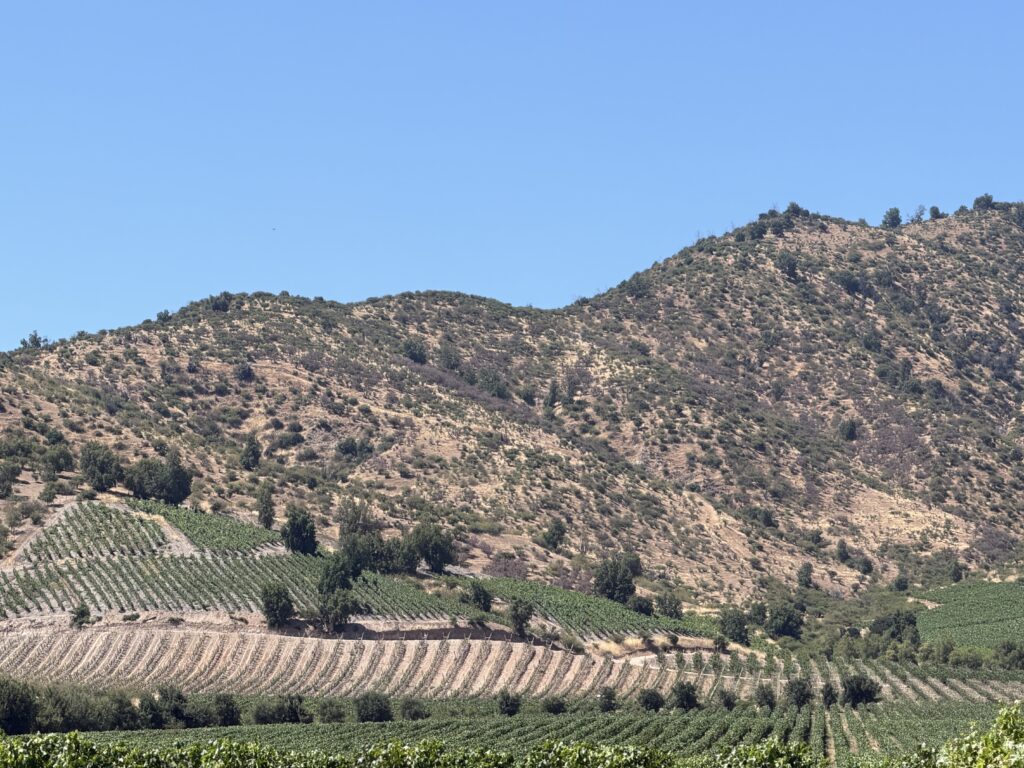
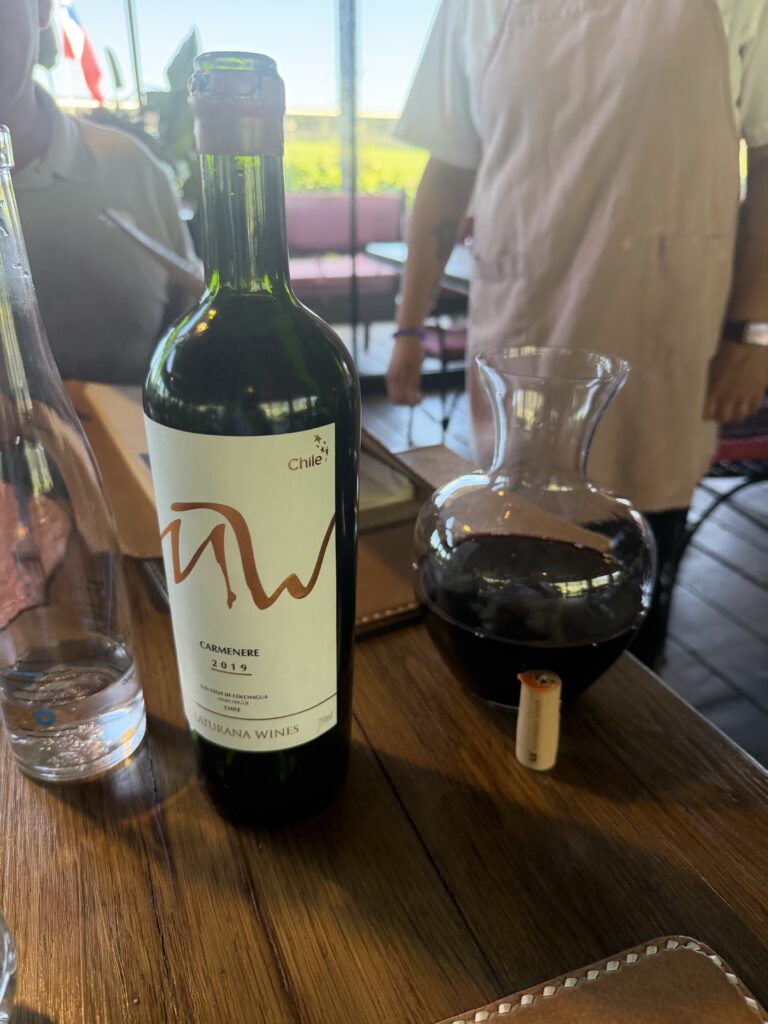
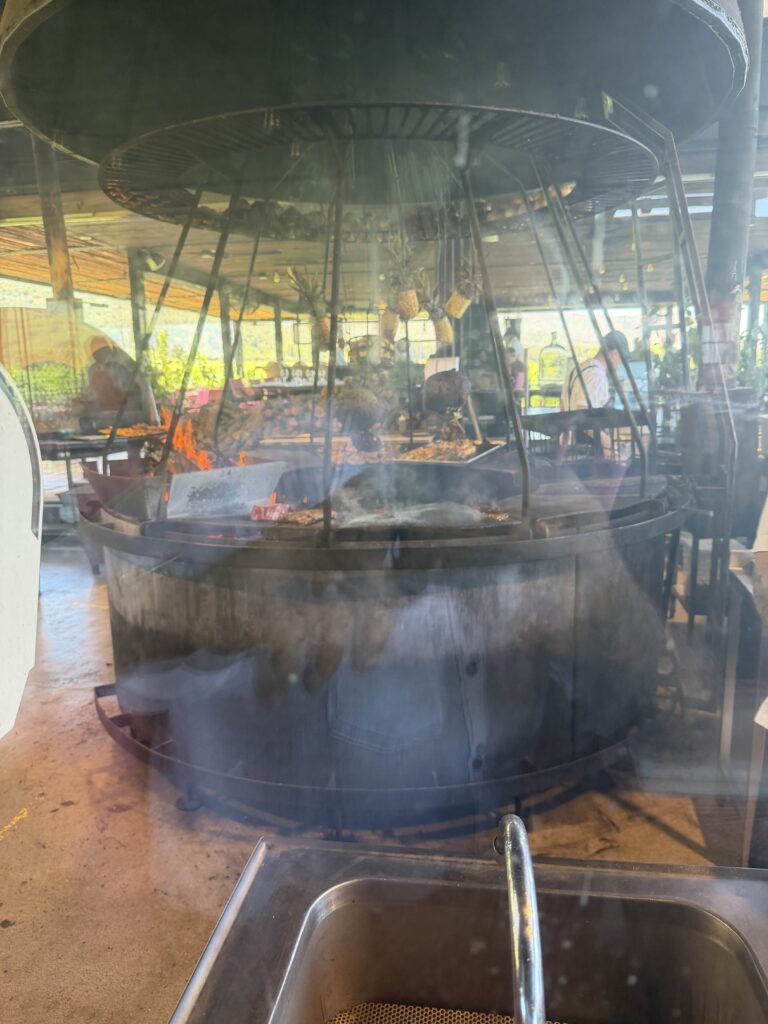
After saying goodbye to to our hosts Antonia and Andres, we headed for the Apalta Valley, a highly acclaimed sub Regina of the Colchagua Valley. Montes winery is an example of outstanding wines, some of which retail for over $500 a bottle. It is also famous for its restaurant managed by a Michelin star Argentinian chef, as such the menu is meat dominated. We were seated in Fuegos de Apalta by 12:45 we both chose steaks and I selected a bottle of 2019 carmenere which was excellent. At $60 Aud you would pay $200 for a bottle of their quality back in Australia.
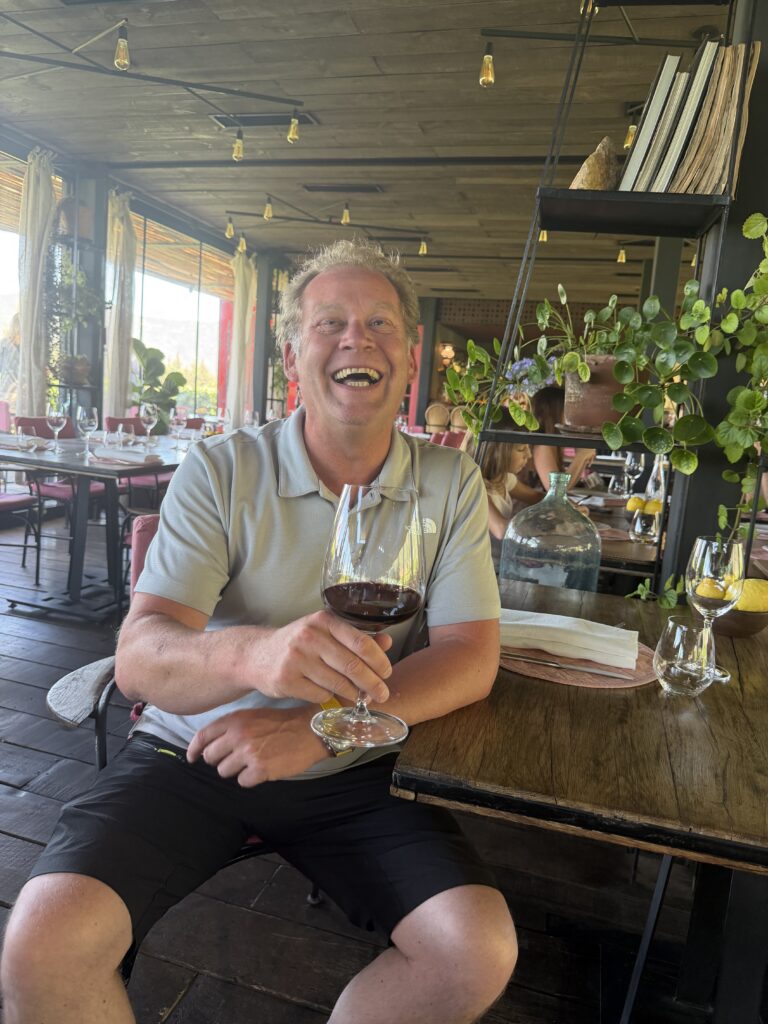
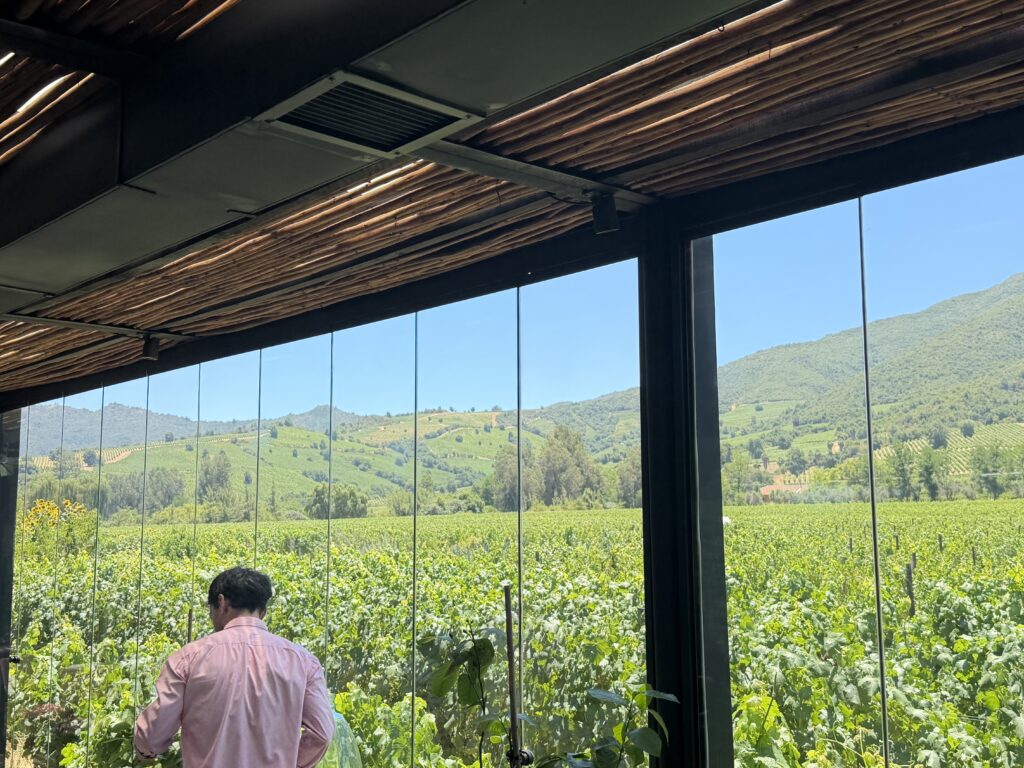
My guide Gary and the magnificent views form inside the restaurant.
We were booked in for another tasting at 3:30. With an hour to kill We dropped into a small. Winery and tasted a very nice semillon, the only winery that I visited which grew this grape. 12 months on oak it was surprisingly good. We finally arrived at Neyen, another 5 star winery sampling not only their red blend but also a Malbec sourced from 135 year old vines.
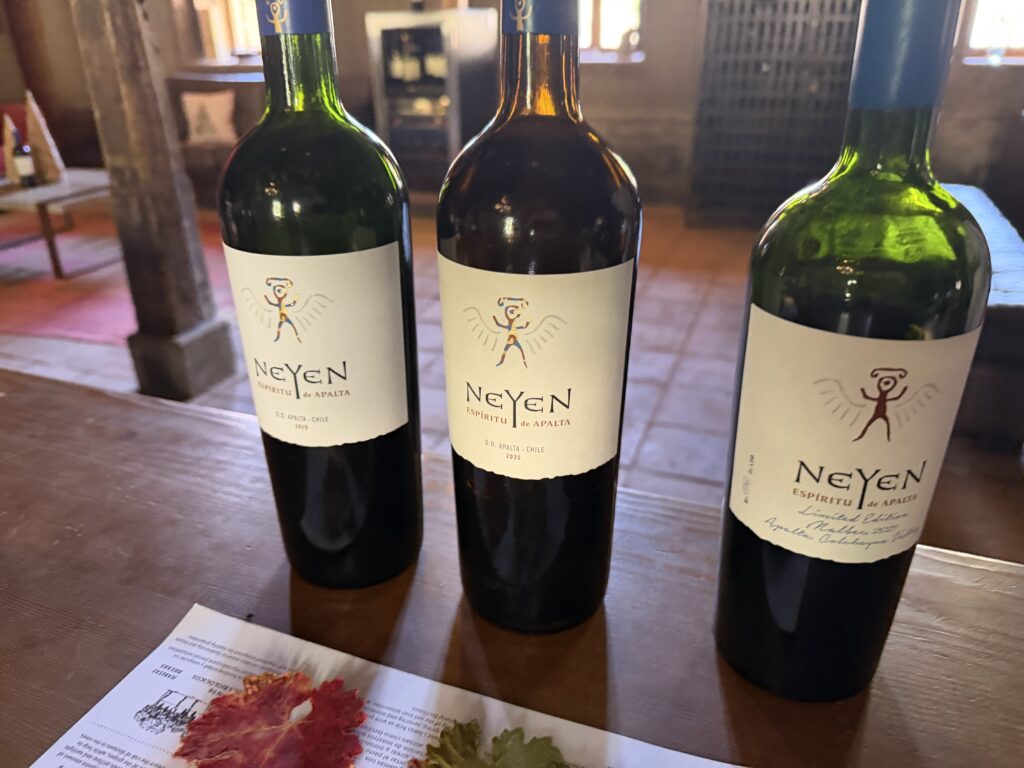
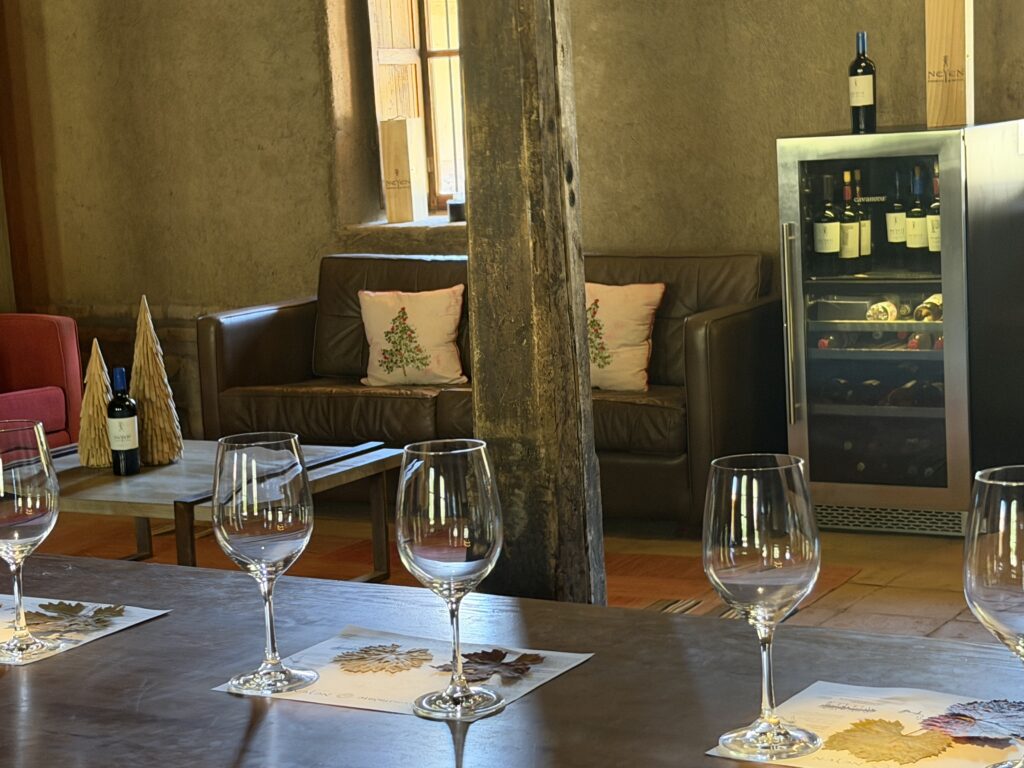
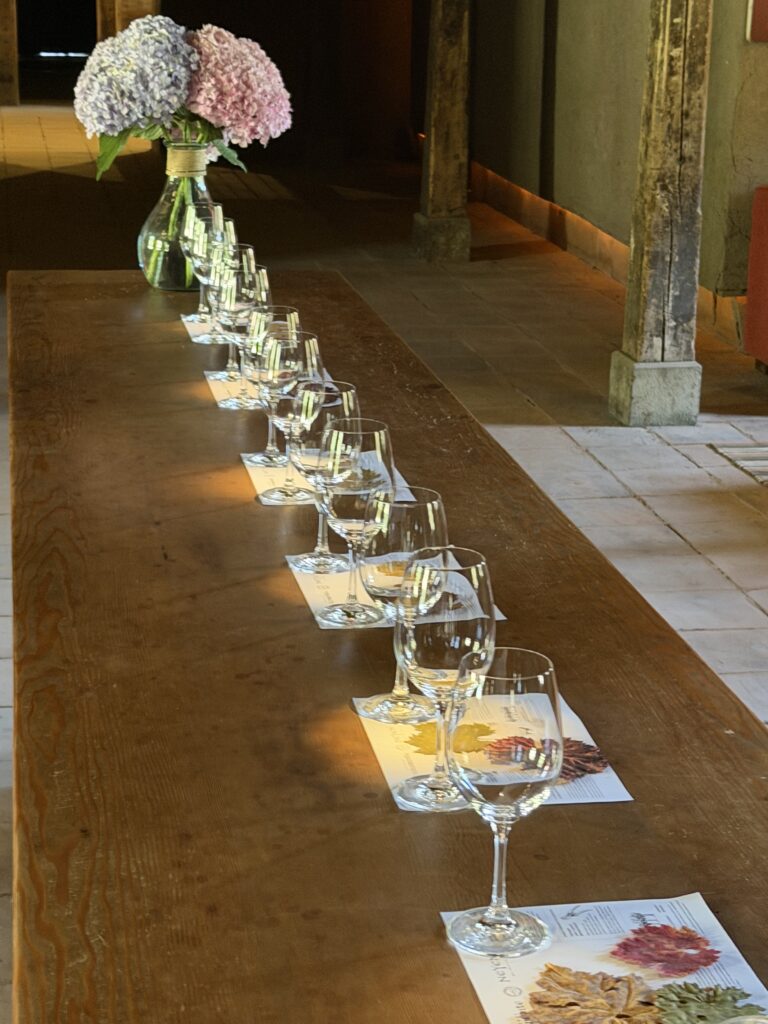
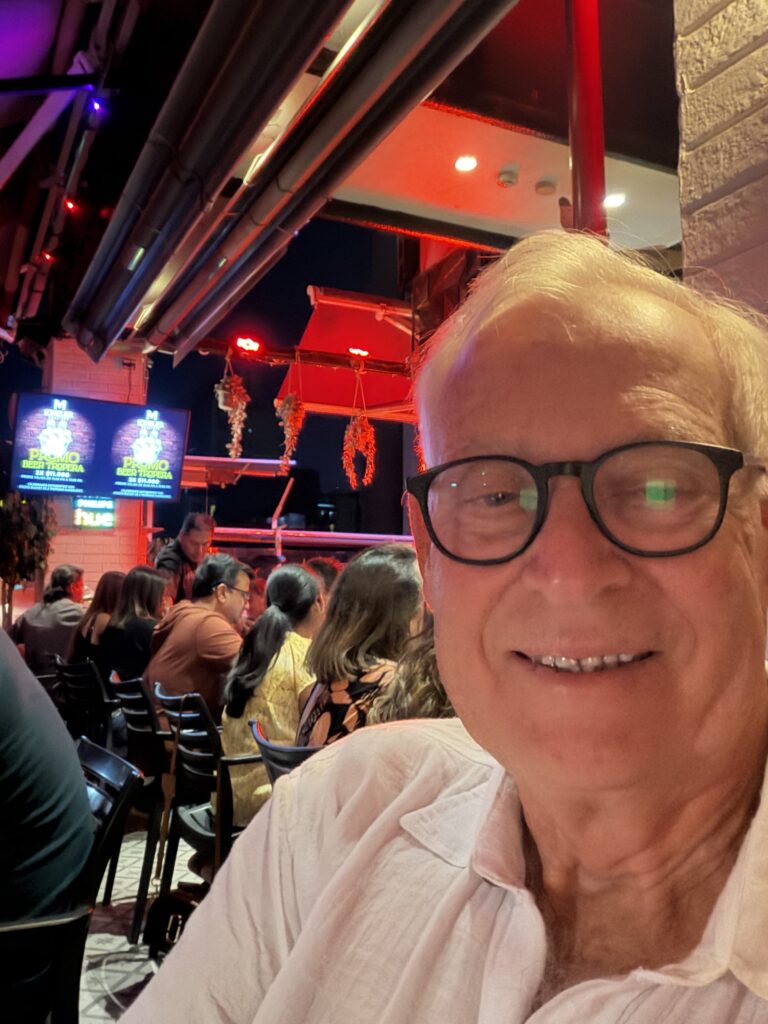
What a great day. Chilean wines are as good as any wines in the world. There “carmenere” is a point of difference and either straight or in a blend provides soft tannins and lots of perfumed berry fruits. A long drive but worth it as I arrived home at 6:45. After a brief rest I headed upstairs to the hotels roof top bar to enjoy a few beers. This bar was very popular with patrons and locals.
December 30
Early morning walk as had the morning free. I climbed the hill of Santa Lucia enjoying some history and the spectacular views
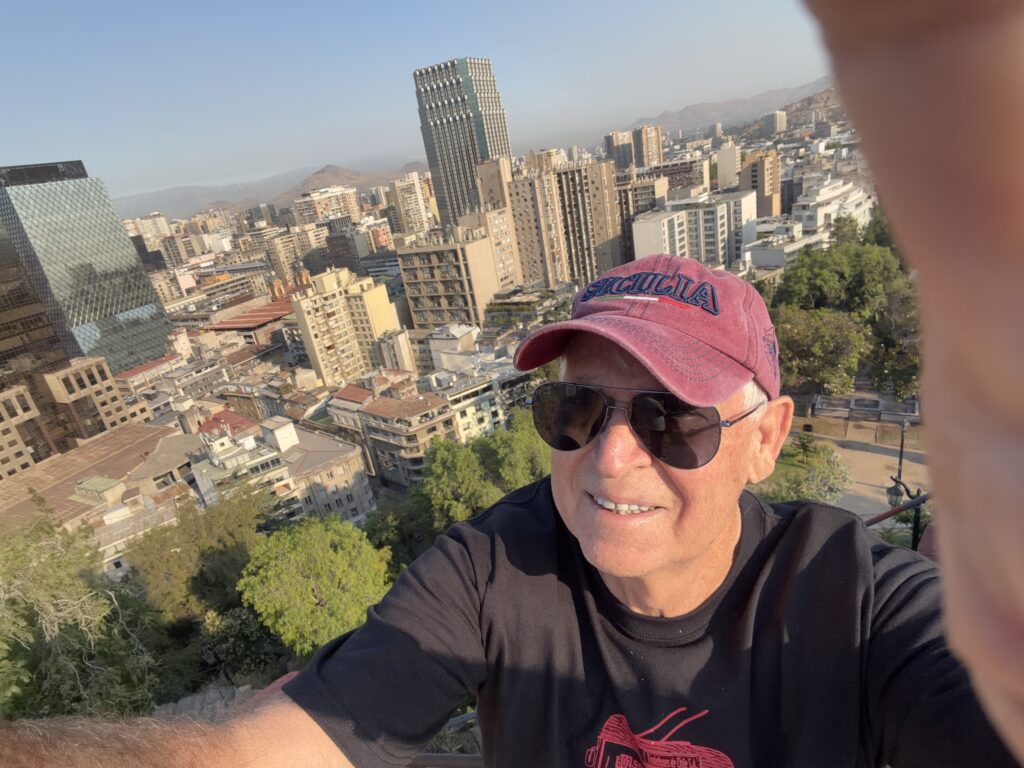
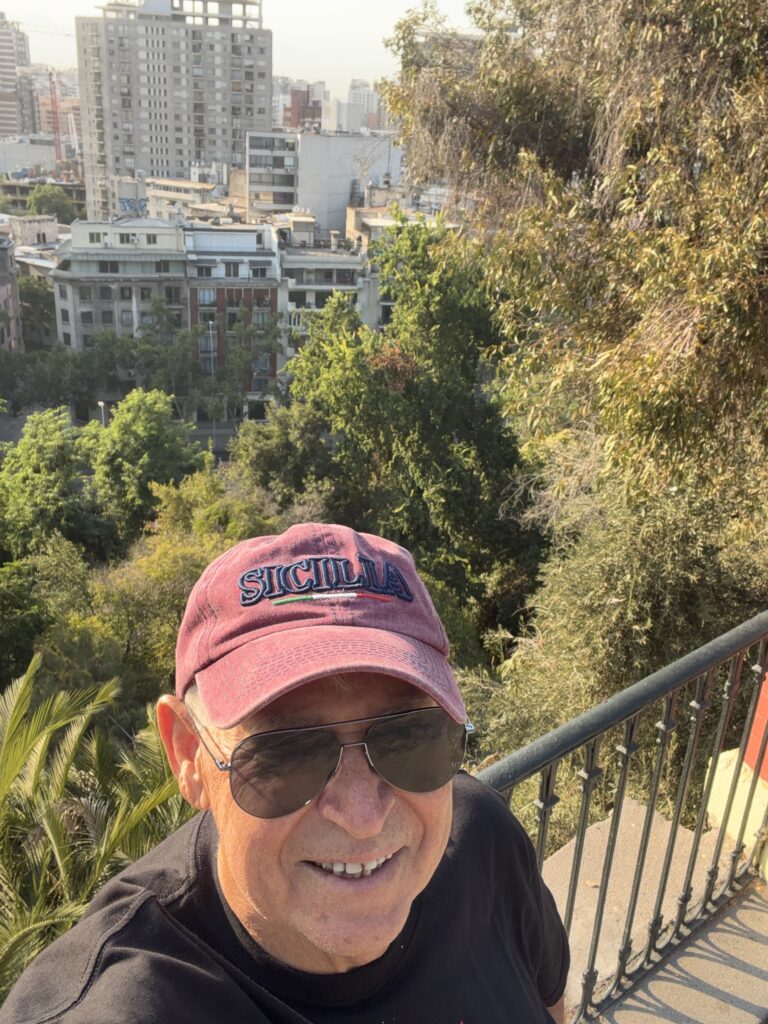
Met up with Gary at 12:30 for a couple of pints and local food style lunch. We had 3 different fillings of empanadas and shared sandwhich. We returned to my hotel via the cultural centre which has two magnificent murals.
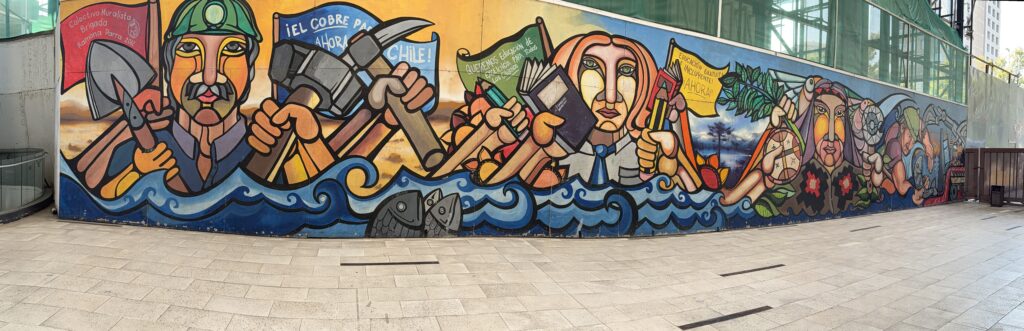
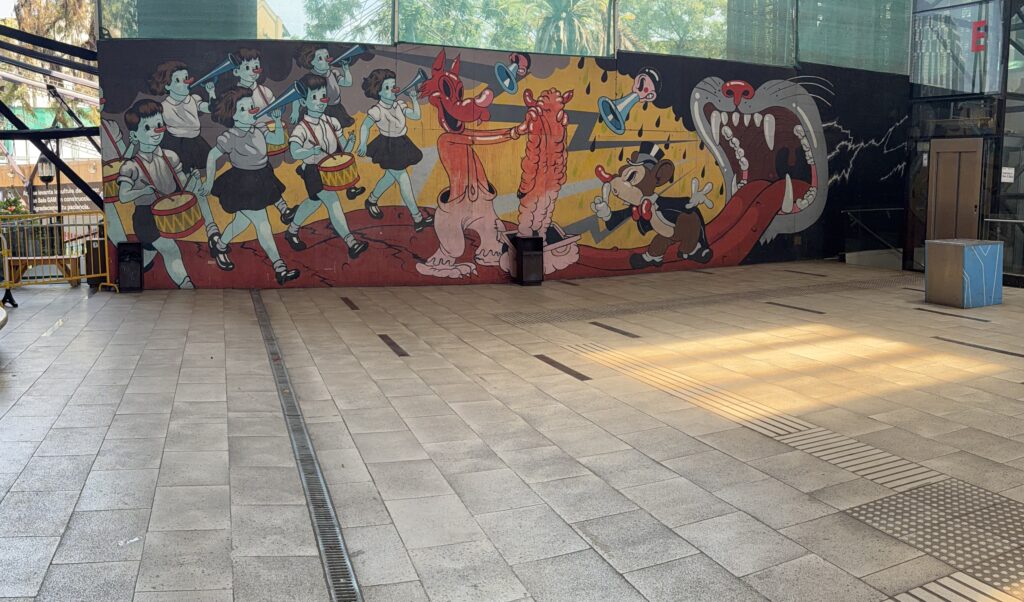
Alfredo was waiting at 2:00pm and we set off for the Maipo valley for the “Top of the World Tasting”. Don Melchor established the Concha y Toro wine estate in 1875. It is now the third largest wine producer in the world distributing almost 370 million bottles every year. This was the very first winery established in Chile and with it he also built the magnificent casa Don Melchor and the Toro or Devil’ cellars.
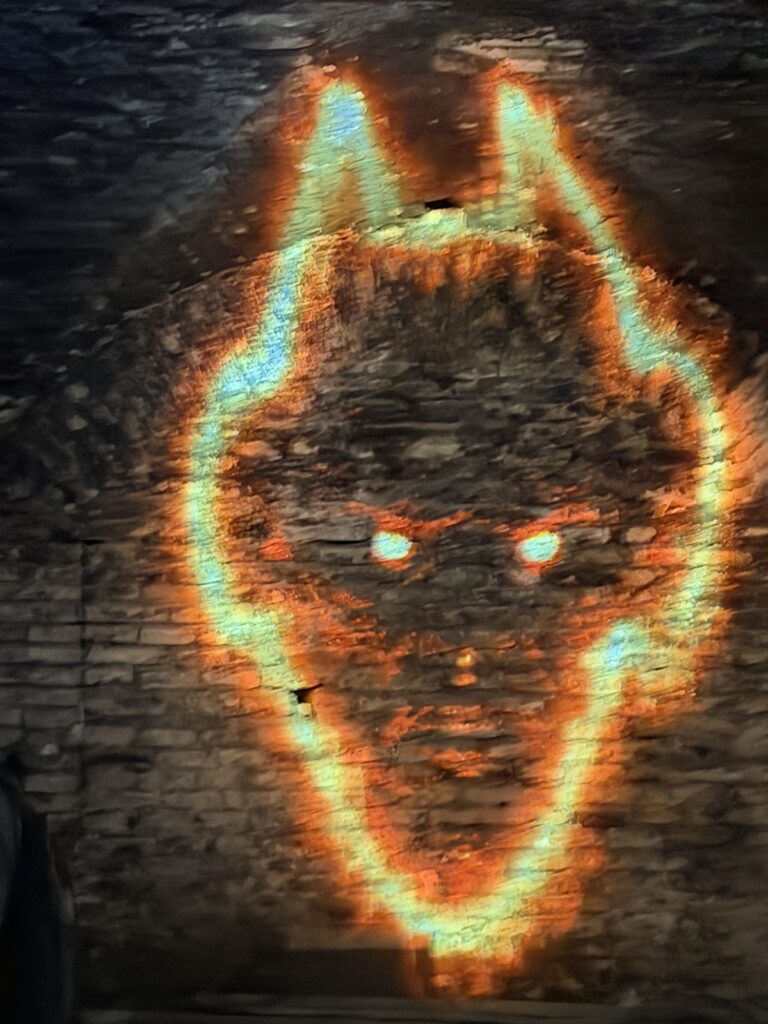
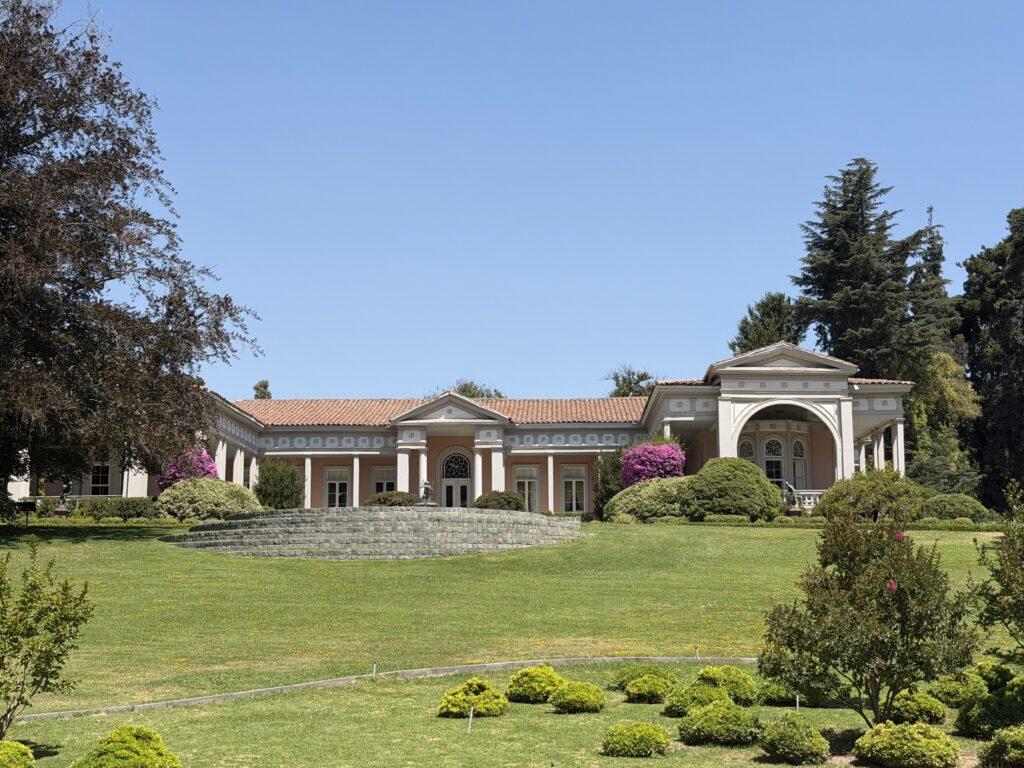
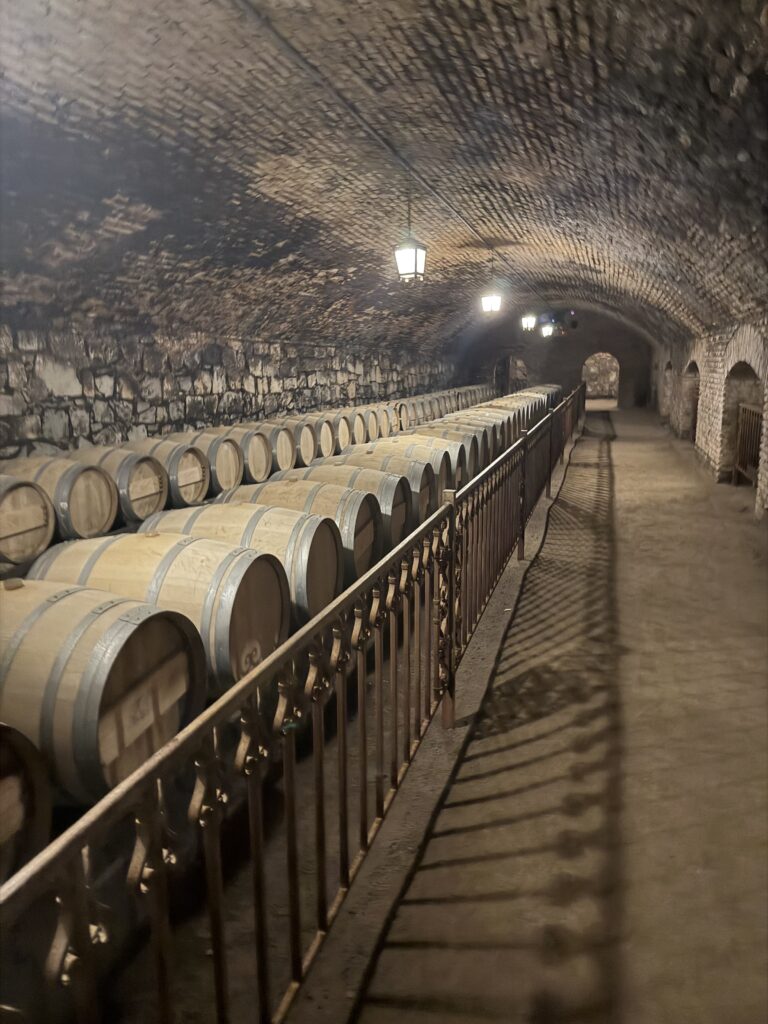
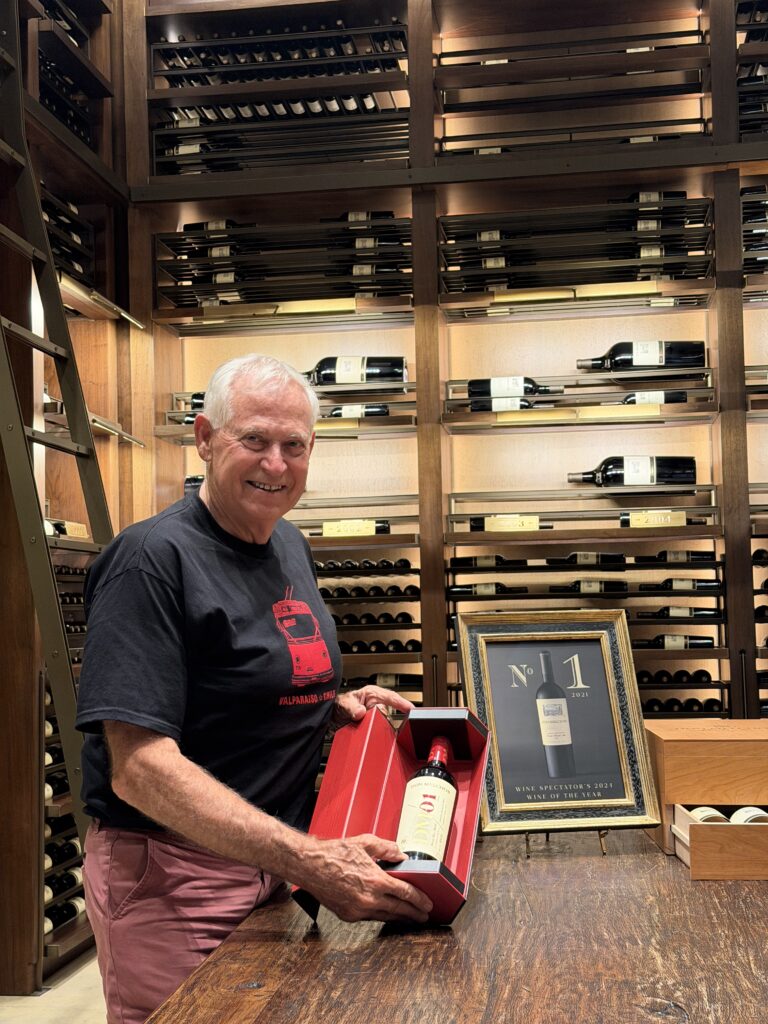
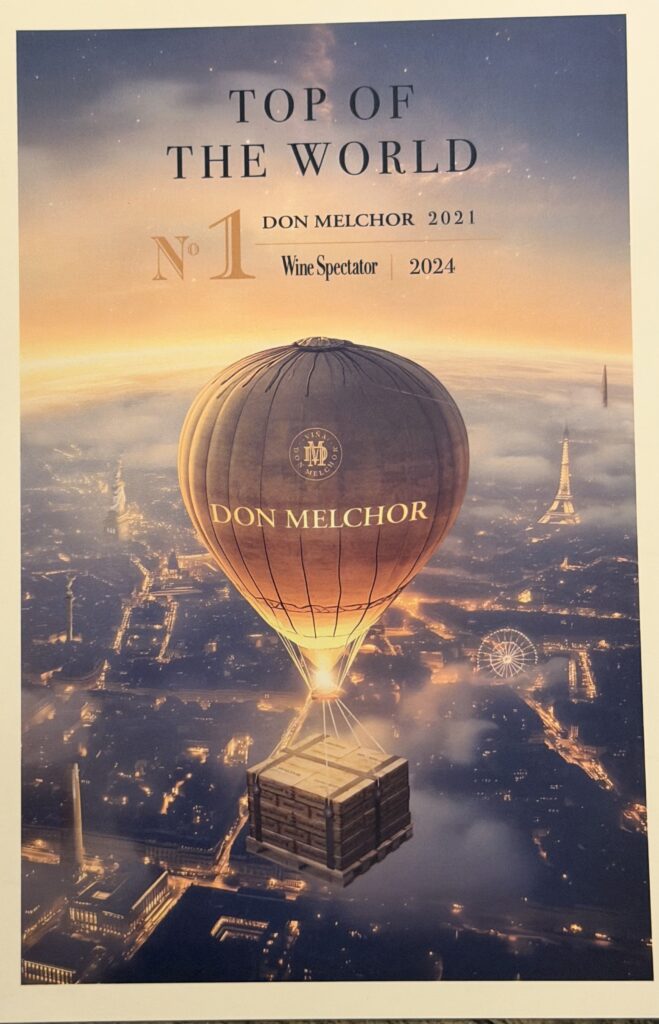
The main purpose of this visit was a tasting of the Don Melchor Cabernet Sauvignon which was voted best wine in the world in 2024. With the help of Chateau Lafitte consultants the winery established seven blocks of Cabernet in 1987 from which grapes were selected and blended to make the Don Melchor Cabernet Sauvignon. The wine has now featured 13 times this century in Wine Spectators top 100 wines. In 2019 the decision was made for Don Melchor to become a separate winery to Concha y Toro estate.
This was a private tasting and I was introduced to Francisco a master sommelier who lead me through the tasting of 3 wines. The DM 2021 cab sav ( this was the award winning wine) the 2024 DM. And a single Cab sav from block 1. I must have sounded like I knew my wines because he then pulled out a 1993 Dm for me to taste. What a great opportunity to spend an hour with such a knowledgeable man; by the way In Chile a standard taste is 120mls.
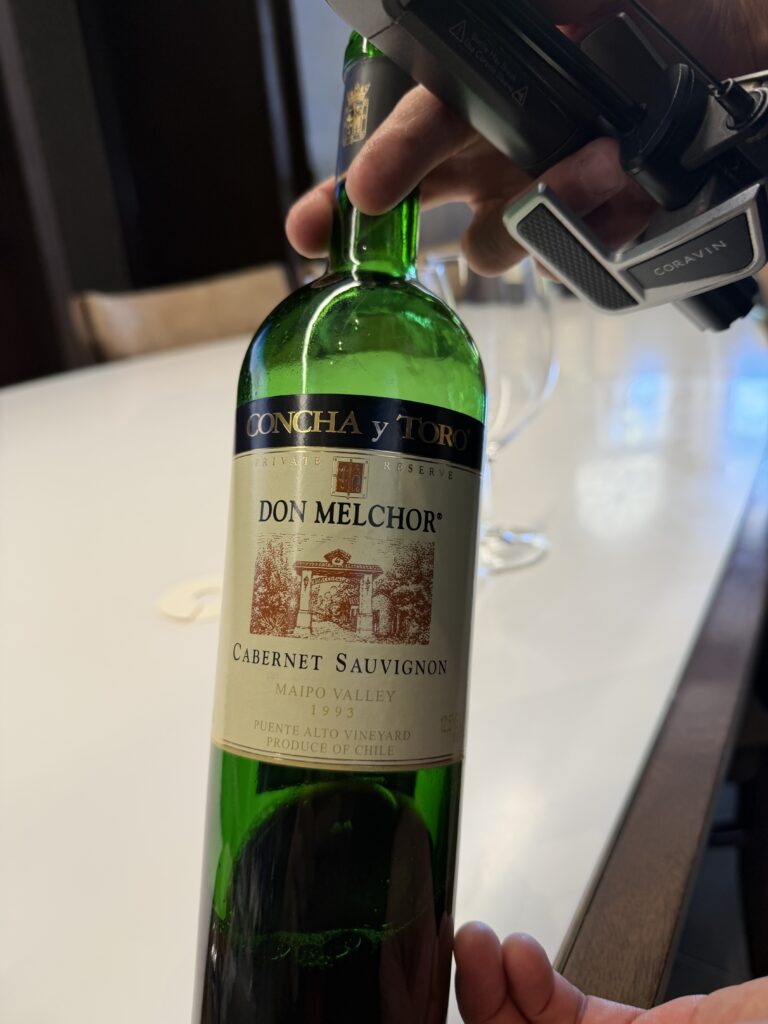
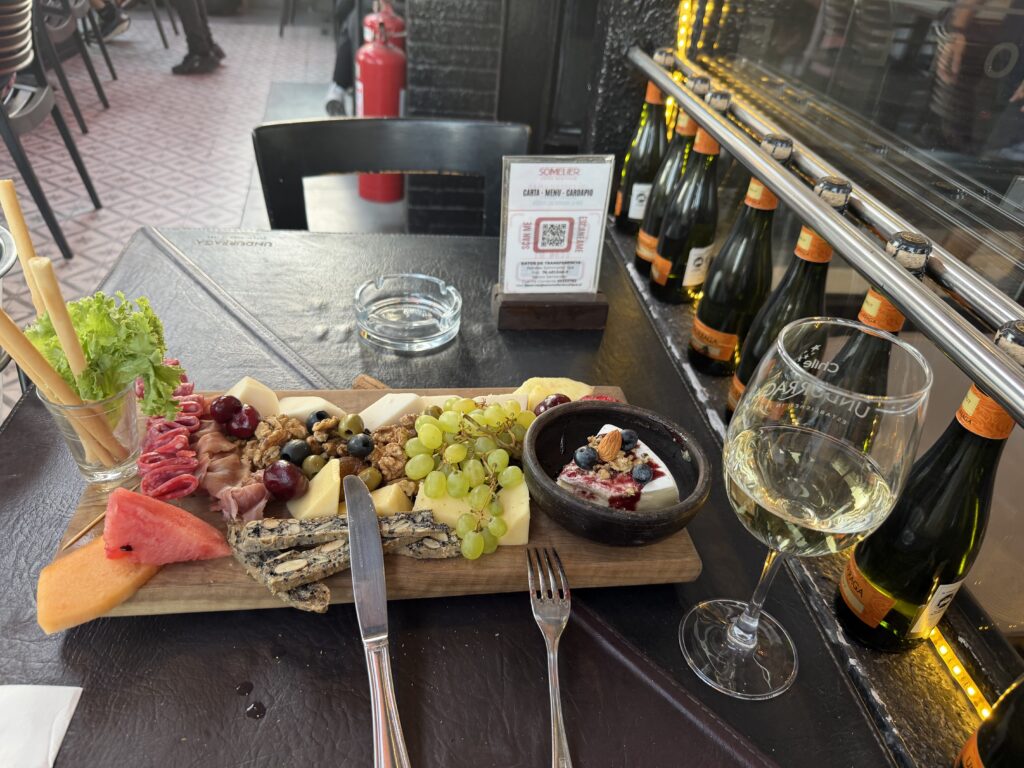
I arrived home ready for a quick nap before finishing my last night on the roof top bar with a bottle of wine and a tasting plate.
December 31 New Years Eve
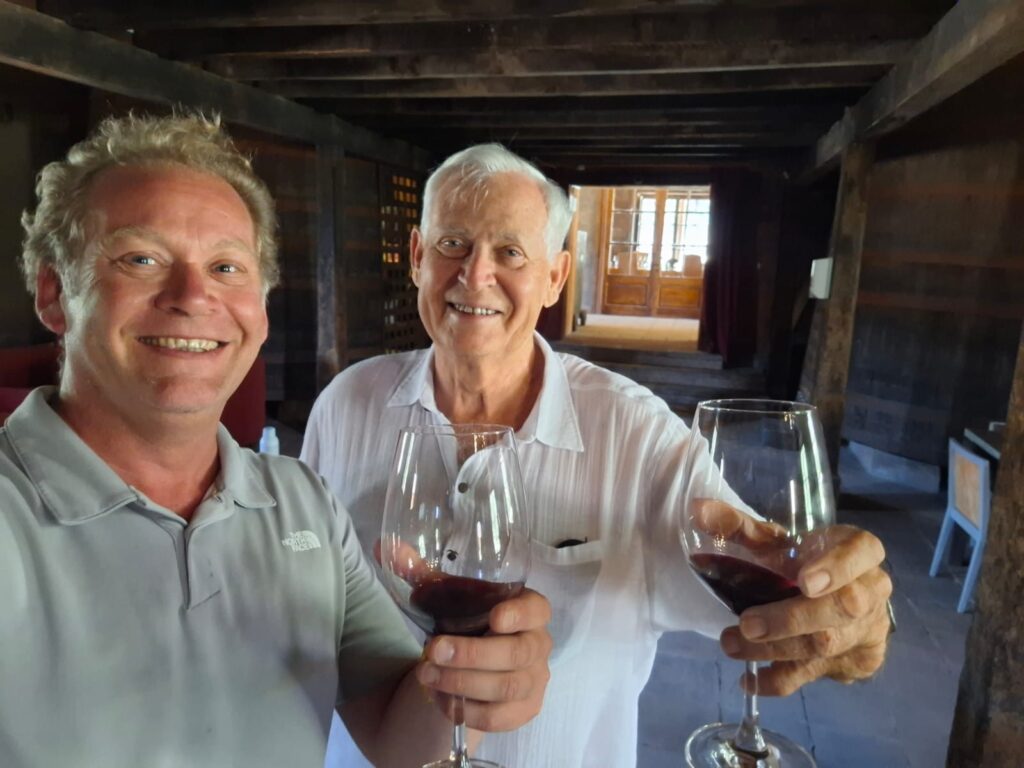
My flight today is departing Santiago for Lima at 3:00pm leaving the hotel at 12:45. This has been a wonderful introduction into South America thanks to Gary James and hi driver Alfredo. On reflection I should have delayed my flight a day and spent New Year’s Eve in the company of people I had met. You learn.
December 31 NEW YEARS EVE in Lima
My travel day with my flight departing at 3:00pm. It’s 4 hours to Lima with a two hour time Zone difference so arriving at 5:00pm Peru time. Lots of ATMs so took out 400 sols knowing that most vendors will take card.
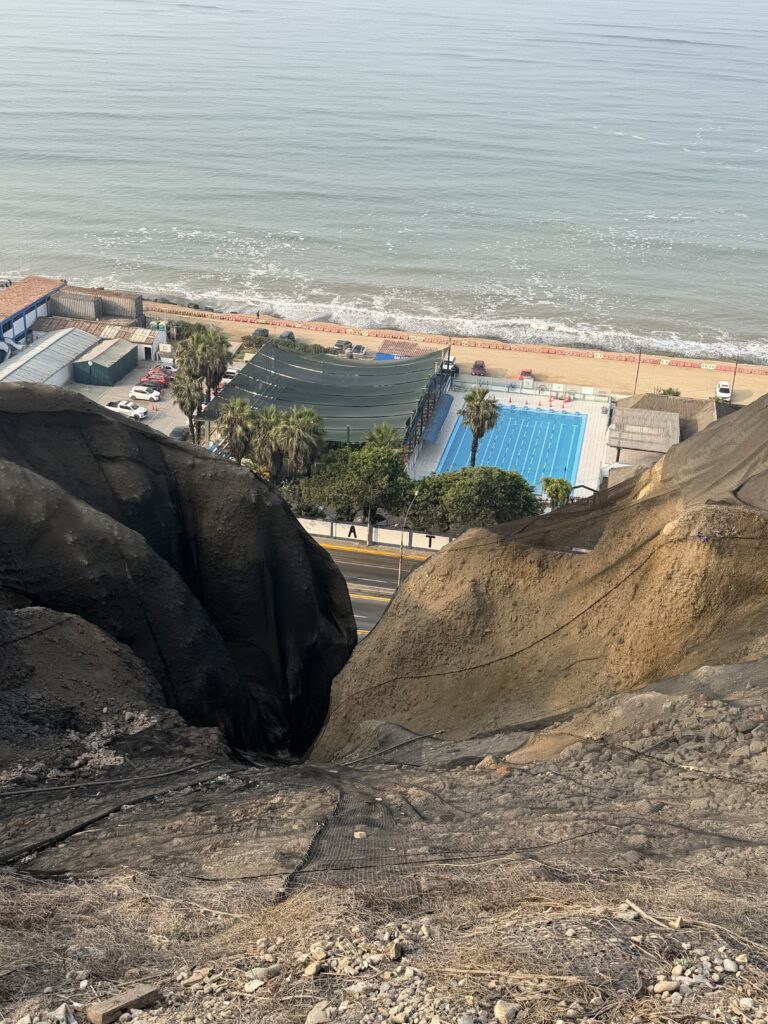
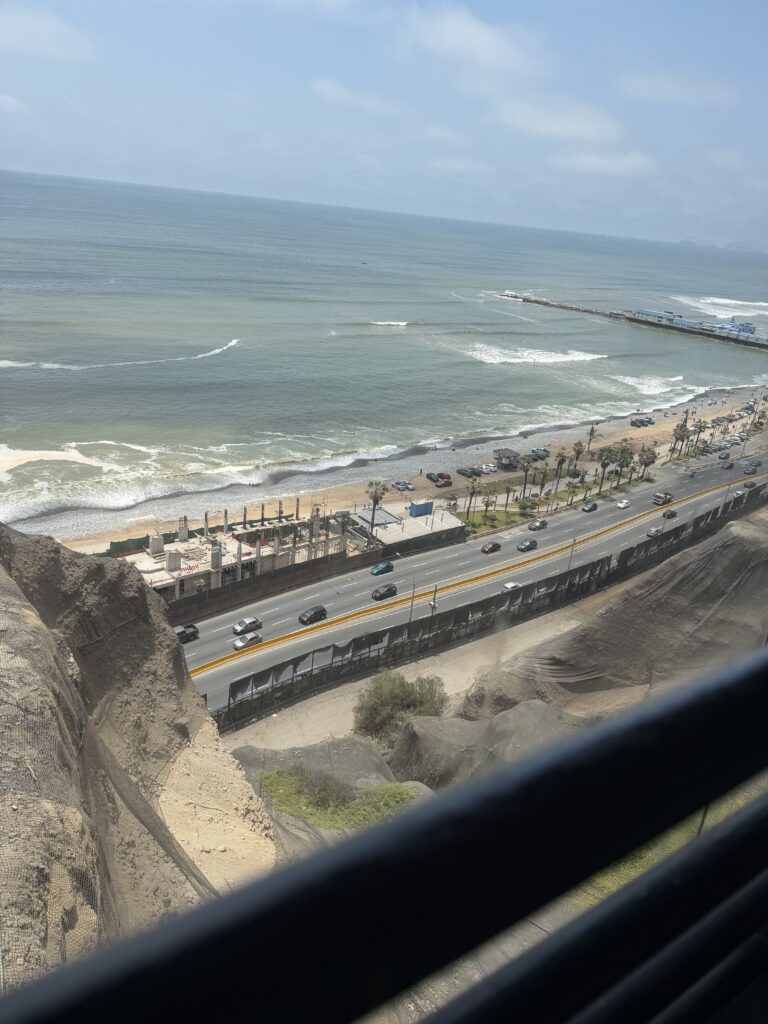
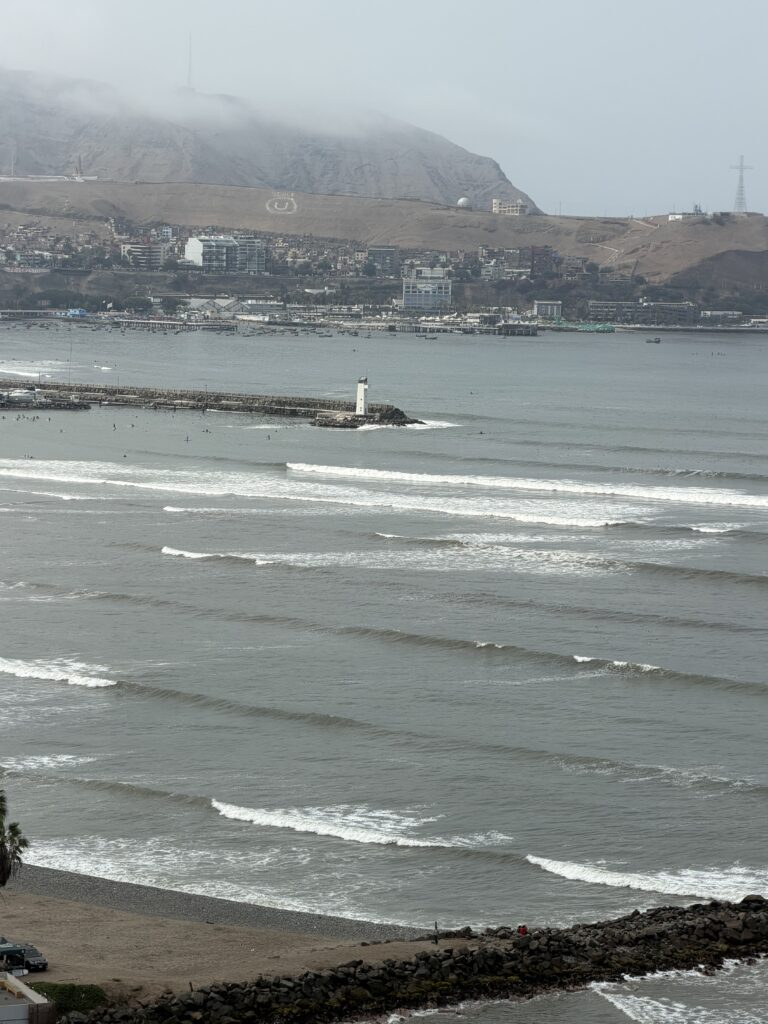
The hotel is centred in the Barranco district of the city which is considered the bohemian and artistic centre of Lima. It is 400 metres to the coast which is popular with swimmers and surfers alike. The massive cliffs leading down to the sea make this a point of difference to most Australia; beaches.
I lasted until 11:00pm (1:00pm in Santiago which I left that afternoon) at New Year’s Eve party in the hotel bar.
The morning of New Years Day was hopeless in terms of the hotel provisions.
Waking early, I found the hotel restaurant and bar closed which did not help my coffee craving. Walking around for half an hour, I eventually stumbled on a nice cafe with excellent coffee. During my walk I came across many murals showcasing Barranco artisans.
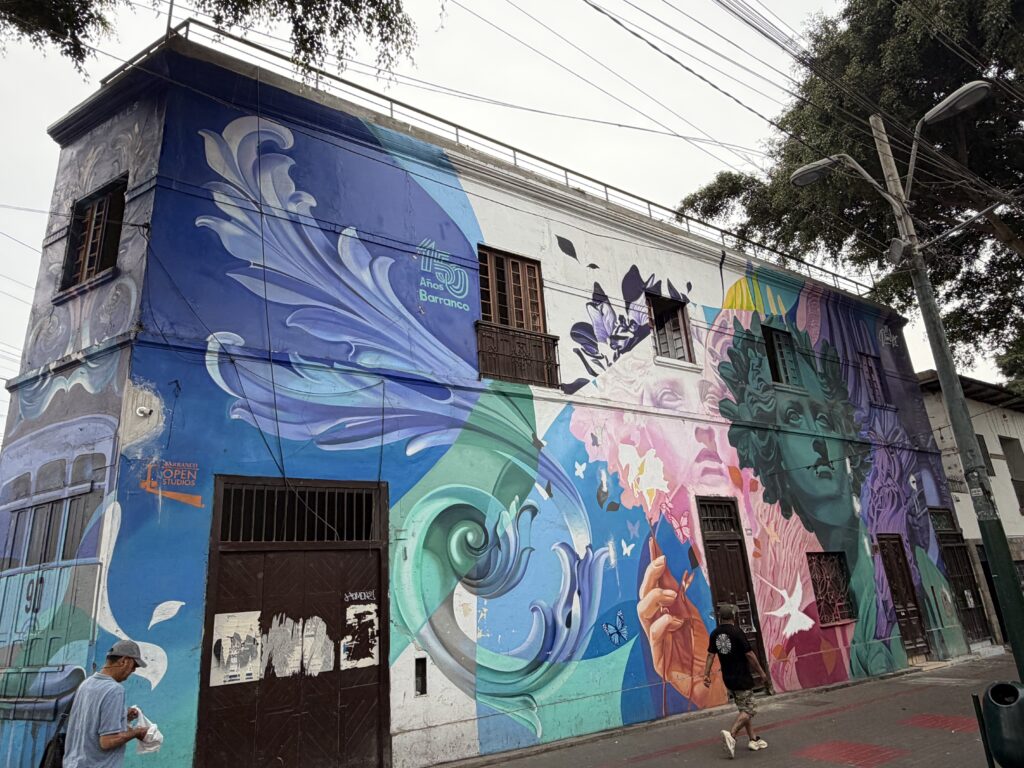
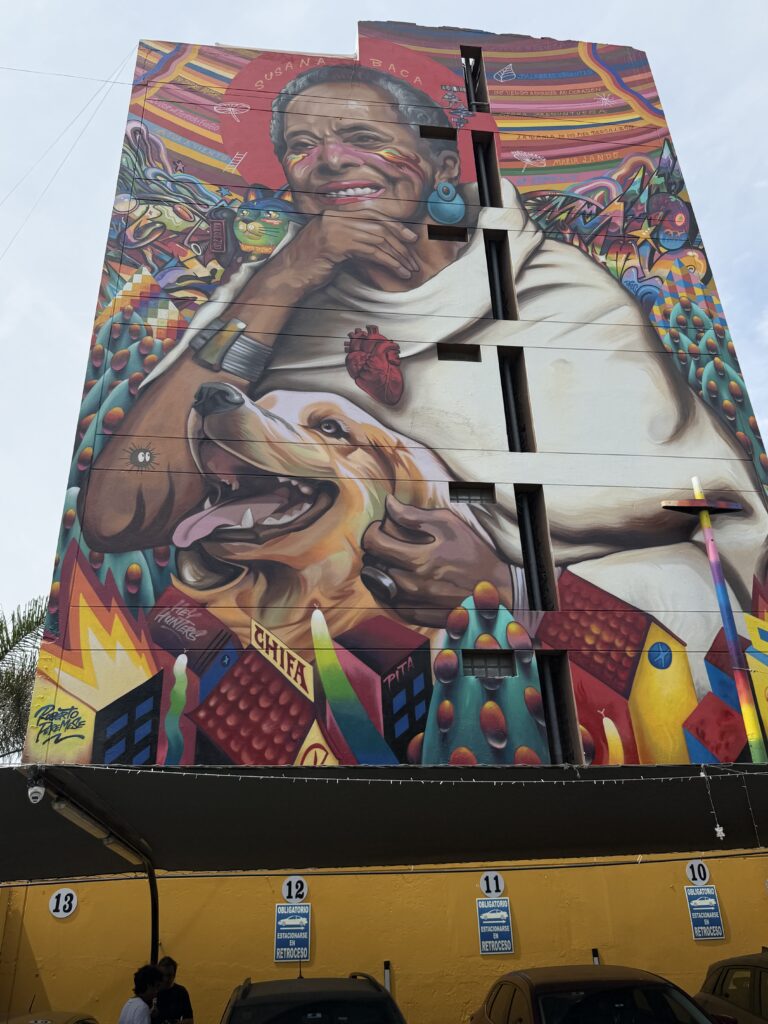
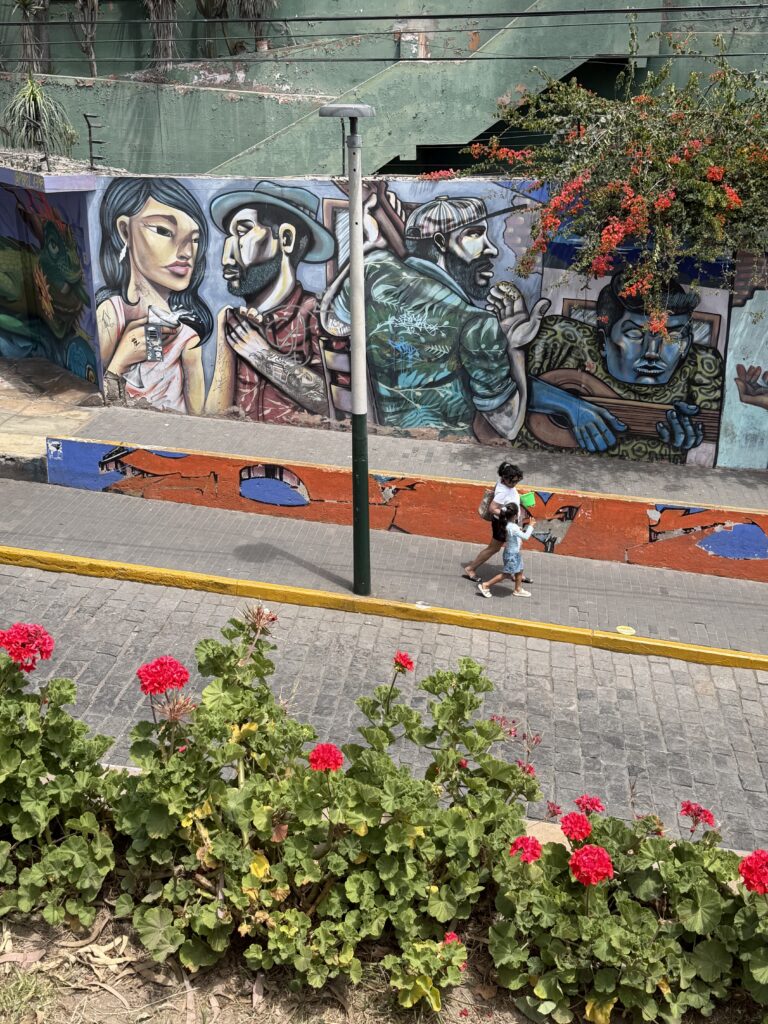
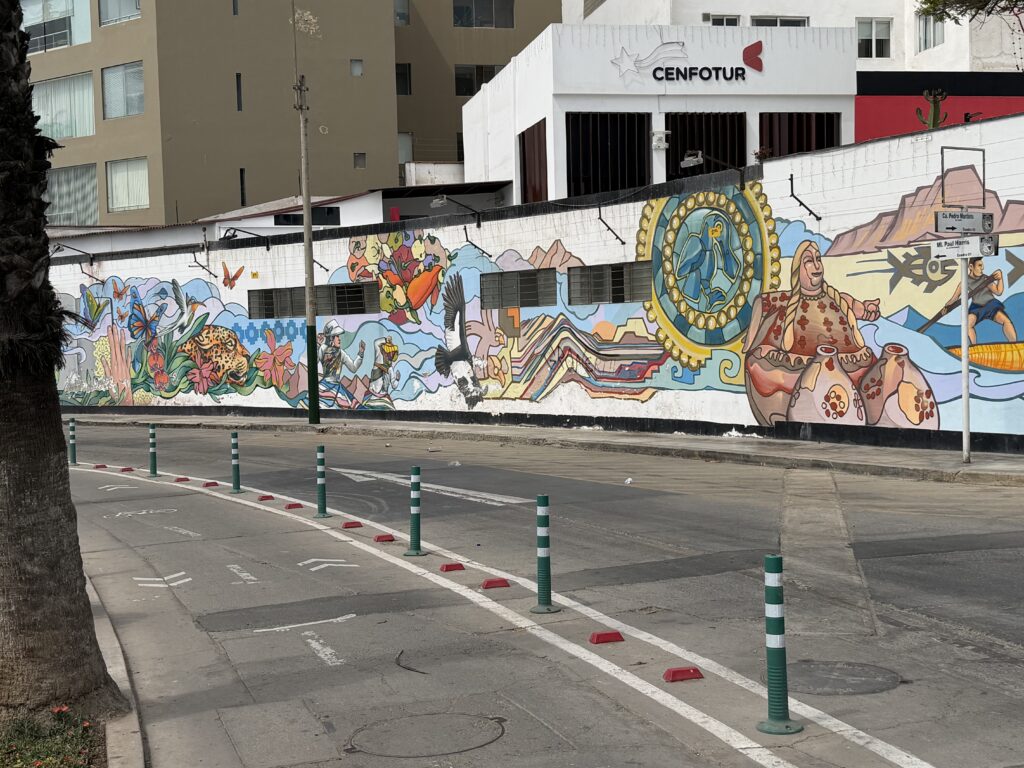
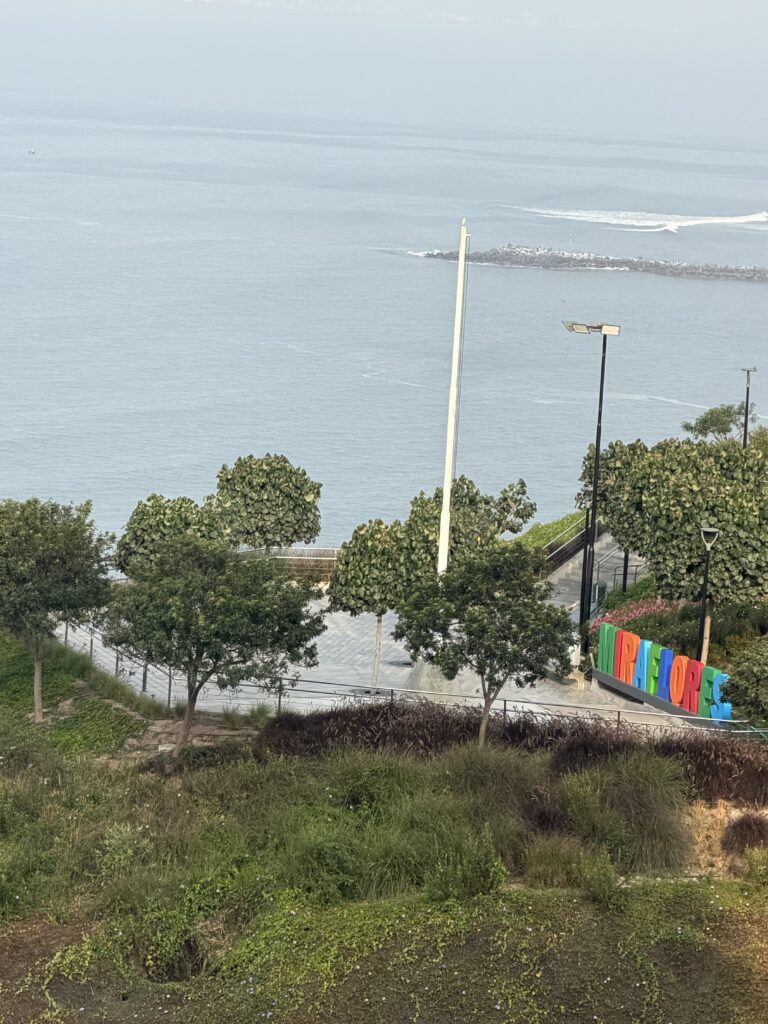
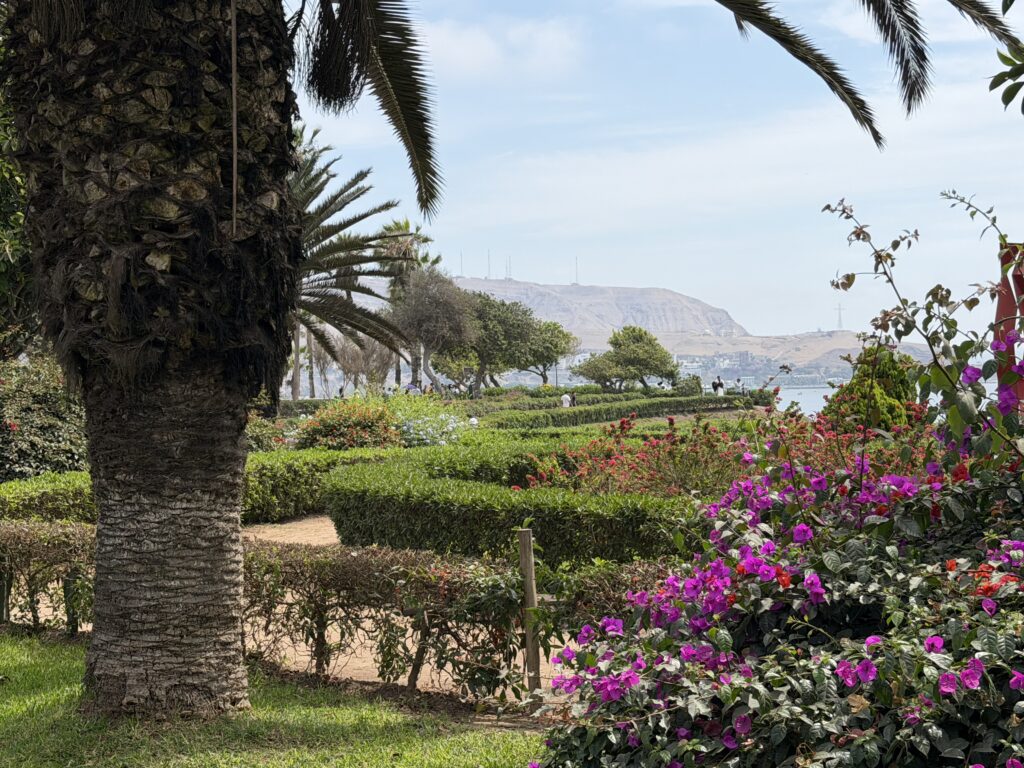
Lima is a city of over 10 million with a very mild climate for my visit. Daily temperatures of 24/5 degrees falling to no more than 19 degrees in the evening and night. It is humid but a great city for walking which is what I did after lunch. Miraflores is a stunning coastal district of the capital with beautiful walkways on top of the cliffs overlooking the Pacific Ocean. It was hard to capture the size of this coastal walk with beautiful gardens stretching for miles.
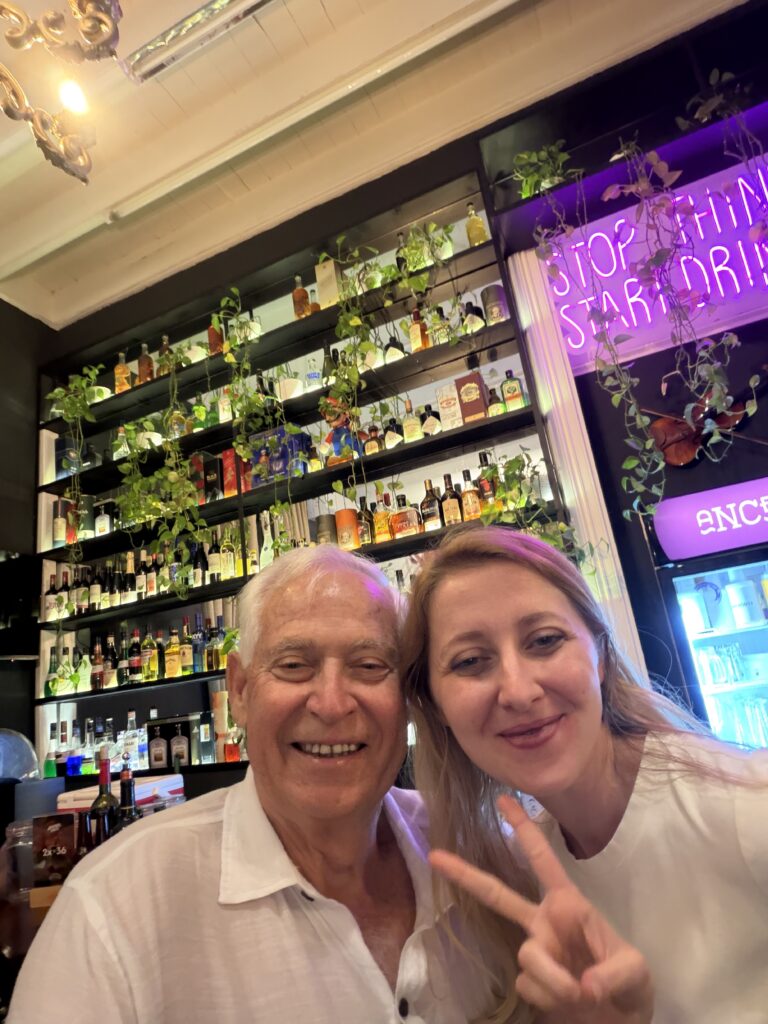
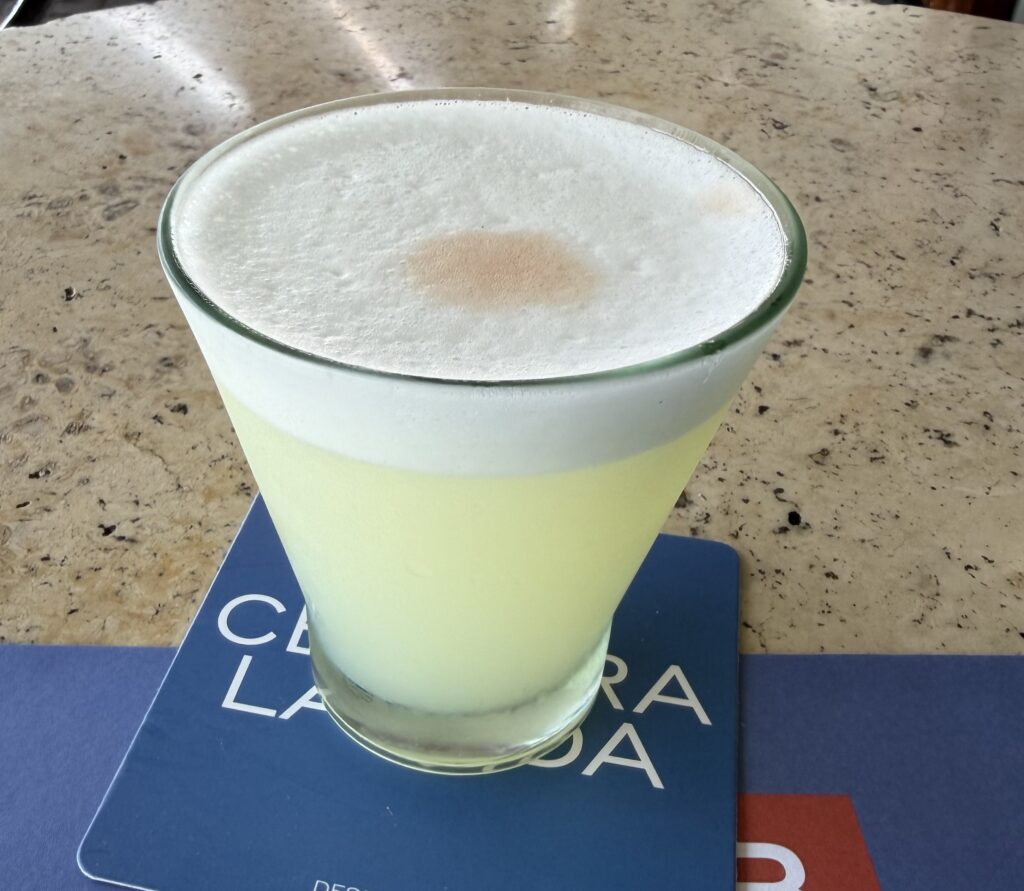
After three hours wandering I found a nice bar serving craft beers and settled in for an hour before the 35 minute walk home. A shower and late evening nap was the order of the day. Around 7:00 I set off to find a restaurant for a glass of wine and a meal. I was seated at the bar and met the delightful Katherine from New York who has been a teacher, restaurant worker and is an aspiring writer. My Glass of wine stretched into two bottles as we discussed wine, holiday destinations and work related issues. A great way to spend an evening followed by a Pisco Sour at my hotel.
January 2
Another day of walking the city. Found the delightful Centro Comercial Larcoma shopping area built into the cliffs of the ocean. Added a couple of t shirts then found a nice restaurant overlooking the Pacific Ocean.
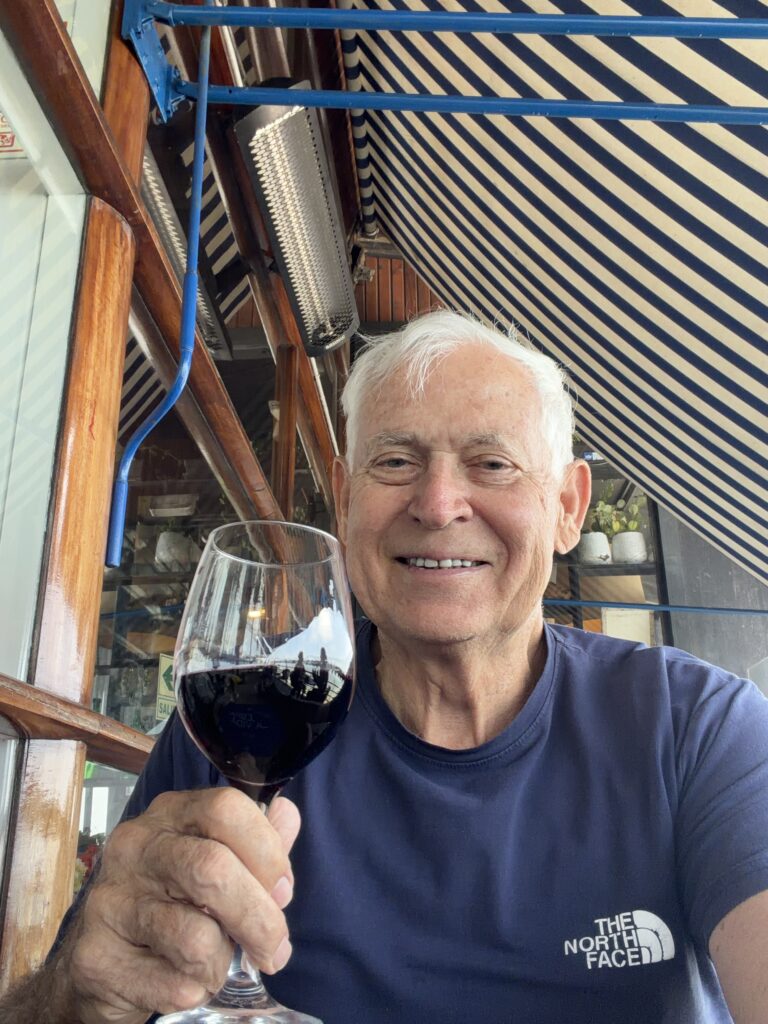
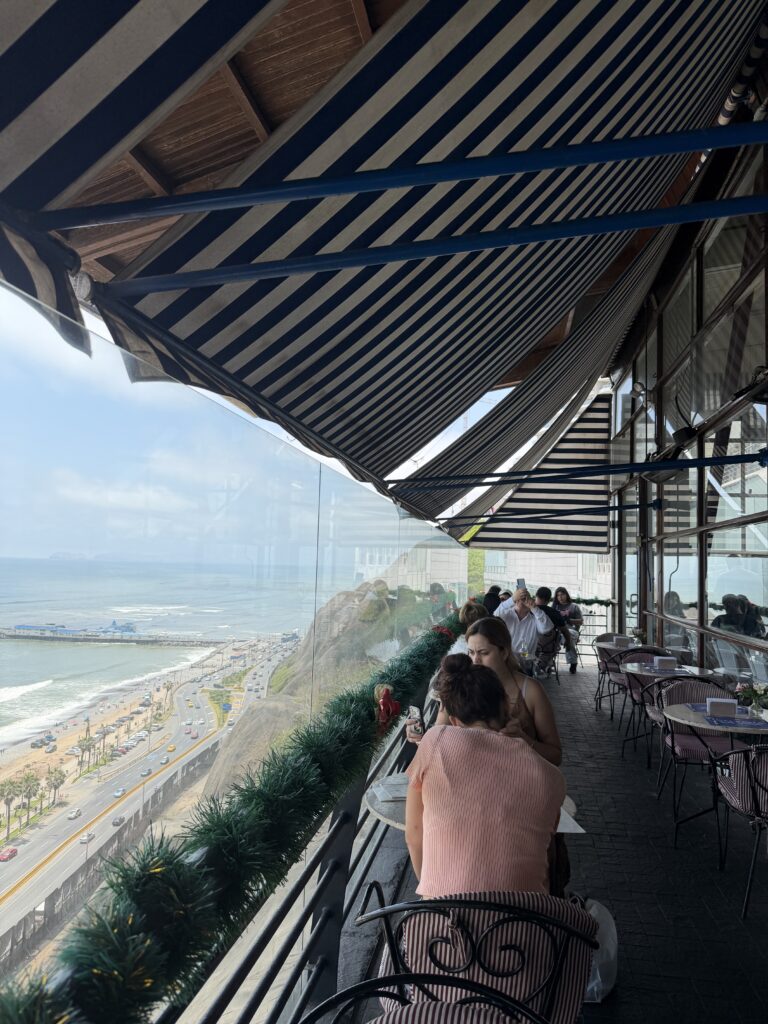
I kept up my average 14 000 steps a day but due to plane trip to Cusco the next day, alcohol was now off the agenda. Altitude sickness can be a real issue flying into a city some 11 000 feet above sea level.
January 3
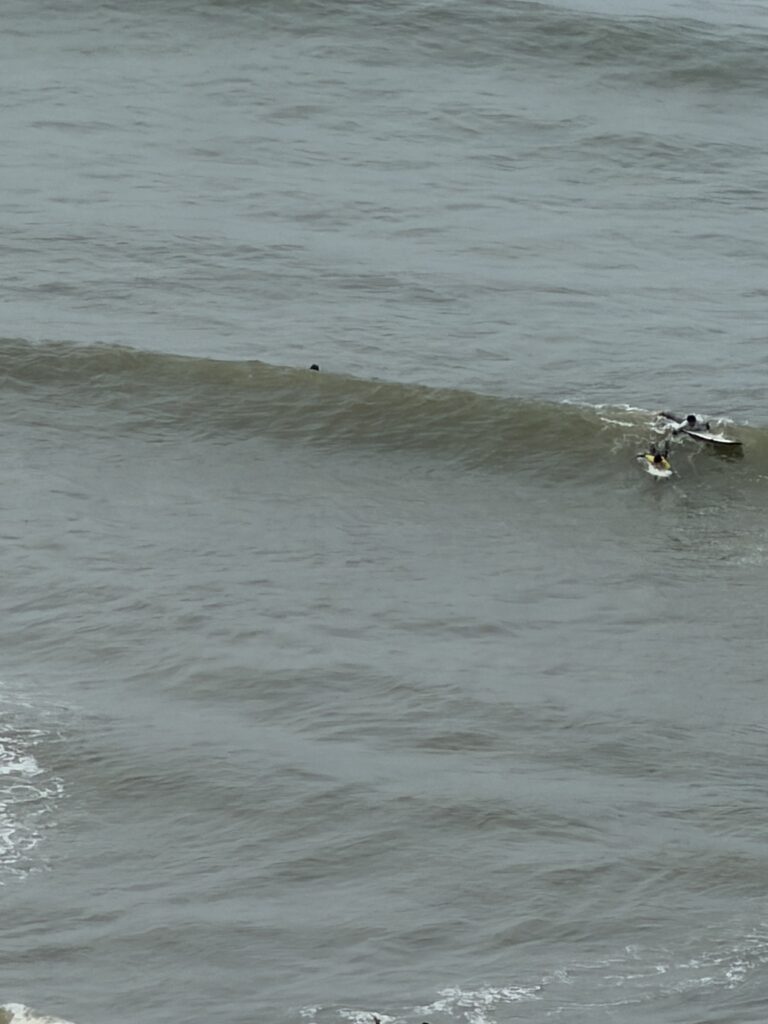
Went for my last cliff top walk in the morning with the wind completely still. The waves brought out the surfers who clearly enjoyed the conditions.
headed for the airport for a midday flight (only 75 minutes) but just prior to arrival WhatsApp message from LATAM “we are sorry to inform you of new departure time of 3:20pm”.
The health decisions of yesterday went out the window as I settled into lunch and 3 pints. The flight was uneventful and taxi to hotel was very quick settling in at 5:30pm. A quick walk gave me a welcome to the lack of oxygen in the air as my heart rate accerated well above normal and shortness of breath another symptom. Back at the hotel it was evident what beautiful surroundings it was set in.
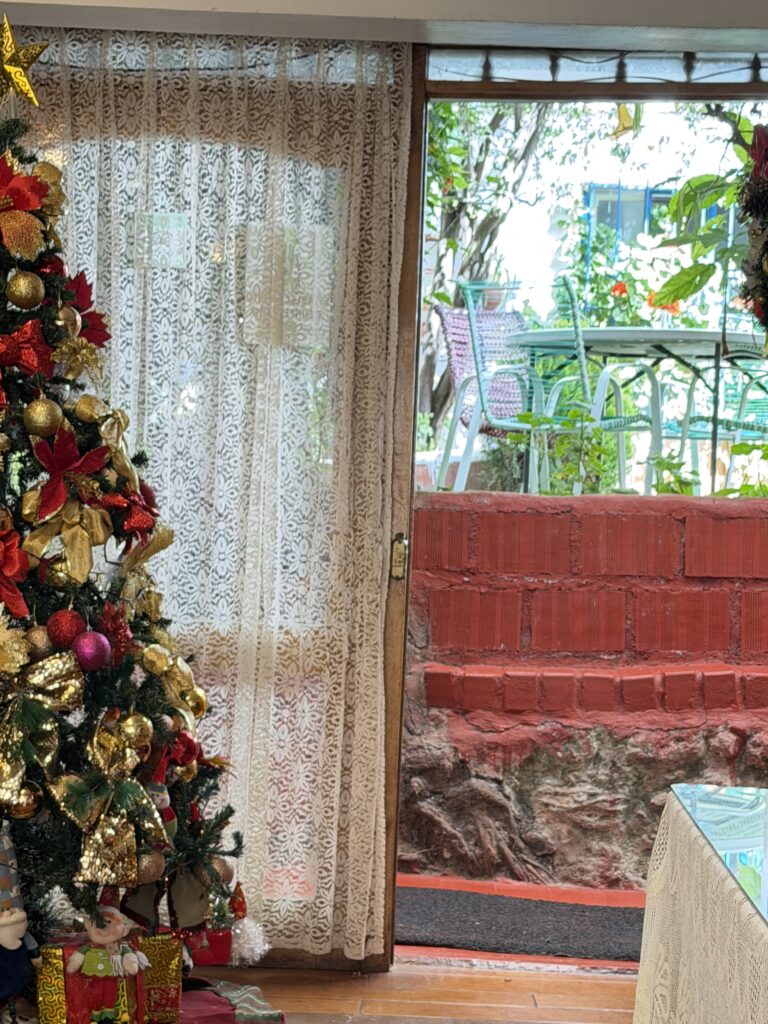
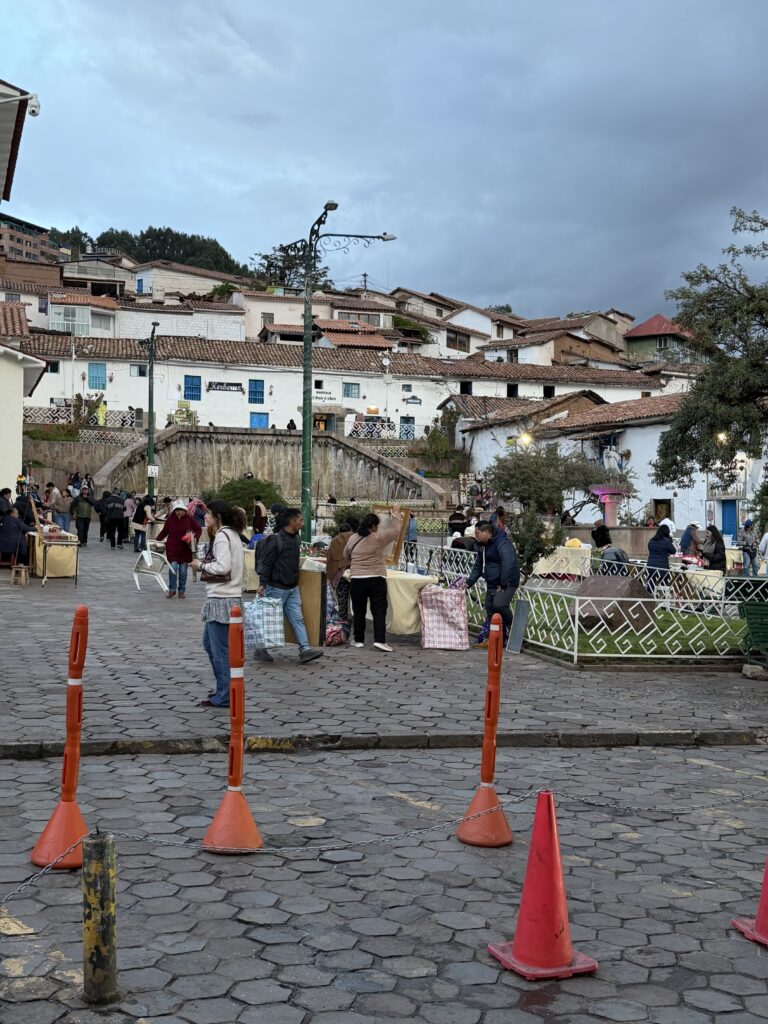
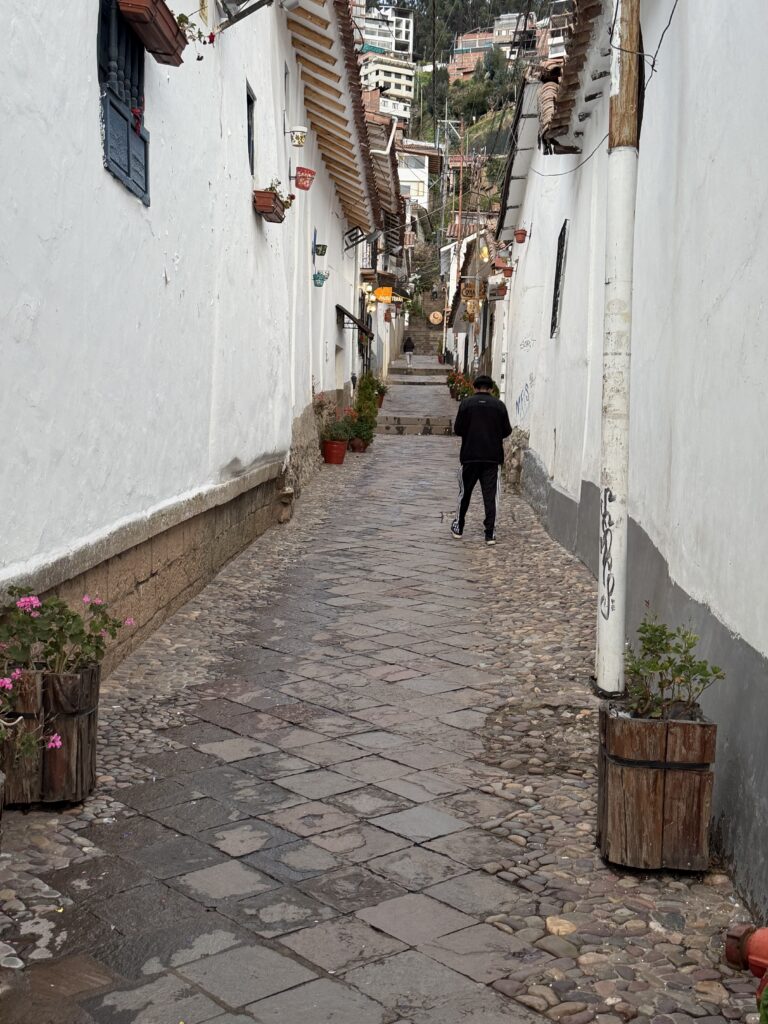
AMIRAS HOUSE was my first destination. Quaint rooms, walk ways through nice gardens set up with tables and chairs in lots of corners for patrons. The town itself reminds me of being on the island of Venice, cobblestone narrow roads with cares restaurant little shops in every second doorway.
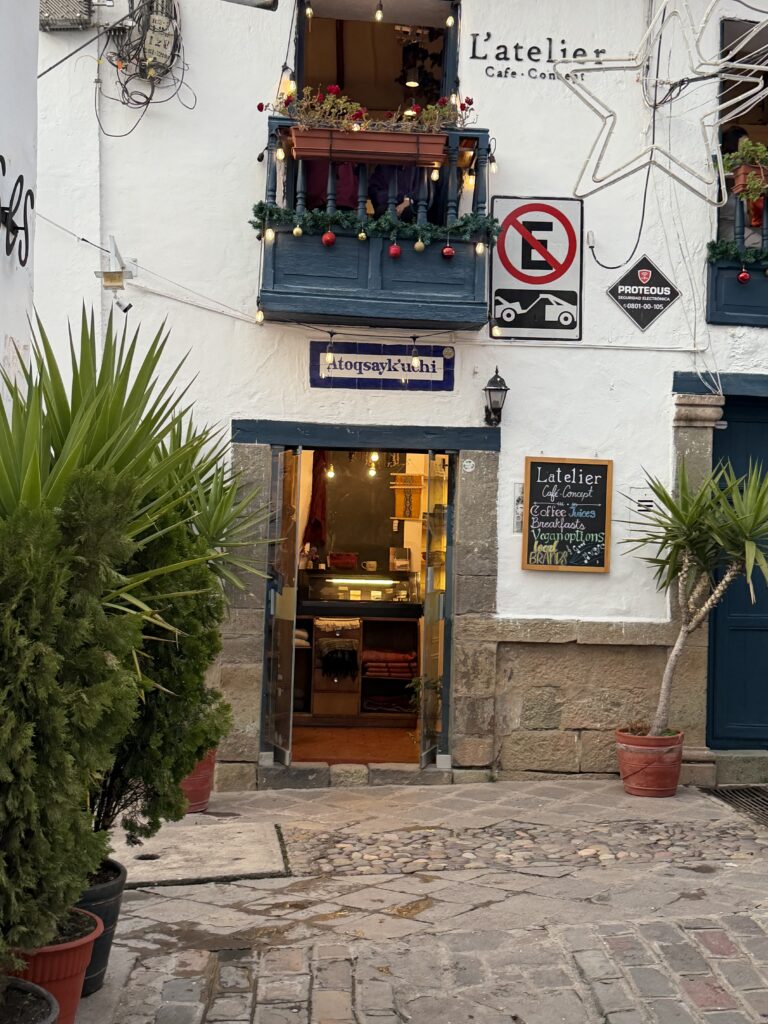
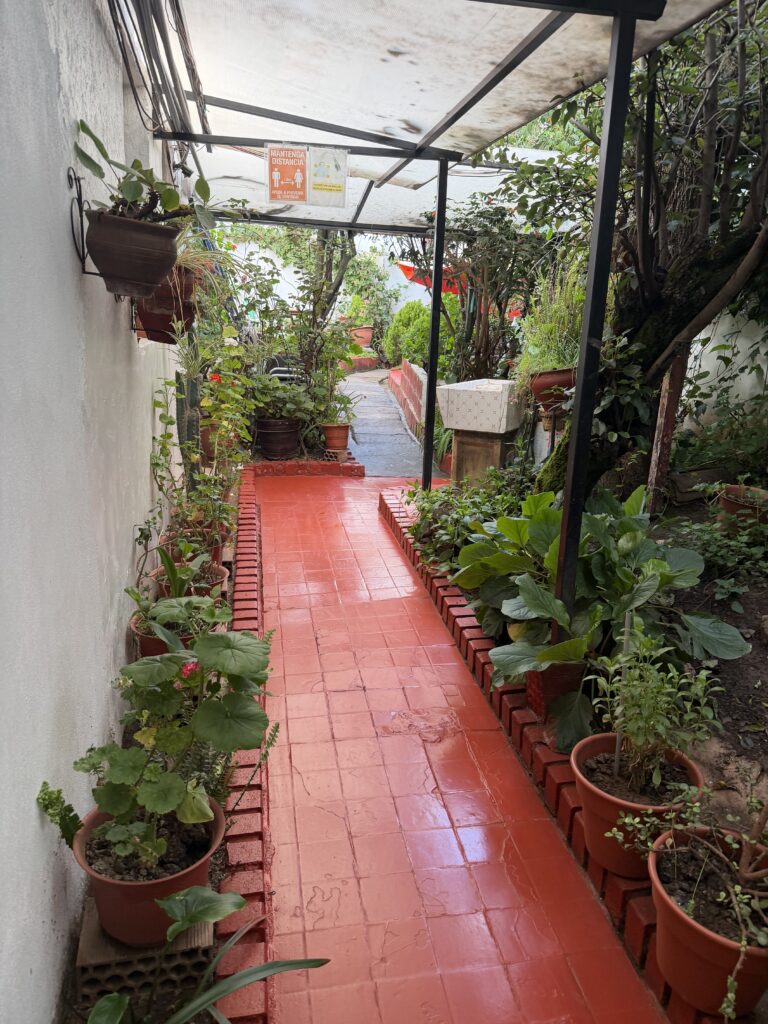
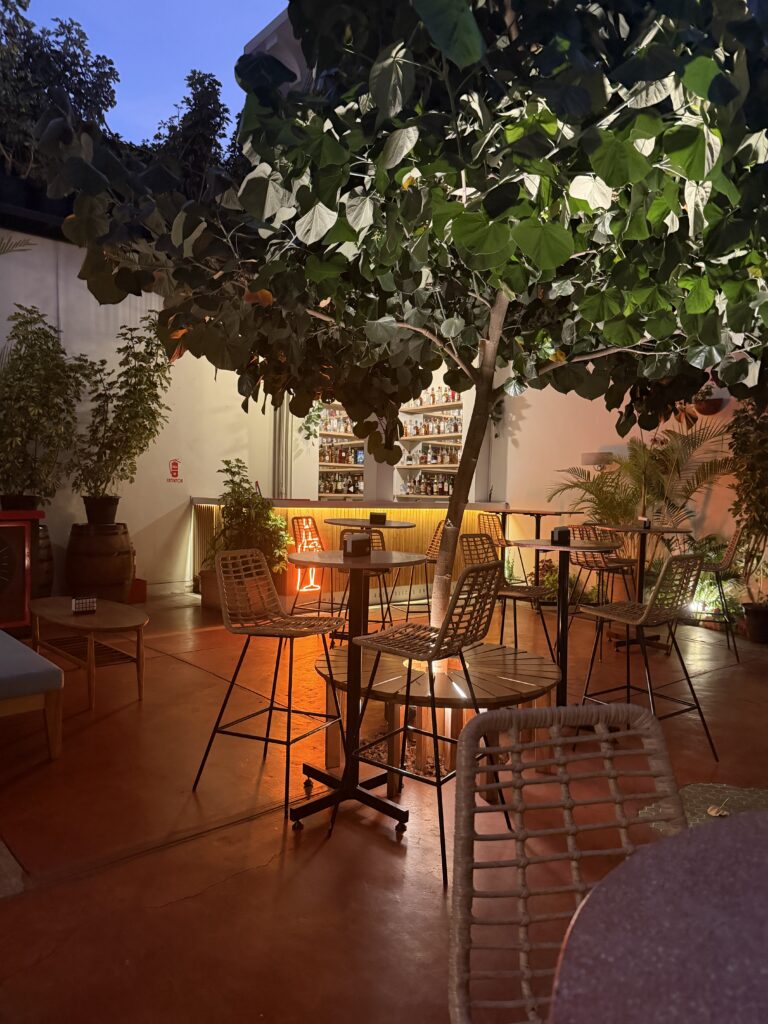
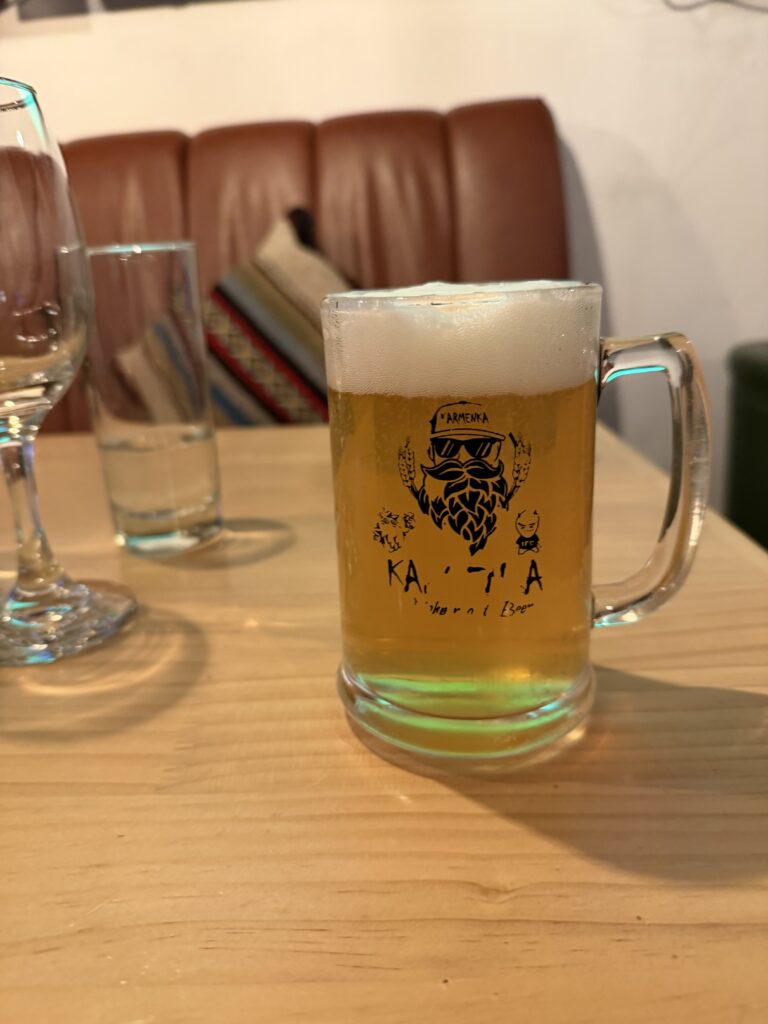
After a quick rest I wandered back down towards the Plaza, entering a restaurant with craft beers. Settled for a small pasta and a glass of red, but with the encouragement of a couple of diners who I chatted with a 7.4% double IPA appeared before me. Lovely couple from LaPaz in Brazil and an American from Chicago all holidaying.
Sunday January 4
Wake up to freezing cold weather, no wind chill but thankful of the warm bed. A quick walk to the plaza and back shows that I have improve a little in adapting to the altitude symptoms but still a way to go.after a break I headed down towards Plaza De Armas the central feature of Cusco surrounded by beautiful old buildings, pubs and restaurants all surrounded by the Hills that this town nestles in.
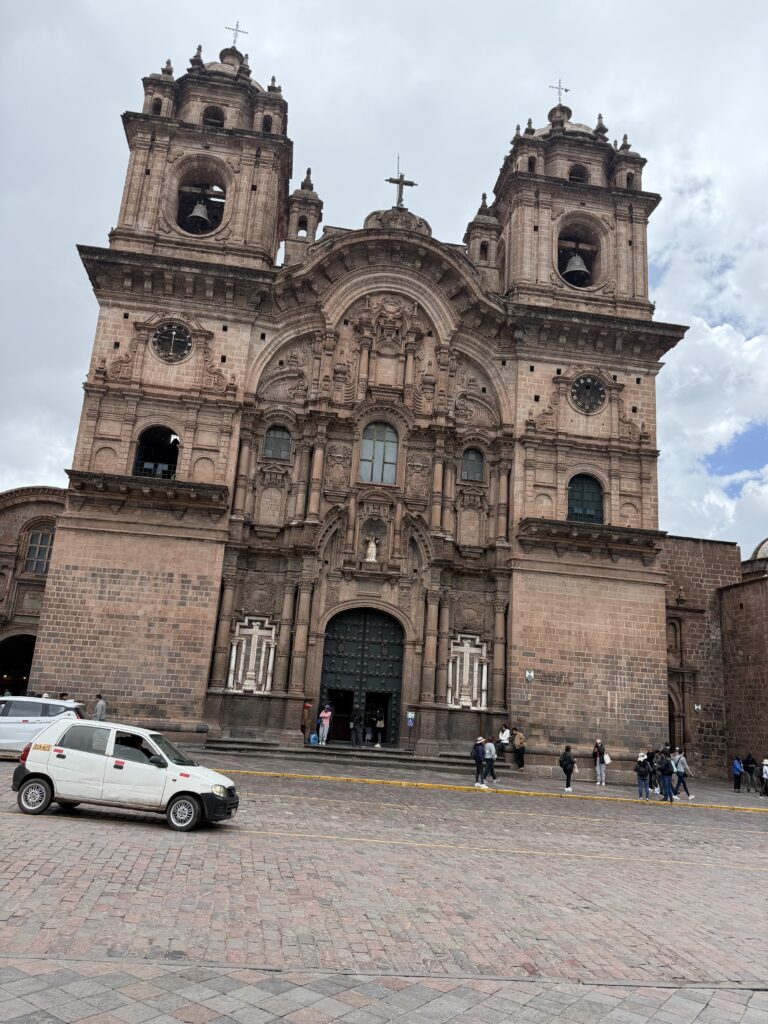
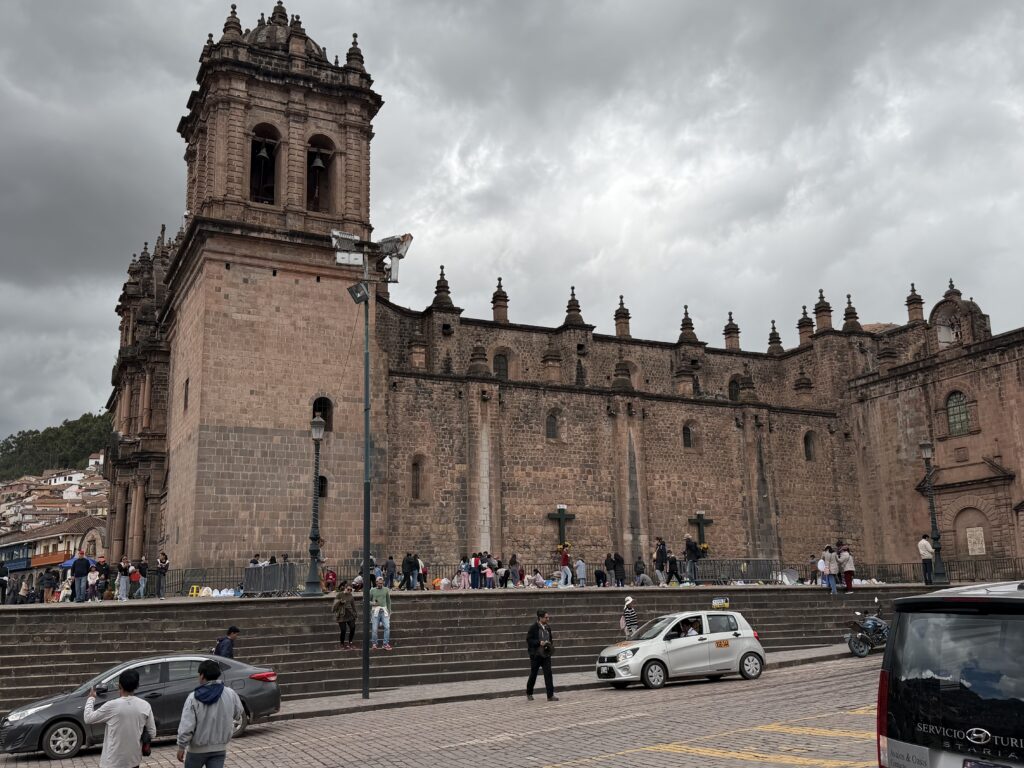
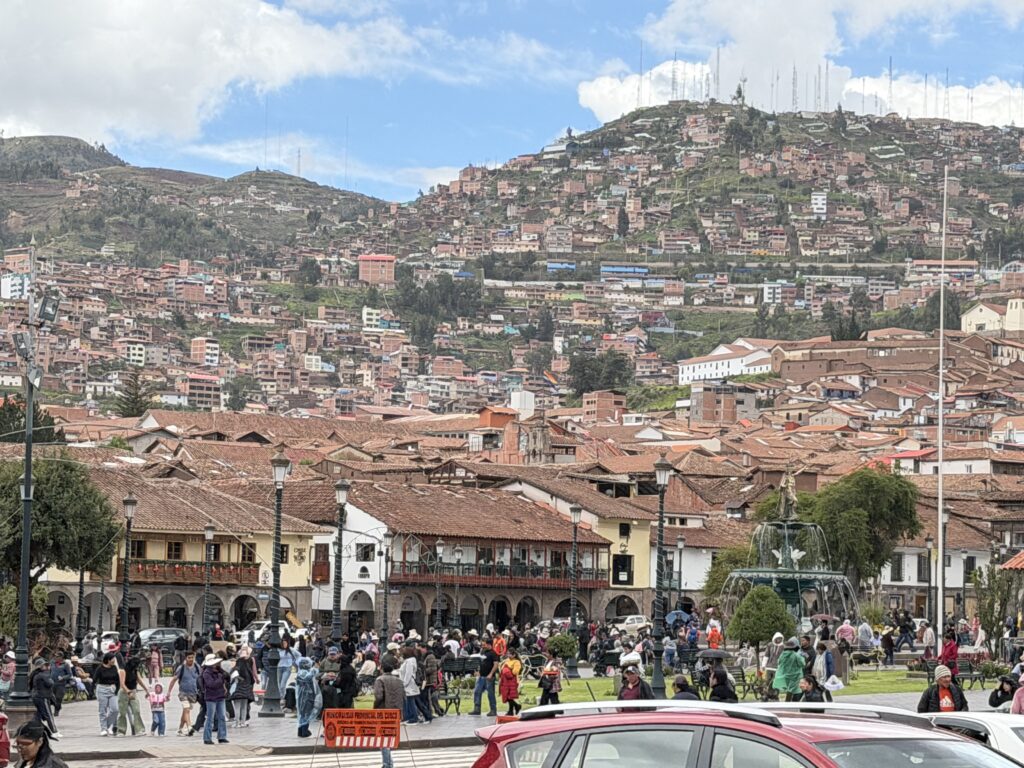
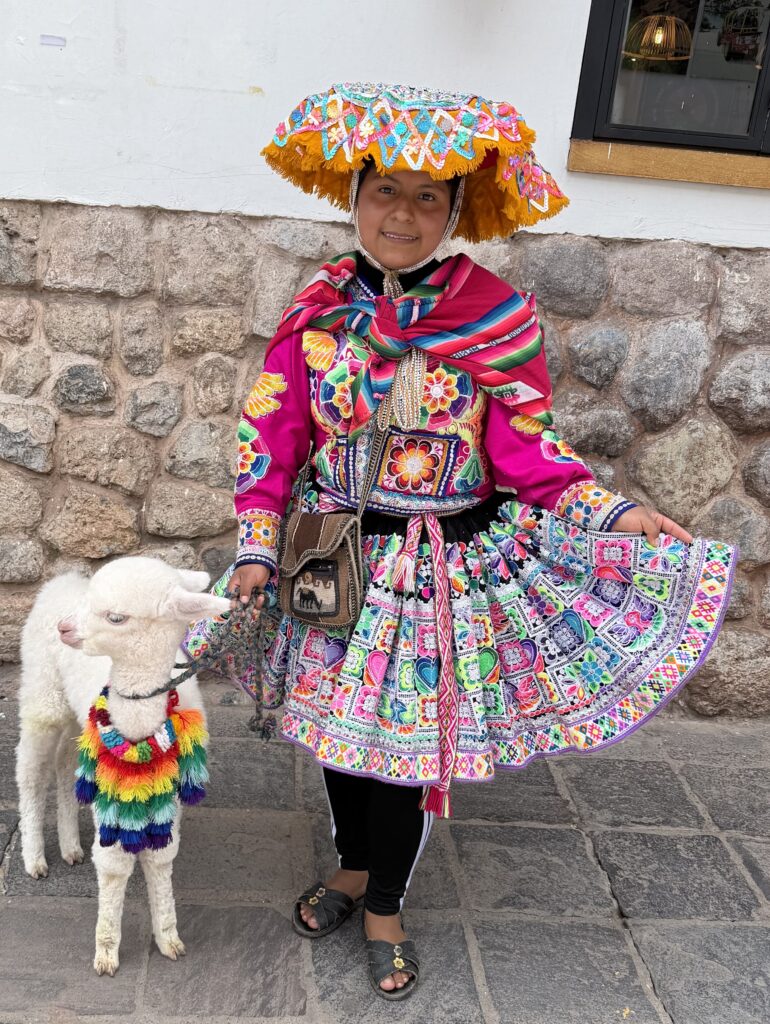
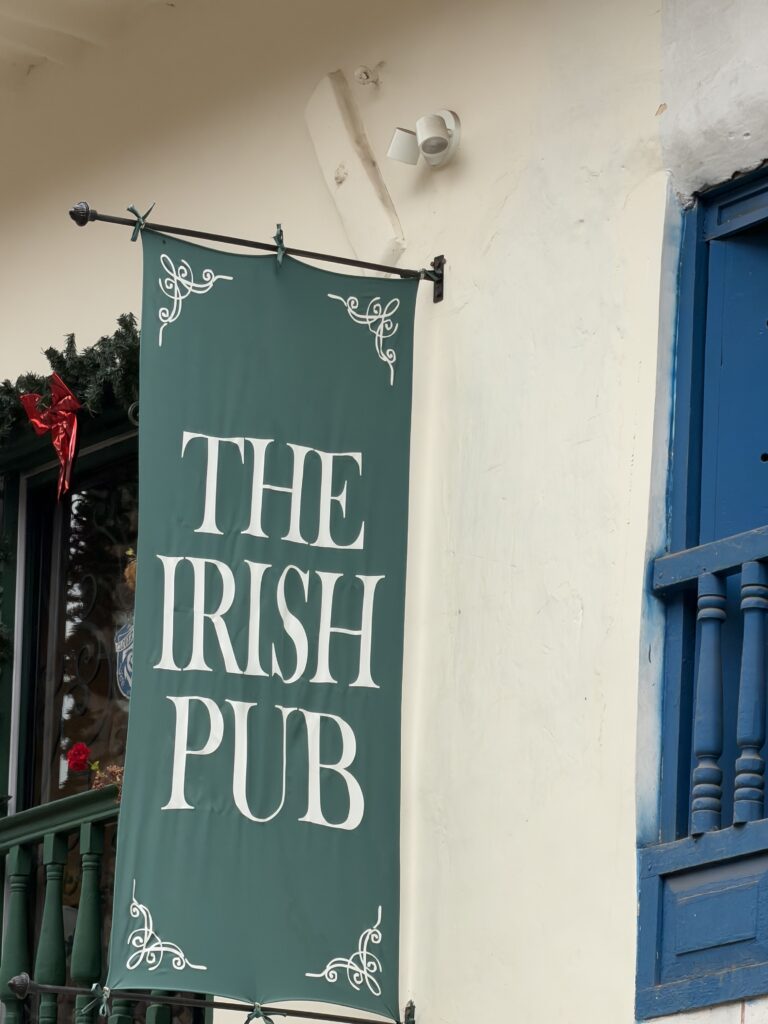
Massage services are everywhere and comparatively cheap, while women dressed in traditional costume usually carrying baby alpacas are there for photo opportunities.I dropped into an Irish pub for a hamburger and a couple of beers.
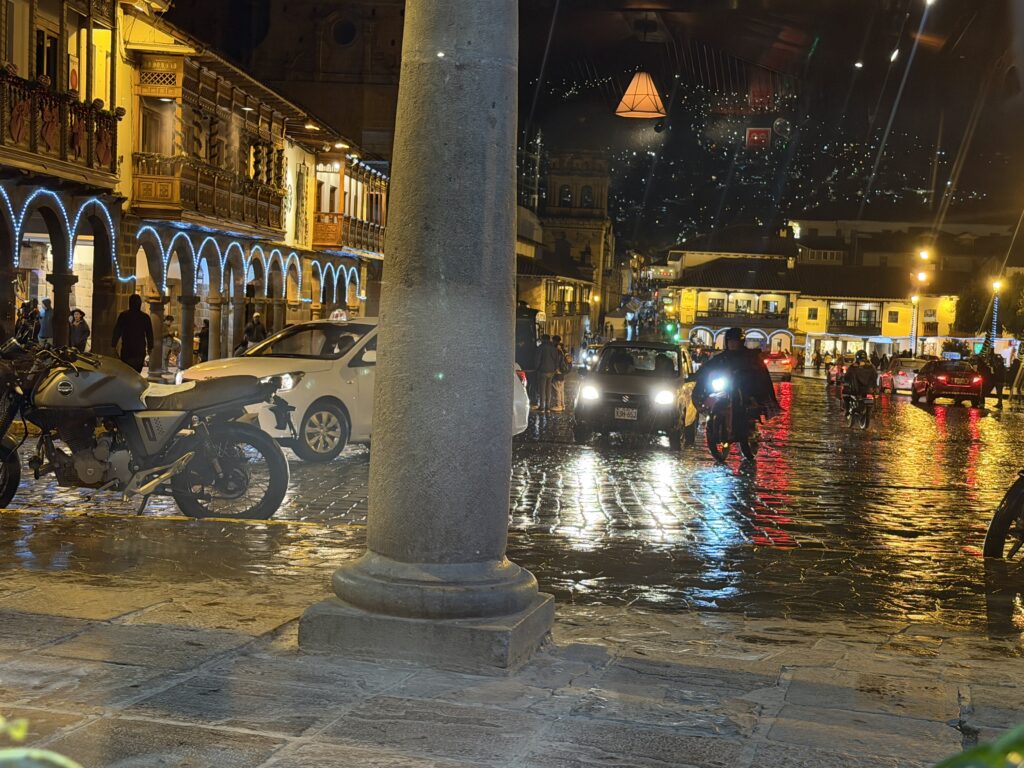
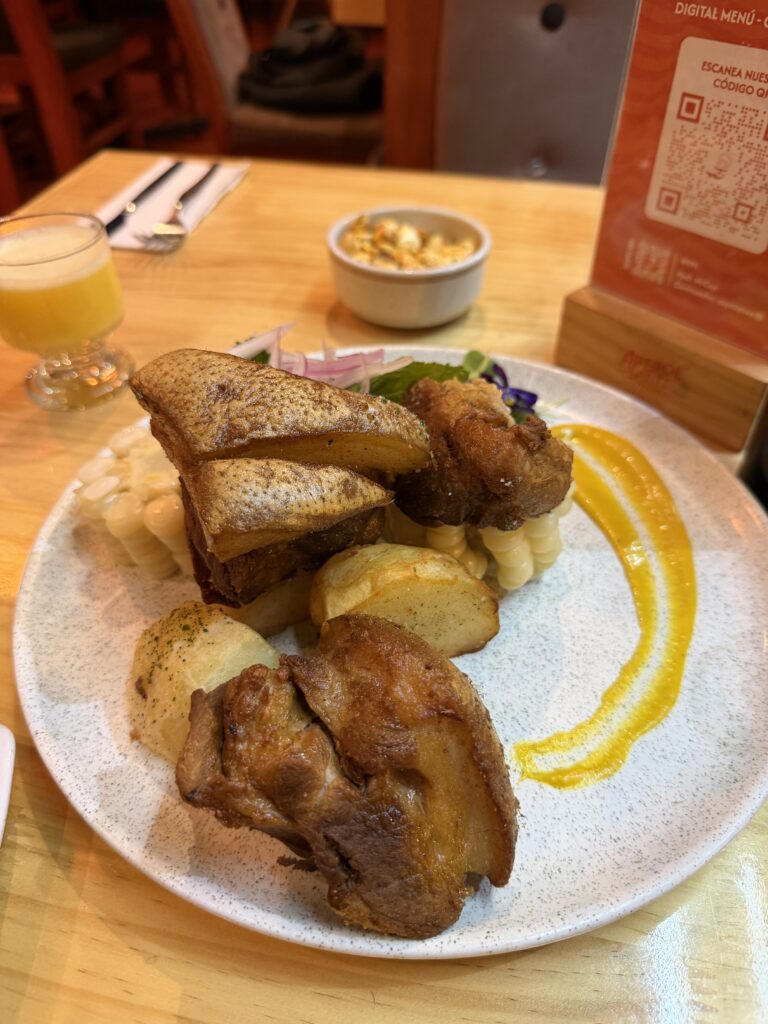
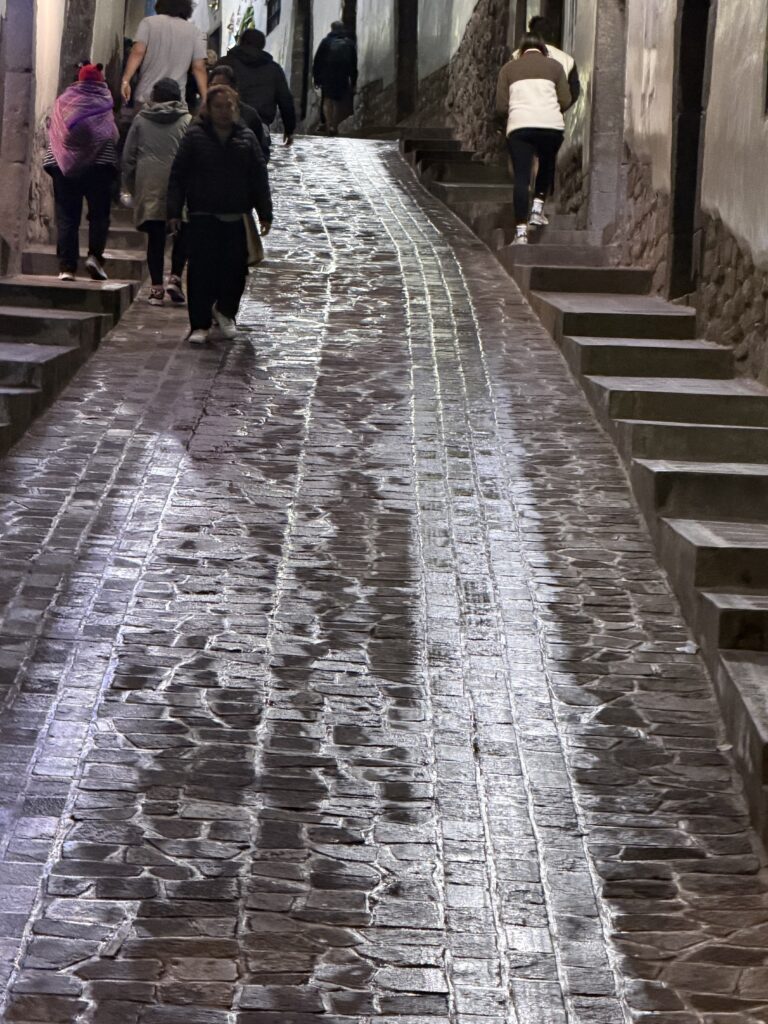
In the evening I went back down towards the plaza for a meal, this time choosing a pork belly dish done in the traditional way but I have to say the bottle wine I bought was better value. While at the restaurant I took a quick snap of the plaza in night light. I added the photo on the right to show how everything road, footpath is up and down. Always walking up hill on the way home adds to the breathlessness challenge.
Monday January 5 I move hotels some 500 metres way. Carrying 10kgs of luggage tested my stamina, especially the hills and stairs.
HOSTAL CORIHUASI is a lovely boutique hotel, a little up market compared to my previous stay and I was able to check in at 10:00am. It is more central to the Plaza, but direct down then up on returns. As I am still feeling the effects of an altitude of 3600 metres above sea level I took it easy, wandering around the central plaza and nearby markets. At this altitude each breath you take has 40% less oxygen than we are used to at sea level.
Tuesday January 6
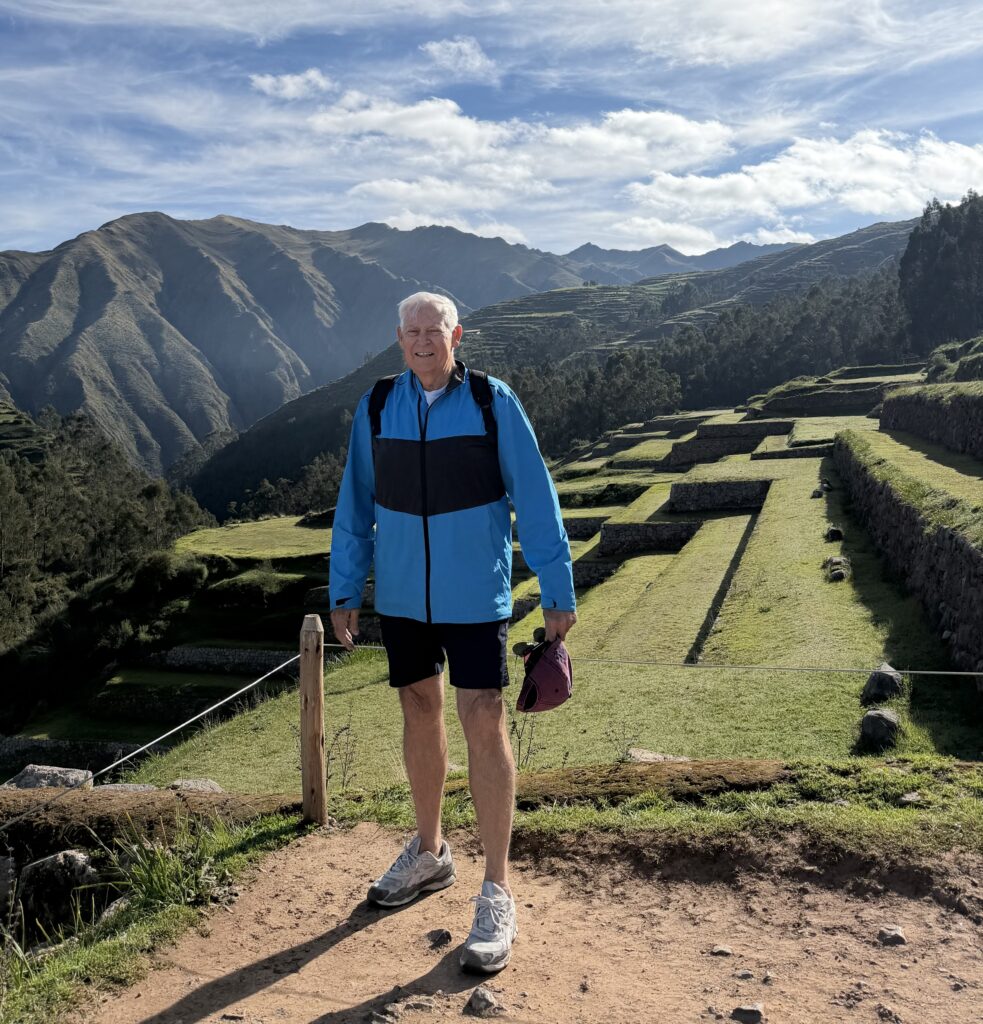
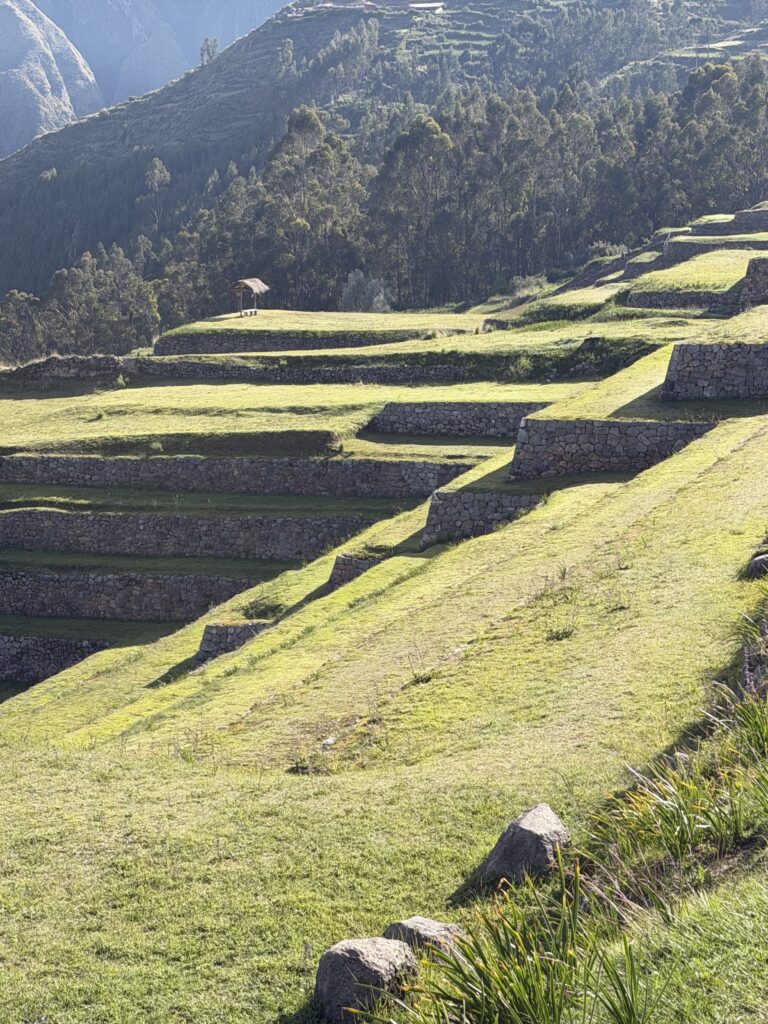
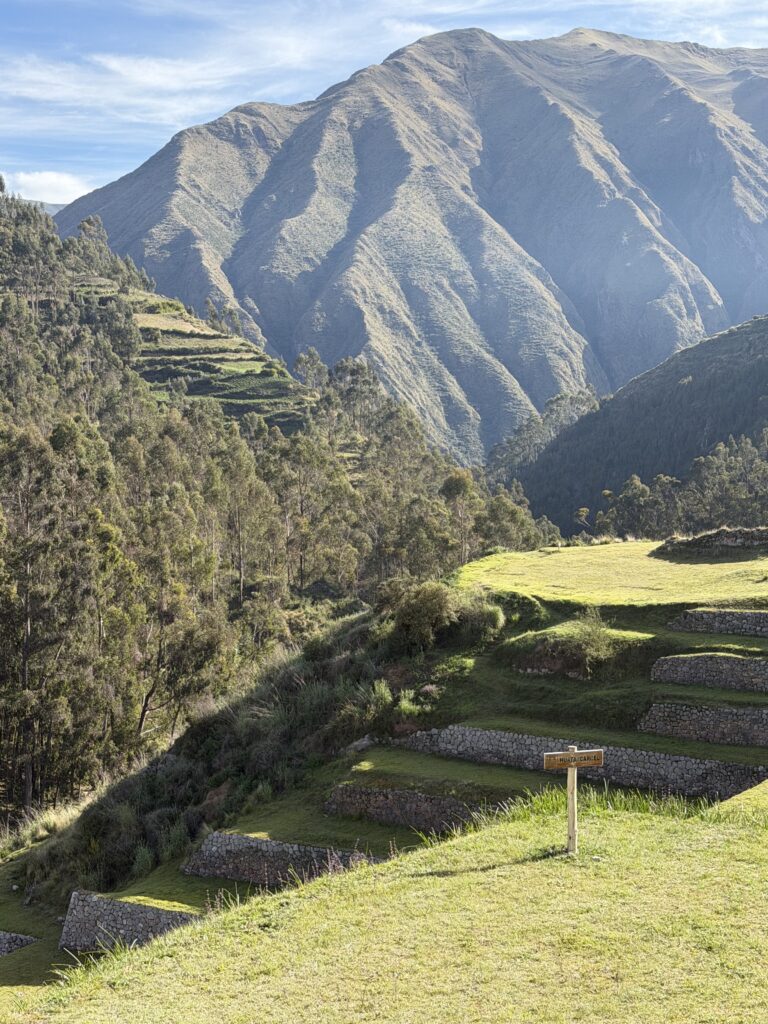
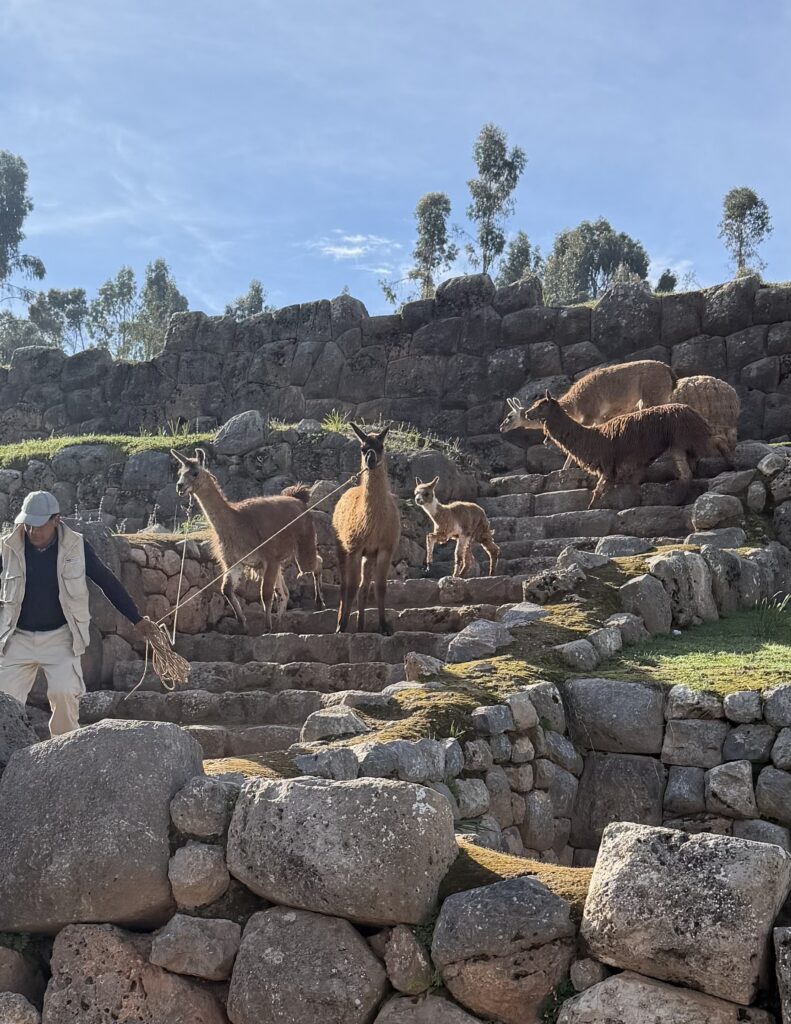
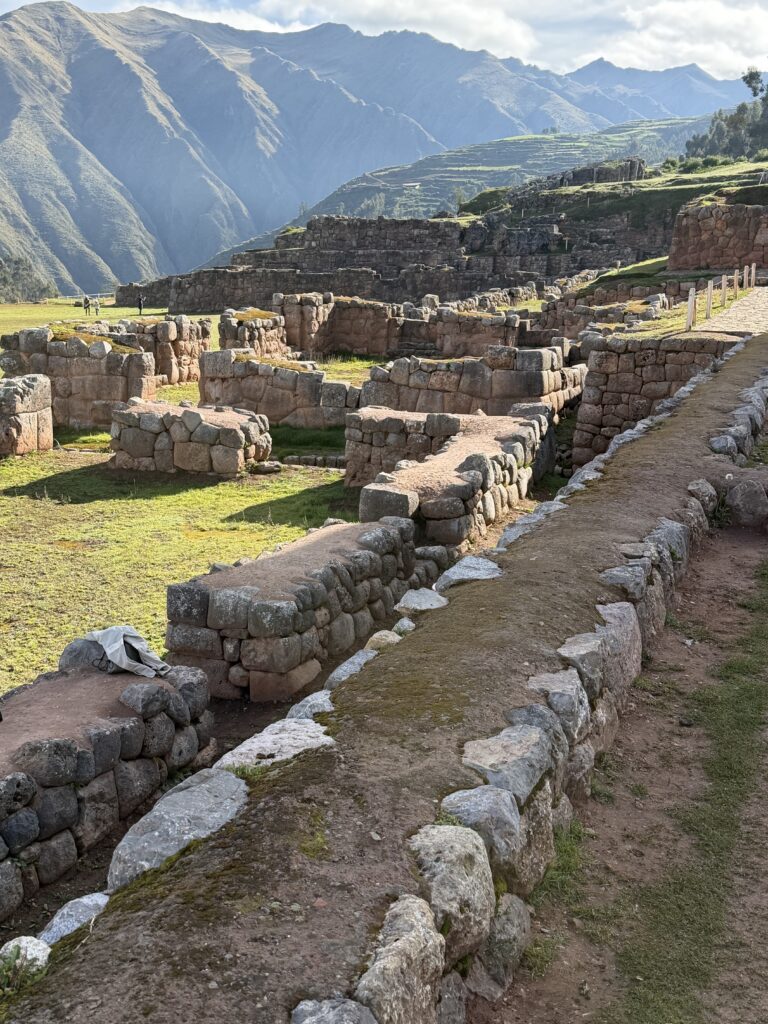
An early start as I walked down to the the main plaza to meet our tour guide for the Sacred Valley tour scheduled to last for 12 hours. There were 11 of us on the tour, seven of whom were Aussies. This turned into a big day with over 32 000 steps registered and 900 plus stairs climbed.Our first stop was at an old temple in Chinchero, however it was the restoration of the old Inca buildings taking place around the temple which were mainly of interest. This is a slow process meanwhile the terraced landscape around this is still used for agriculture. A small group of alpacas descended to the fields as we surveyed the landscape.
After a brief history lesson we boarded our bus and headed towards a weaving shop some 500 metres away. We got to dress in traditional costume (whether we liked it or not) and were given an overview of the ancient process of weaving, the produce used to create colour and the quality of garments based on alpaca age.
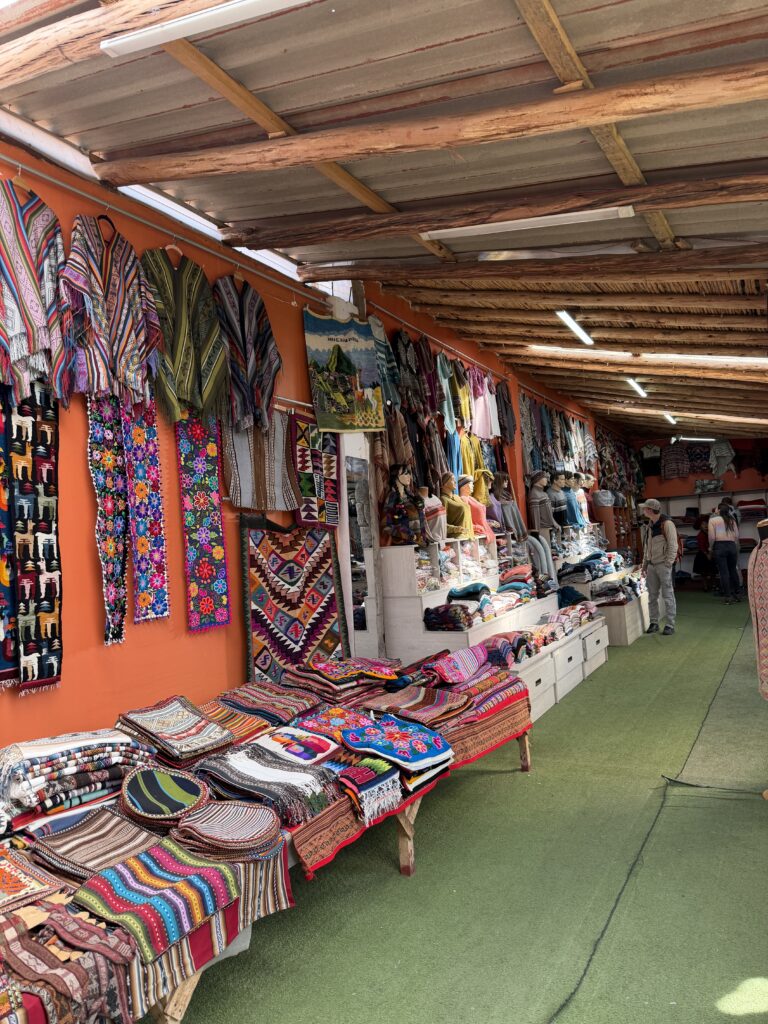
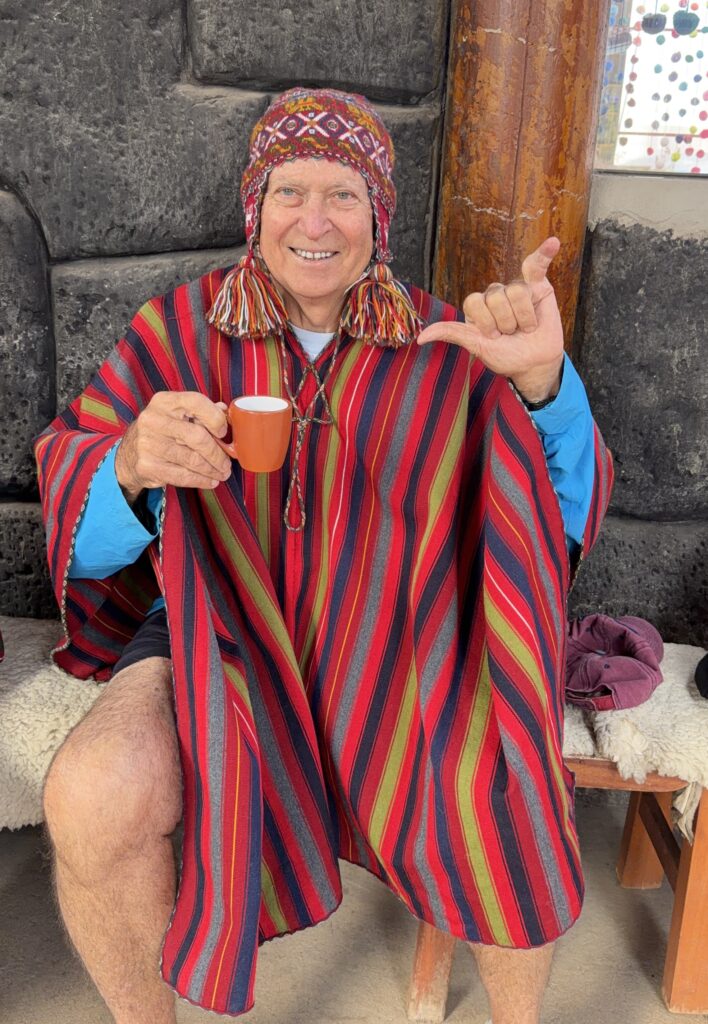
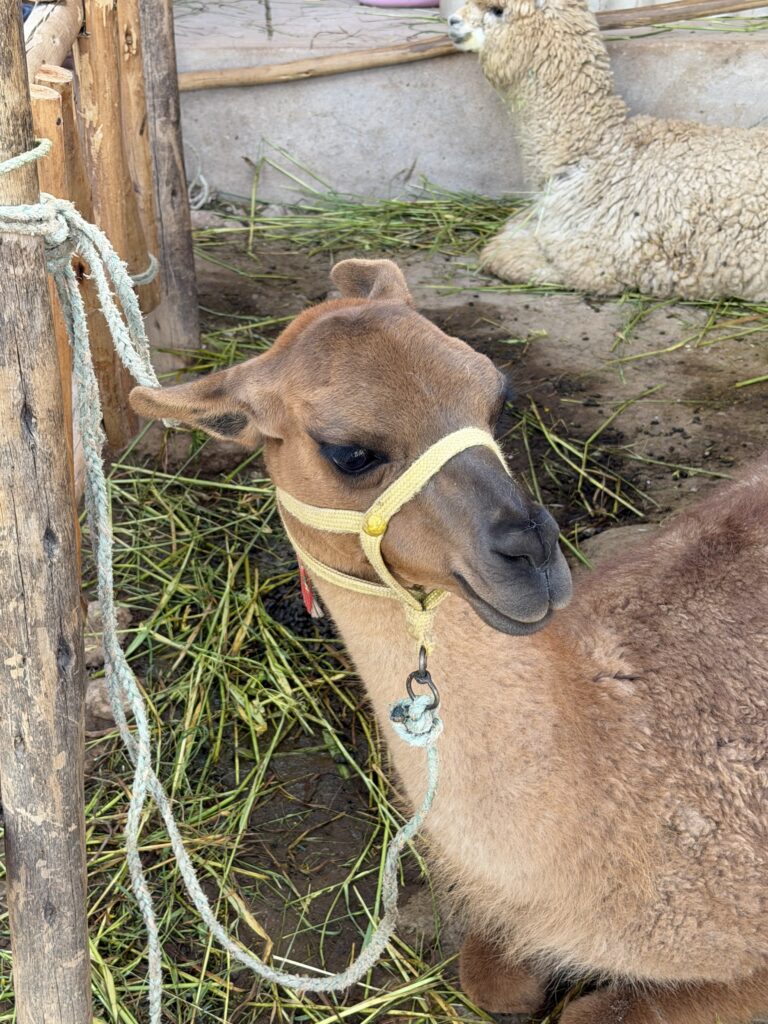
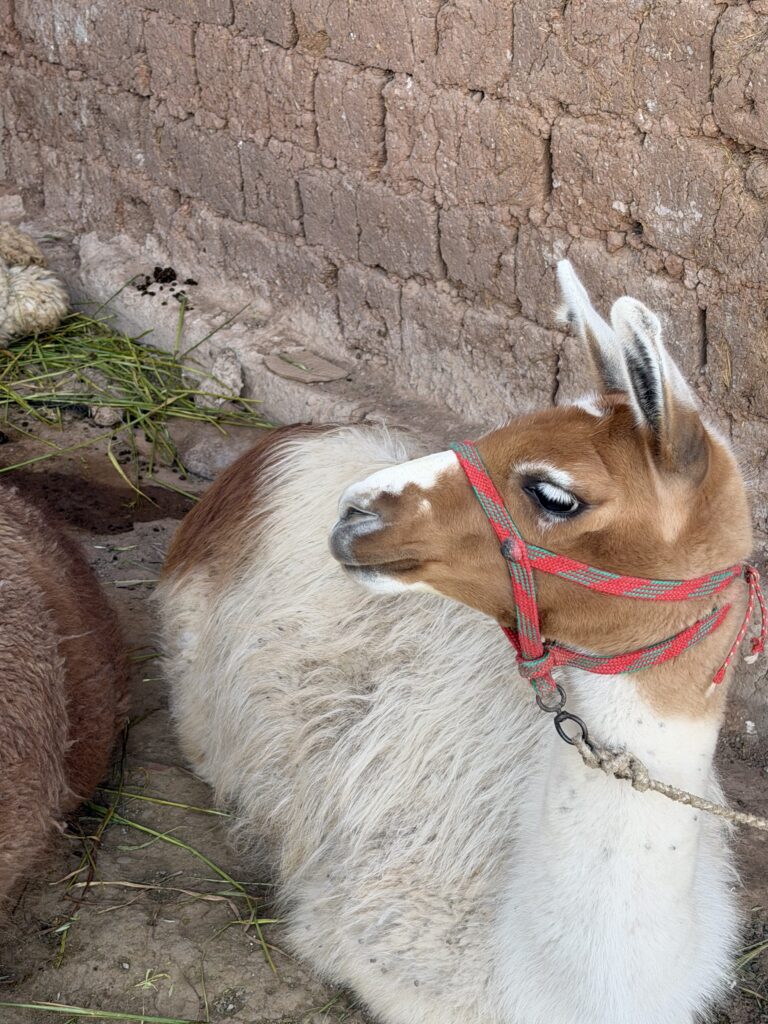
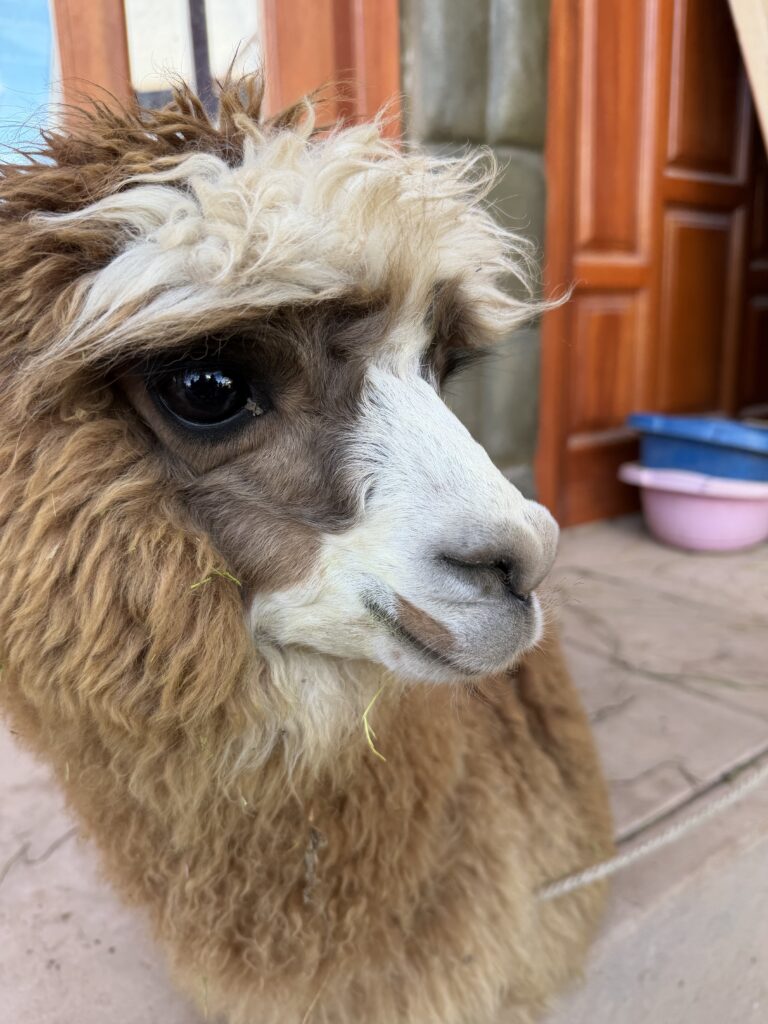
Alpacas everywhere
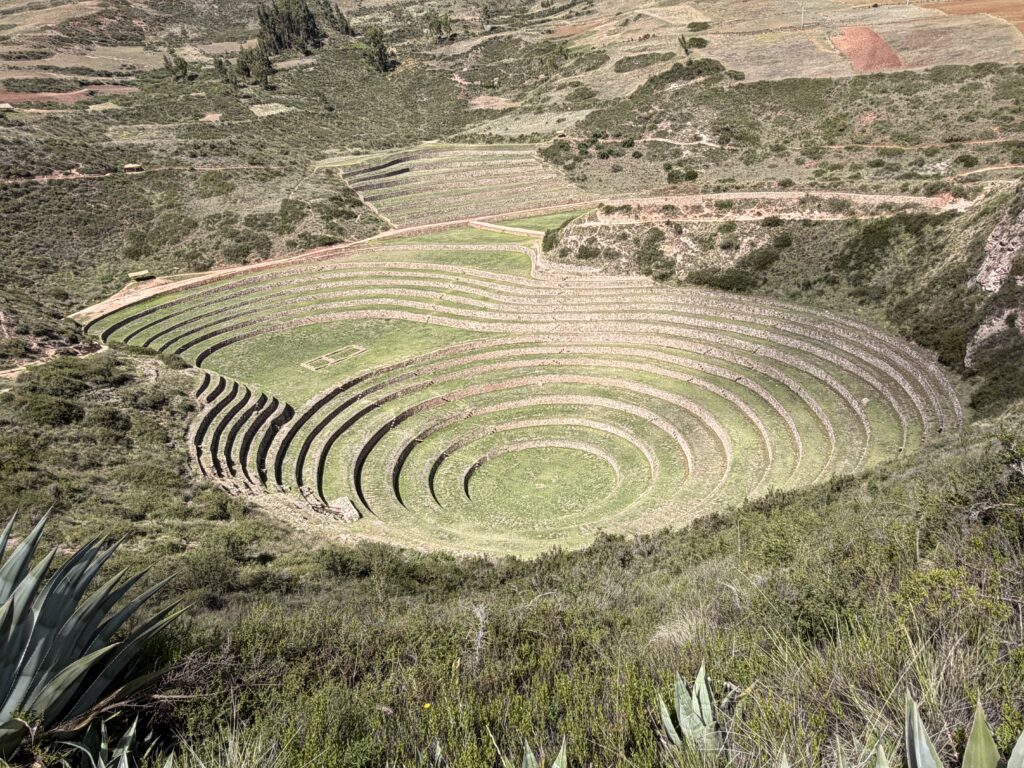
Back on the bus as we head for Moray some 40 minutes drive for two incredible sights. The first was the ancient Muyu archaeological site developed by the Incas as a residential haven and meeting place. The drop is over 300 metres form where I stand.
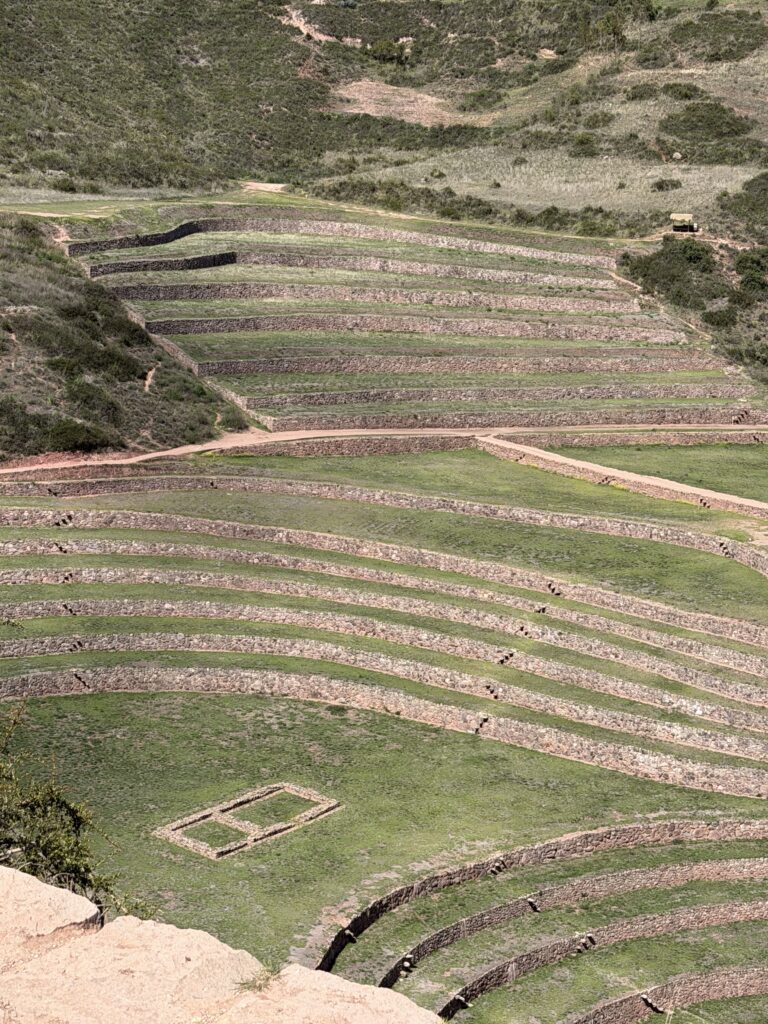
From here it’s a 20 minutes drive drive descending 600 metres into the valley where unique salt mining has taken place for centuries. For some unusual reason a heavily salted underground stream emerges at a temperature of 32 degrees Celsius. The Incas then created a series of mini dams to capture this water and release salt content waters in an escalating level of salt until they could mine it. A wall to the entrance was covered in a beautiful mural.
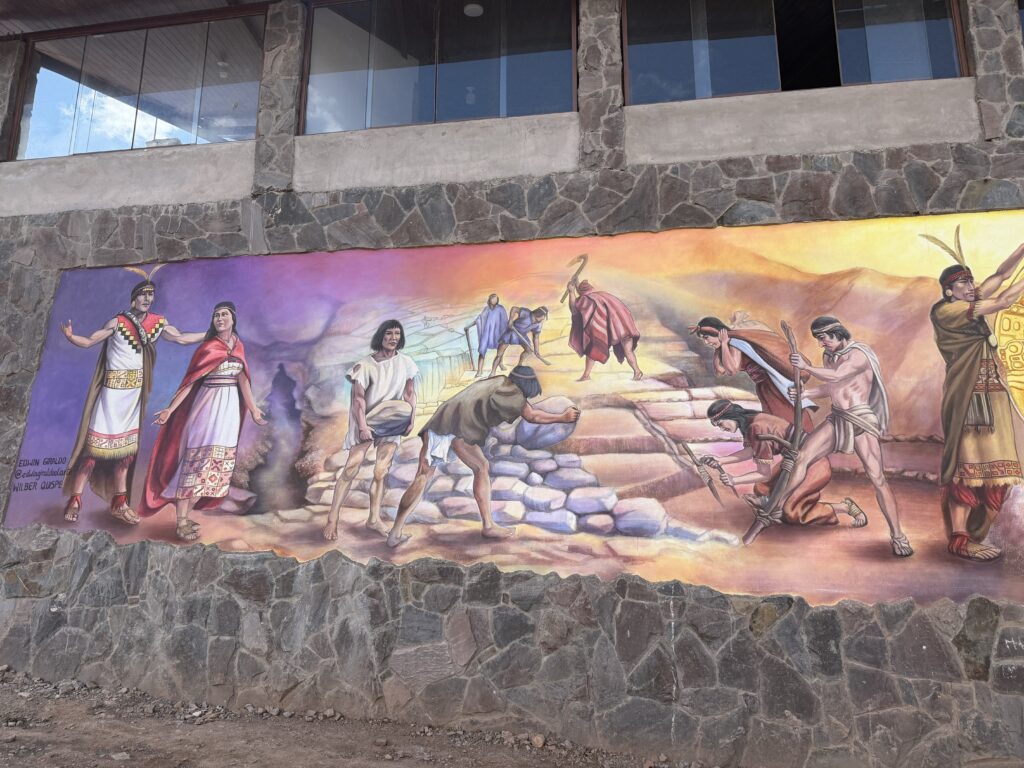
this depicts the type of stone used in the mini dams in the following images.
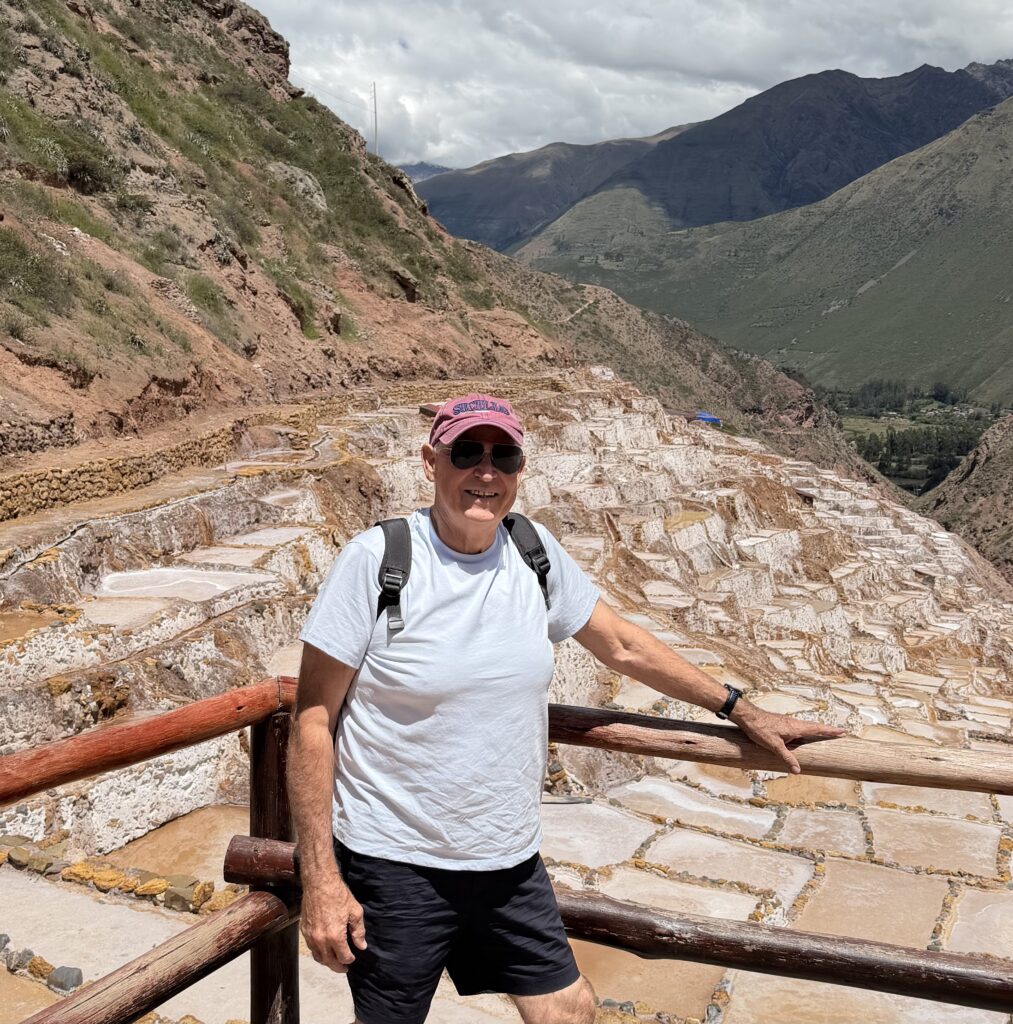
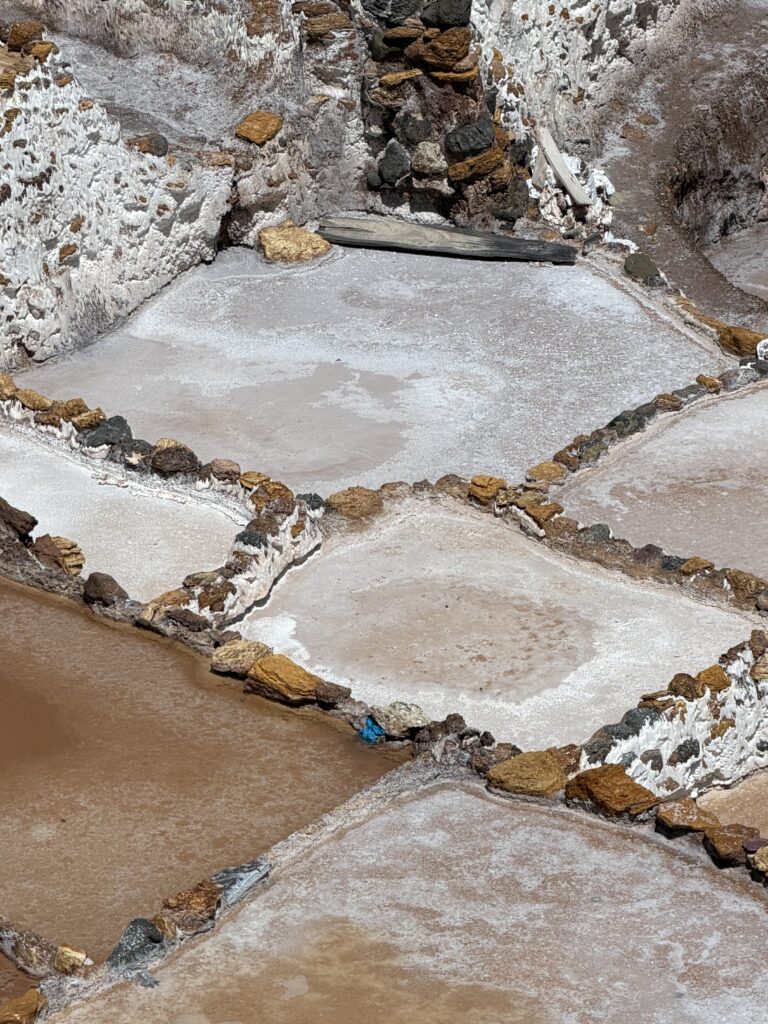
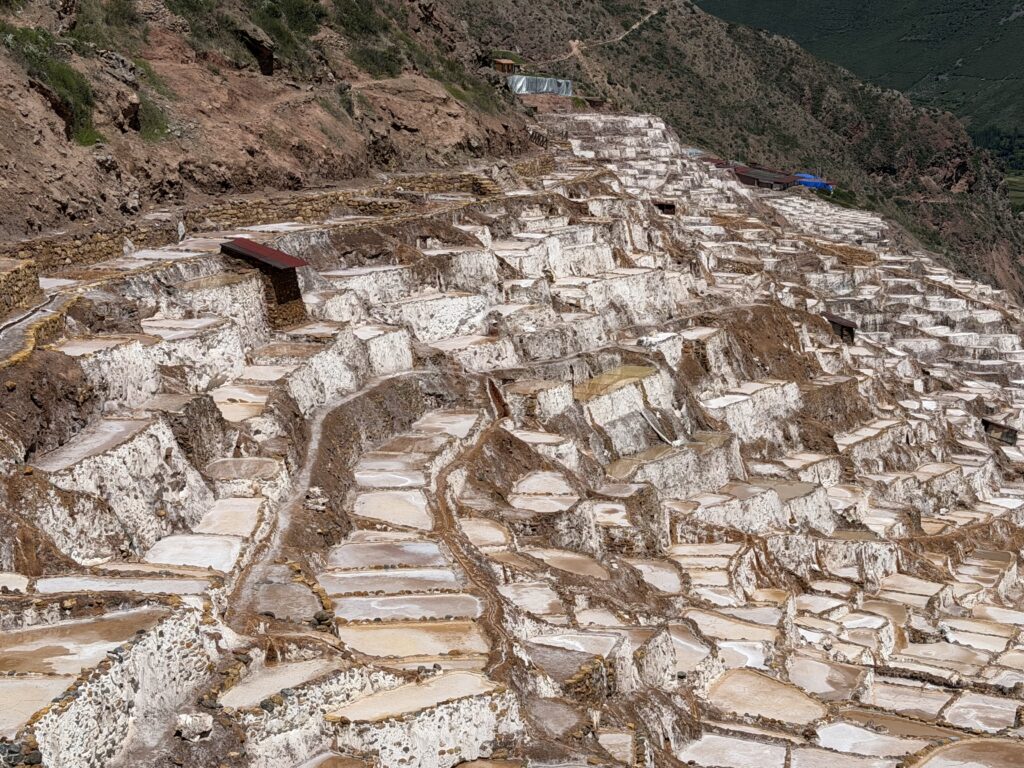
Back on the bus and climbing out of the valley into town where an exceptional buffet awaits. Over 40 dishes, hot cold meats, Inca dishes, salads and even desserts. This entire day tour cost me $43.00 AUD.
Atfter lunch we head to Ollantaytambo set on the Urubamba River. This archaeological site displays the ruins of a massive Inca Fortress set among large stone terraces on the hill side. It includes a huge sun temple and bath house.
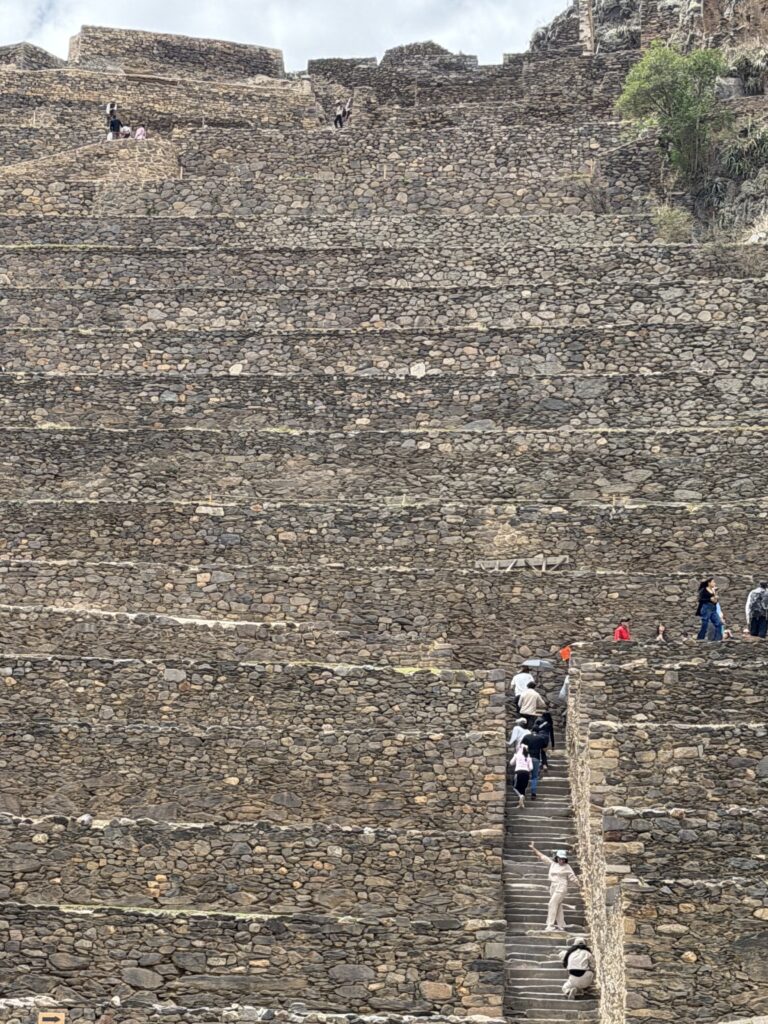
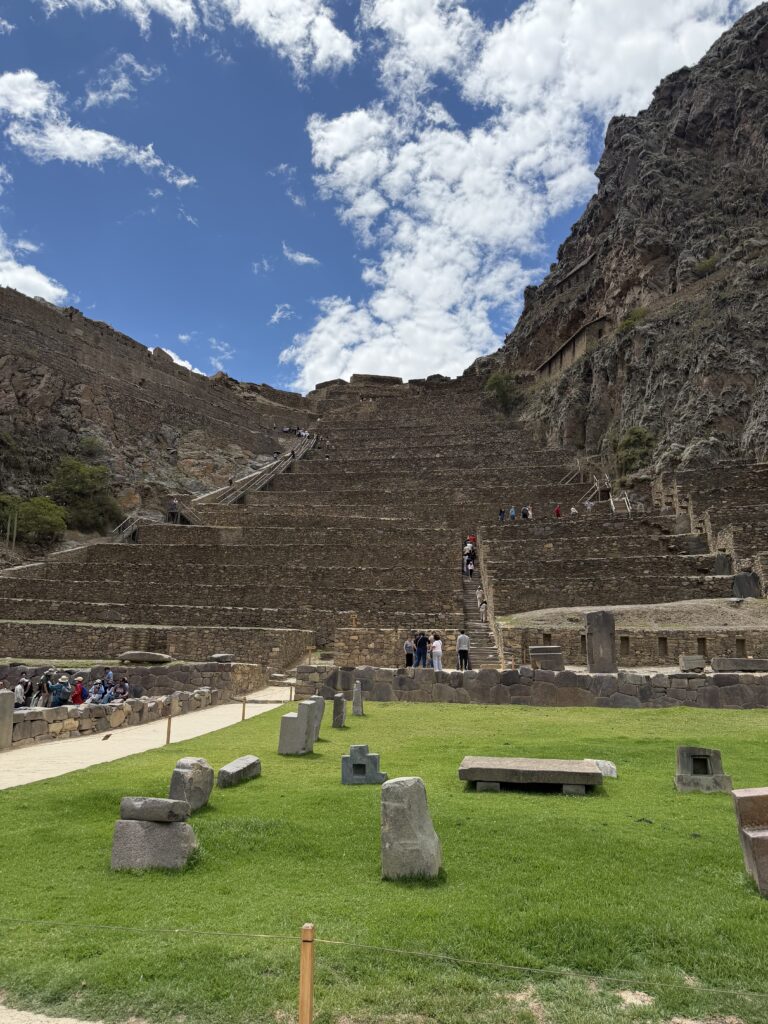
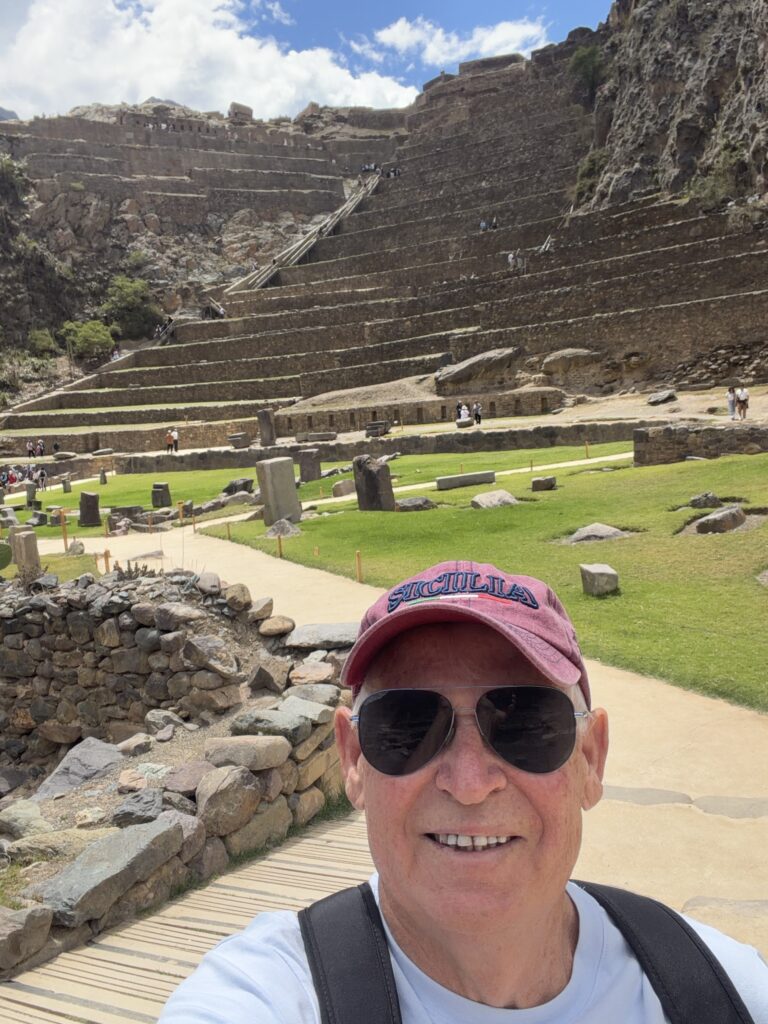
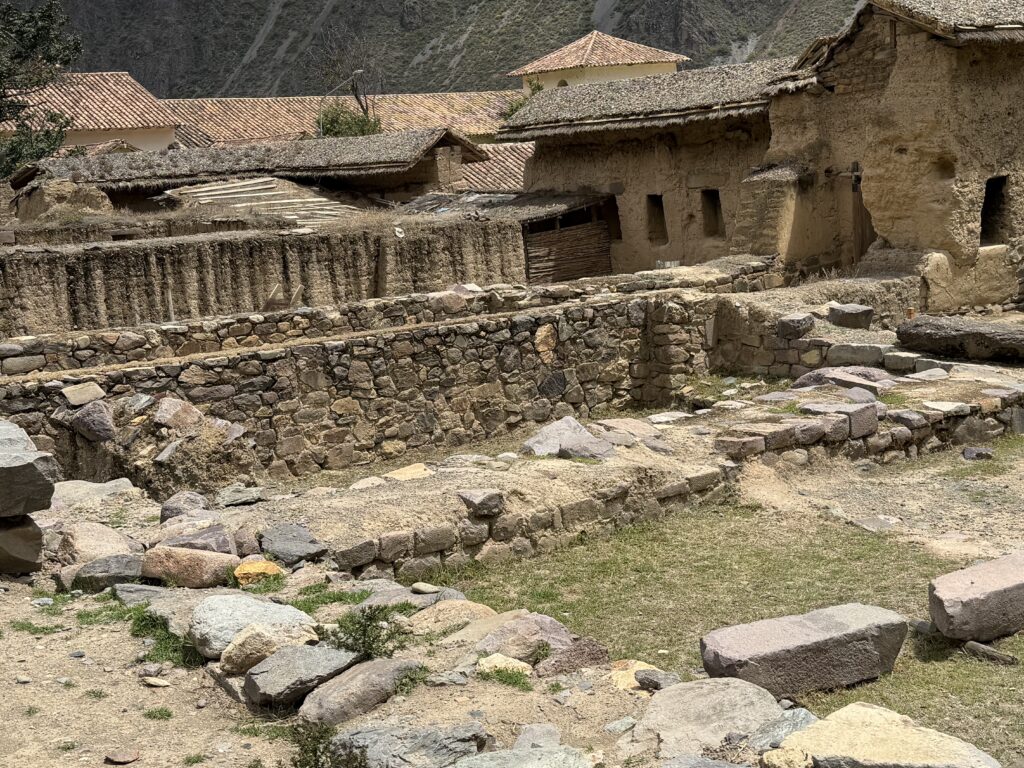
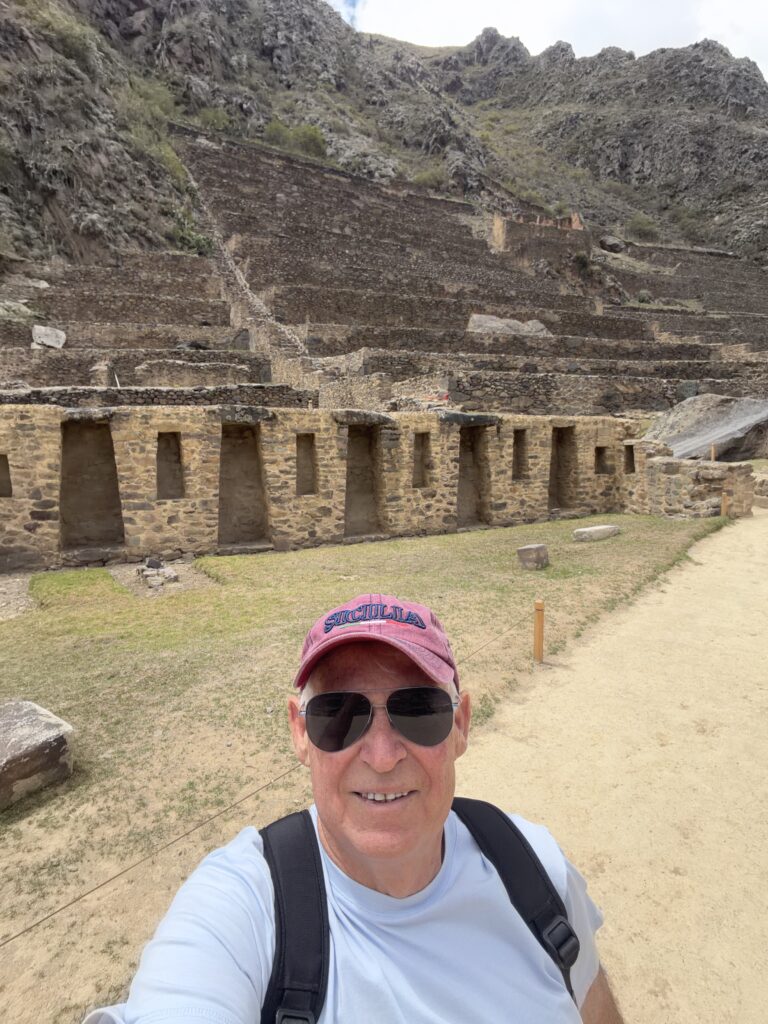
Ollantaytambo is a touristy town which we have to walk back though. In the town square locals are dancing to music, restaurants and bars appear full and street food is everywhere which is a segue to some interesting dishes. Guinea pig is a delicacy, and restaurants serve alpaca grilled much like we eat a steak.
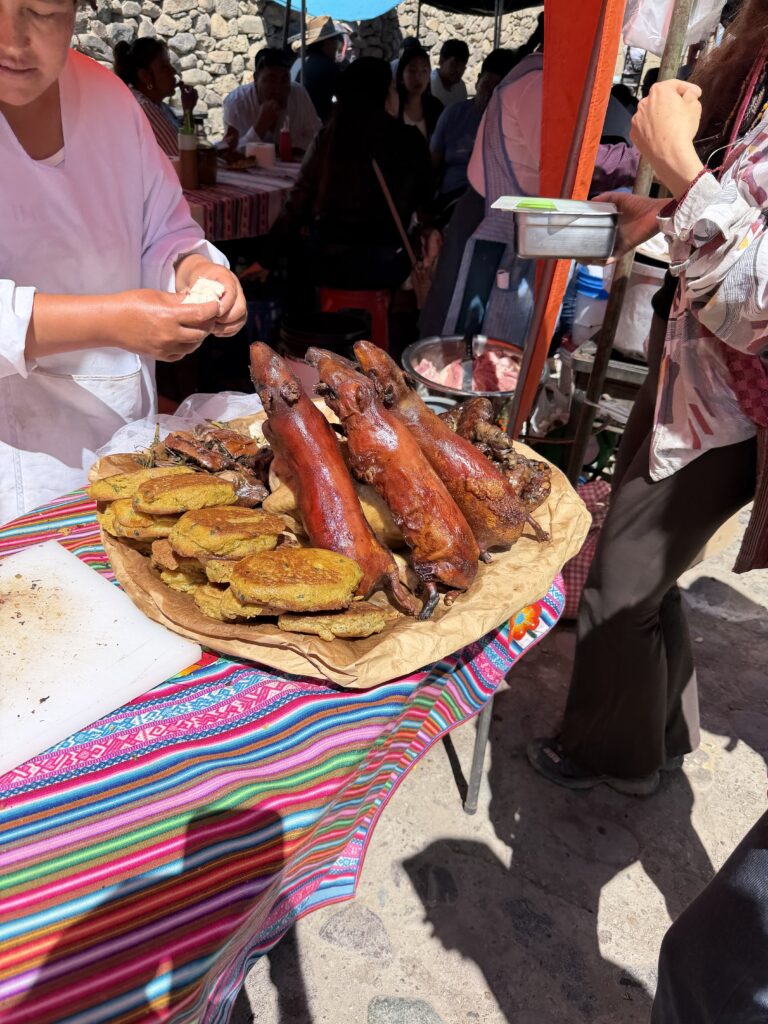
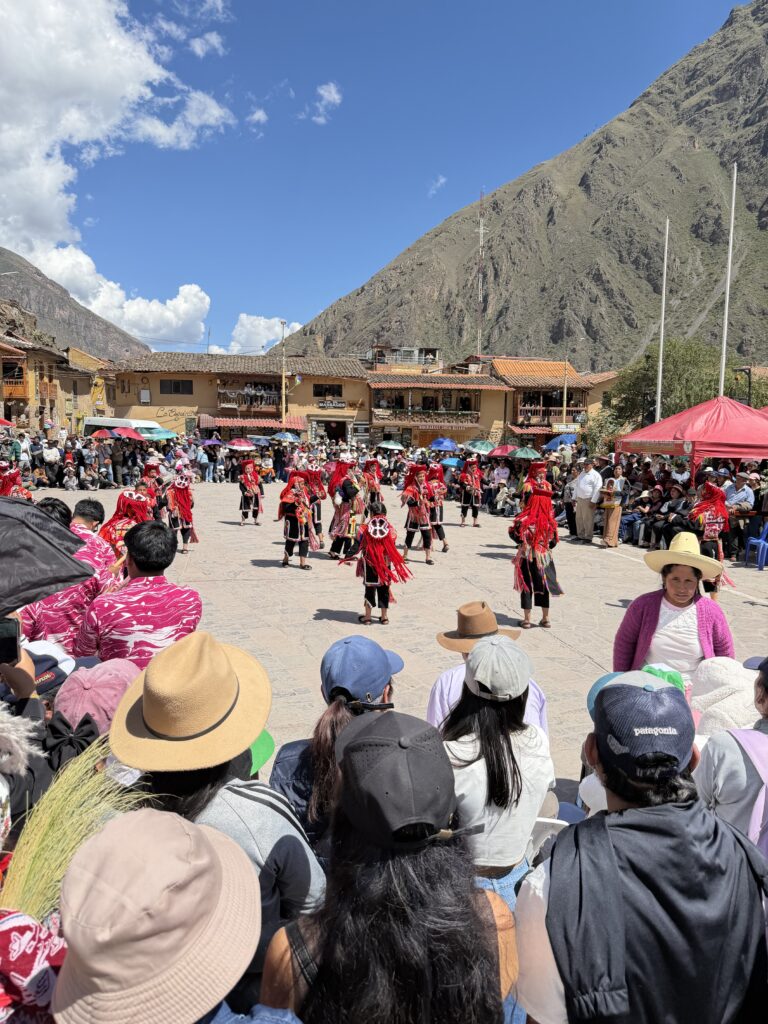
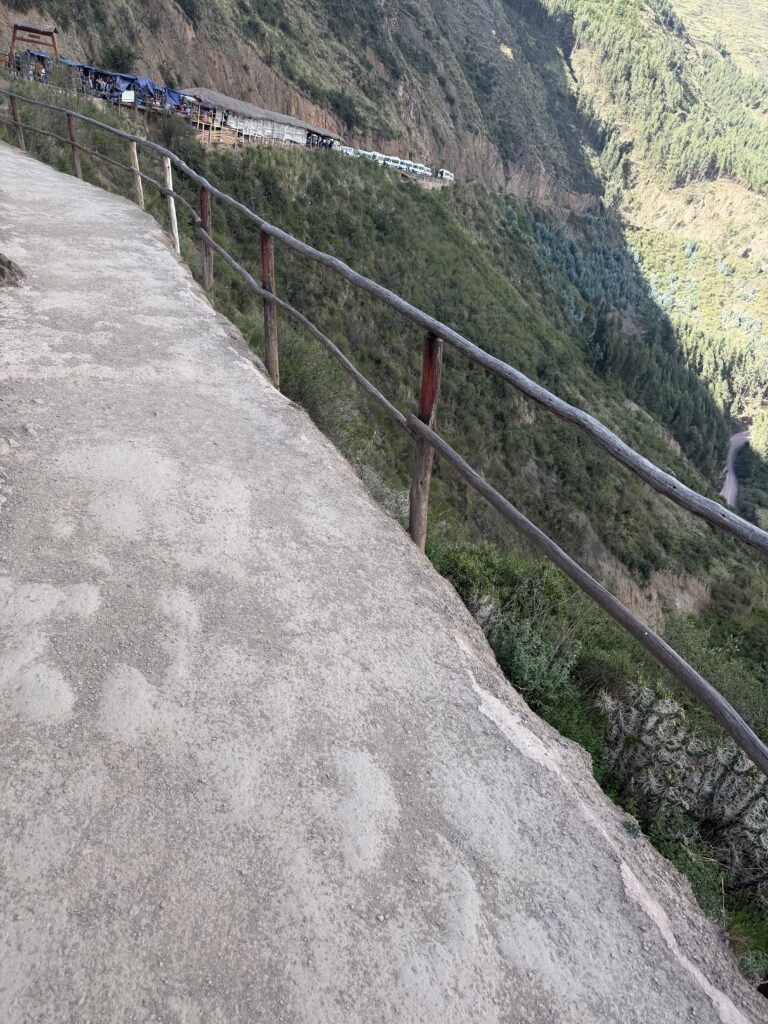
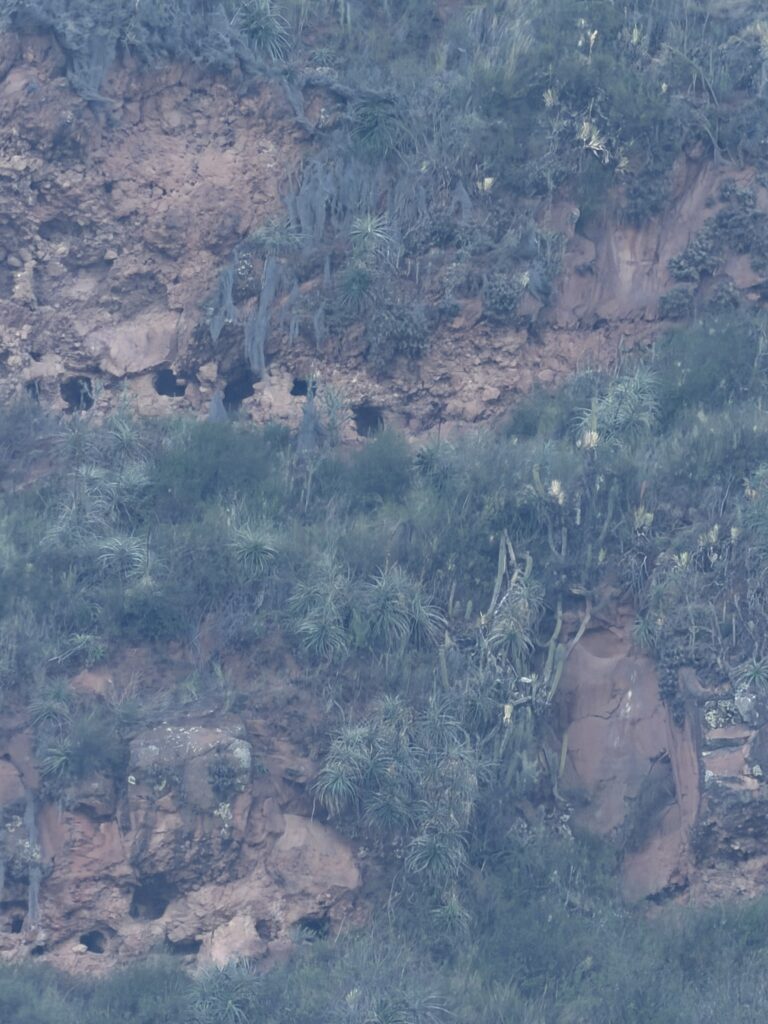
we now head to Pisa ruins, our final destination before heading home. The hike to these ruins is along a narrow ledge, about 1.5 metres which appears to be nothing except for the drop on one side. It is also uphill most of the way so I stayed close to the opposite side of the drop at all times. The ruins are of an ancient Incan citadel with associated temples and a plaza. Apparently from the top the views are breath taking but none of our group thought it worthwhile by this stage of our tour. The catacombs visible at the surrounding mountains apparently contain up to 10 000 bodies and burial was performed Inca customs of the day.
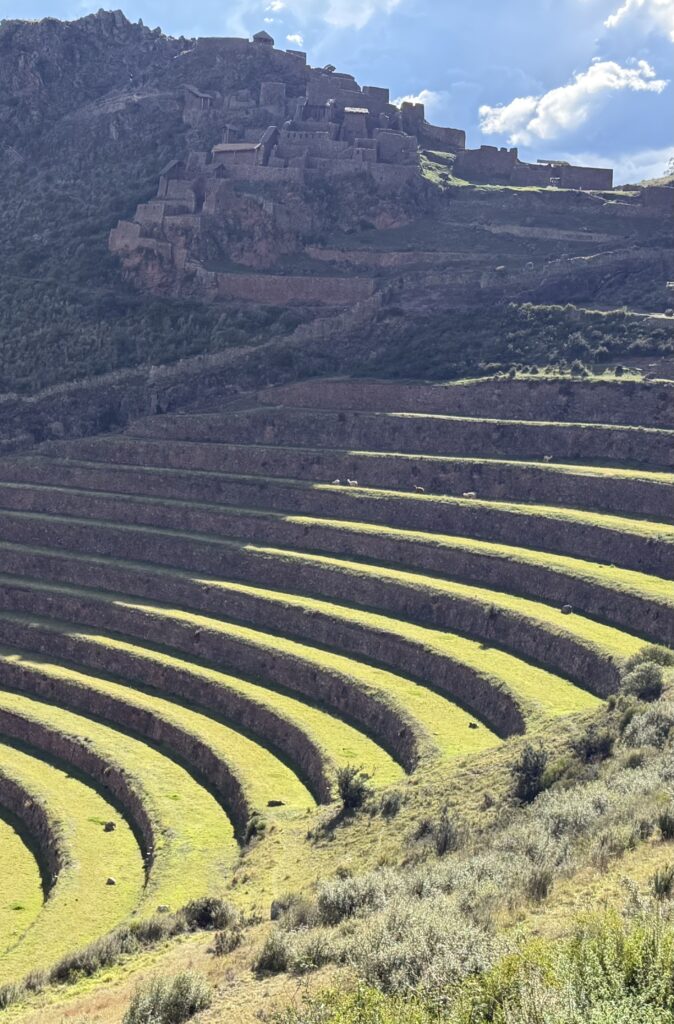
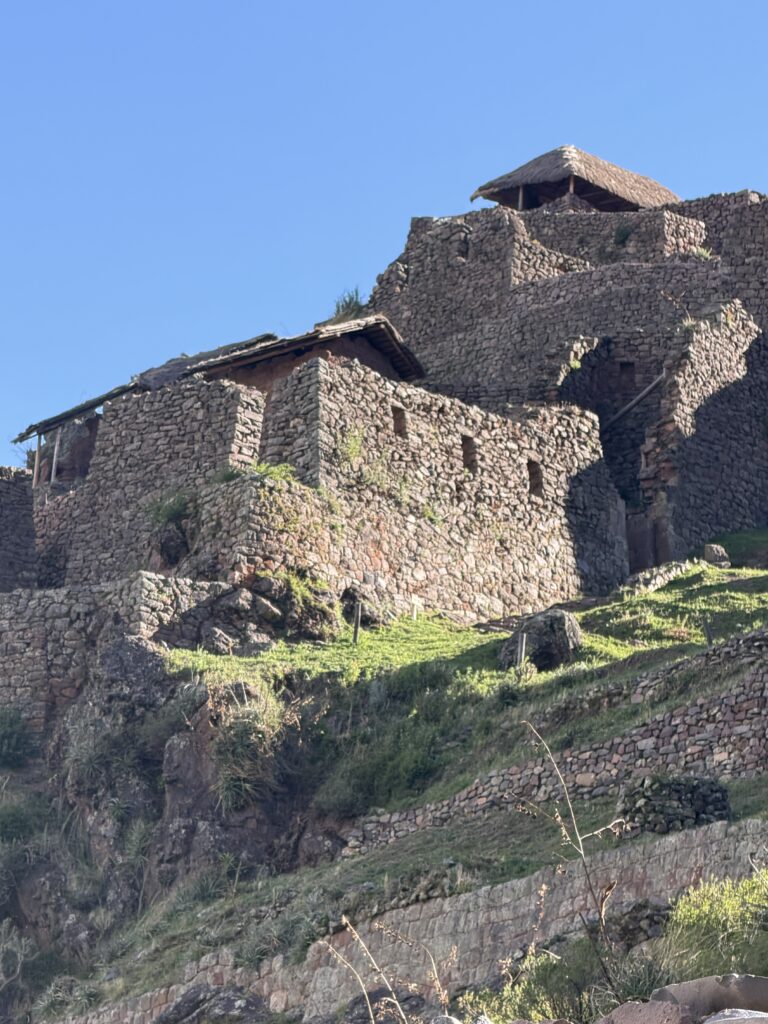
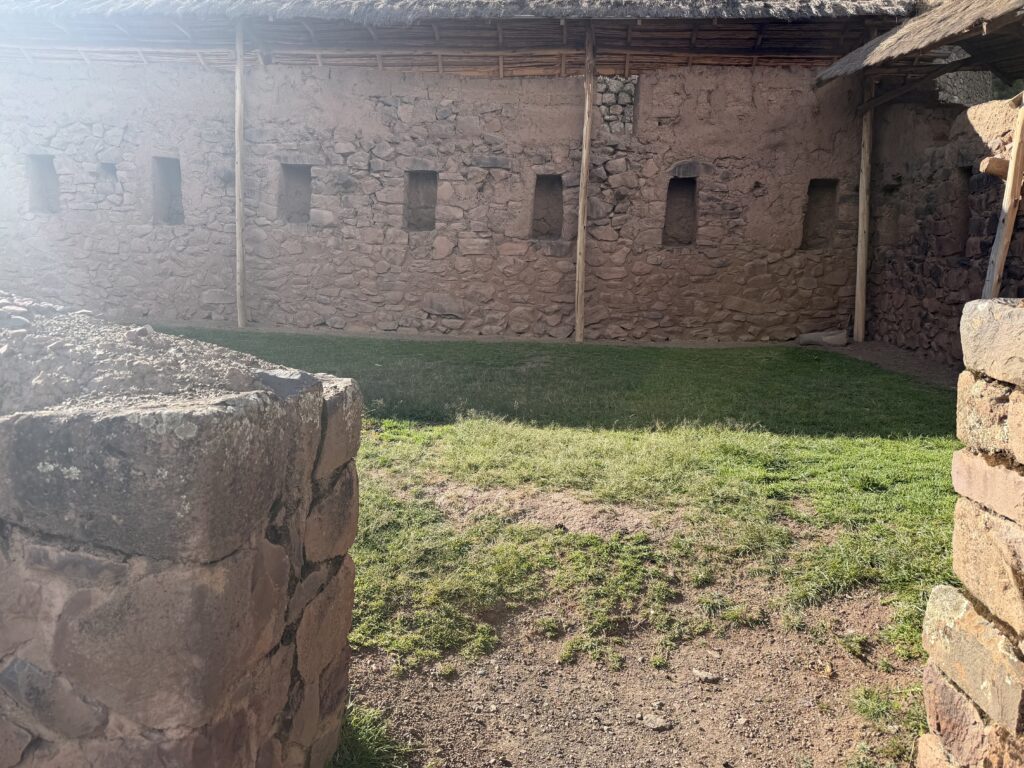
My final photo is a view of one of the spectacular mountains in the distance, rising over 6000 metres surrounding the areas I visited
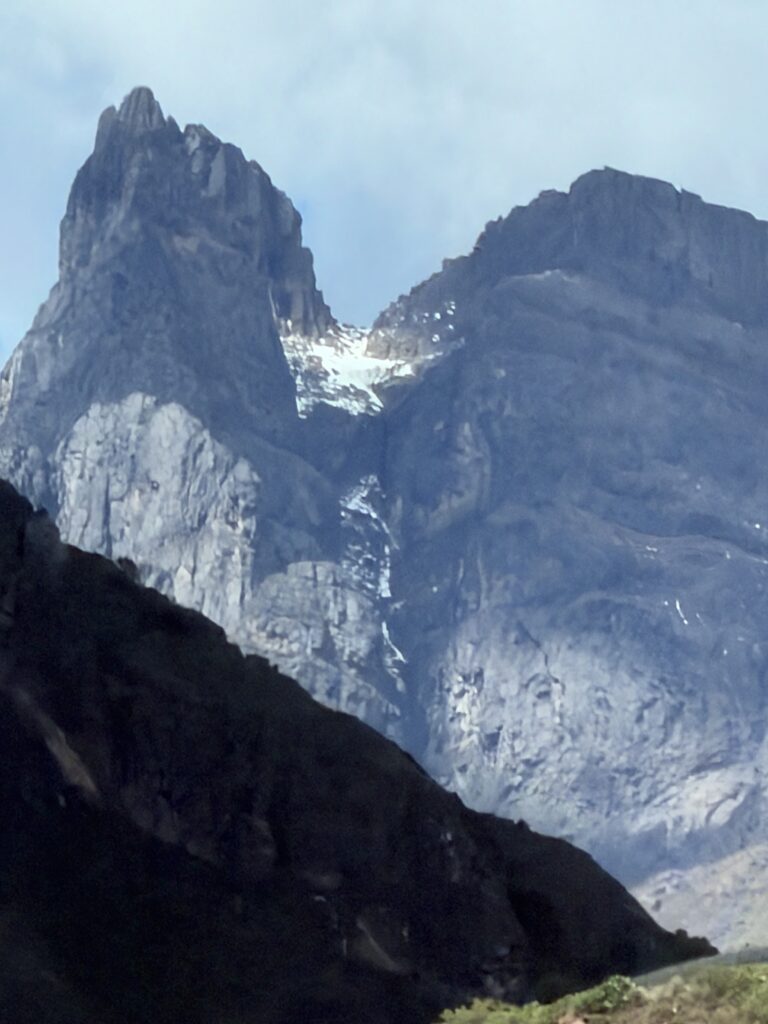
Wednesday/Thursday/ Friday January 7-9
My Machu Picchu day. NOOOOOOOOO
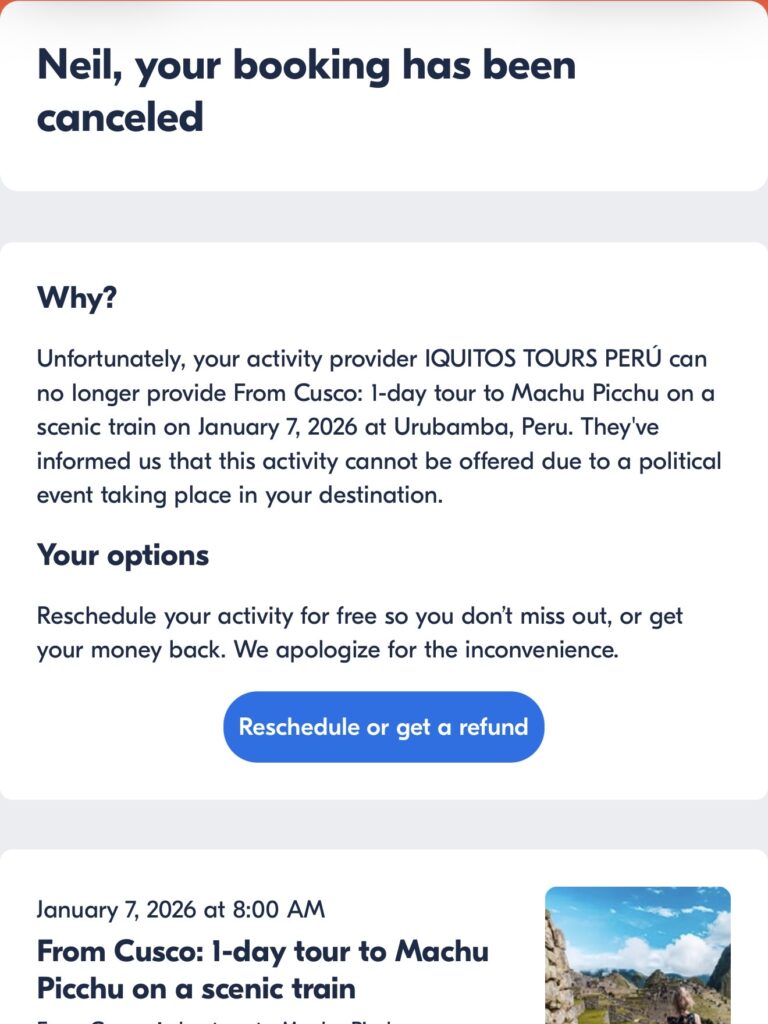
At 6:00am as I was getting ready to meet tour guide at 7:30am I get this bullshit. As from the photo below my trip was cancelled. 2 days later I met people in a bar who were on the very same train to Machu Picchu and there was no political issue and the train trip went ahead. I bought my ticket 2 months earlier at $180 and when I was in Cusco they were selling for $543. Make your own mind up as I did. I contacted the company IQITOS TOURS and accused them of dumping me to make profit. They refused to engage. I have since cancelled over $1000 worth of tours with them nd booked alternatives at a slight cost increase.
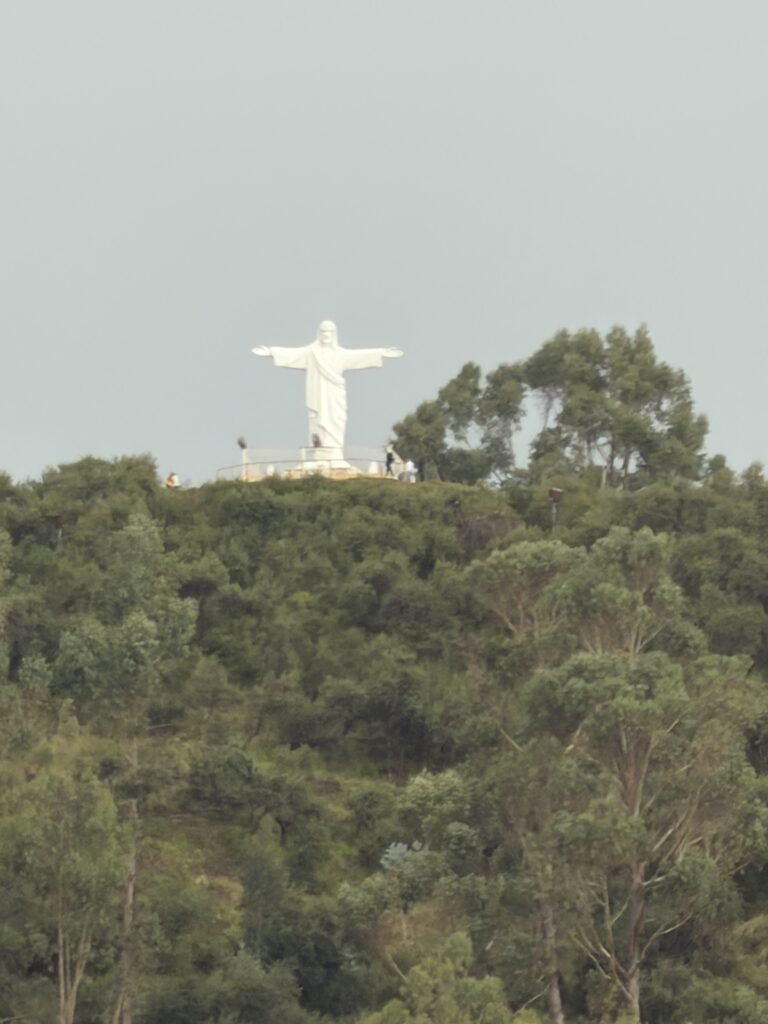
Unfortunately the statue of Mary overlooking the city did not protect me.
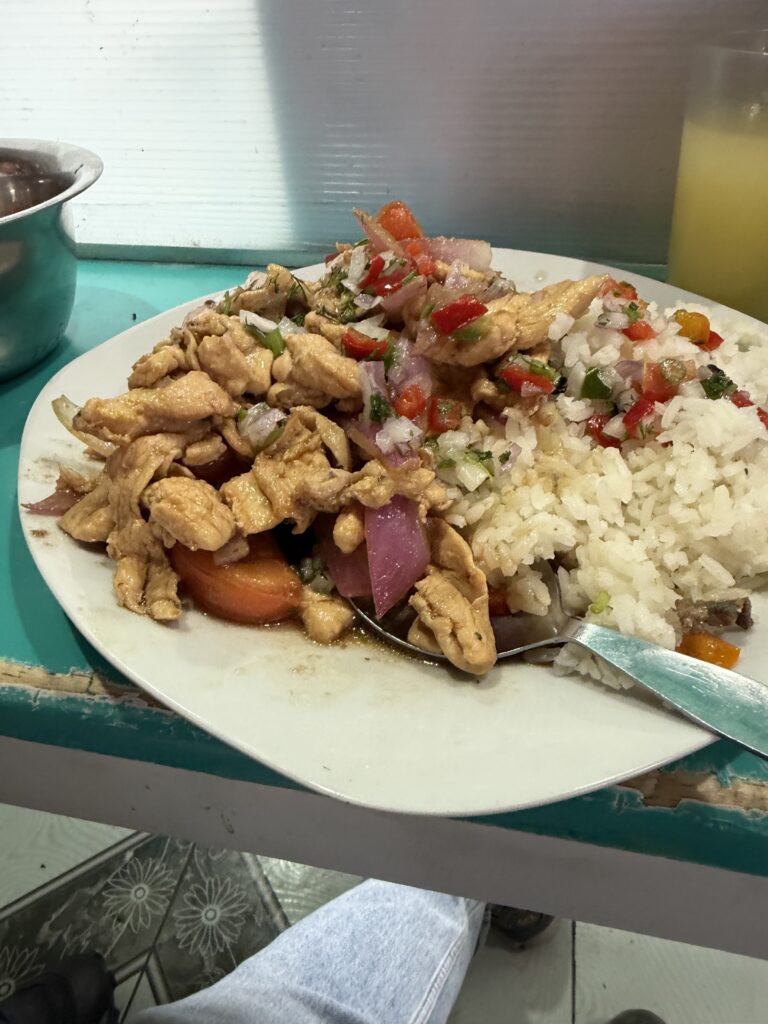
Wednesday and Thursday we’re walking days around the city trying to avoid any areas that were too hilly. I tried food at local markets – huge meal and drink for $8, Alpaca skewers and their traditional soup.
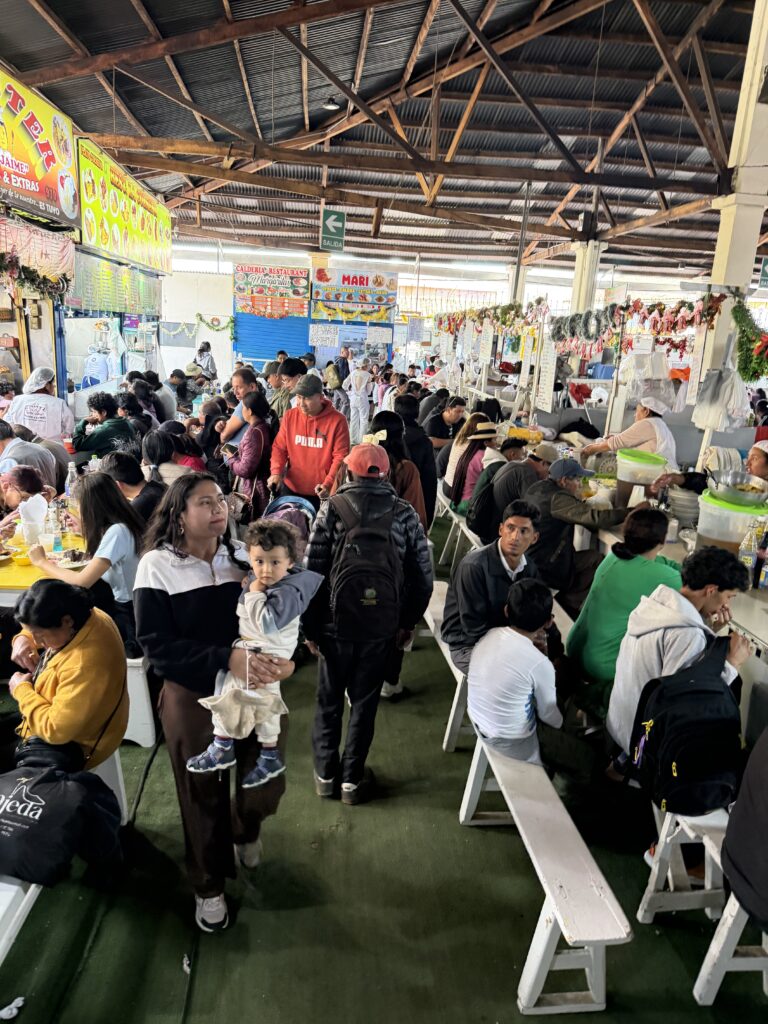
San Pedro market above is the largest of its kind in Cusco.
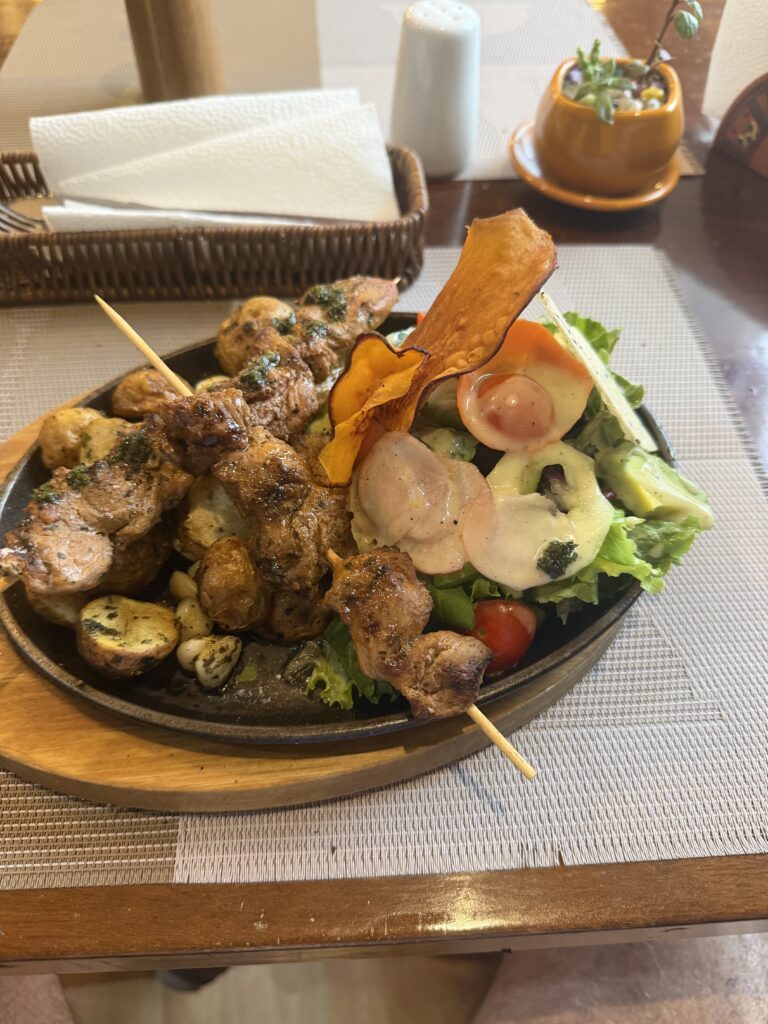
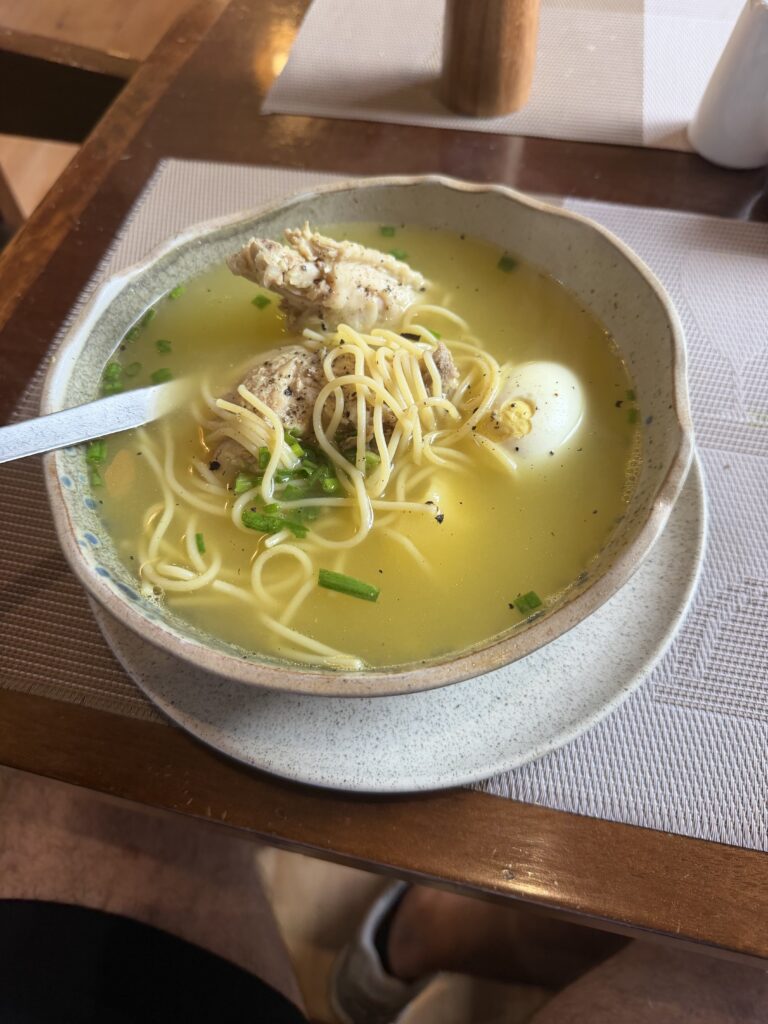
Food servings are so large in the restaurants that I only ever ordered and entree or a soup.
On my last night I discovered a small wine bar and enjoyed chatting to Louis as we shared knowledge about South American wines. In the bar was a group of young Aussie girls who were celebrating that they completed the 4 day trek to Mach Picchu. This evening the temperature was heading towards zero with a storm coming in.
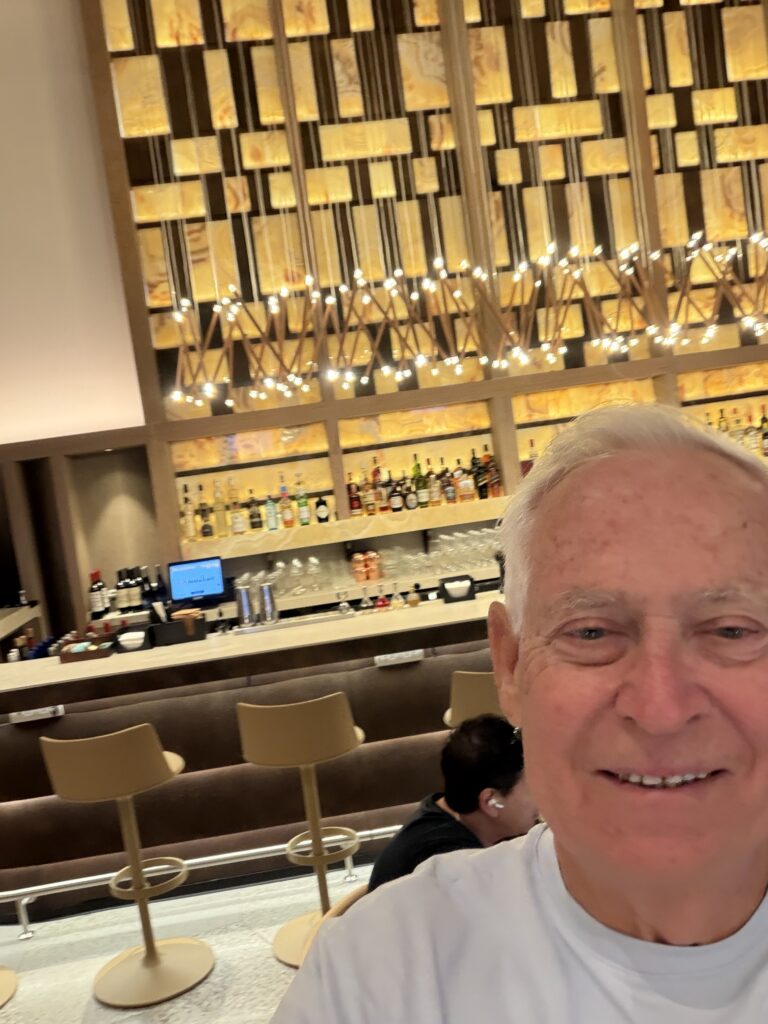
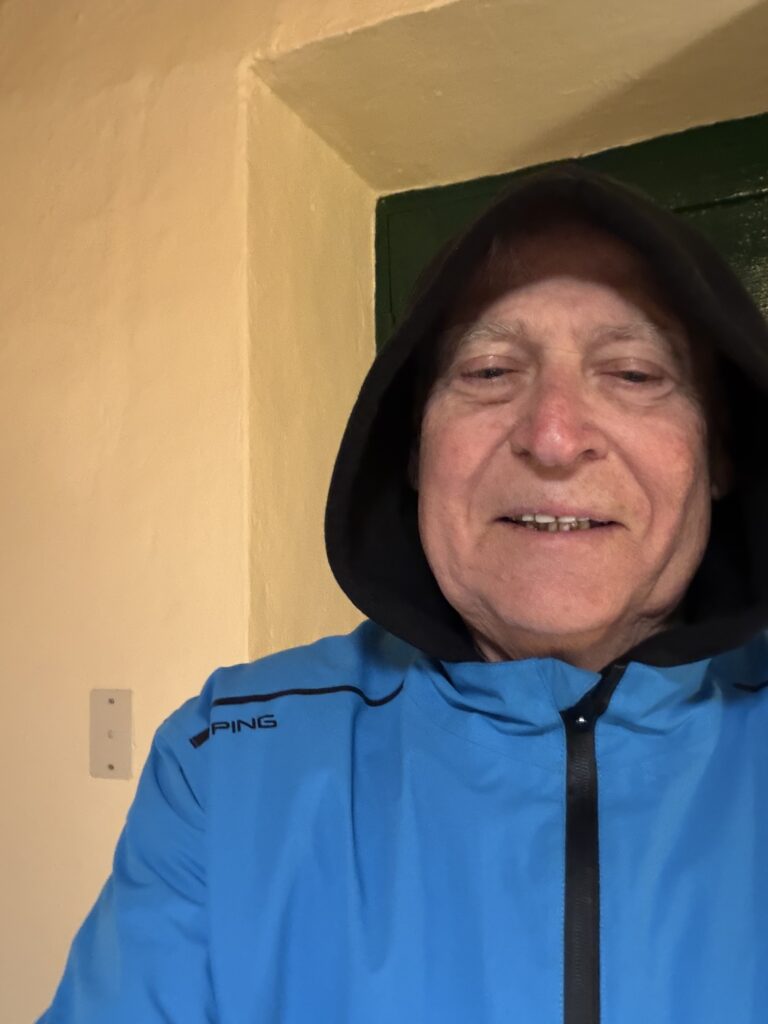
From here I ventured next door to Paddy’s Irish pub and enjoyed two Guinness (from a can) and chatted to a number of customers. It was nice to be in a venue where you could understand everyone. Home and ready for the early morning start flying to Quito via Lima.
Flights were good with a long layover in Lima but in one of the lounges. Change to US dollars or the rest of the journey. Taxi to my hotel Antinea 25 minutes for $25. Quito is markedly different from Lima. Roads in excellent condition and the city has a clean feel about it. Lima has magnificent new airport but driving into the city gives a por impression. The first 20 minutes is a drive through shanty towns and substandard potholed roads then you hit a nice freeway system. Quito straight onto the freeway from the airport.
Saturday January 10
Hotel Antinea is very pleasant in the 3 star range at $140 AUD for 3 nights. My plan was to buy some cheap pants and thick Sox for the Amazon tour. I also had luck in Quicentronshopp8ngbcentre as I found a waterproof cover for my iPhone. Given its recent history I was happy to fork out $100 to protect it both in the rain Forrest and on the Galápagos Islands. Once this achieved I spent a few hours walking around, enjoyed a nice lunch then took an uber back to my hotel around 3:00pm. Uber costs for 5kms and just short of 20 minutes an unbelievable $2.41 US. A bit. Of R& R followed by a Netflix movie I headed out to The Holy Crank, a craft beer pub about 10 minutes walk.
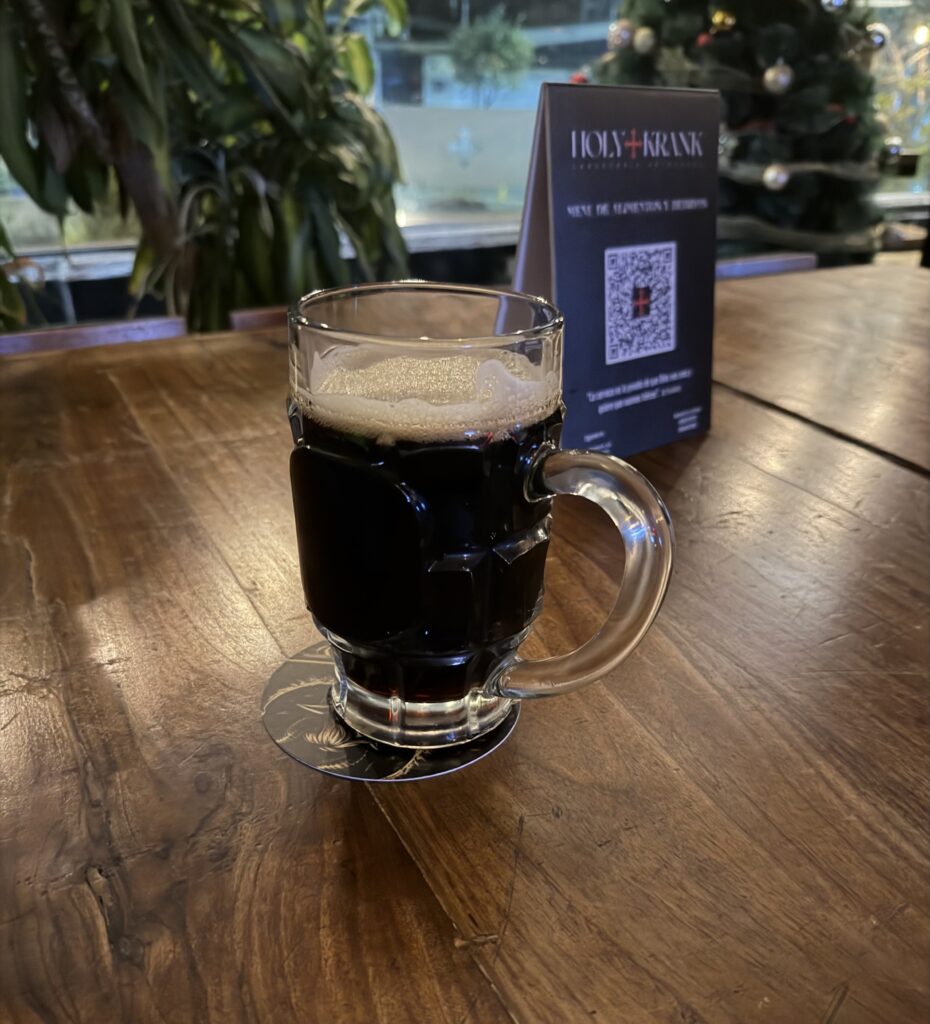
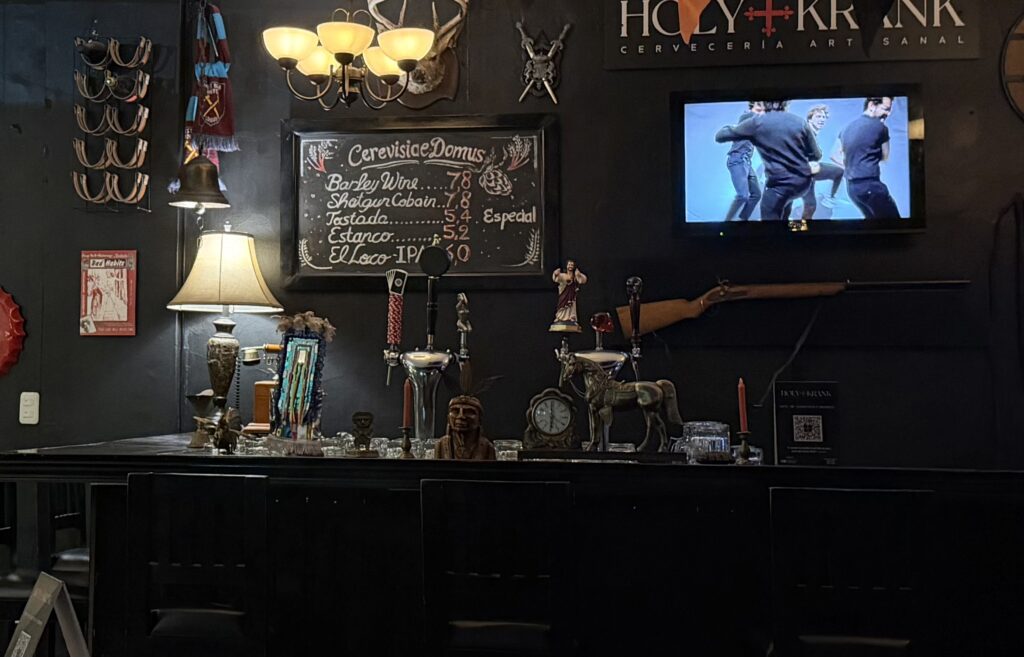
Sunday 11
Early start as we drive out to Pululahua, a massive volcanic crater that has been extinct for well over a million years. A small community of Andeans live and farm there.
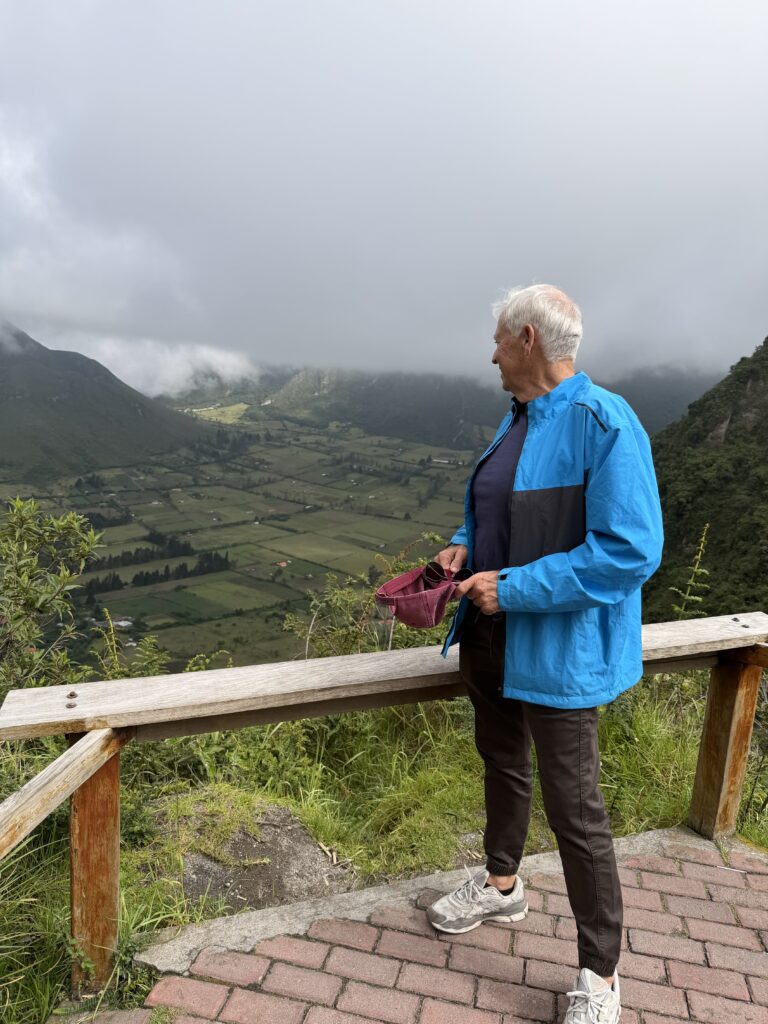
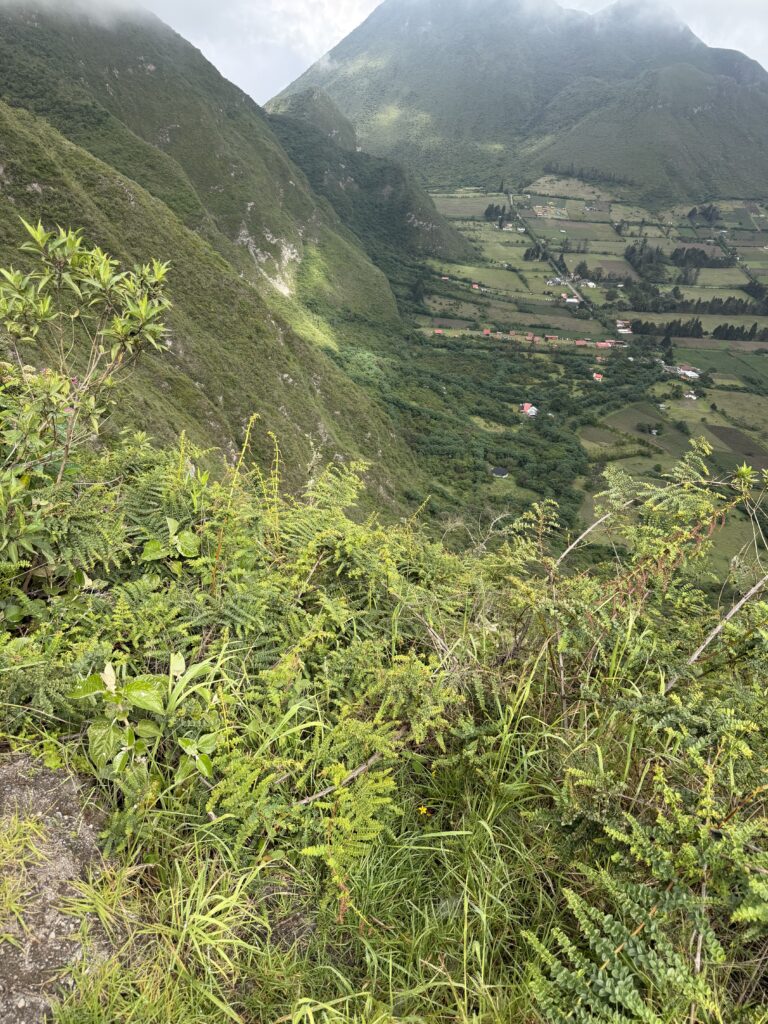
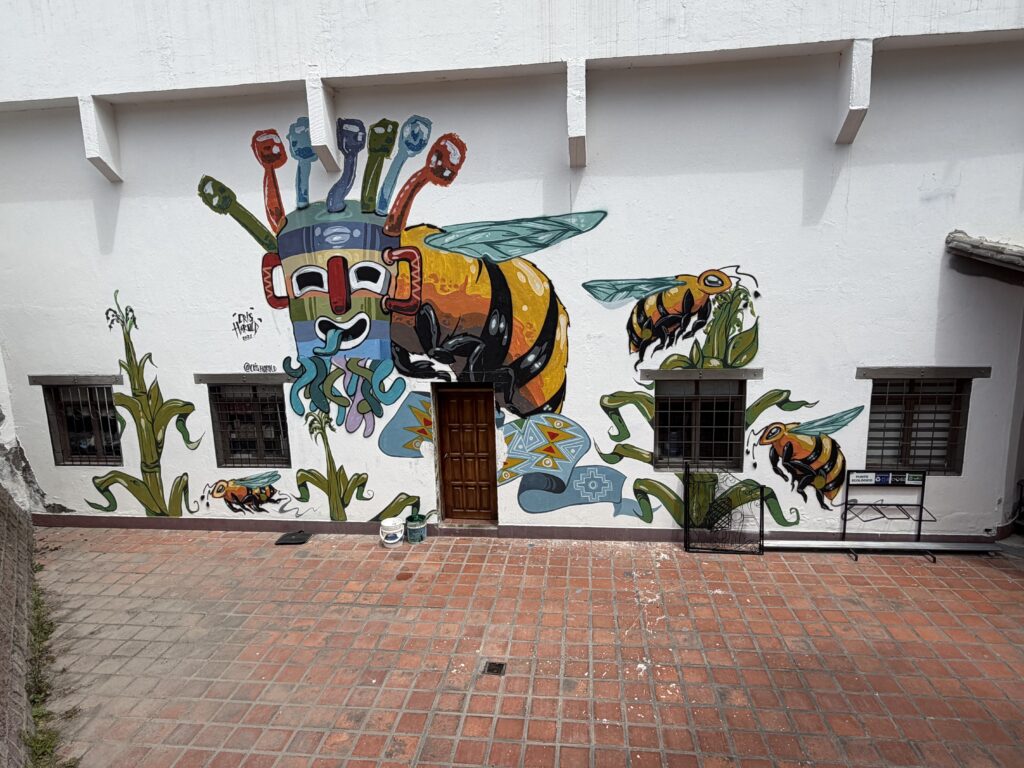
This is a go go day so next we are off to the Intinan museum and the middle of the world monument acknowledging that the equator runs through this part of Ecuador. They have recreated Andean calendars nd sundials for time of day as replicas of the ancient Andean culture. Geographers would have a great time here. Both sites are set up for tourists to buy and also have magnificent murals.
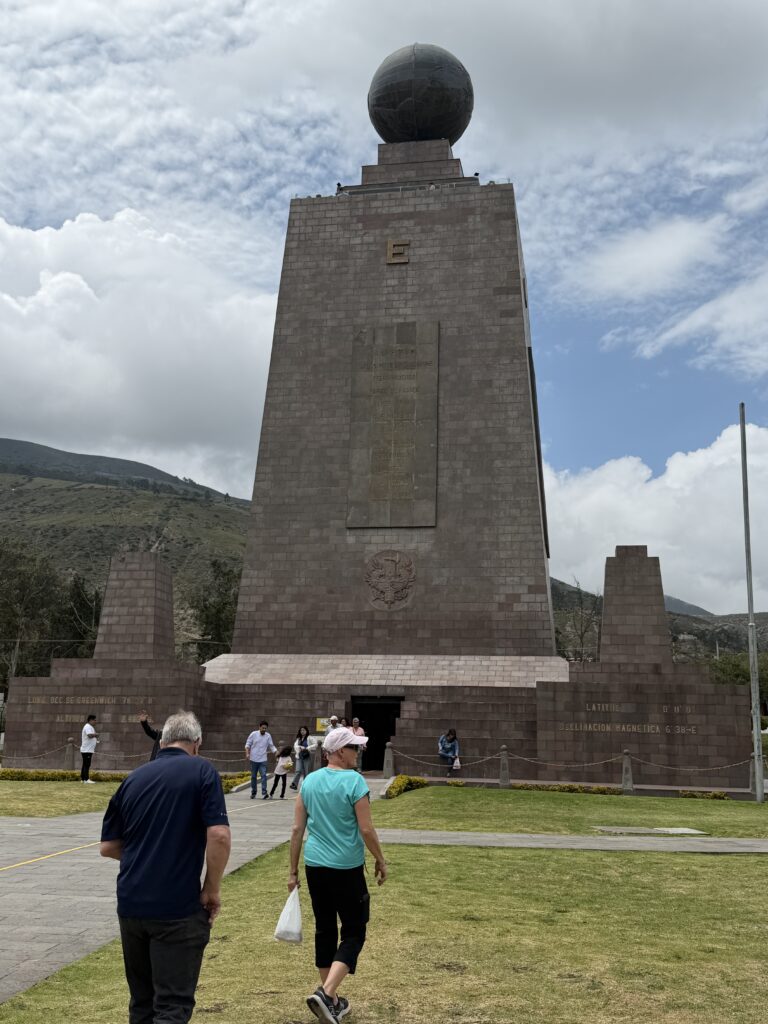
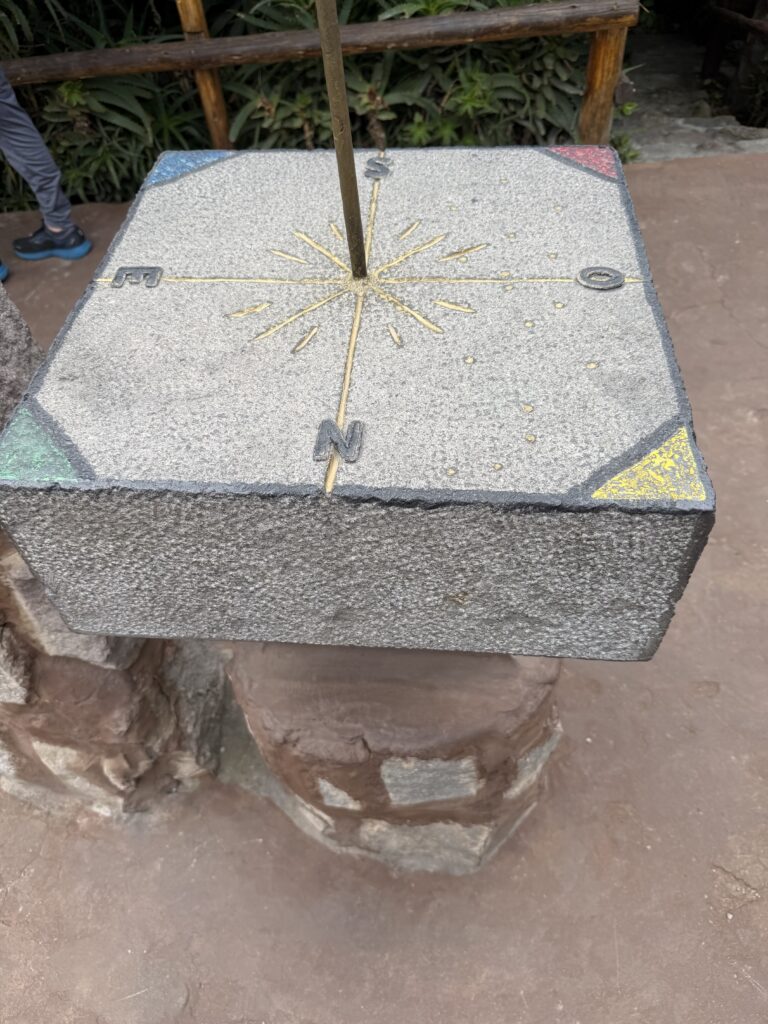
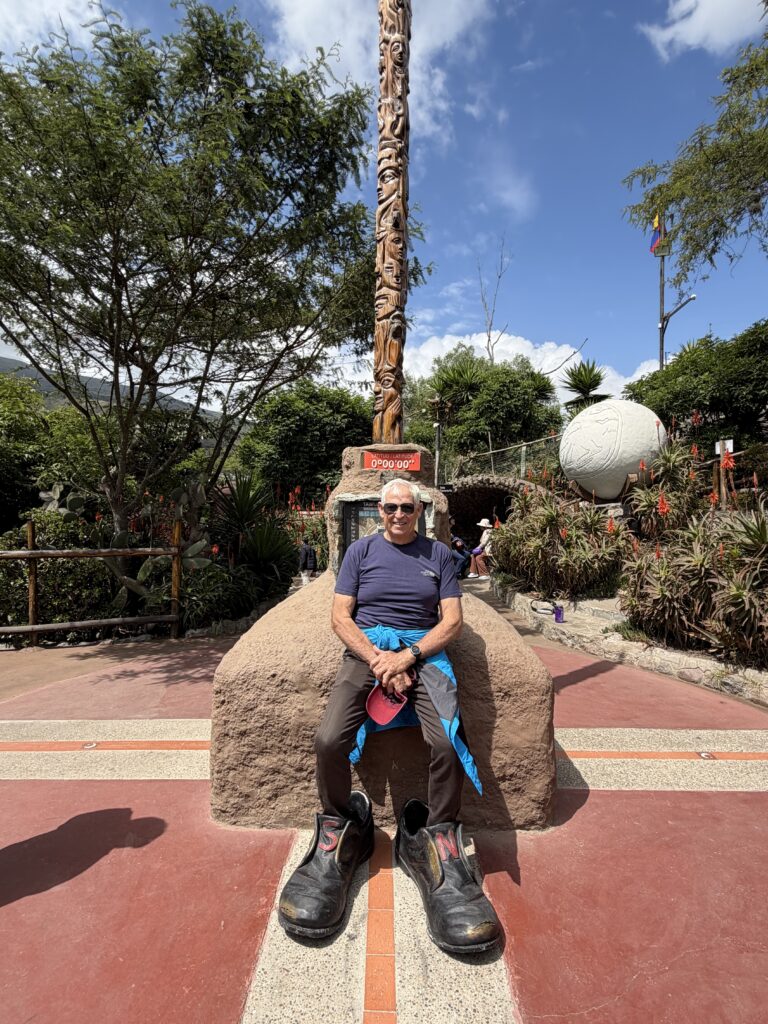
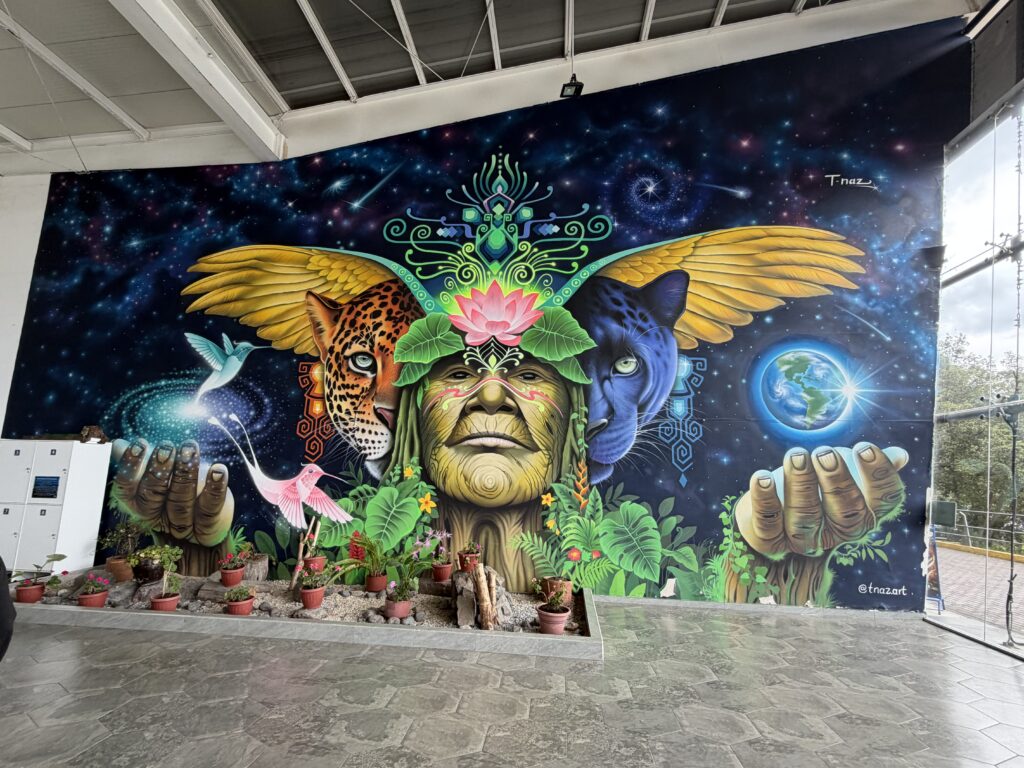
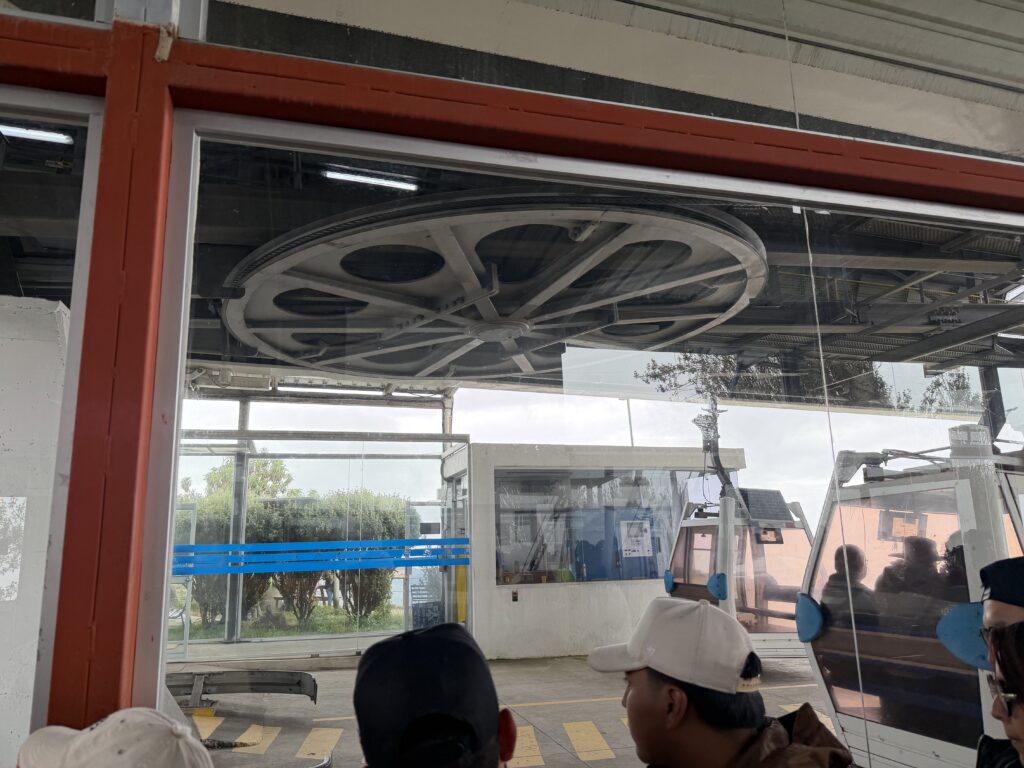
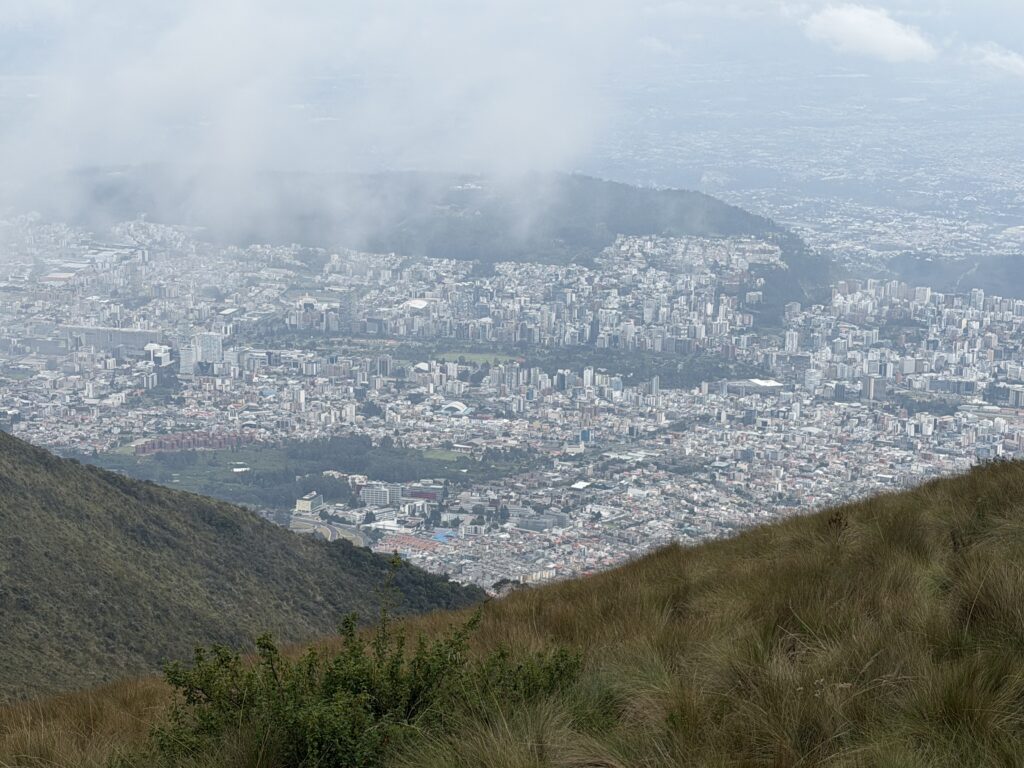
From here we headed to the cable car “Touch the sky” going up some 1200 metes to be 4000 metres above sea level. It certainly gives an amazing view of the city and surrounds. The queue to return was.30 minutes long.
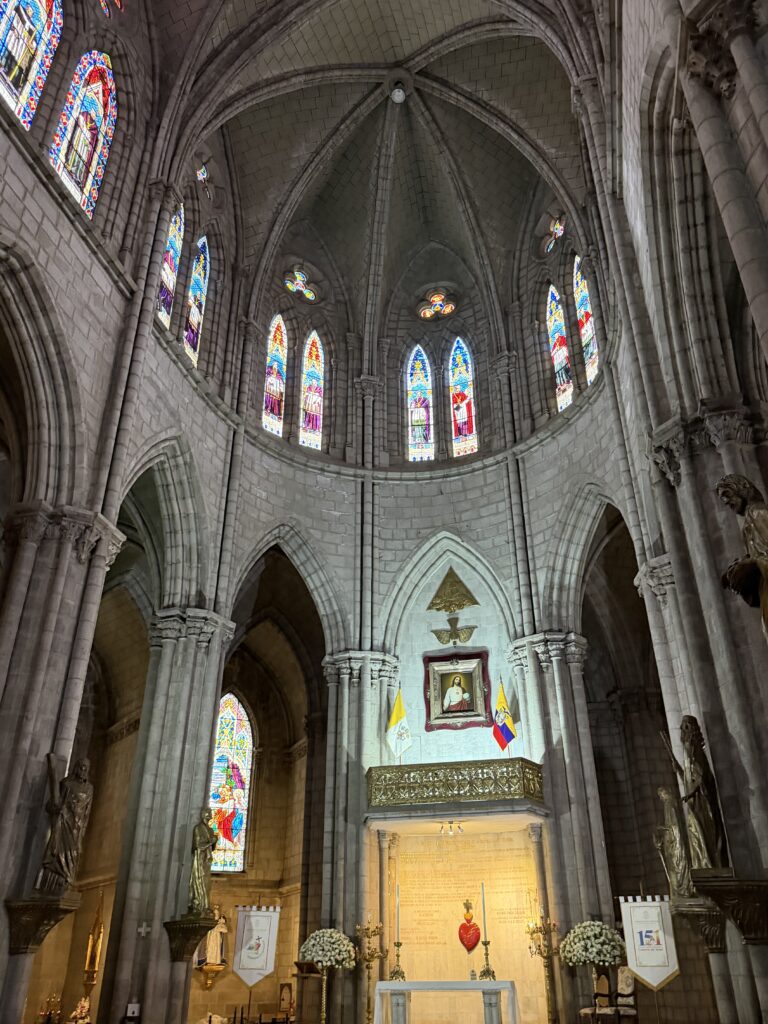
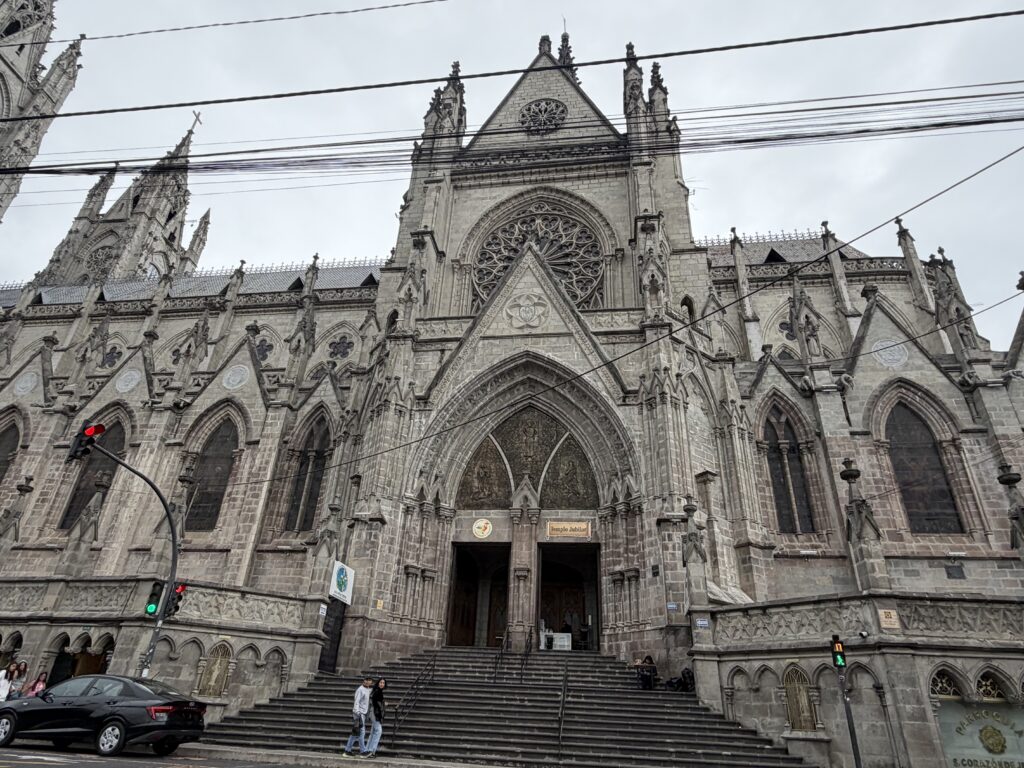
After our descent we headed back into the city to the Basilica. Quite an amazing church with construction commencing in 1901 and finished some 20 years ago. Beautiful architecture form the outside and beautifully adorned within.
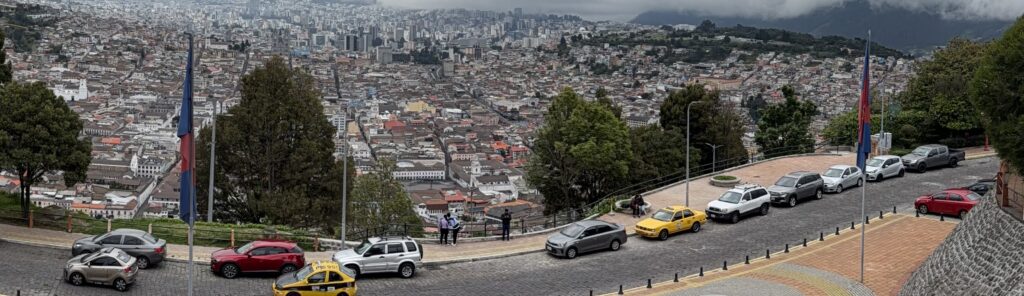
Our final stop was the hilltop where Quitos guardian angel has been built providing a 360 degree view of the city and surrounds. It goes by the name El Panecillo. While up here the storm struck and we were stuck for around 40 minutes. Lots of food and shop vendors there, but no beer or wine so we suffered in cold until it passed.
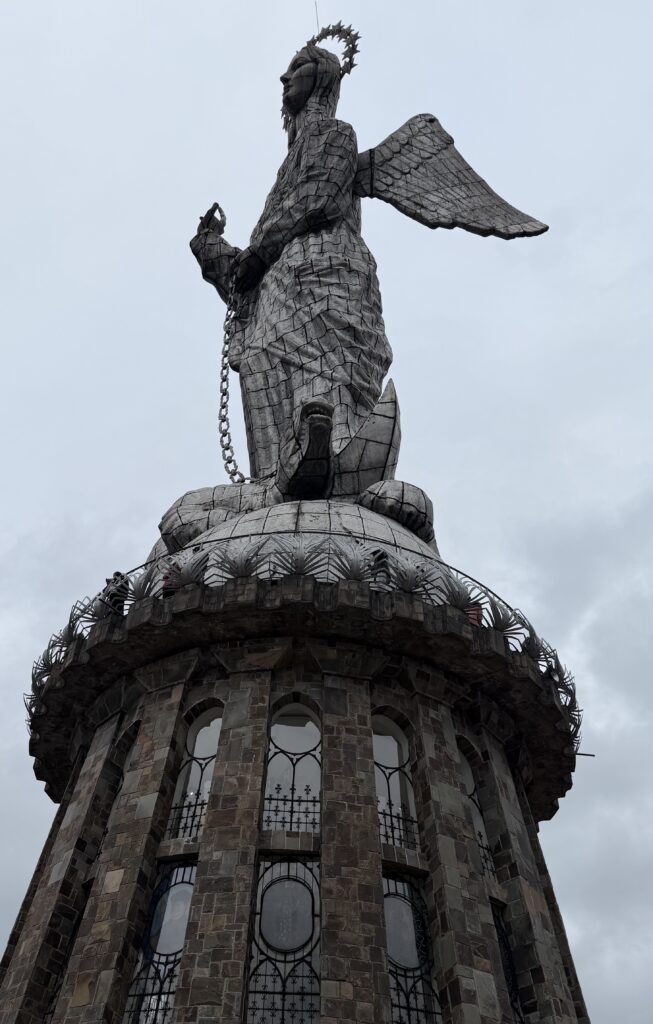
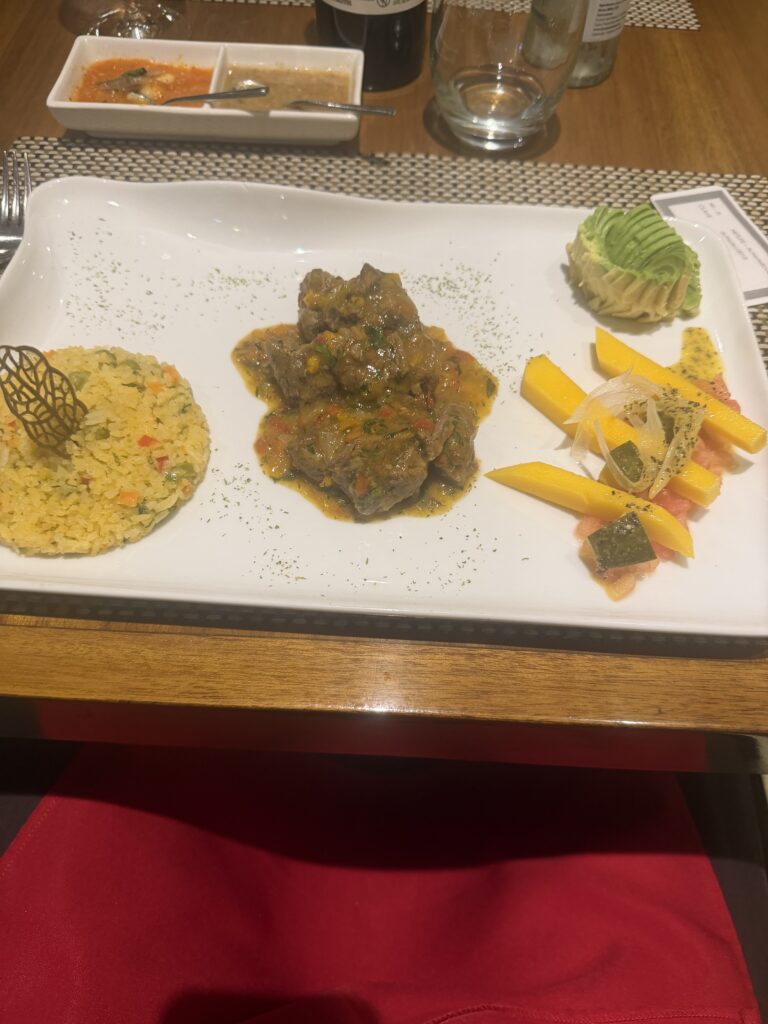
The next two photos showcase the guardian and my passion for local cuisine. The Lamb stew is supposed t9 be a traditional dish but I don’t believe the everyday Andean served it up like this.
Monday January 12. GREEN FORREST ECO LODGE called Suchipakari Jungle lodge.
Picked up from my hotel at 5:00am for the 4 hour 20 minute drive to the camp. it’s more a hotel with great facilities and comfort. I chose the jacuzzi suite and later phots will show why.
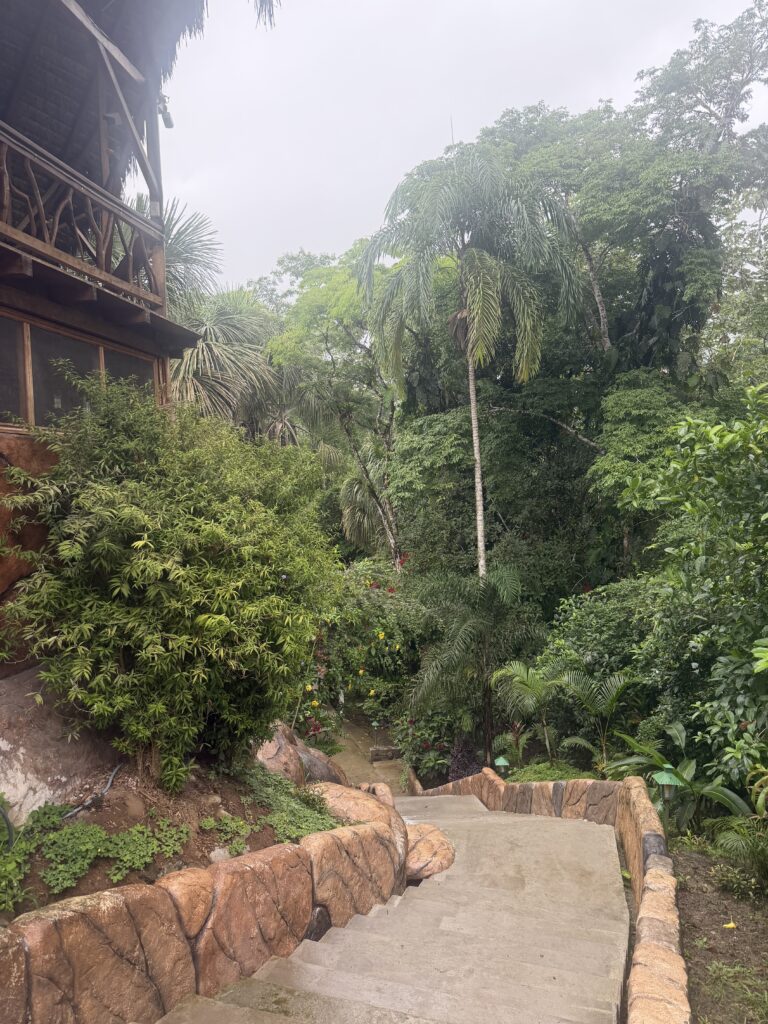
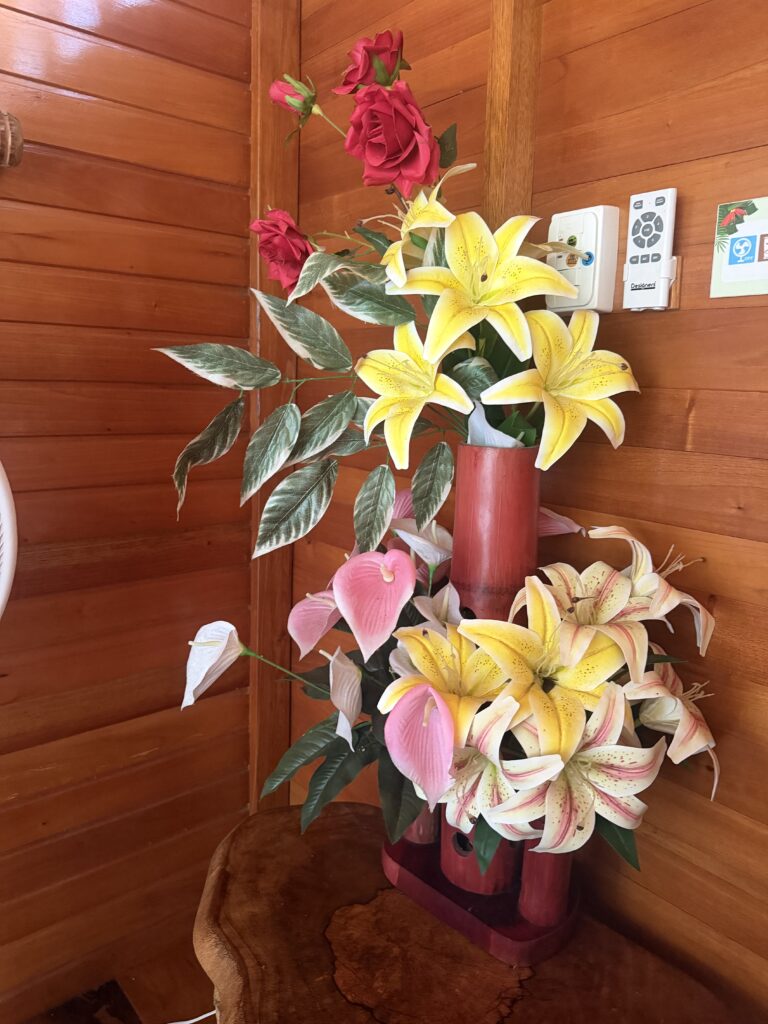
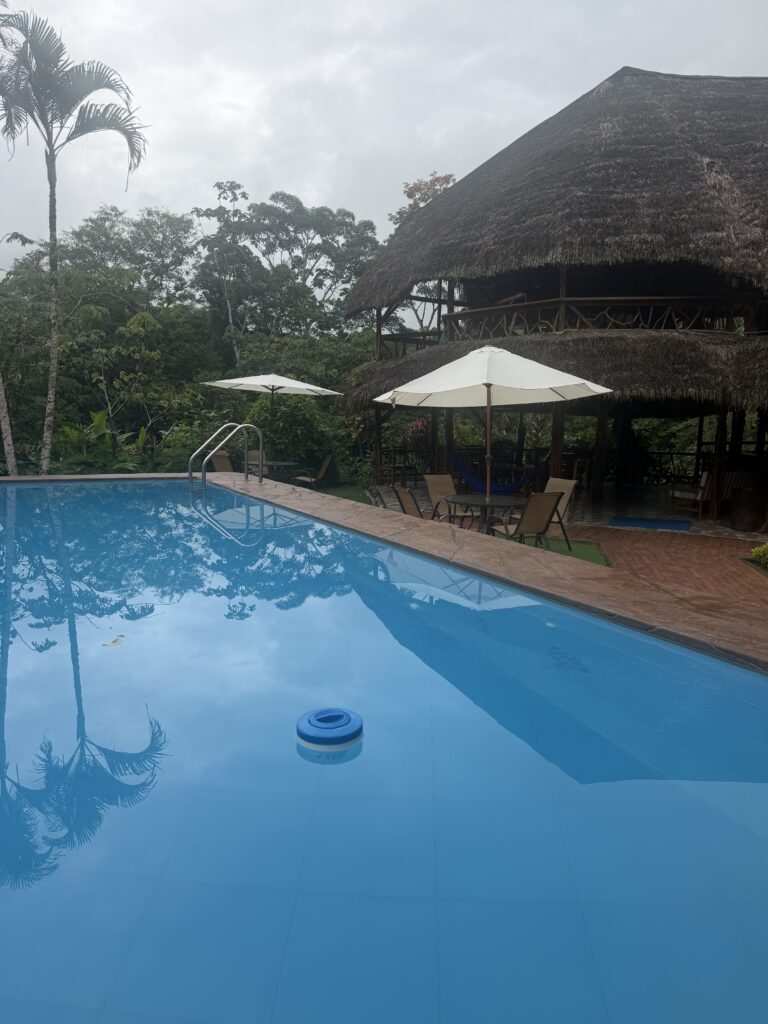
I needed to remember directions to my humble abode hence the pathway photo, great swimming pool and the flowers found on each corner of my bedroom.
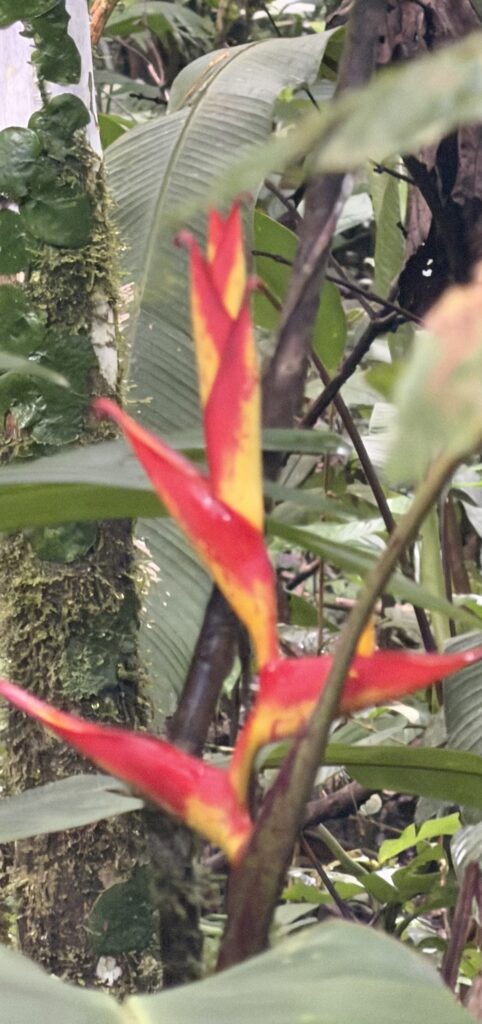
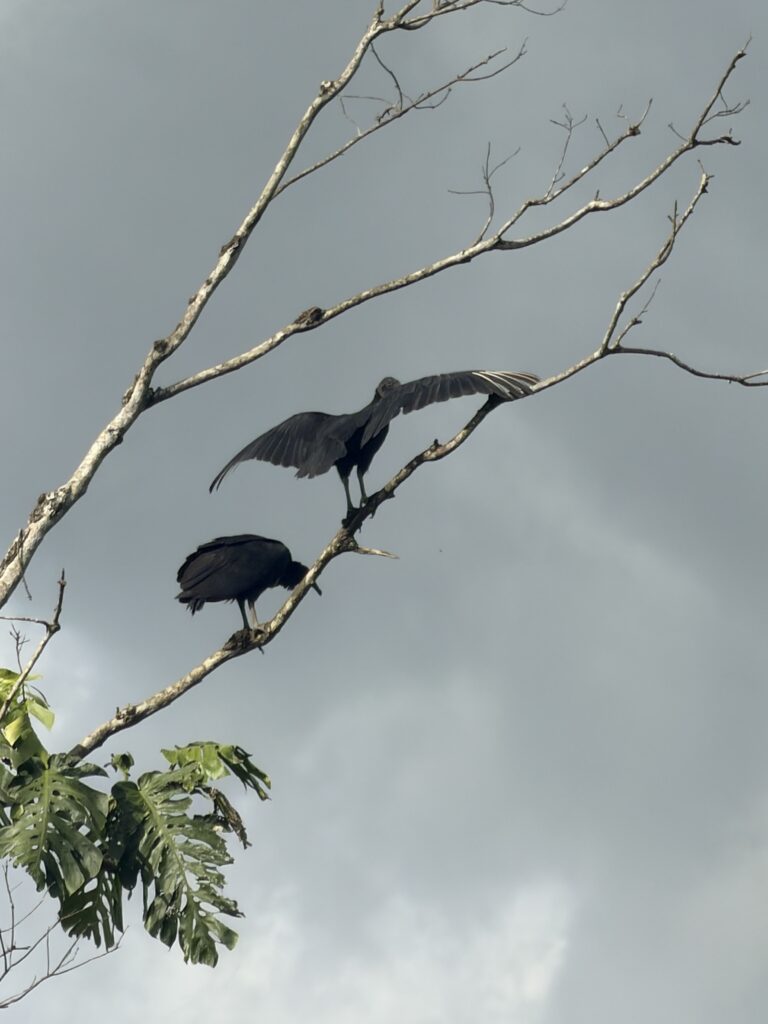
Straight into a bush walk mainly around the ecology of the jungle, unbelievable tall skinny trees seeking sunlight and the growing additional suckers to source nutrients form the ground, also some beautiful flowers growing wild. We came cross a pair of black headed Butcher birds, a species related to the Giant condor of the Andes Mountains.
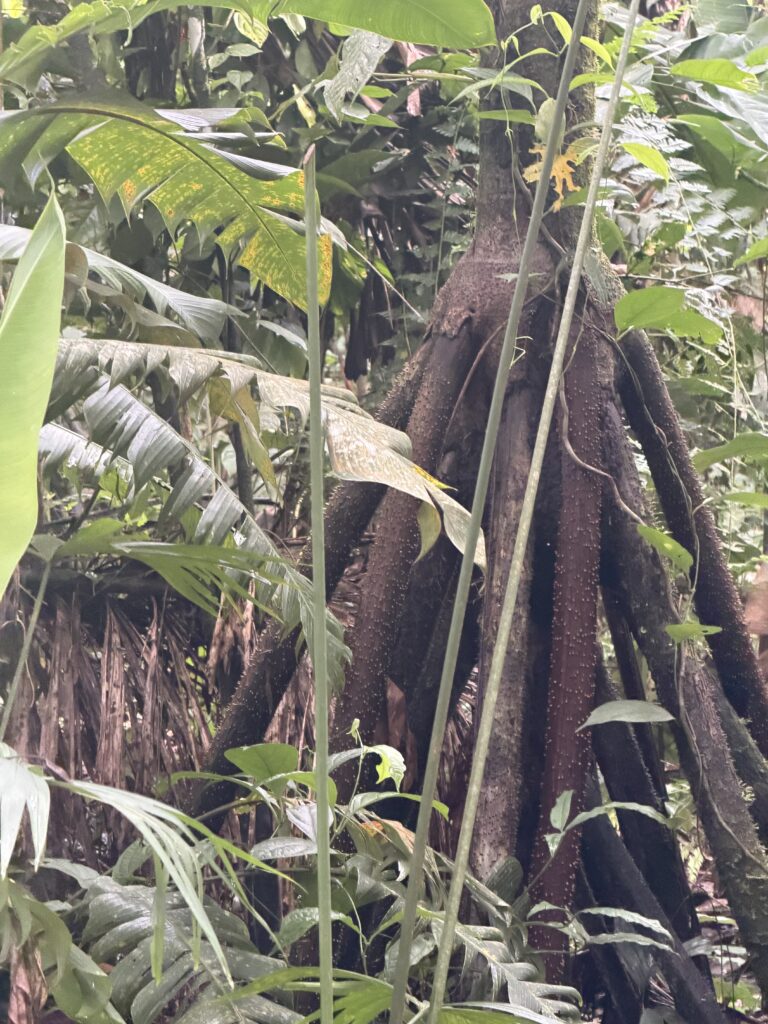
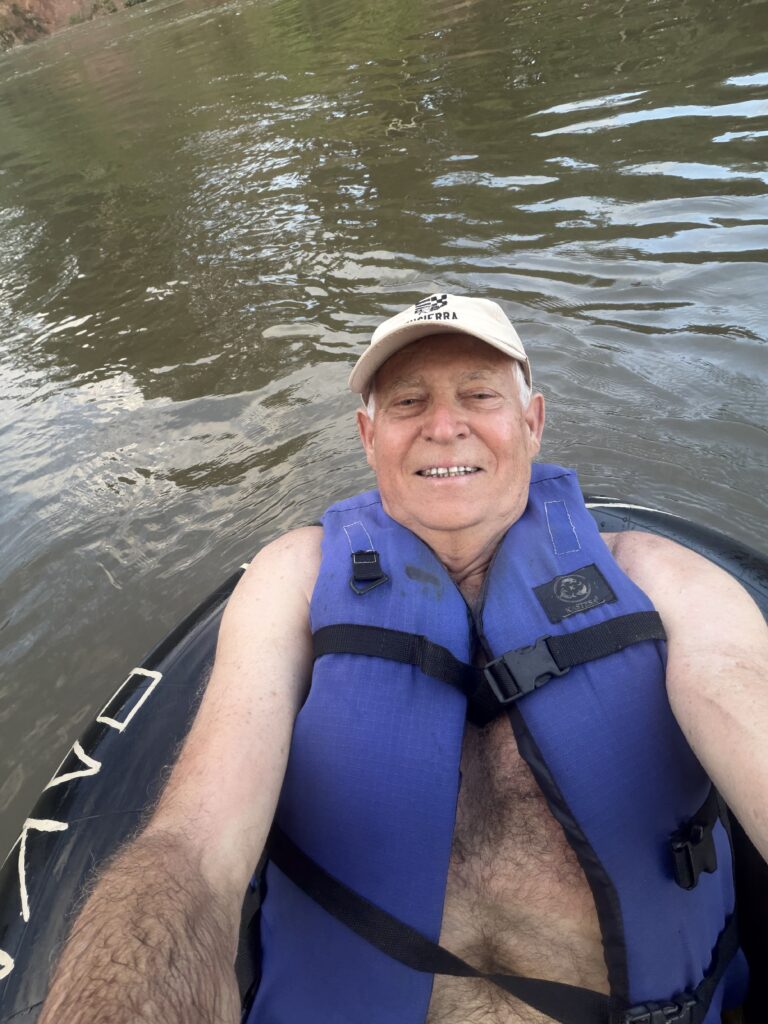
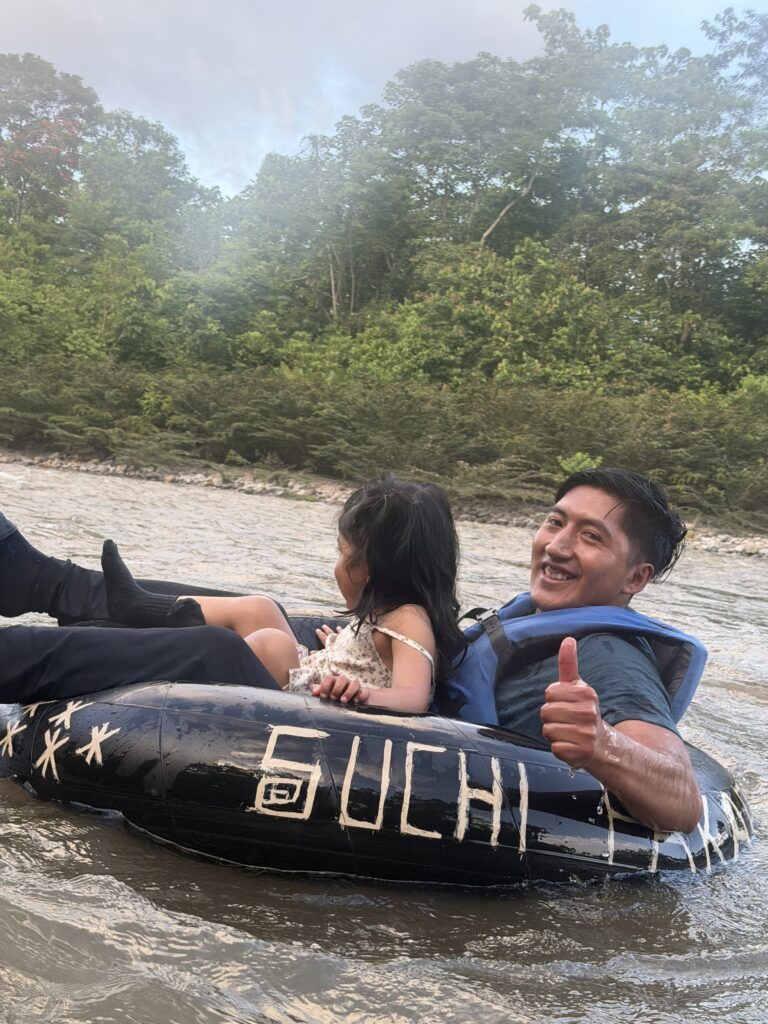
Next we were straight into rafting on rubber tubes, drifting about a km down river. My bum hit a few rocks before I learnt that staying on top of the tube was wise.
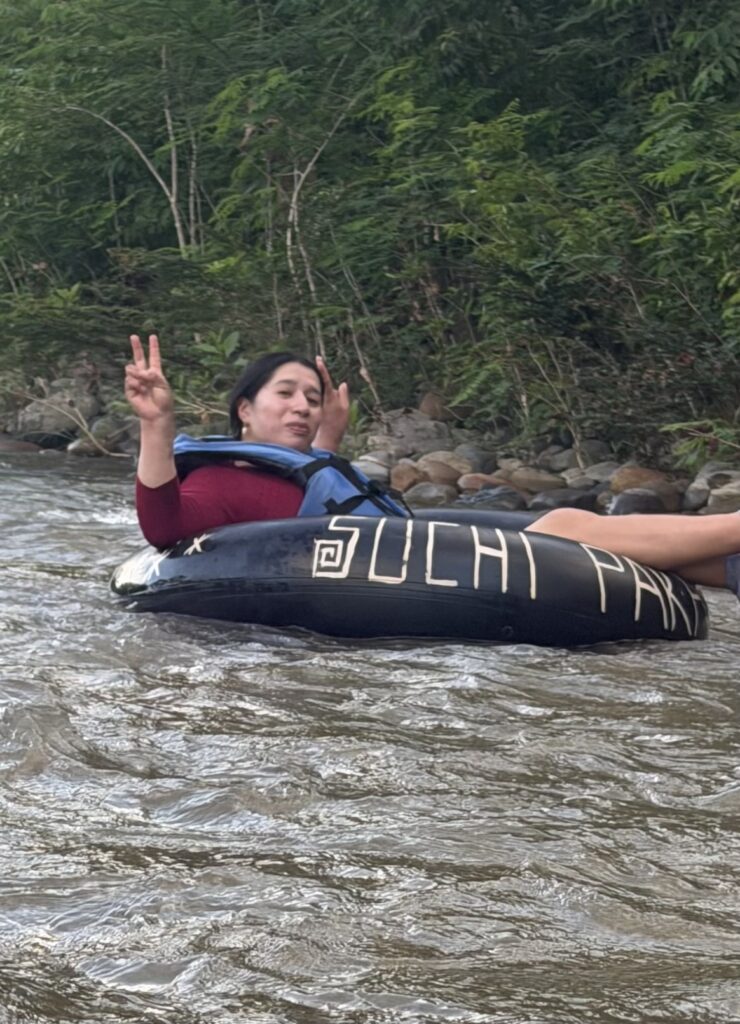
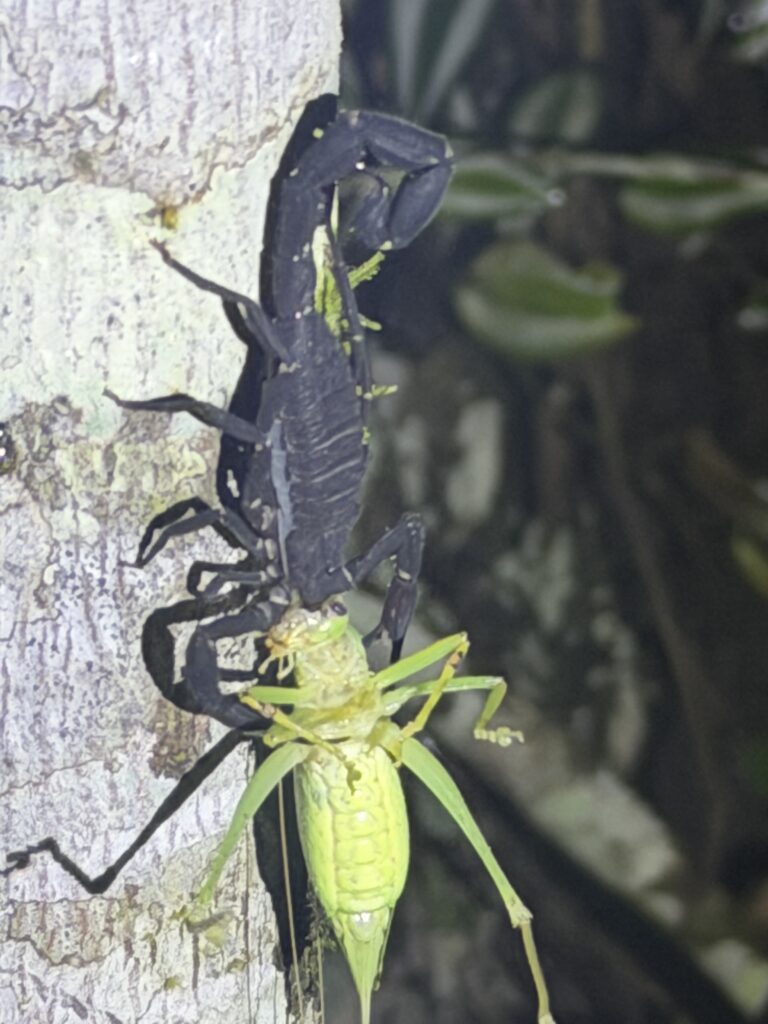
After this little adventure I had around 2 hours until dinner which is served in their restaurant form 7:30pm. My guide was not finished with me and dragged me off to participate in a night walk, which did prove to be interesting. His regular a tarantula was not there but a range of frogs, scorpions, etc made up for the lack of tarantula.
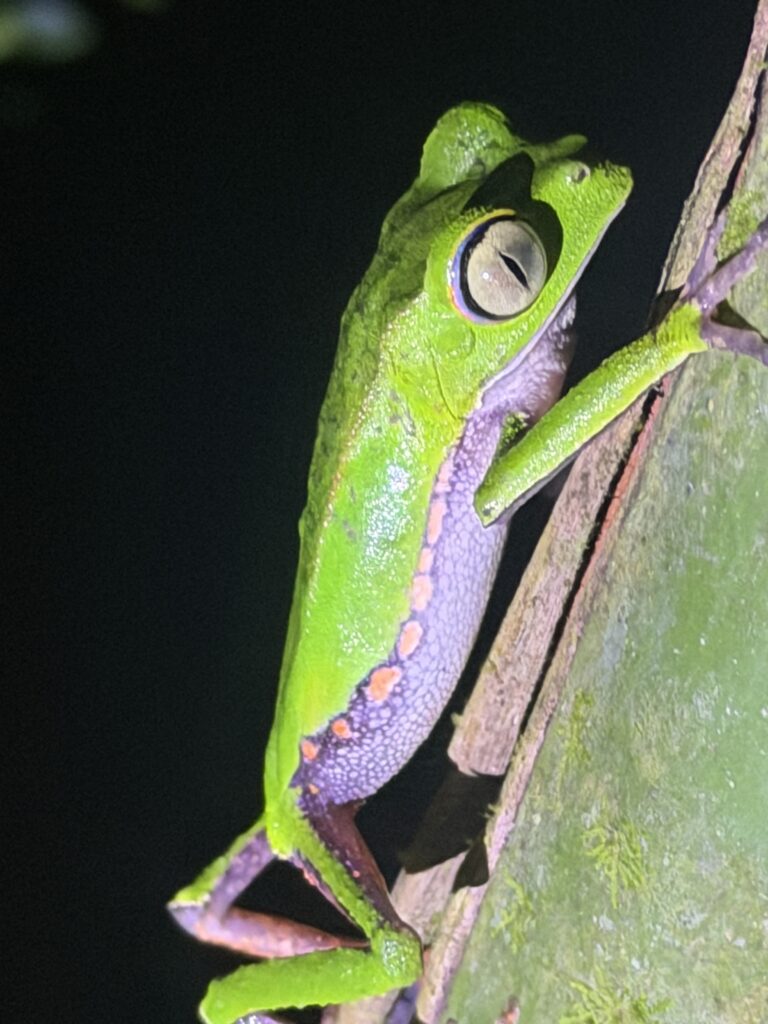
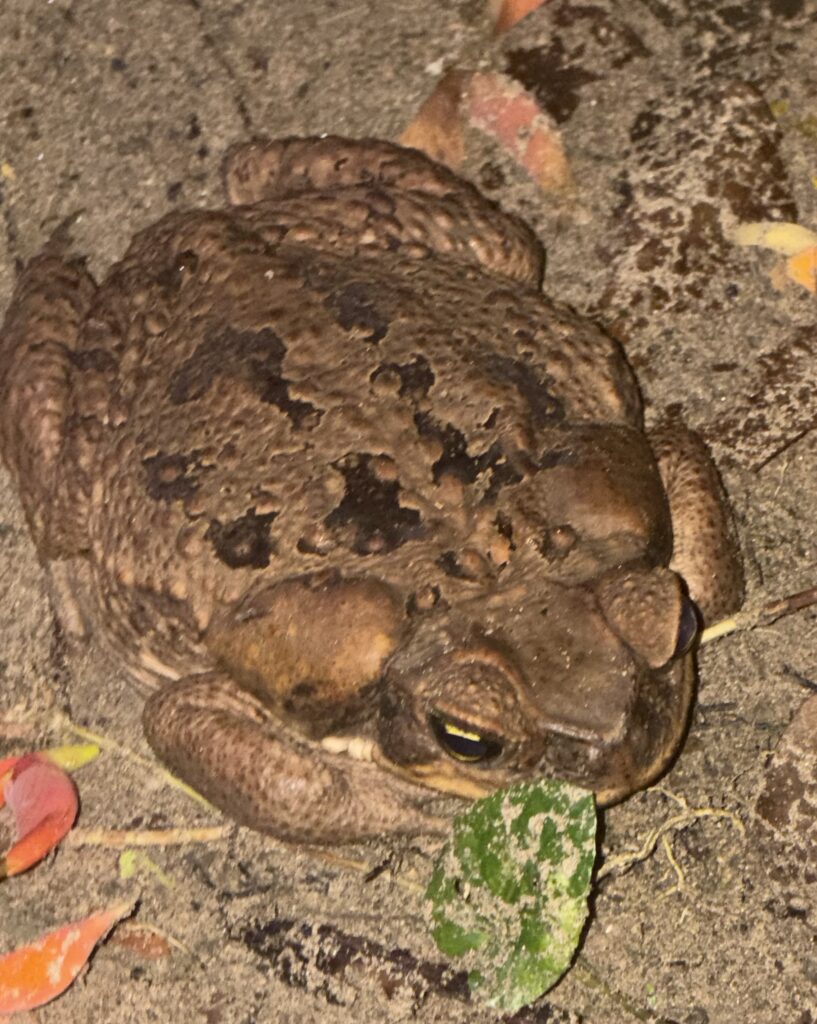
Stunning colours of the tree frog contrast to the ugly cane toad which has been imported to Australia many years ago.
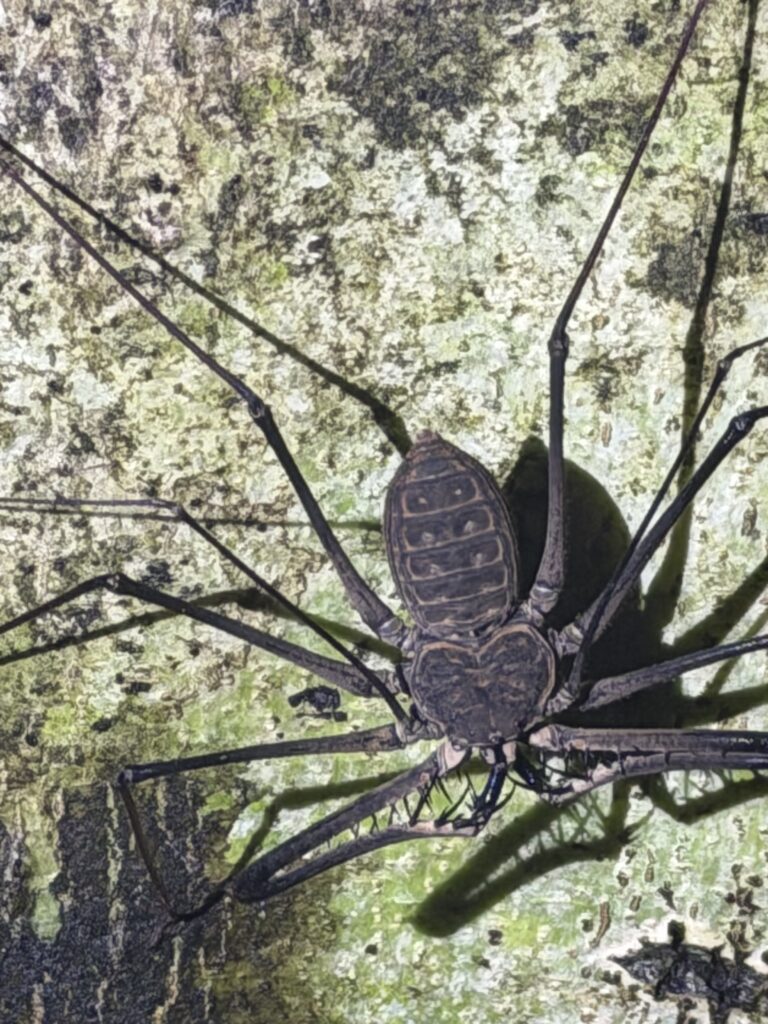
Back at the lodge a few beers at the bar then a reasonably early night.
Tuesday January 12
I was paired with a family group from Ecuador, a town outside of Quito, though only one of them spoke English we managed to click. Our guide was challenged to hold such a diverse group but he did well.
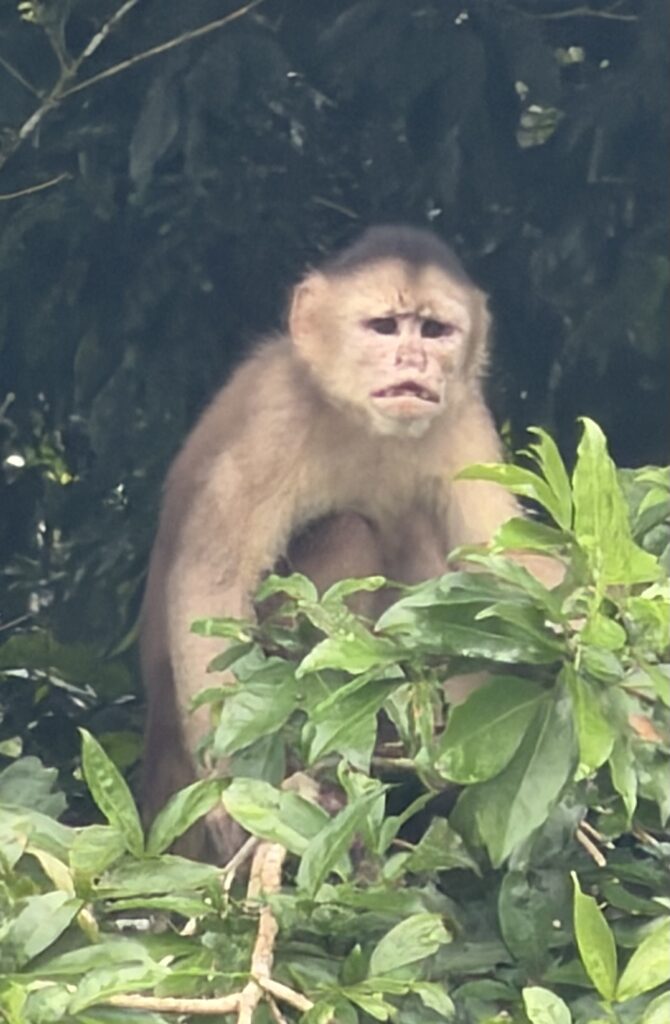
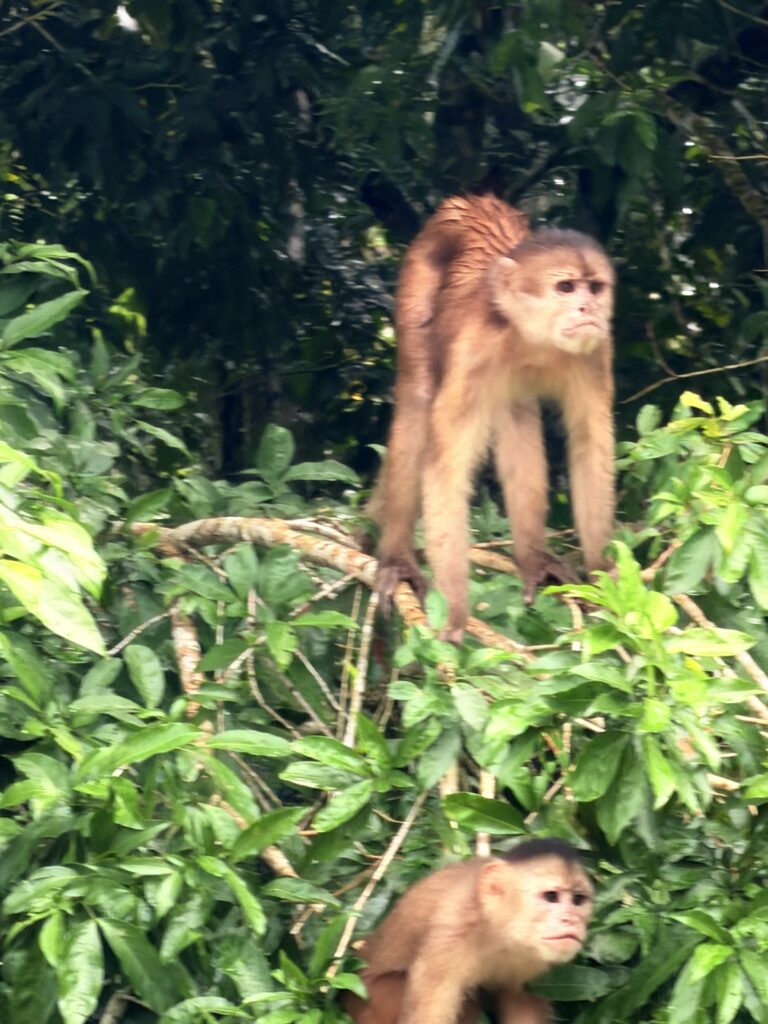
We set off at 8:30 walking from the camp for 40 minutes then all aboard a traditional river long boat and headed down stream on the Napa River which my guide assures me hits the Amazon river 1000kms down stream. After 30 minutes we hop off at a river crossing and cafe and watch the non stop transfers across the river conducted by two boats designed for this. Setting off again we came accross some wild life however most Amazonian animals are nocturnal so not observed.
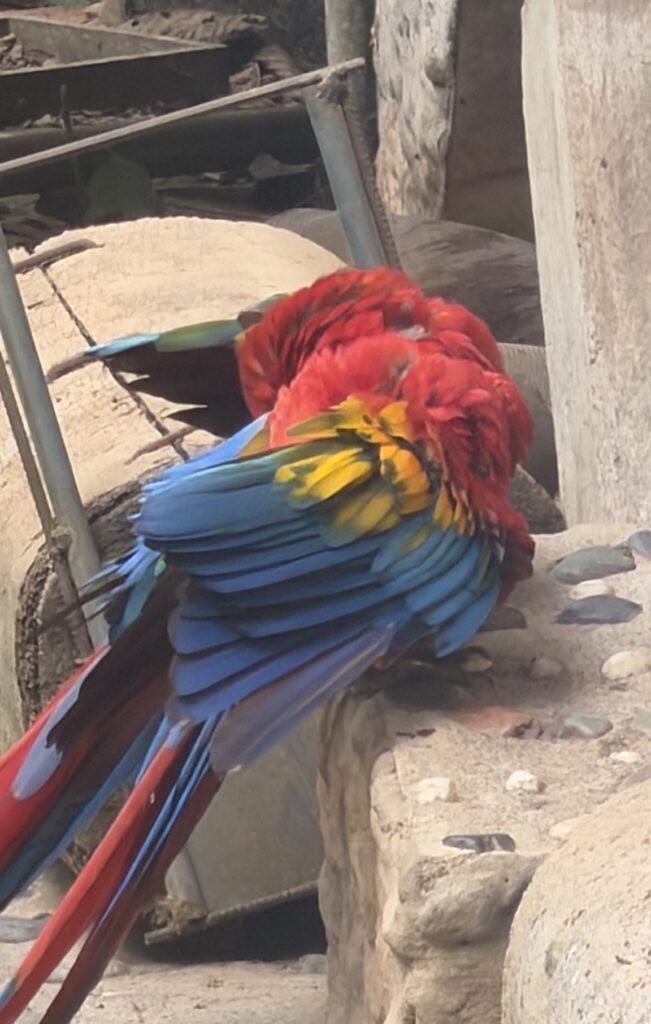
Our next stop was at a wildlife sanctuary aptly named Amazoonica. Numerous animals brought in for a range of reasons many not wanting to leave so have been there for many years. Two macaus represent this. One was brought in 2003 with a broken wings and it can no longer fly. A year later another brought in. These two have formed an inseparable bond and never separate; they will likely live another 40 years together in the sanctuary.
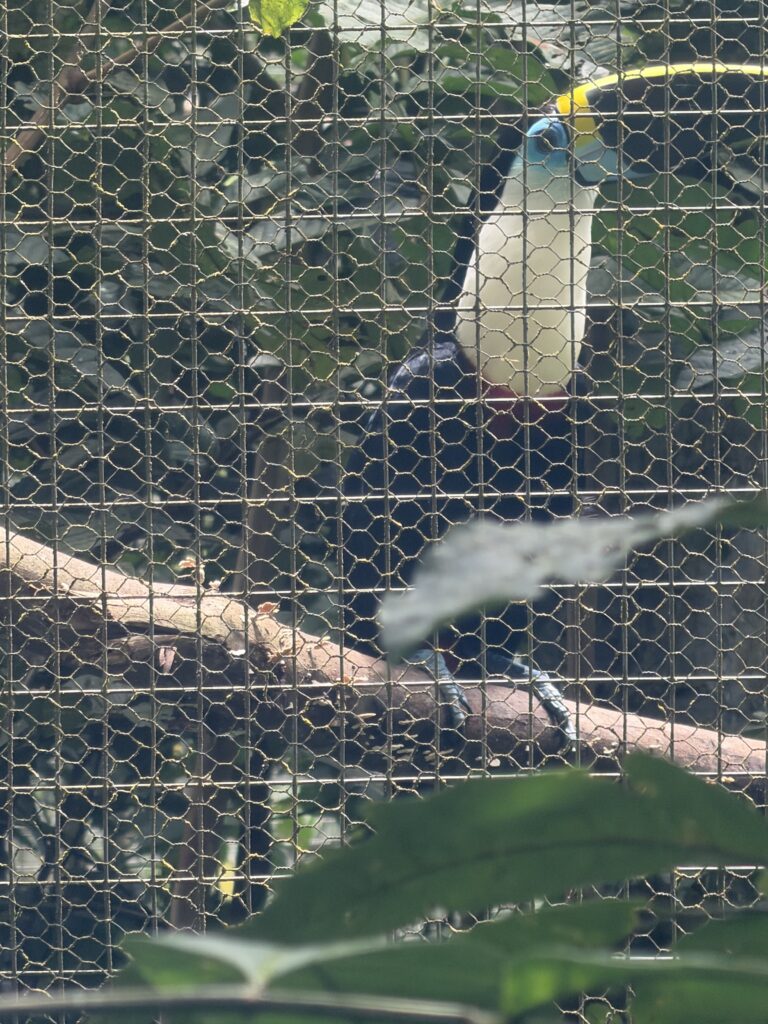
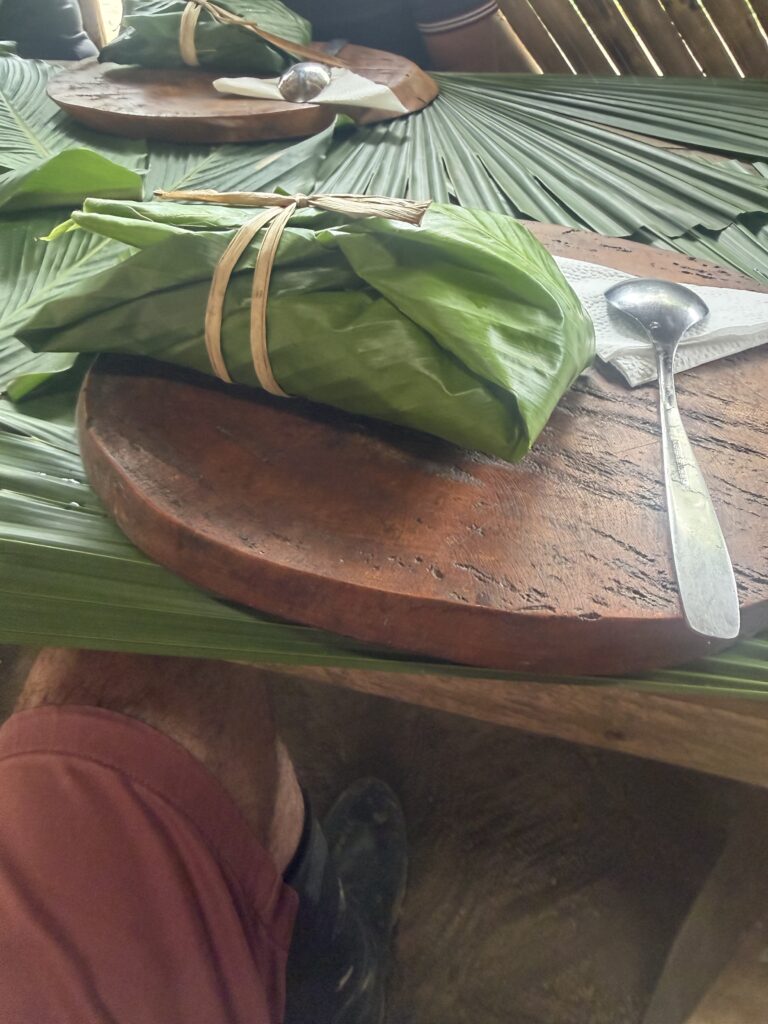
We caught glimpses of cayman, tapir ocelot and a four metre long anaconda, however all are nocturnal animals and sleeping in comfort. Our next hop on hop off river boat stop was lunch at a local village. They had prepared a rice beef and vegetable mixture wrapped in banana leaf. It was pleasant and provided the carbs needed for. Long day.
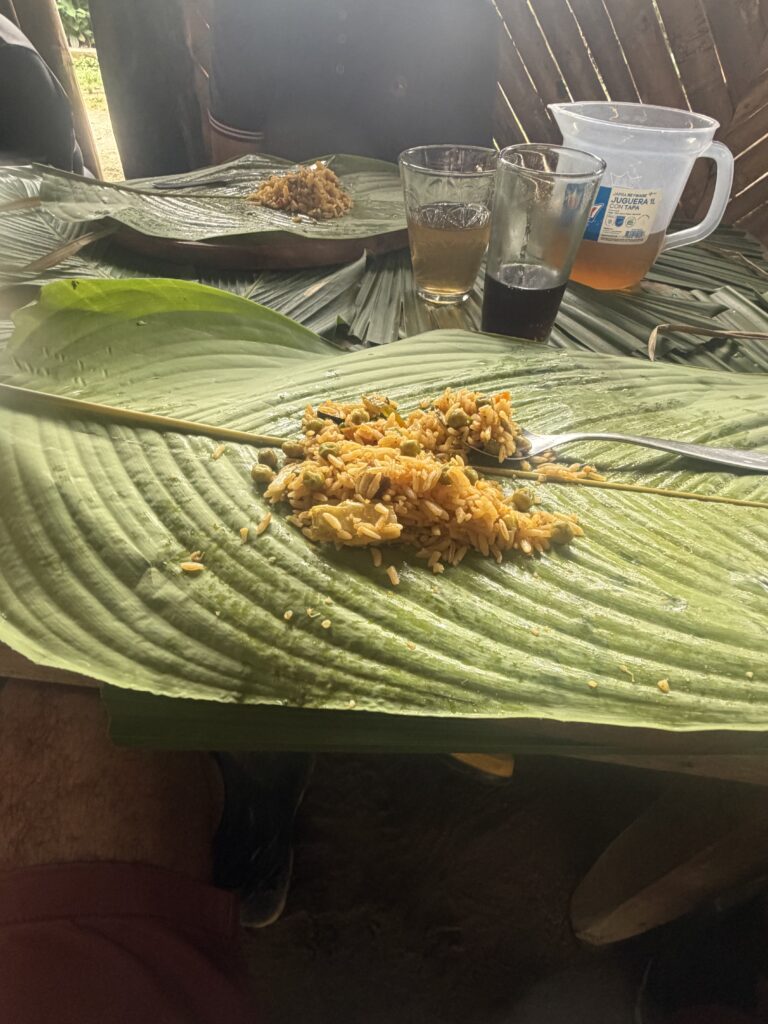
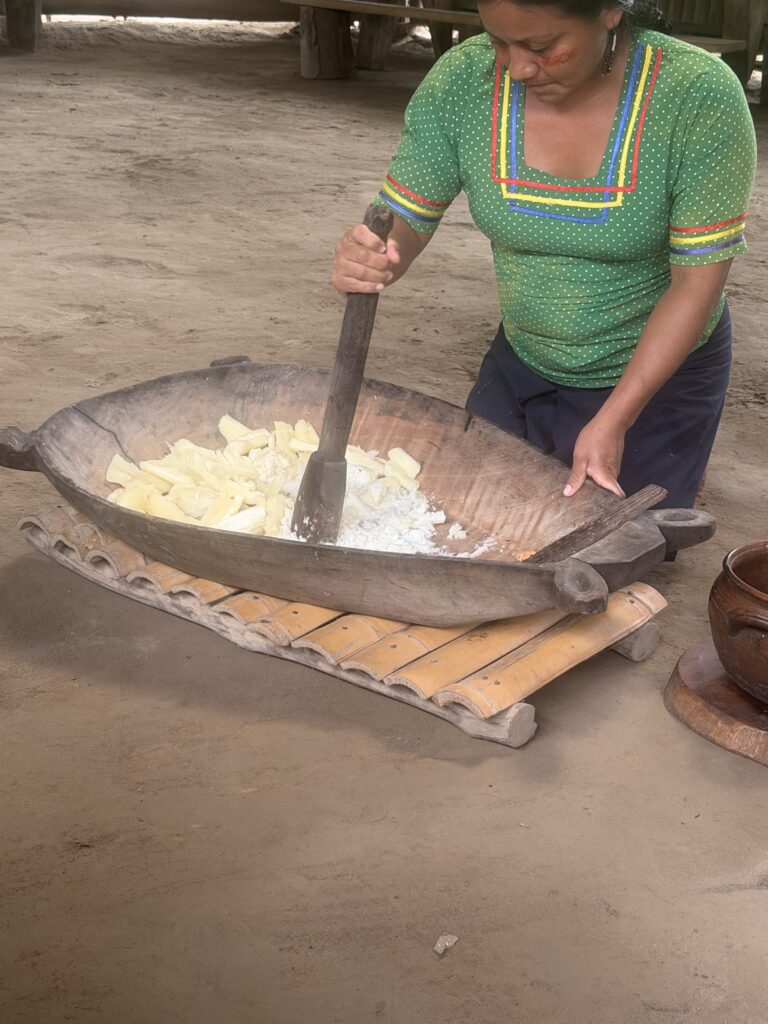
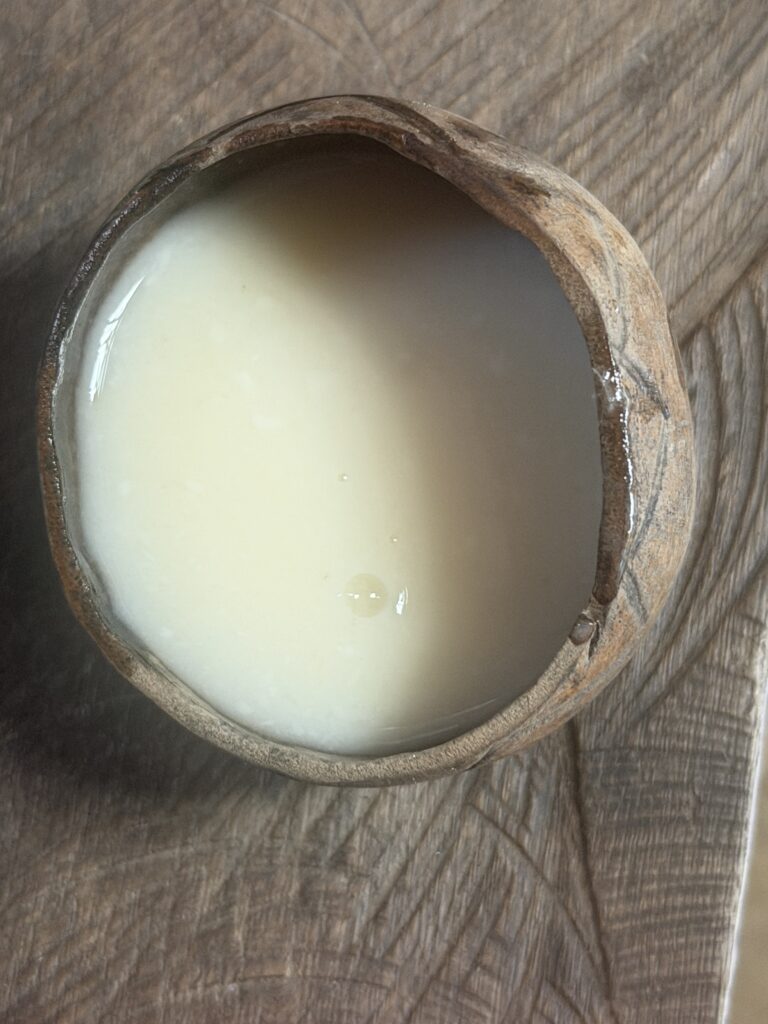
The woman in the community also put on a demonstration of their local dance and encouraged us to join in. They also demonstrated how they make their local alcohol by crushing a root vegetable after it had been boiled for some hours. A sweat potato was then grated into the mixture with an unknown liquid. We had a sample of a two week old outcome and a much nicer older vintage.
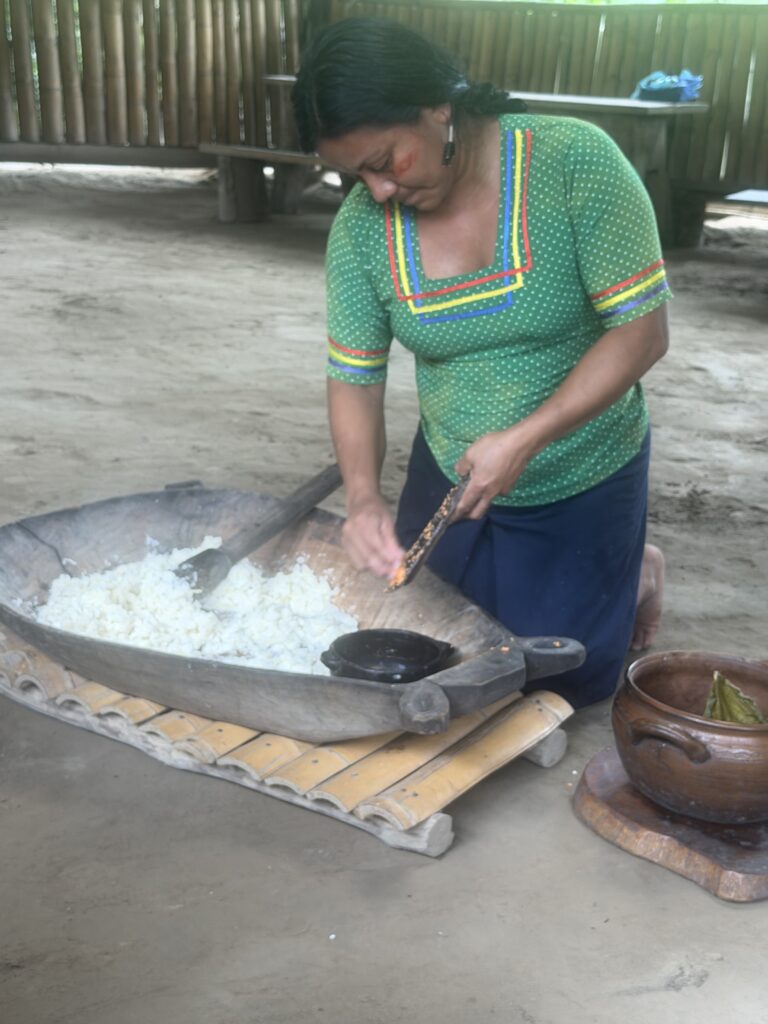
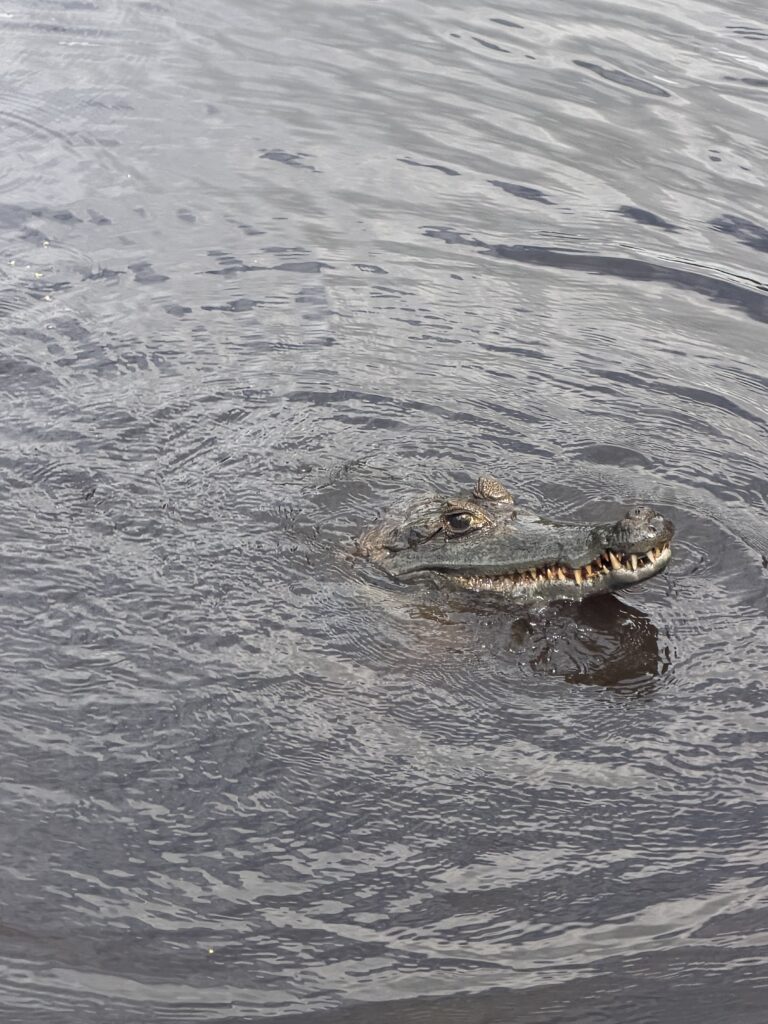
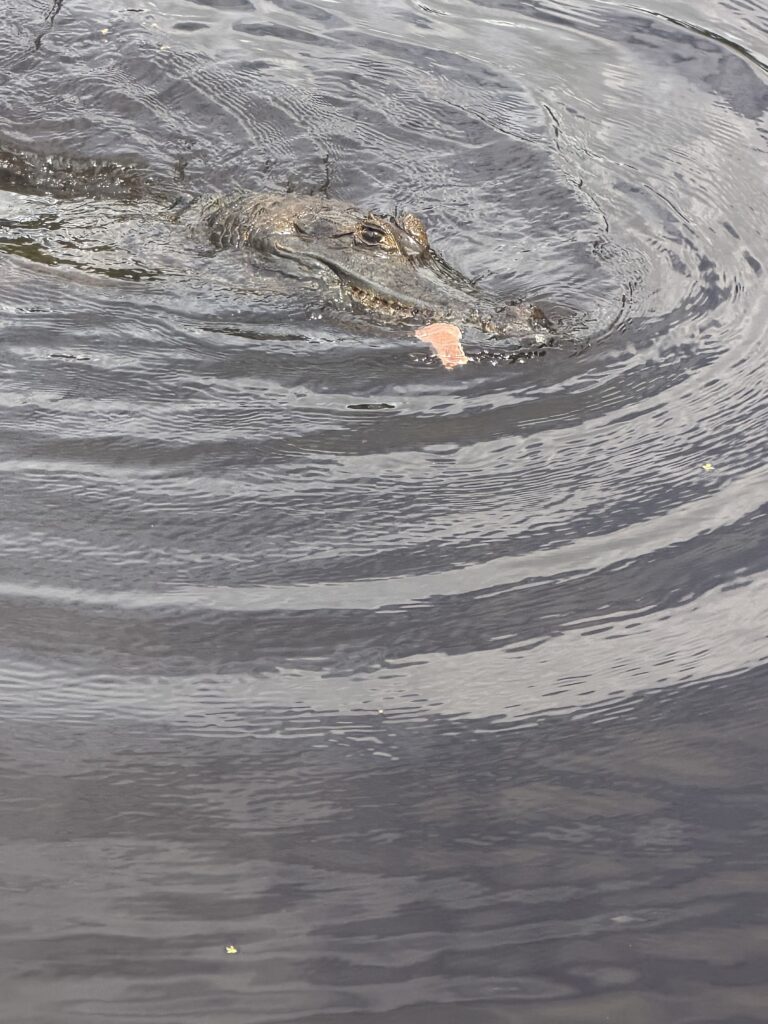
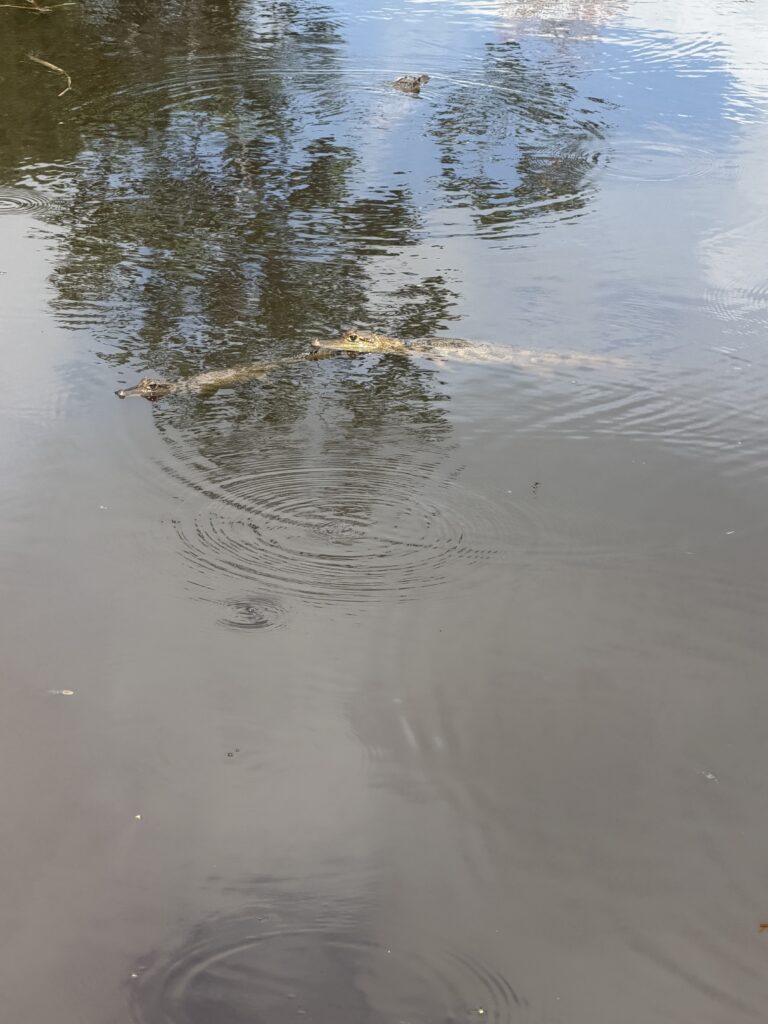
Our final hop on hop off was a small cayman farm, containing two adults and around 6/7 smaller cayman. Tossing chunks of meat in brought them close.
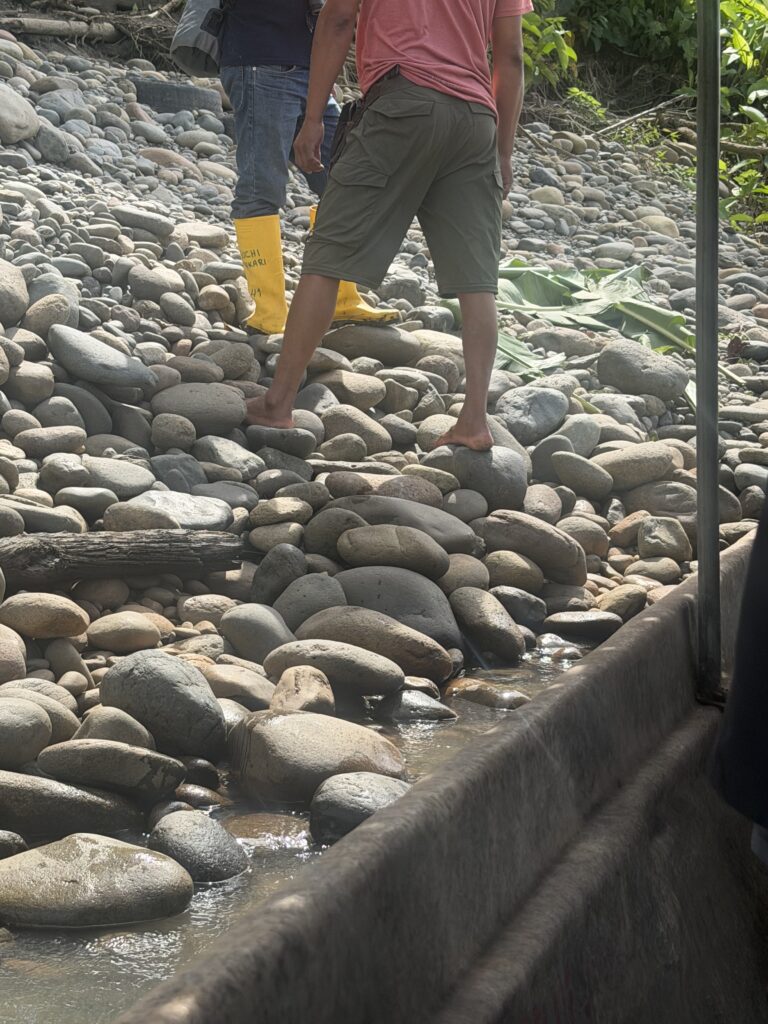
You can tell the locals from the visitors by looking at their footwear and our group.
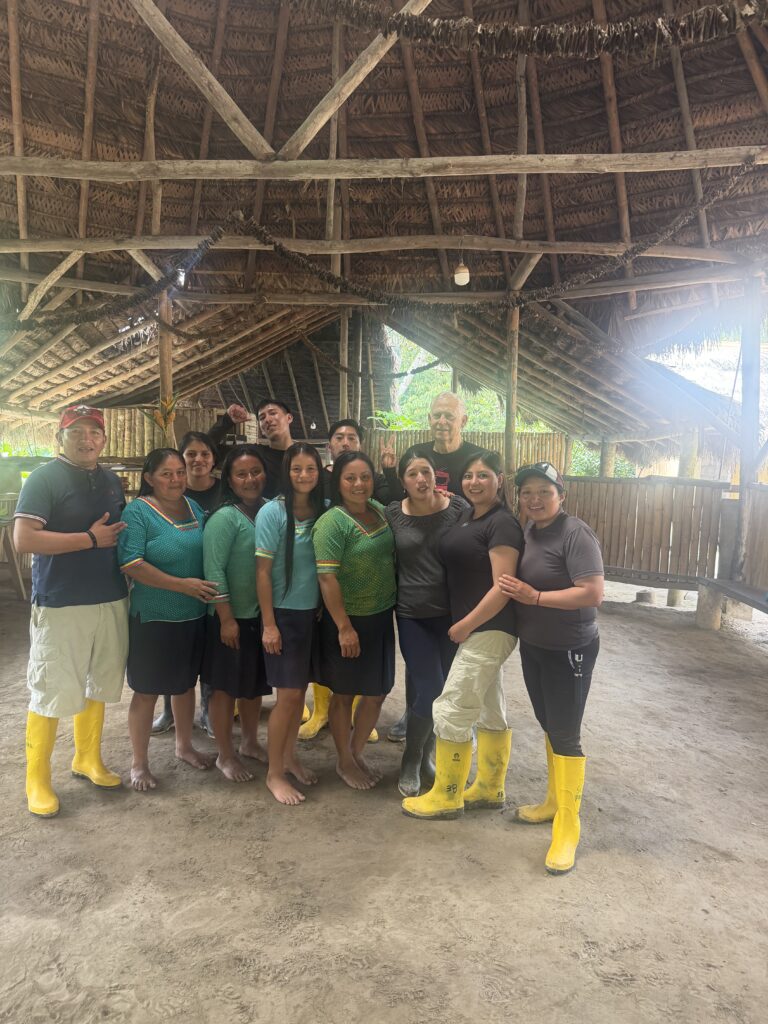
Finally home around 4:00pm. A long but great day so time to relax. What better way than this……
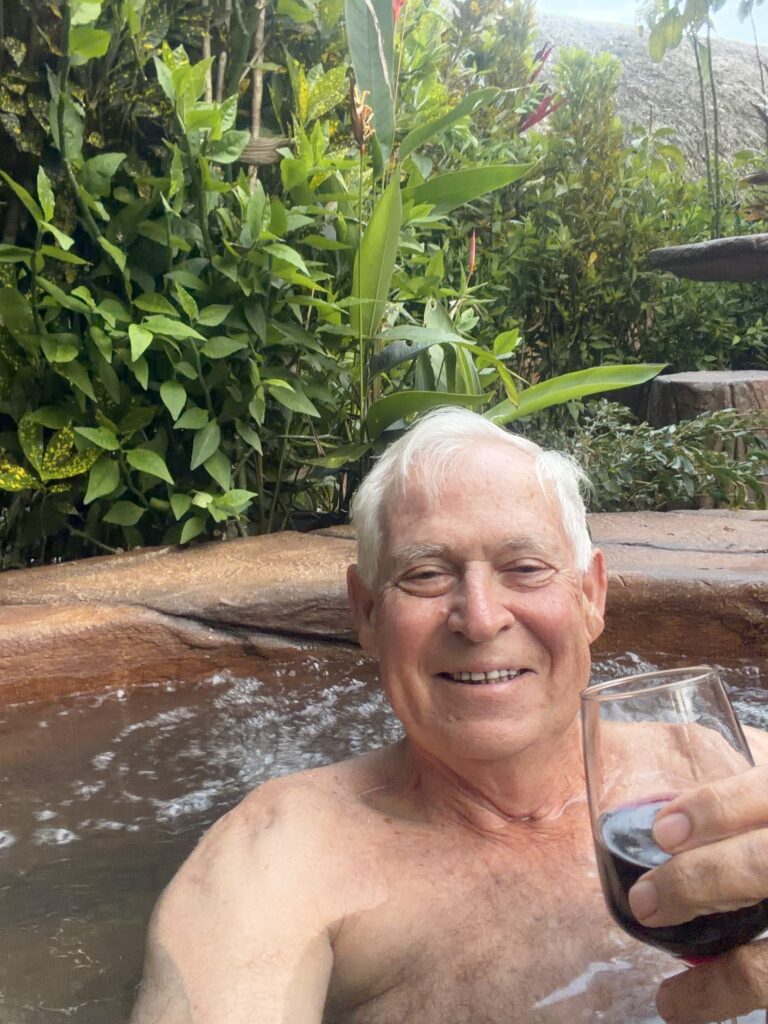
Wednesday January 14
The rain started last night and has not stopped with at times heavy downpours. We have a full day once again ahead of us, we set off by car at 9:00am. We reach our destination which is a major waterfall around 45 minutes later.
I am solo with my guide today and he suggests we wait a little, as too much water was coming down rapids to make a safe crossing. Some thirty minutes later he suggests we go an alternative way which a mountain goat would have trouble with, let alone a 74 yer old man with wobbly knees. I followed him out climbing over rocks under branches until we reached a section where he said we could cross. This entailed me leaping about a metre of rushing water. He extend his hand, I grabbed and jumped. Success and hamstrings still intact.
That was the easy part as I followed him along a muddy slippery trail. At some point I lost sight of him but plodded on. When he did not appear after 10 minutes I stopped and yelled for a bit then turned around as I did no want to get lost. I slipped three times on the way down, but aside from a muddy bum I was able to continue. As I approached the rushing waters where Ieapt over, he appeared behind me. I was not happy with him and let him know, but he lead me out of the area onto a roadway then back to our driver. No photos of the slippery trail as I would have struggled to balance and did not want to lose my phone.
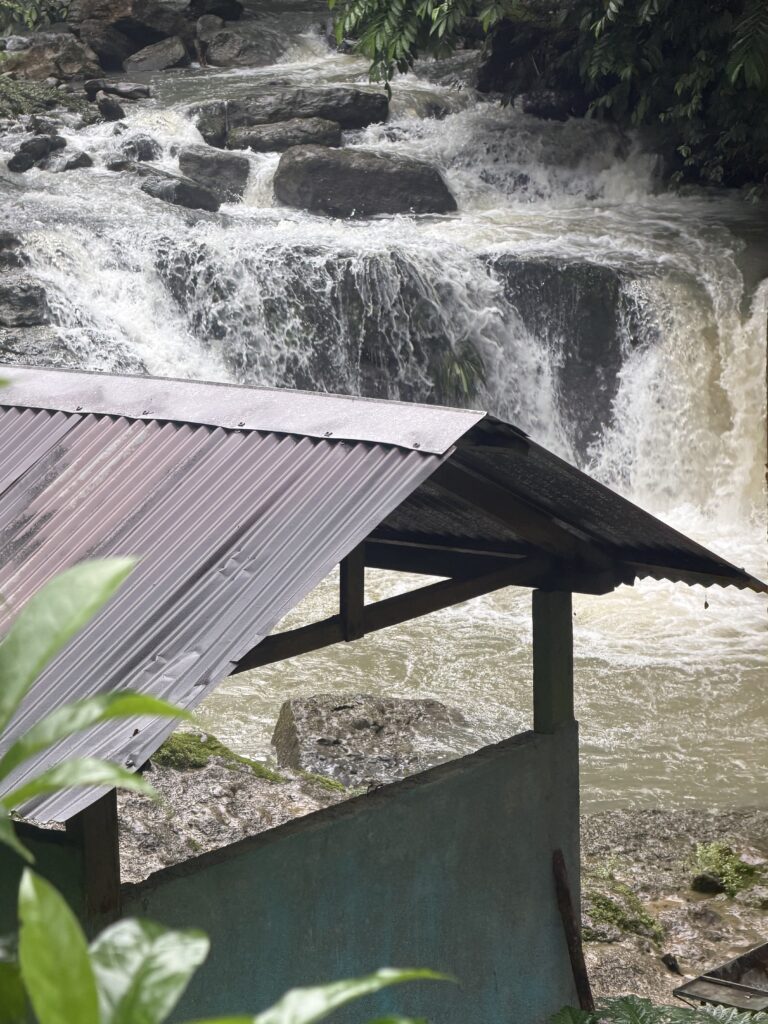
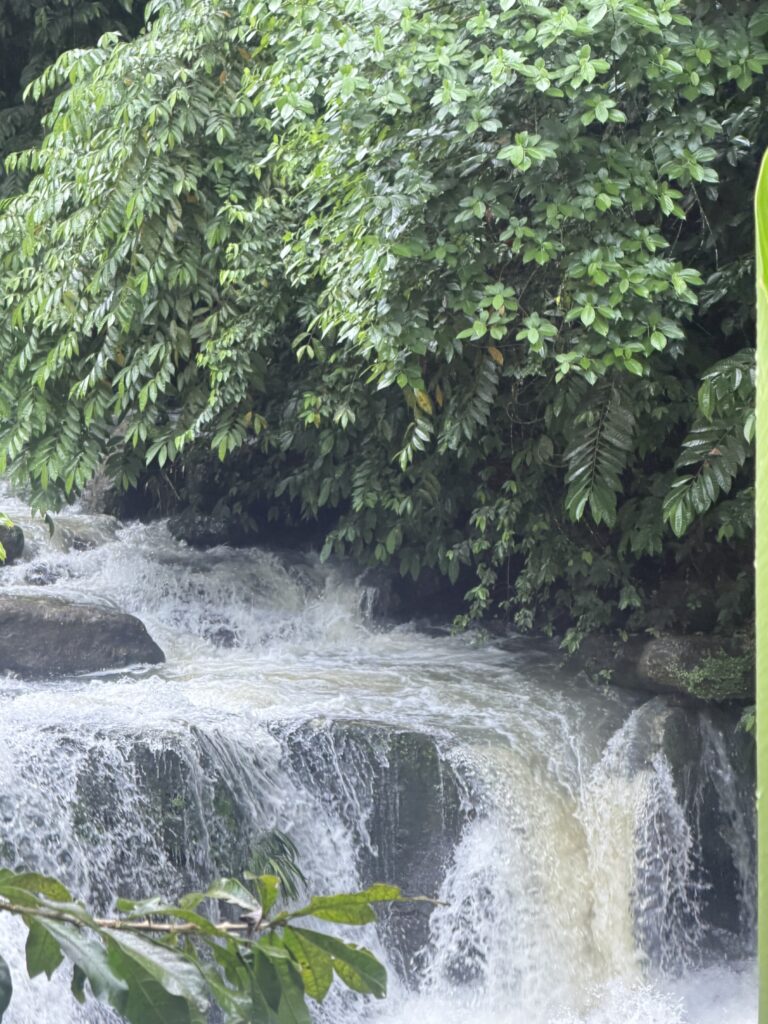
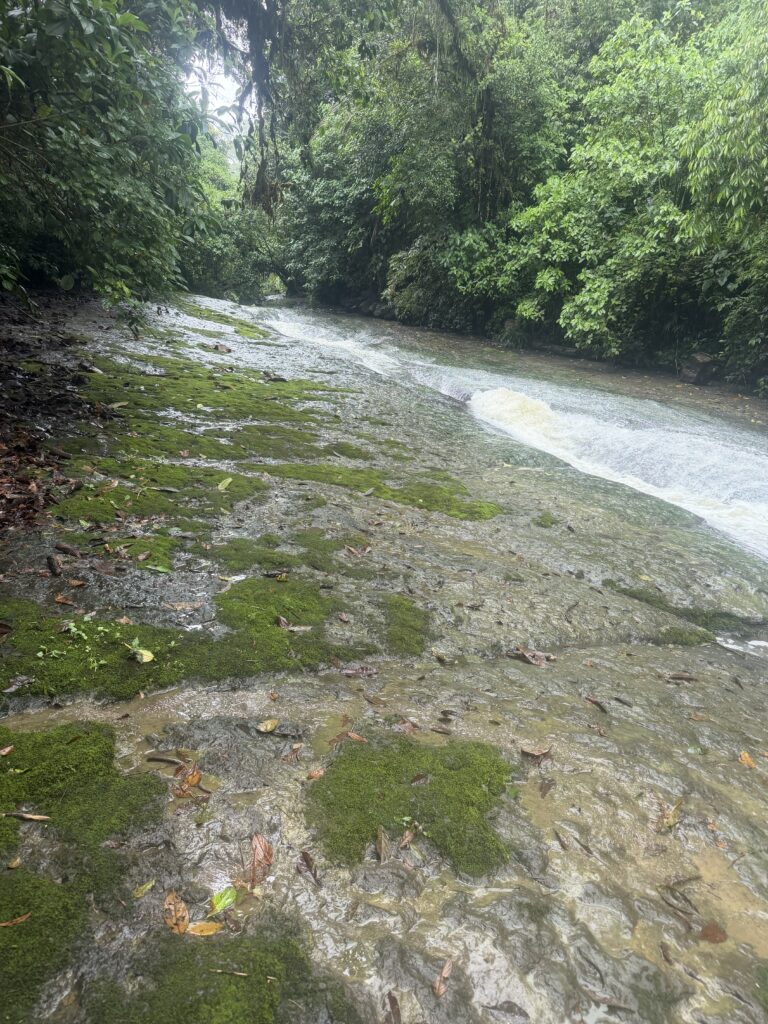
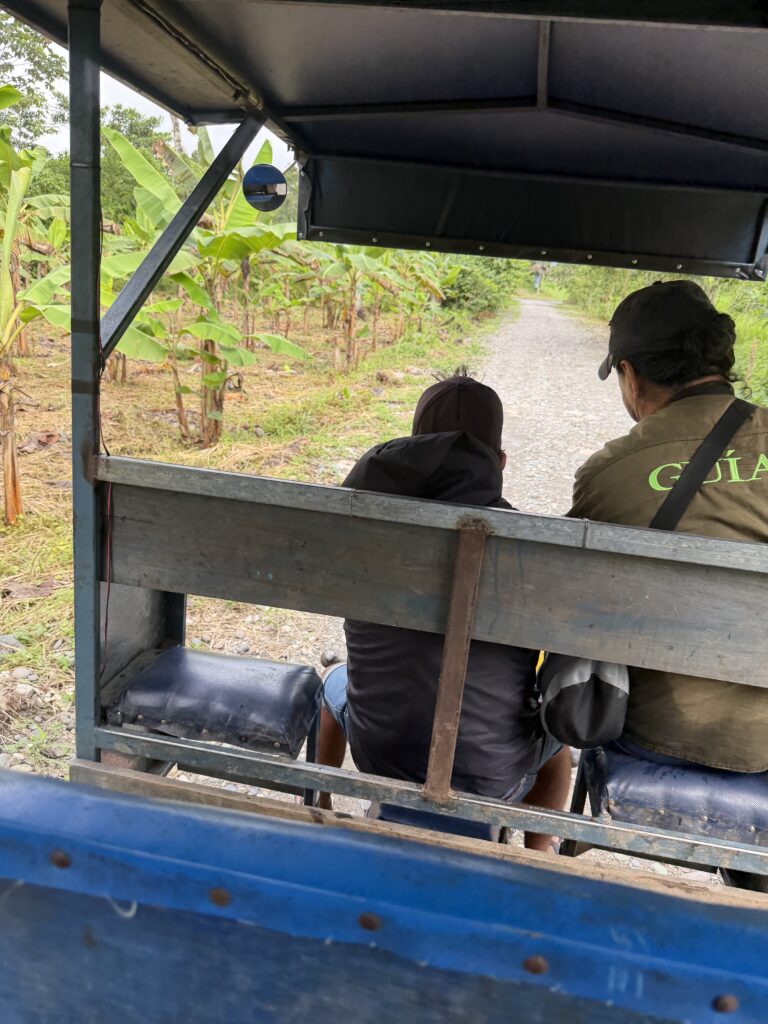
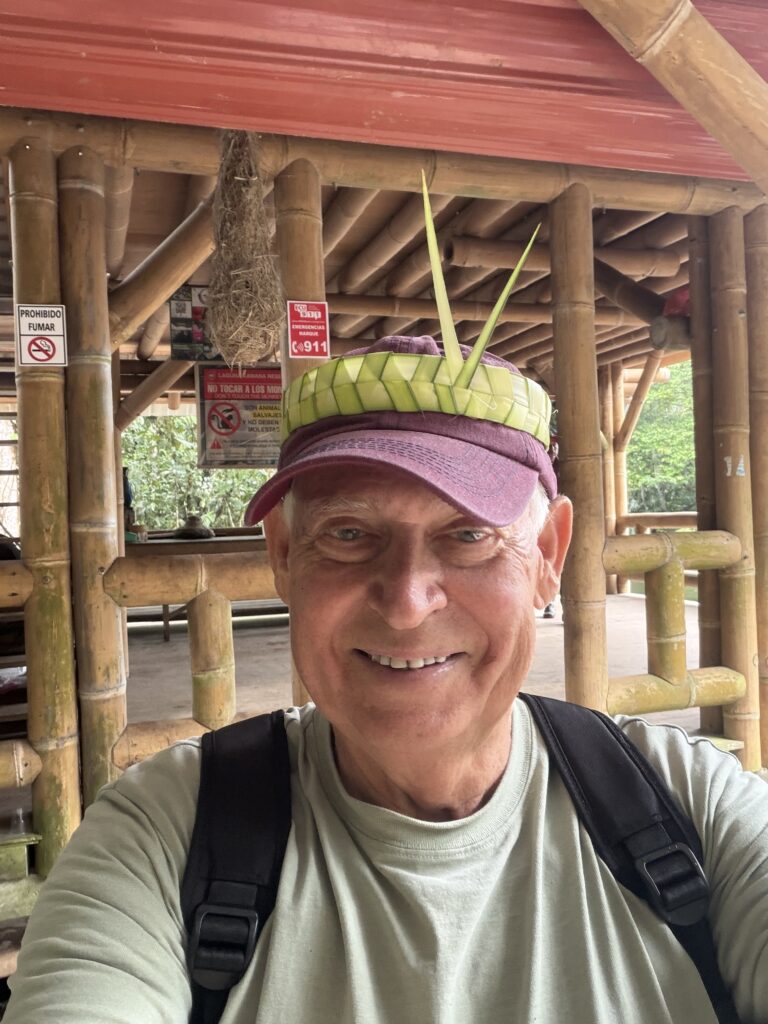
By the time we returned from our attempt to get to the main waterfall we were both drenched. Waterproofs did not stop rain in our boots and running down my neck soaking all clothing. I stripped down to shorts and we headed to another village overlooking the river and settled in for lunch.next we travelled via tuktuk t( not what they call it but a Thai tuktuk all the same), where we would board a canoe for a gentle paddle upriver. A little village girl greeted me and.offered my some head wear which I could not refuse and gave a small tip.
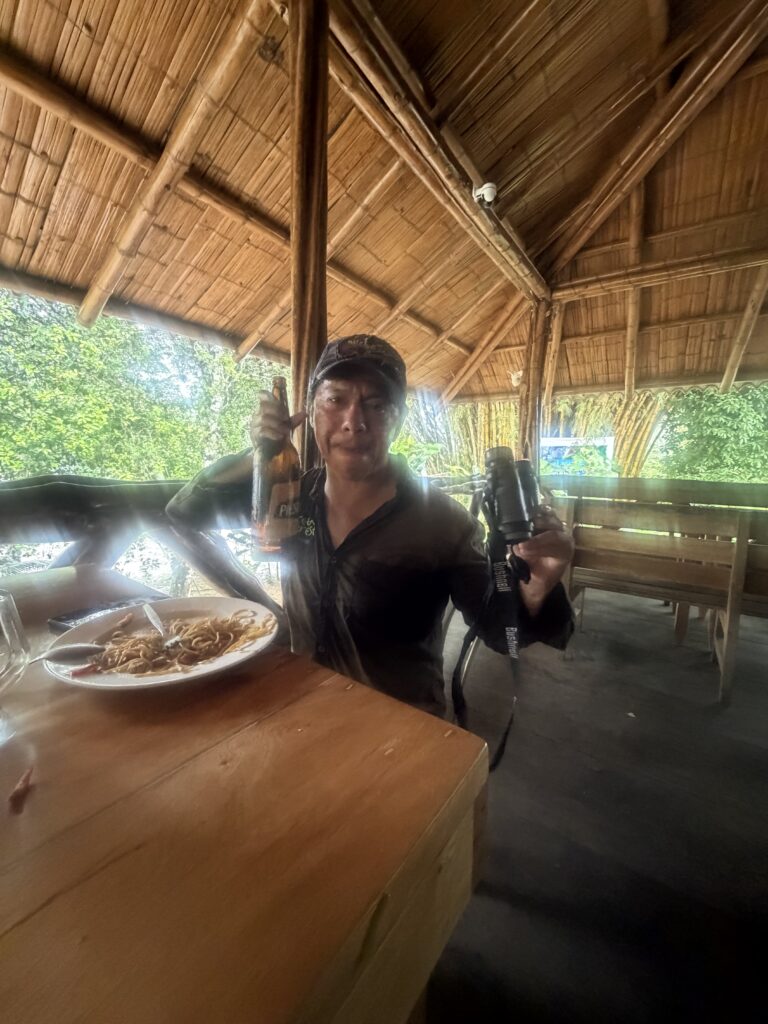
The half hour canoe ride was great. We were in piranha territory as demonstrated by food being tossed into the water. I could see nothing except a swirl of water and the food gone so no photos. We did see larger monkeys and a river hawk protecting its chick.
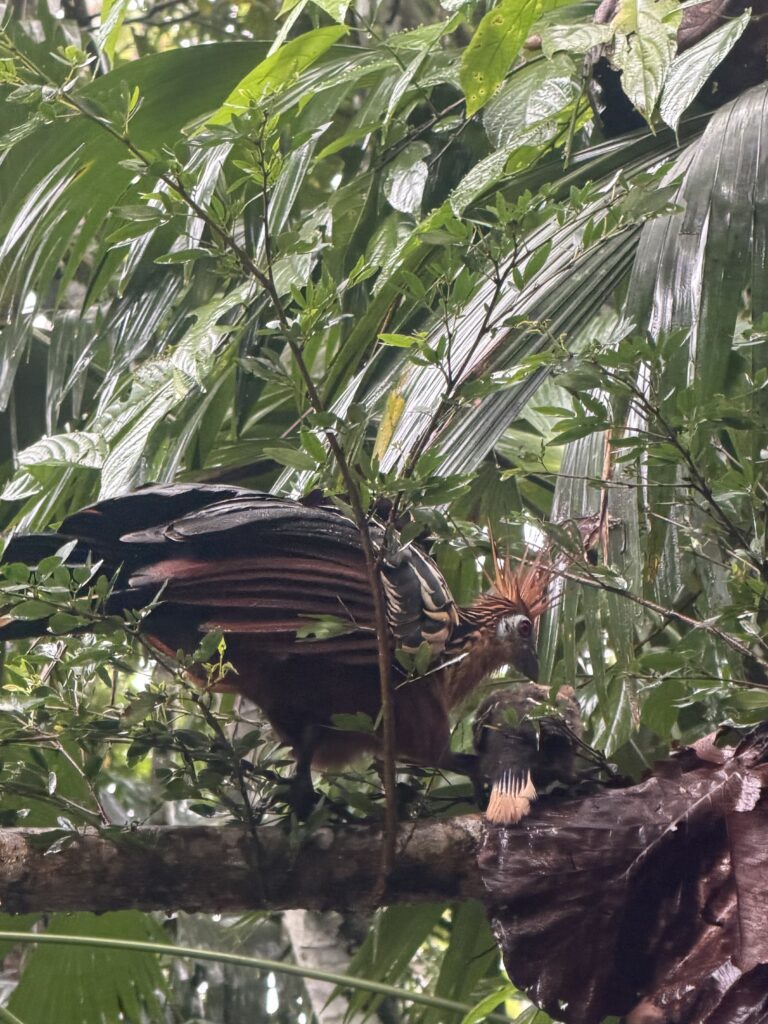
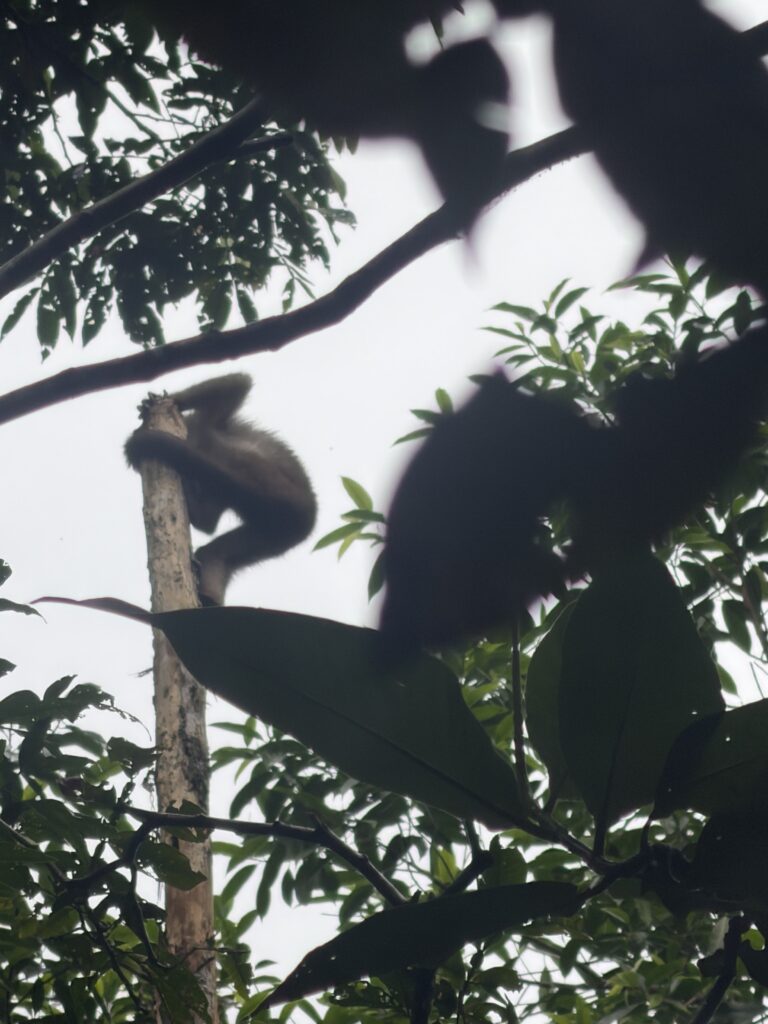
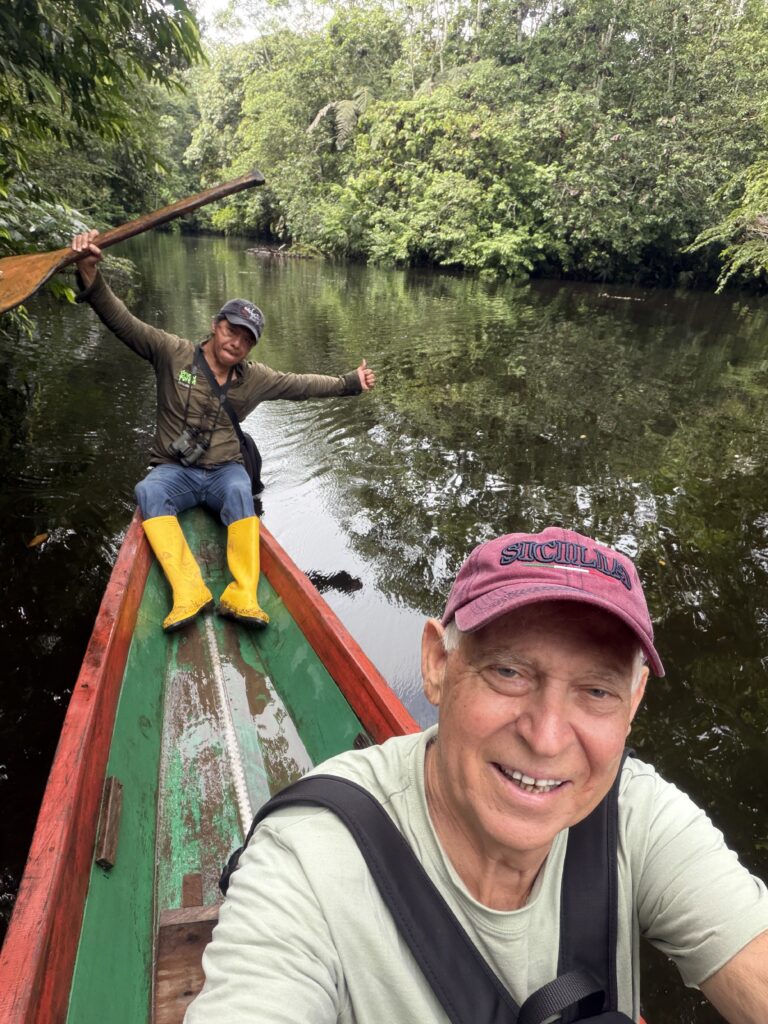
after a short jungle walk in this area we retraced our steps, back on canoes, tuktuks, river boats and finally a 40 minute ride home. The half hour on the canoe rescued what could have been a disaster day.
In the small village centre we came across numerous in town monkeys. This one was using a rock to break open a nut.
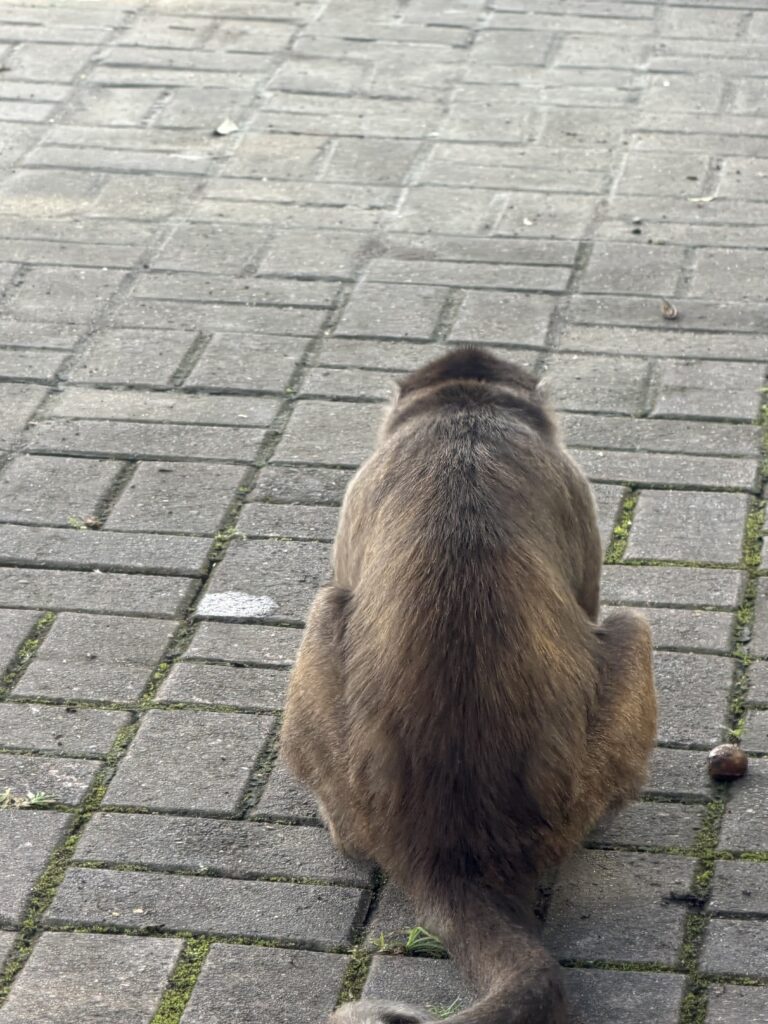
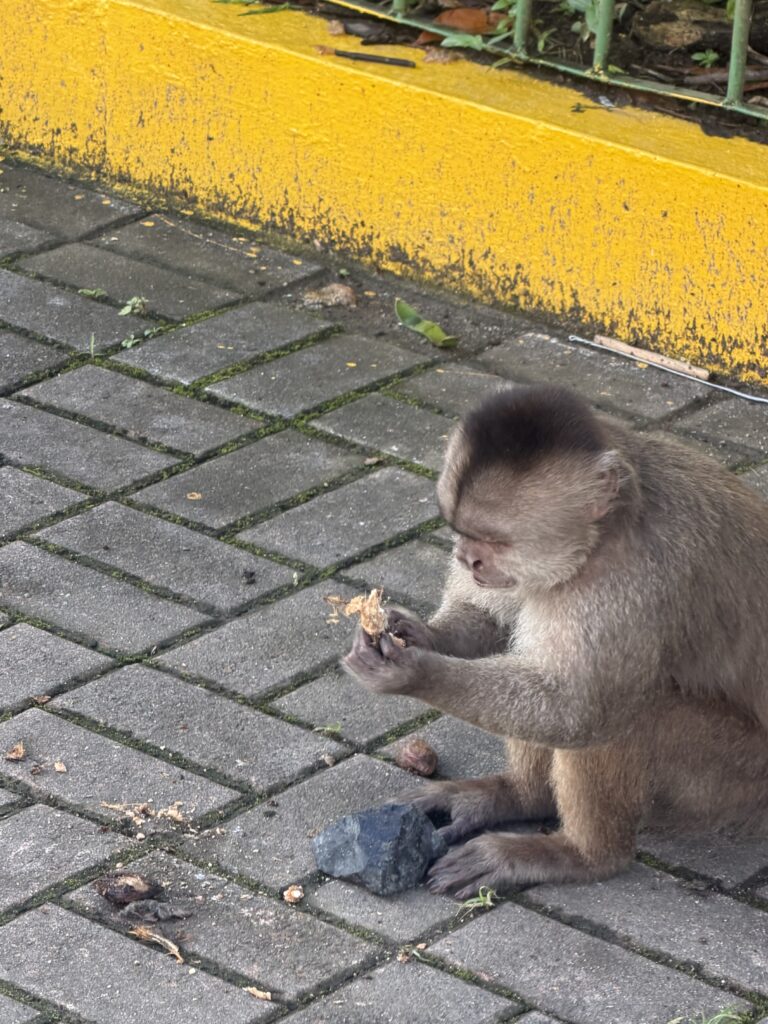
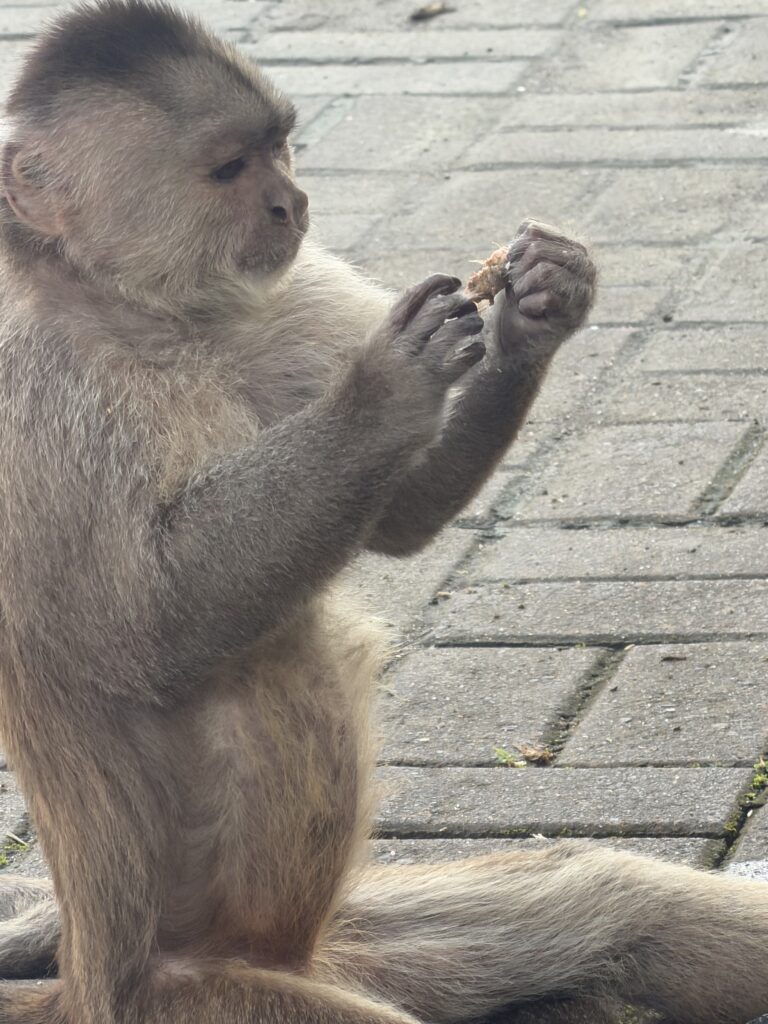
once back I organised for my jacuzzi to be filled with hot water and relaxed until dinner time. I joined a group of Canadians s after dinner for drinks and socialising. Nice way to spend my last night in the Amazon.
Thursday January 15 DEPARTURE DAY
After breakfast I briefly met up with my guide Patrick who was acting fairly dismissively, perhaps not expecting much of a tip after yesterday’s performance. He was right I was already reducing it in my mind by half but in the end NO TIP.
At 11:00am I set off with my driver Alex who owned his Renault Duster. Alex came form the school of Jack Brabham and my return trip to the city hotel was 30 minutes faster than my outgoing 4 days earlier. He was an excellent driver all said.
I checked into the JW Marriot hotel for two good nights sleep and a day of R&R. My accommodation at Puerto Ayora for the next 7 nights is confirmed and my flight is scheduled to leave at 6:55am Saturday morning. Prior to that I enjoyed the comforts of the Marriot with some great mels including the traditional BBQ and some excellent wine.
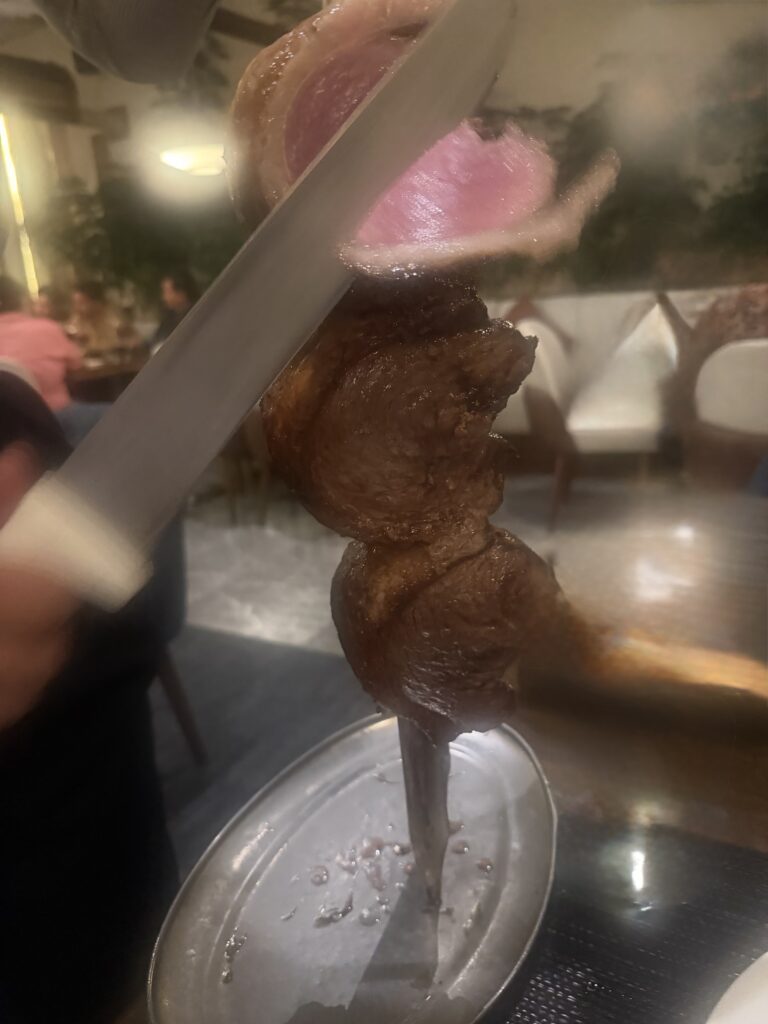
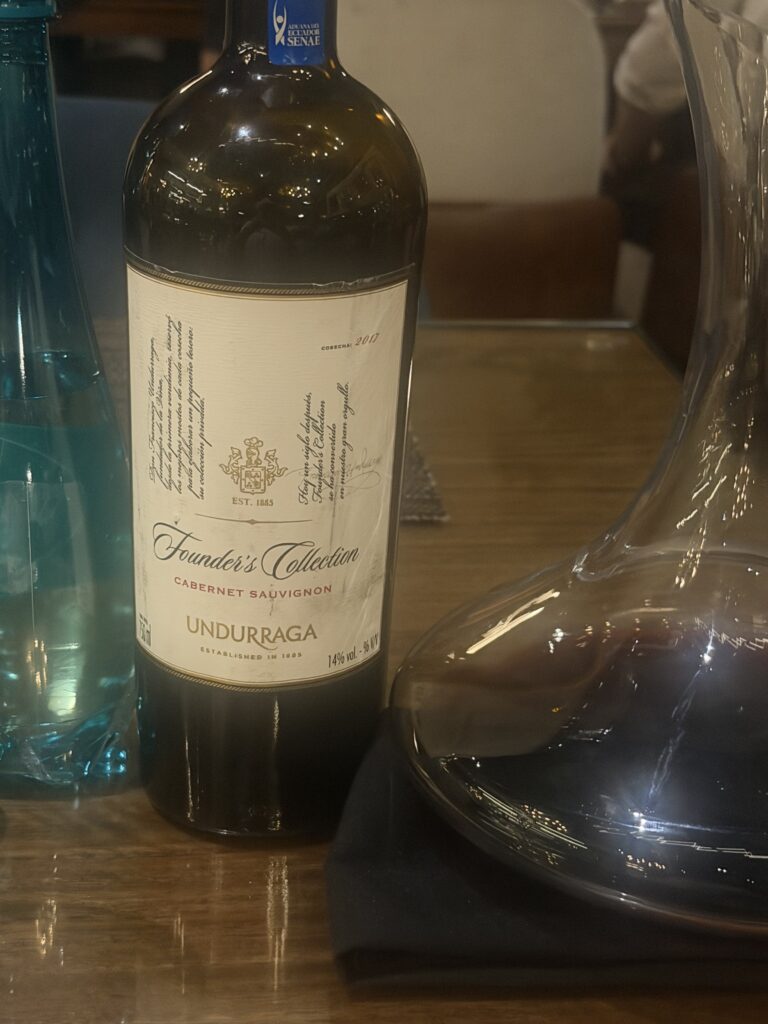
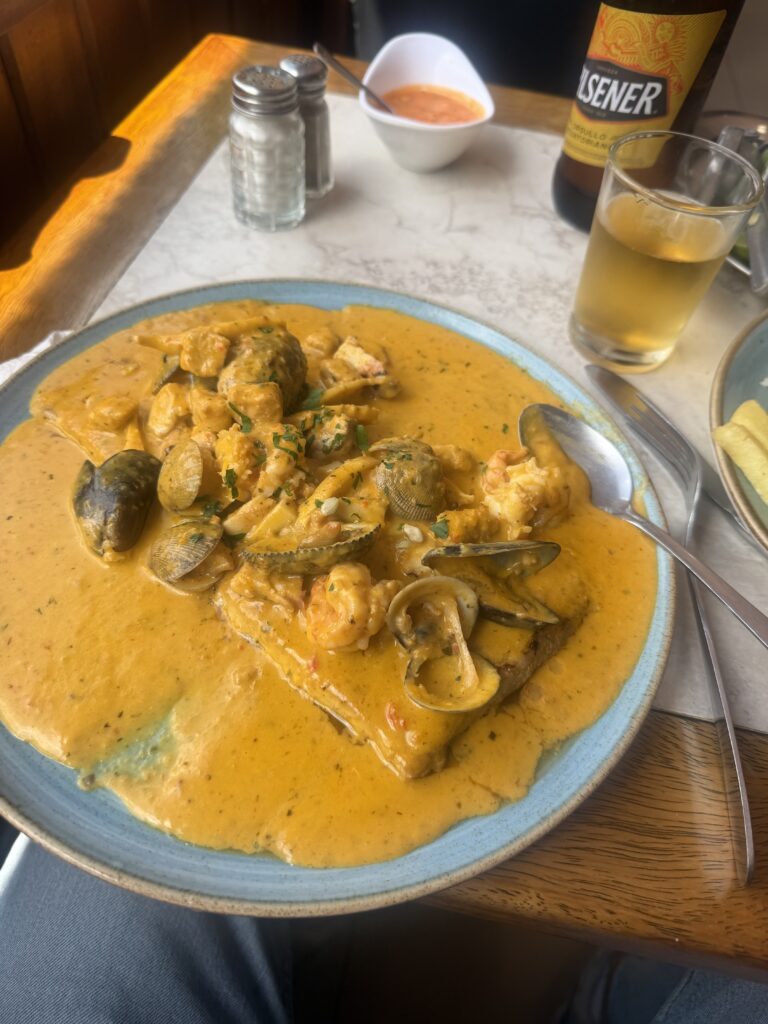
Saturday January 17
a
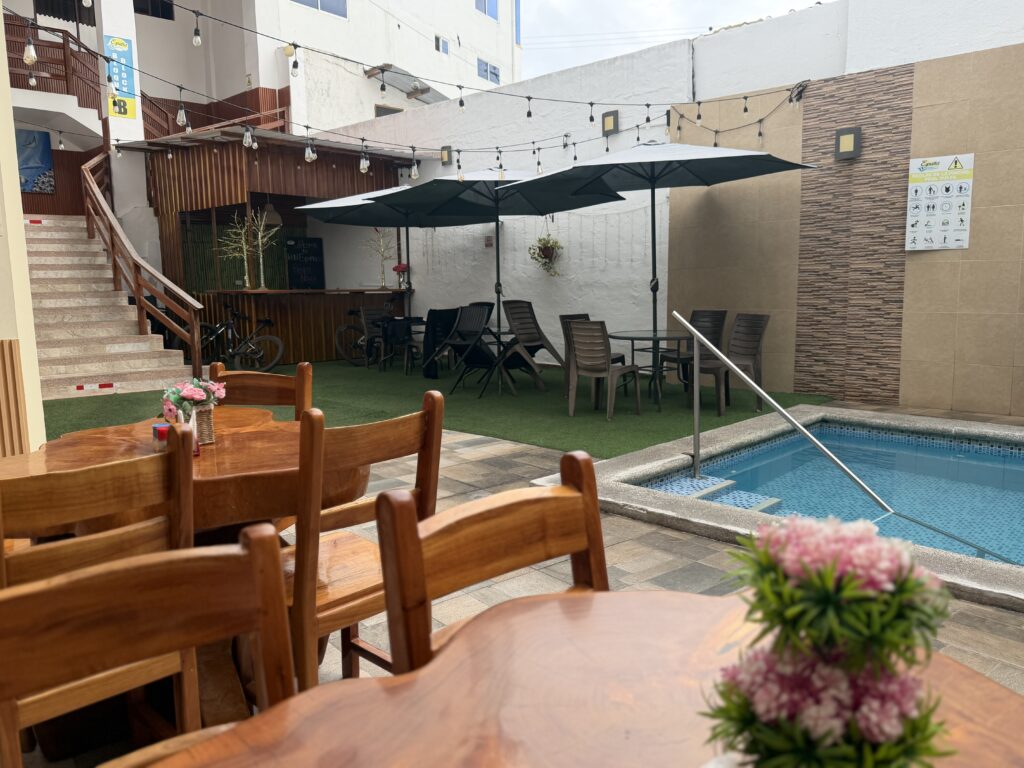
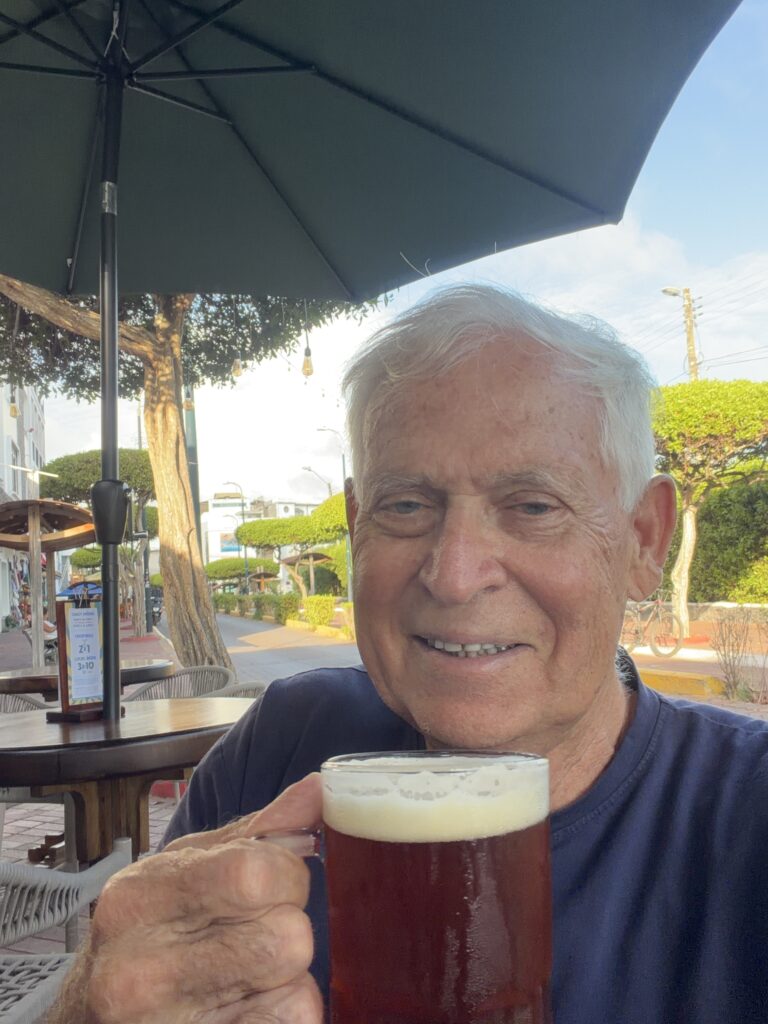
day of travel arriving eventually at my hotel in Puerto Ayora. friendly staff and lovely downstairs cafe area around the pool used for breakfast. After a brief respite I went for a wander immediately meeting locals and found a good craft beer (or two).
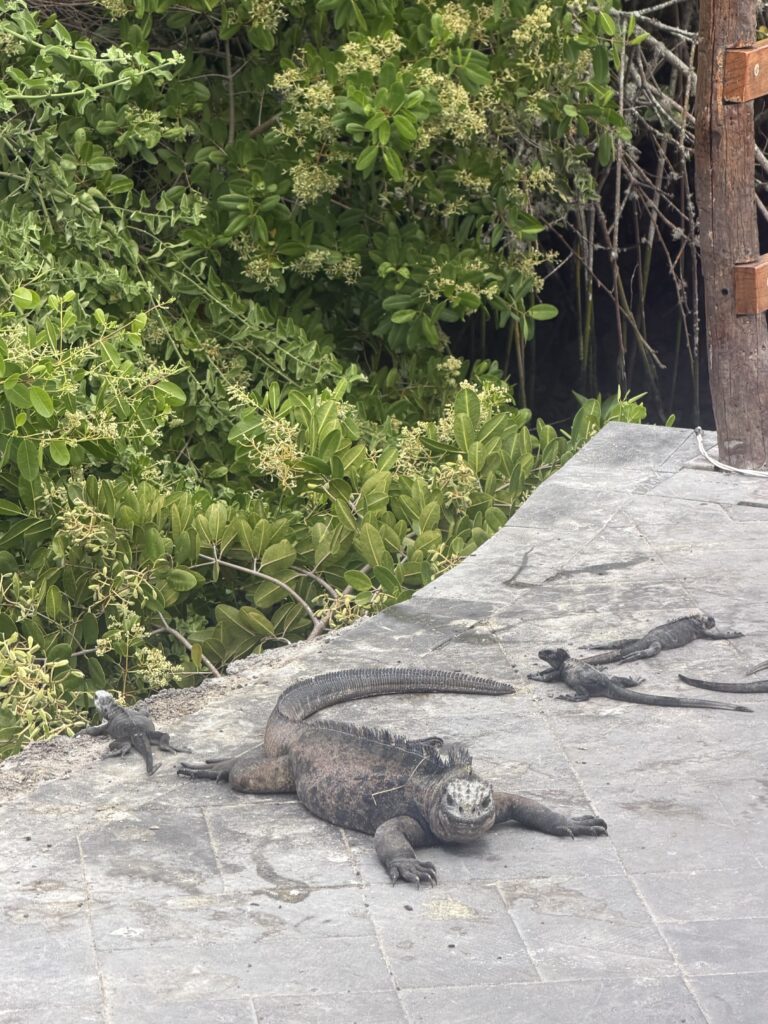
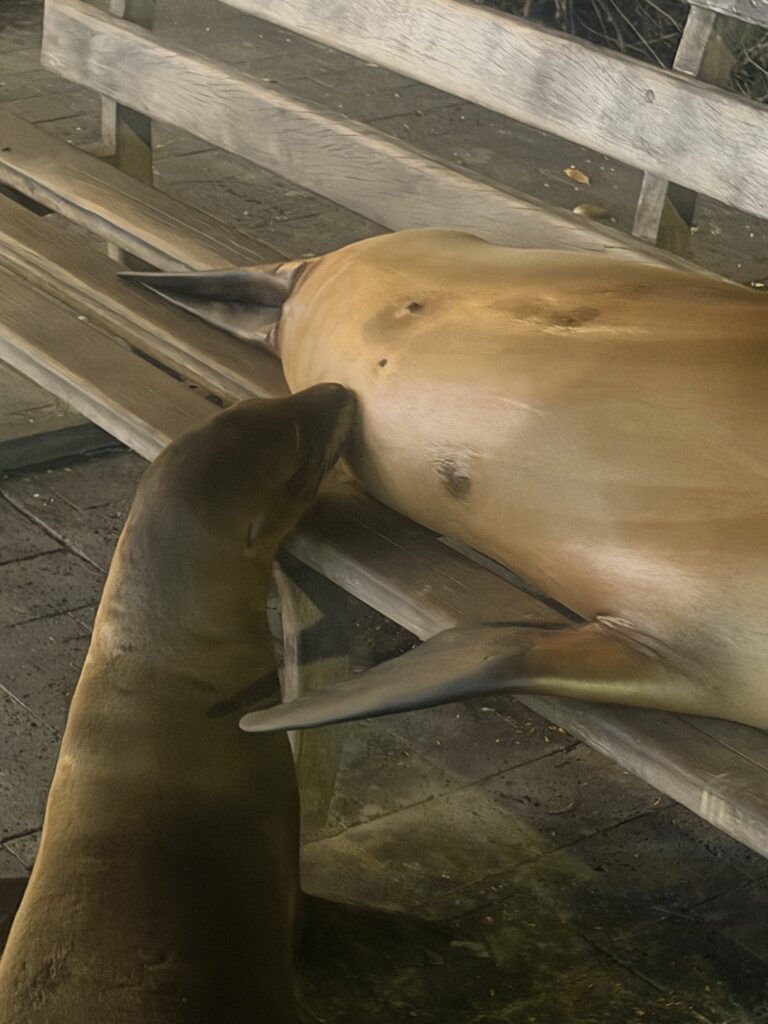
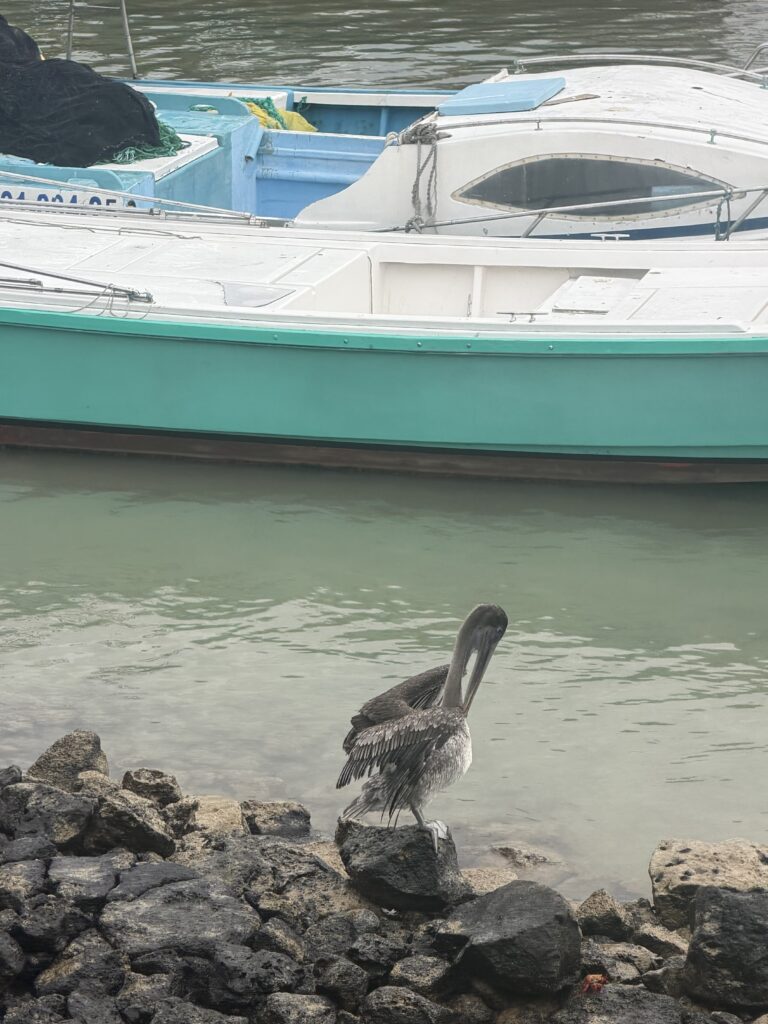
Medium sized Iguana, baby sea lion feeding and the pelican as this area is known as Pelican Bay.
Arrival involves your flight with $200 US landing fee, a bus ride then ferry from Beltran to Santa Cruz. A 40 minute taxi ride the. Follows to Puerto Ayora. During the journey I negotiated my firsts tour with Vincente the driver. The next morning he picked me up at 8:30 am and we spent the next three hours covering the craters, lava tunnels and land tortoise farm with a guide. if you ever used Get Your Guide app make sure you book nothing on the Galapagos through this. Prices change regularly and prices from are often double when you open the tour. I paid my driver $40 and the farme entrance fee of $8:50. On get your guide this was as much as $178 though more often a little over $100.
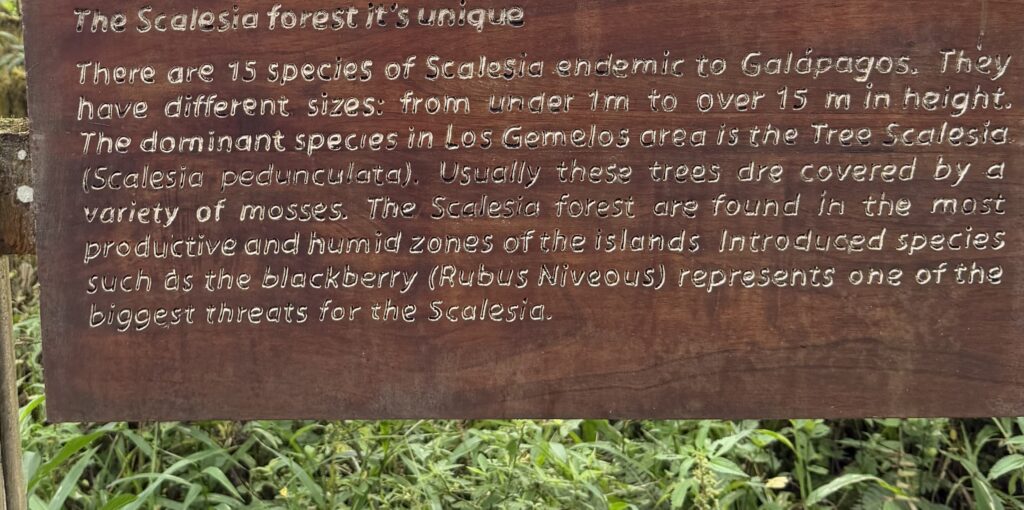
The craters of Los Gemlos are collapsed lava sink holes found on either side of the main rod some 15 kms North of my hotel. The surrounding bushland has unique vegetation known as the Scalesia Forrest with information in the landscape photo below. Home to many birds in particular the Darwin Finch. The sinkholes while noteworthy are not spectacular after Cusco and the Amazon.
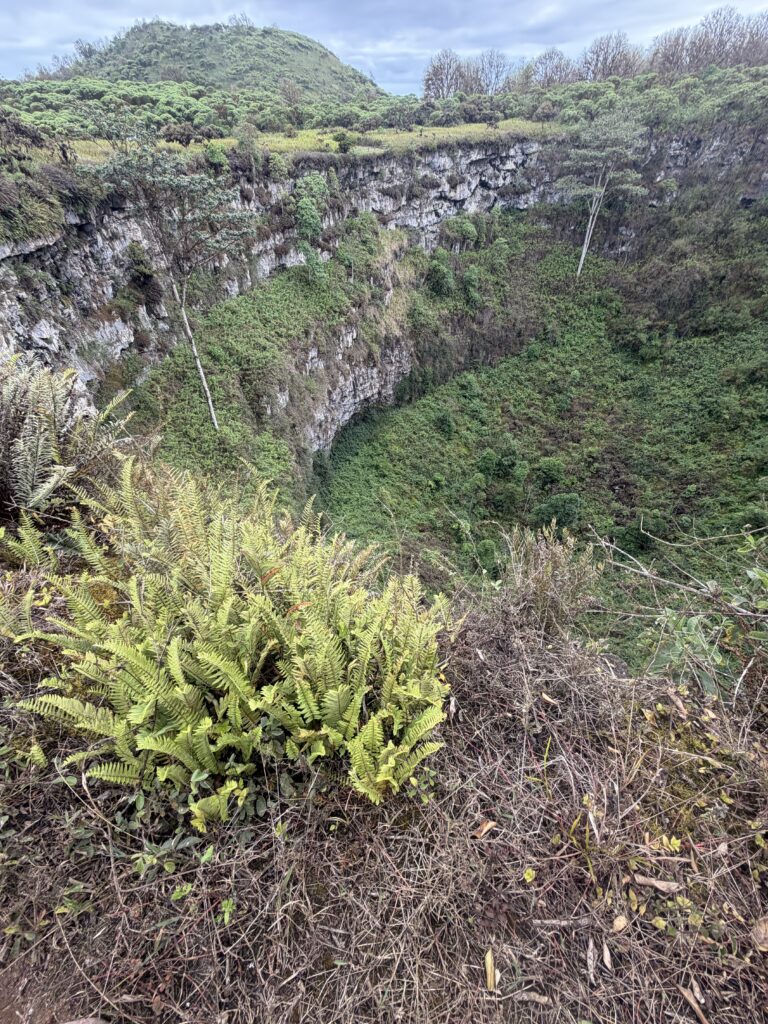
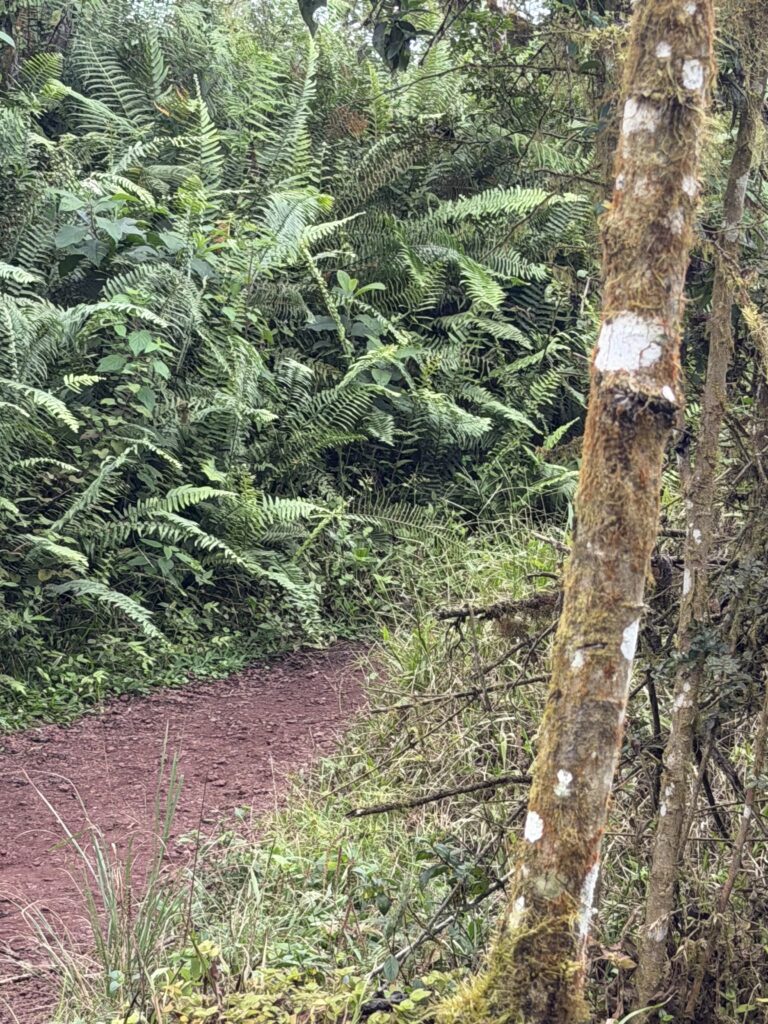
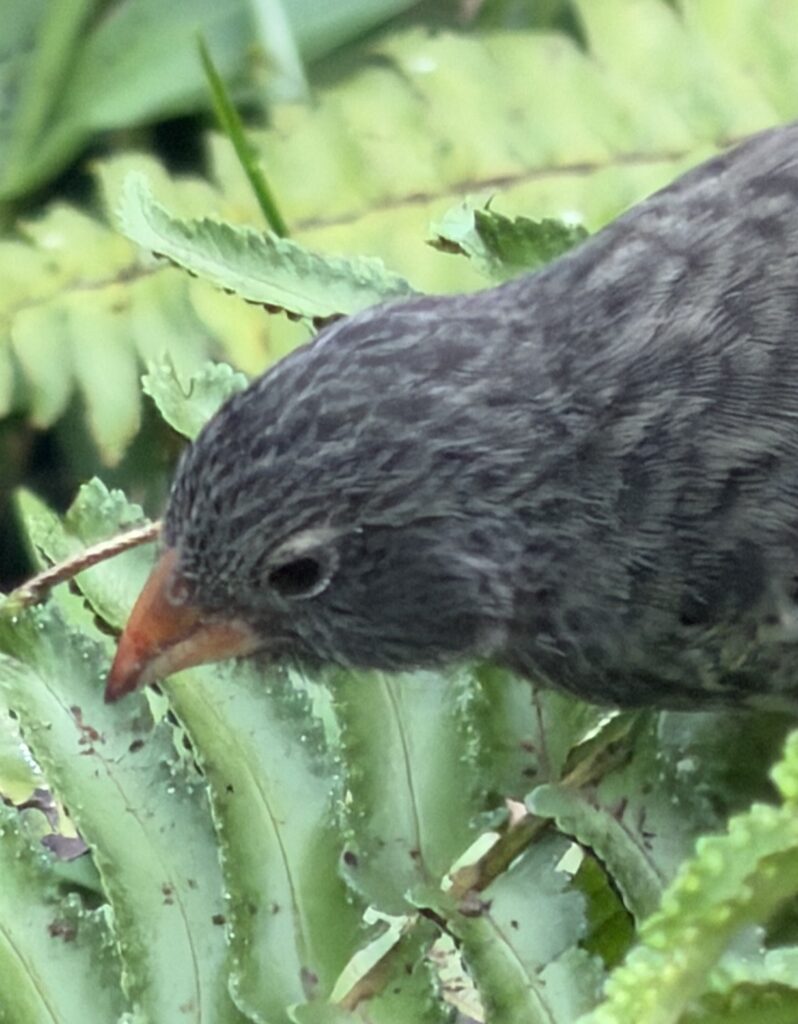
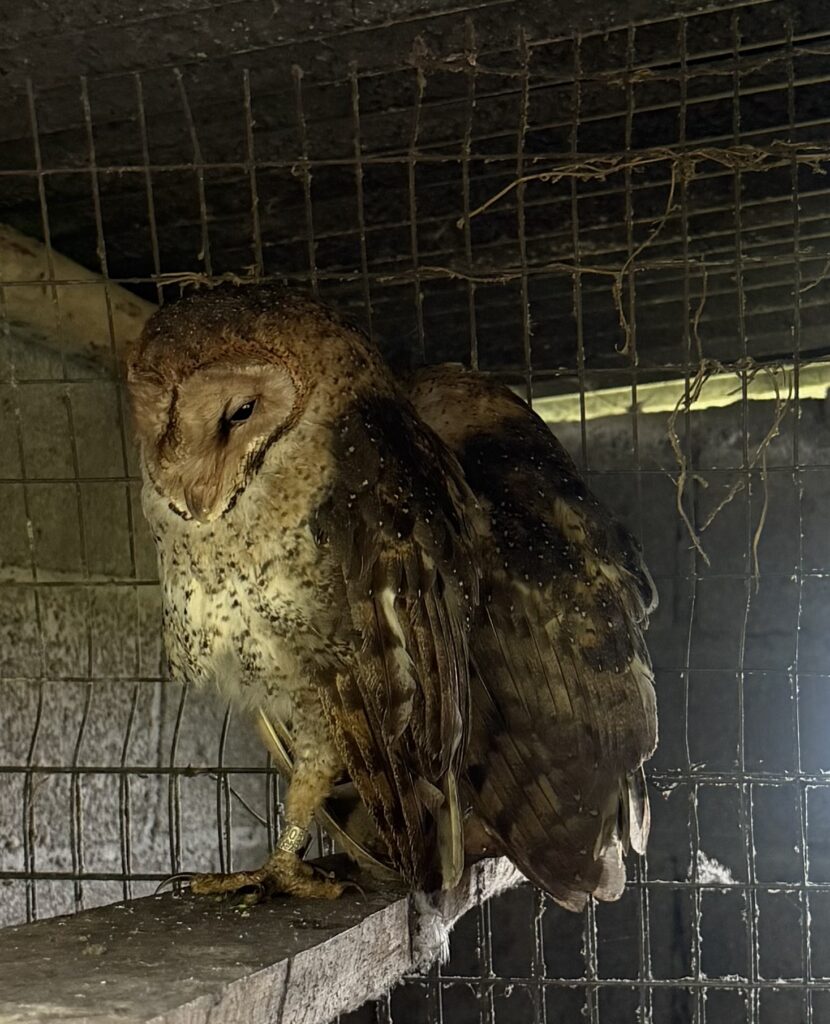
Back in the taxi( dual cab 4 wheel drive is standard) we head to Rancho Primicias where the lava tunnels are found. My driver also new of the location of two rare Tito Alba owls which appear to have inhabited and old small shed close to the lava tunnels.
The lava tunnels were formed some two million years ago by flowing lava that left behind hollow tubes. This is one of the largest though many have yet to be discovered and/or explored. I descended some 20 metres then walked for 15 minutes until arriving at the exit. One spot there was only an 80 cm clearance but other than that well lit and easy walking.
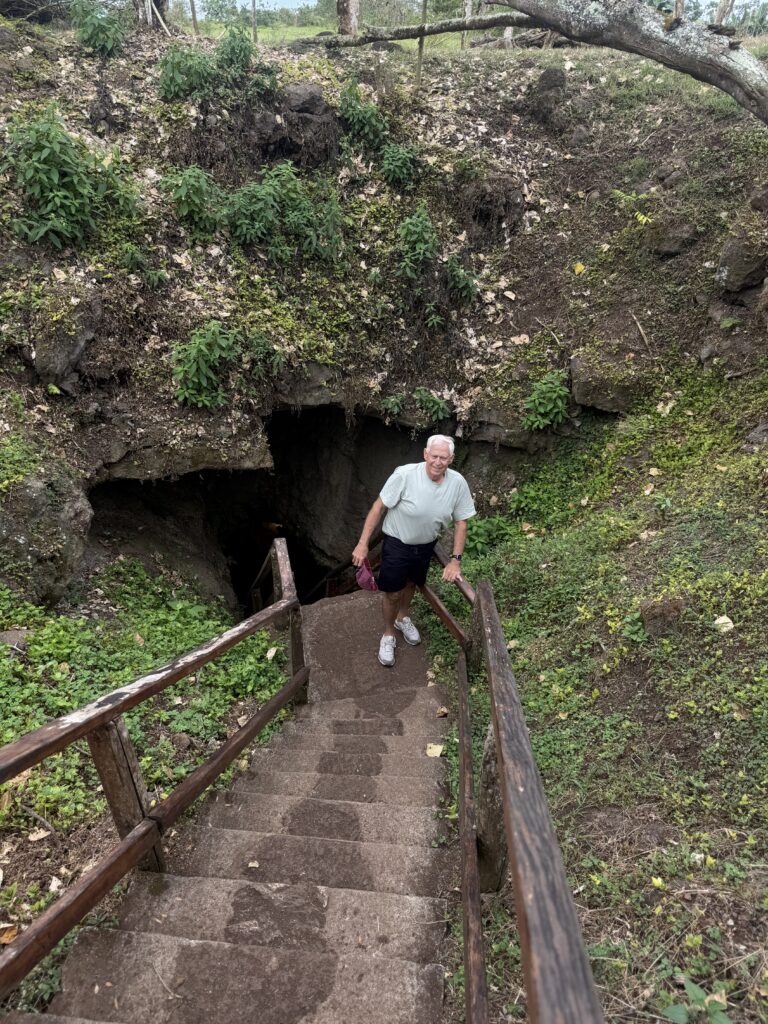
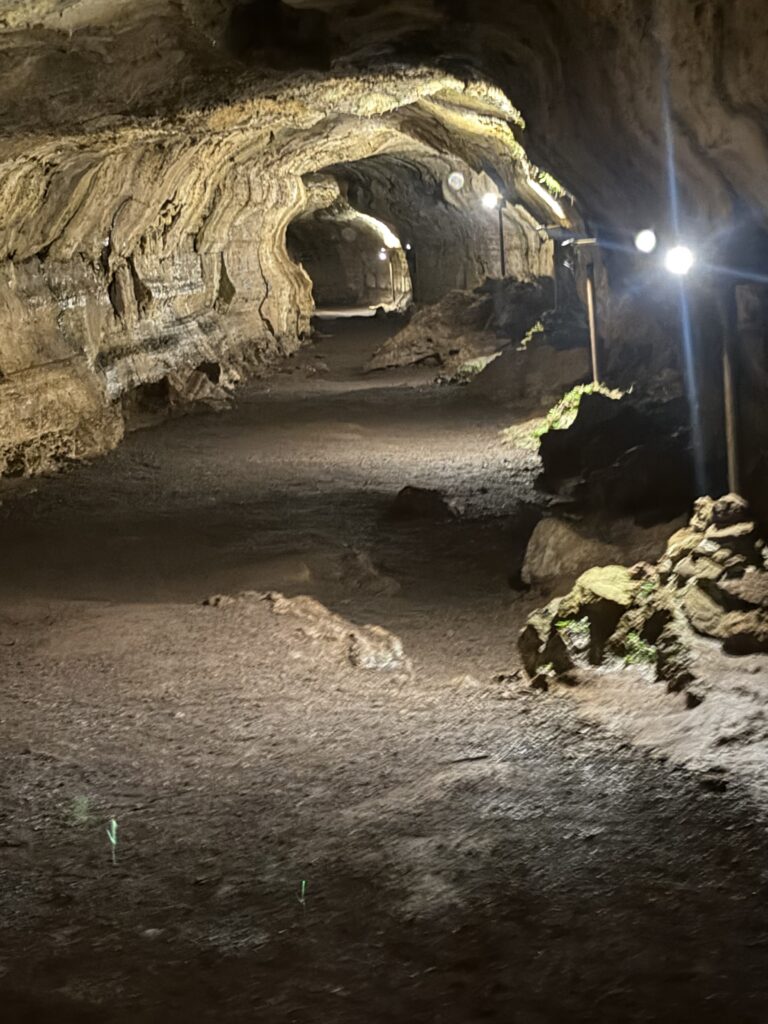
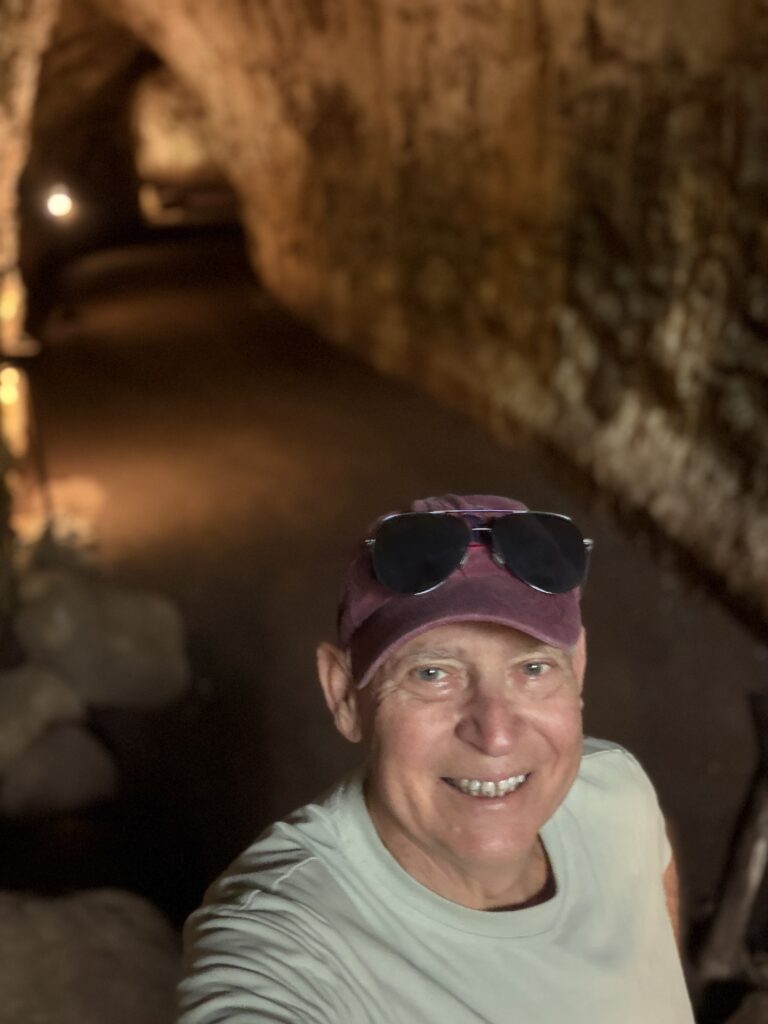
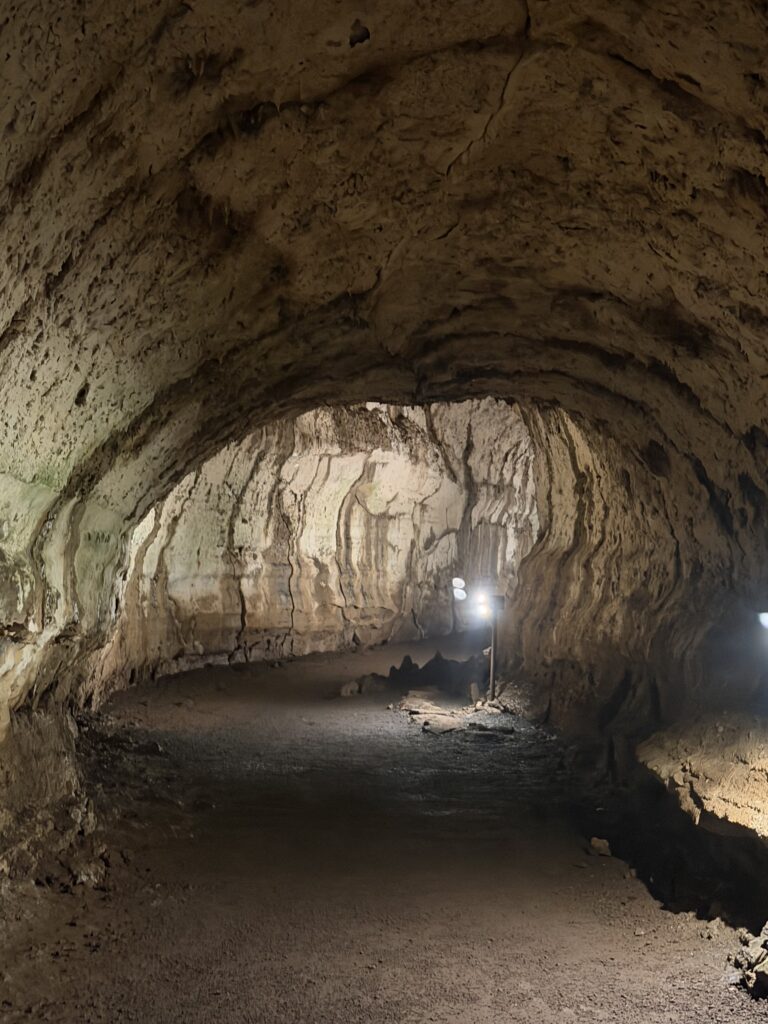
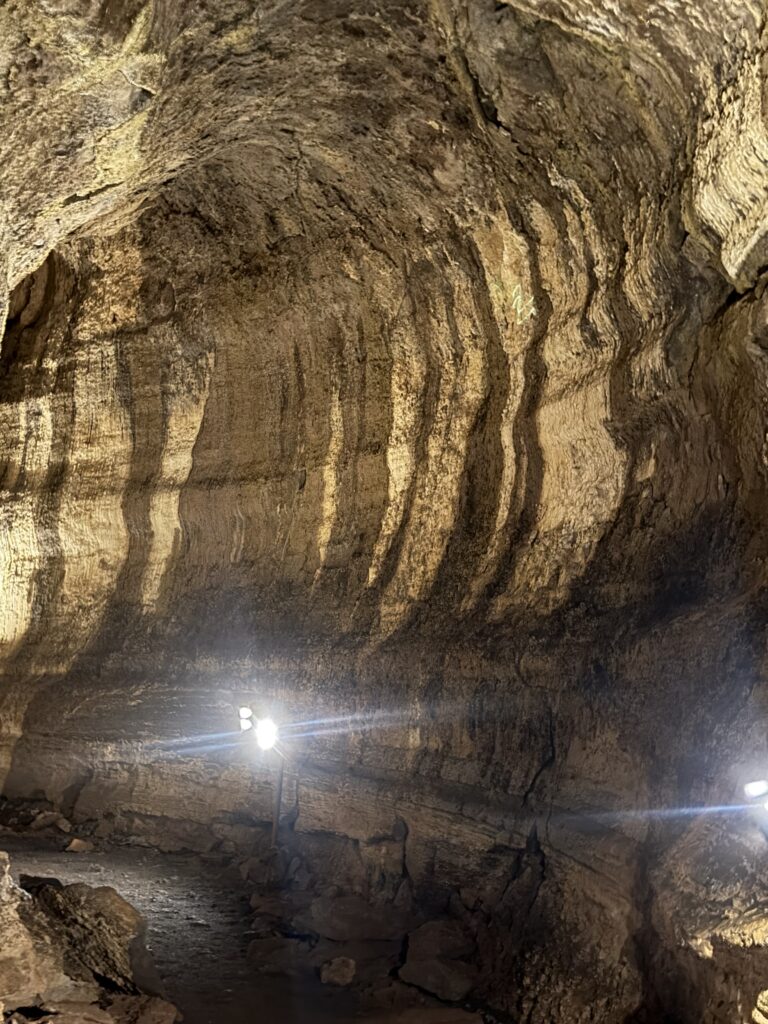
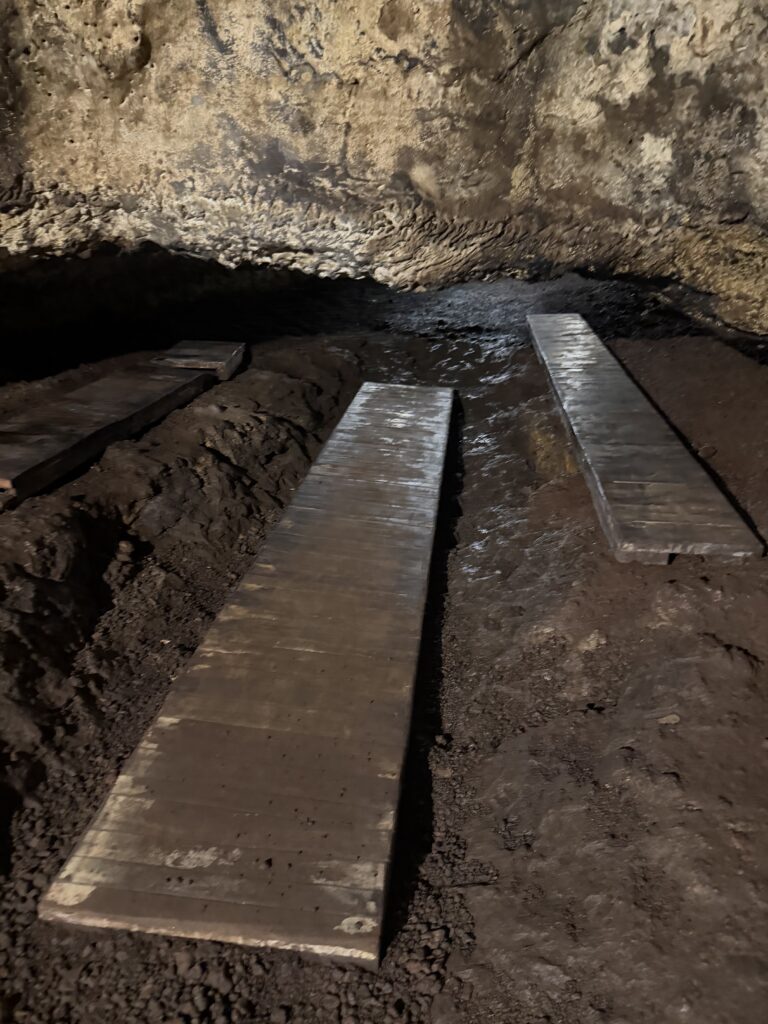
As you can see the height and width of these tunnels though varied is spectacular with the rock formation of the walls equally so.
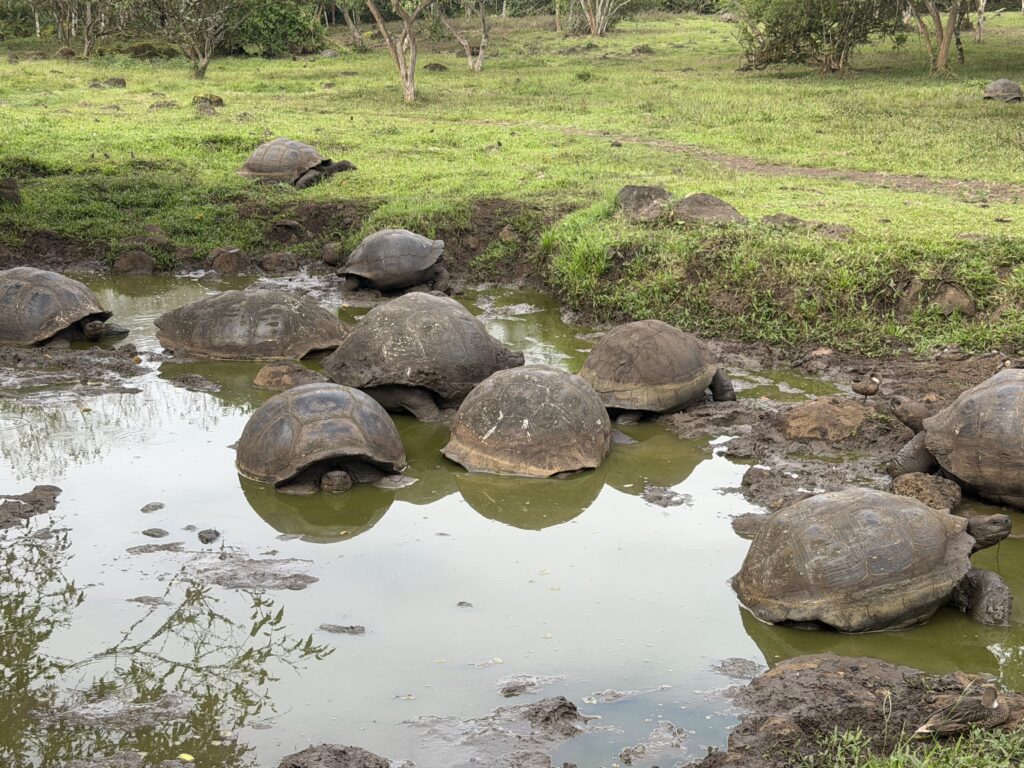
Next stop is Tahoe tortoise farm at Rancho el Chato. The building hosts a first class restuaurant and a guide centre providing additional information around the structure of the tortoise shell.
these animals are vegetarian living on a diet of grass and fruits when in season. February is full on mating season with males who are much larger than females endulging in behaviours of mate selection.
The female when fertilised will make its way uphill some 5 kms. Lay and bury her eggs then return to the farm. The island allows for natural selection of baby and young tortoises to survive. Many don’t. This that do gradually make their way back to the farm.
The female below has rejected the dance of this large male and heads south. You can see the difference in size.
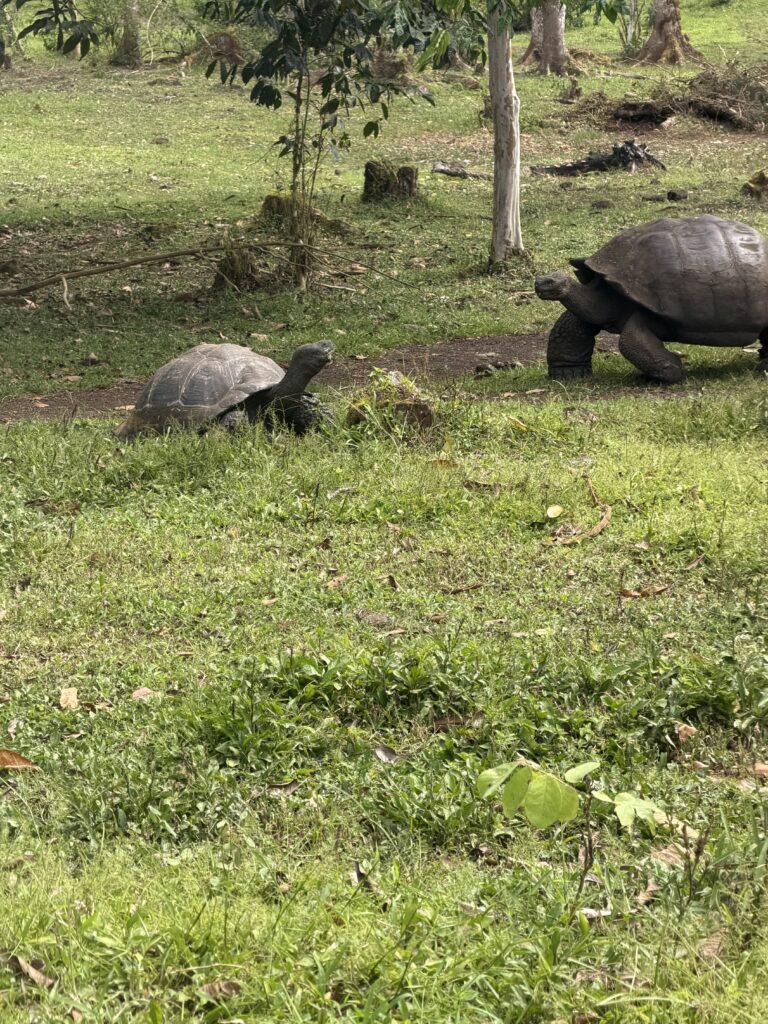
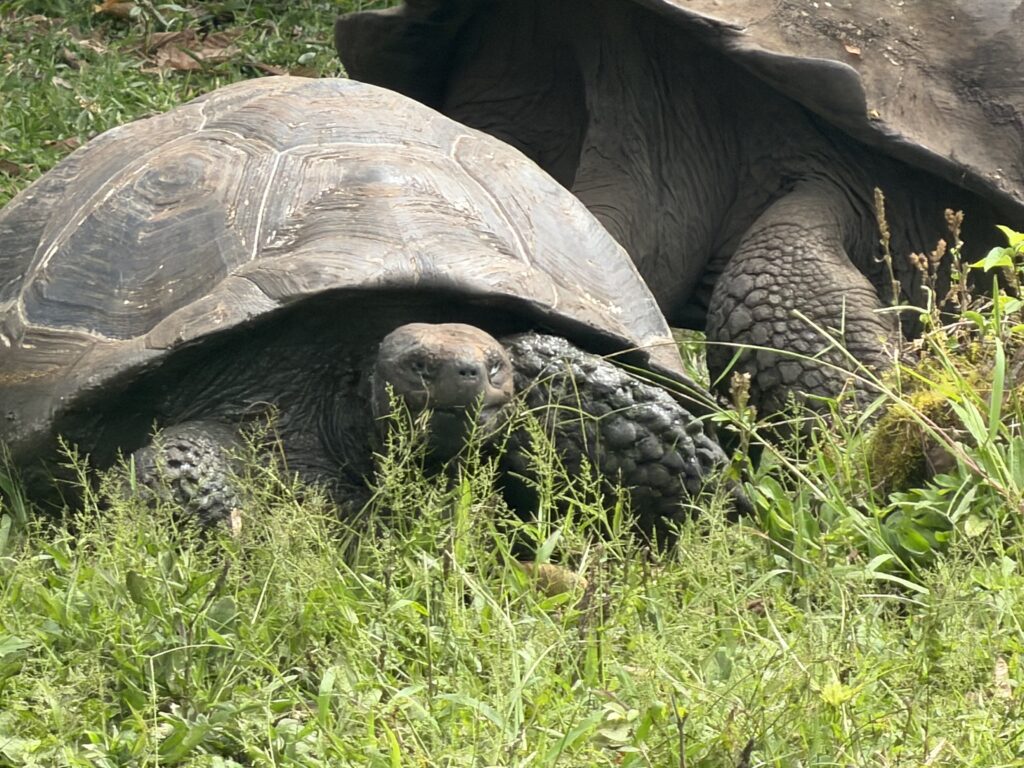
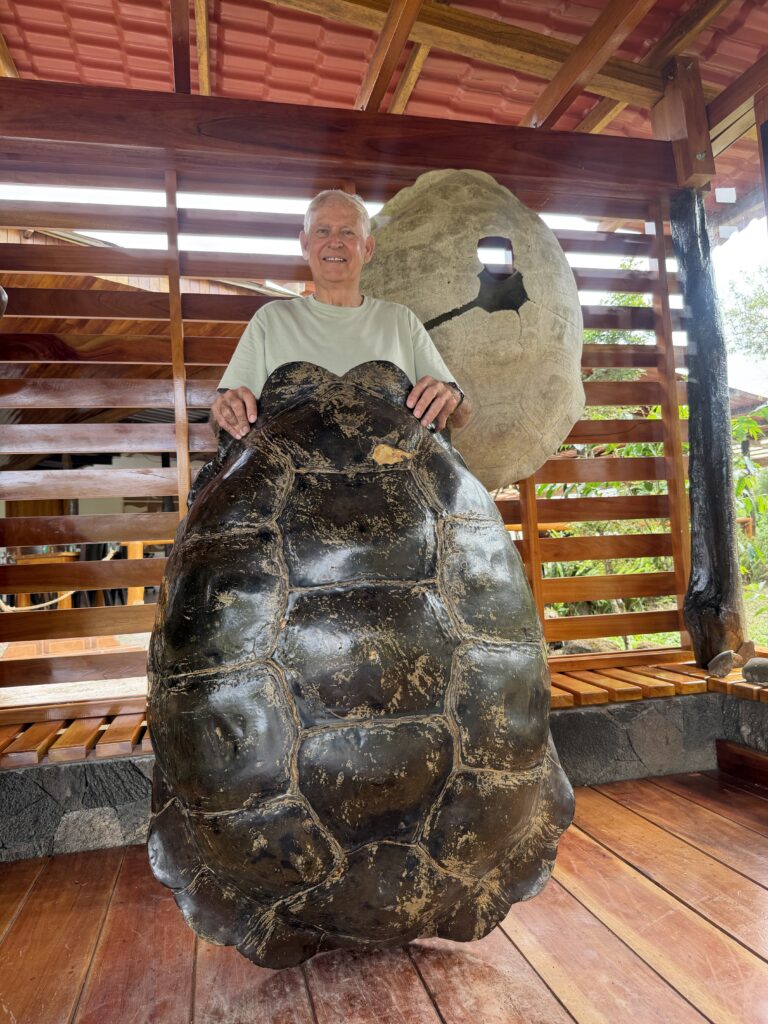
the farm’s largest tortoise is called Shaquille O’Neill (for non NBA people he was one of the largest and best basket ballers of all time). He is over 175 years old and weighs 275 kgs. There are several similar males on the island but none considered much larger.
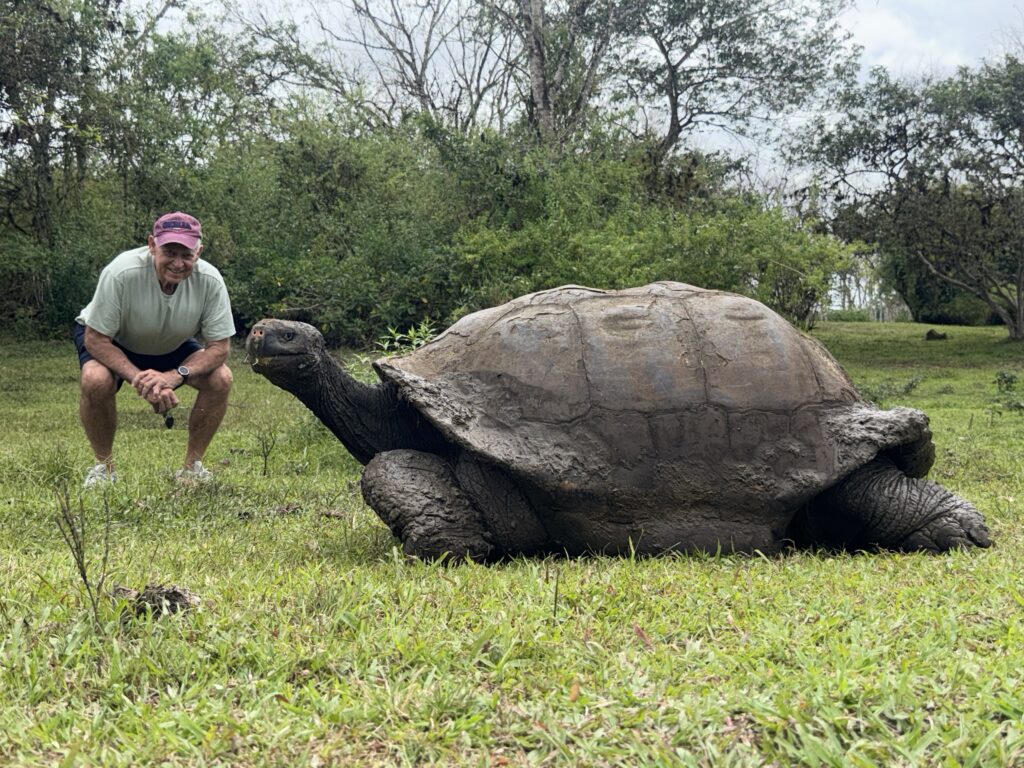
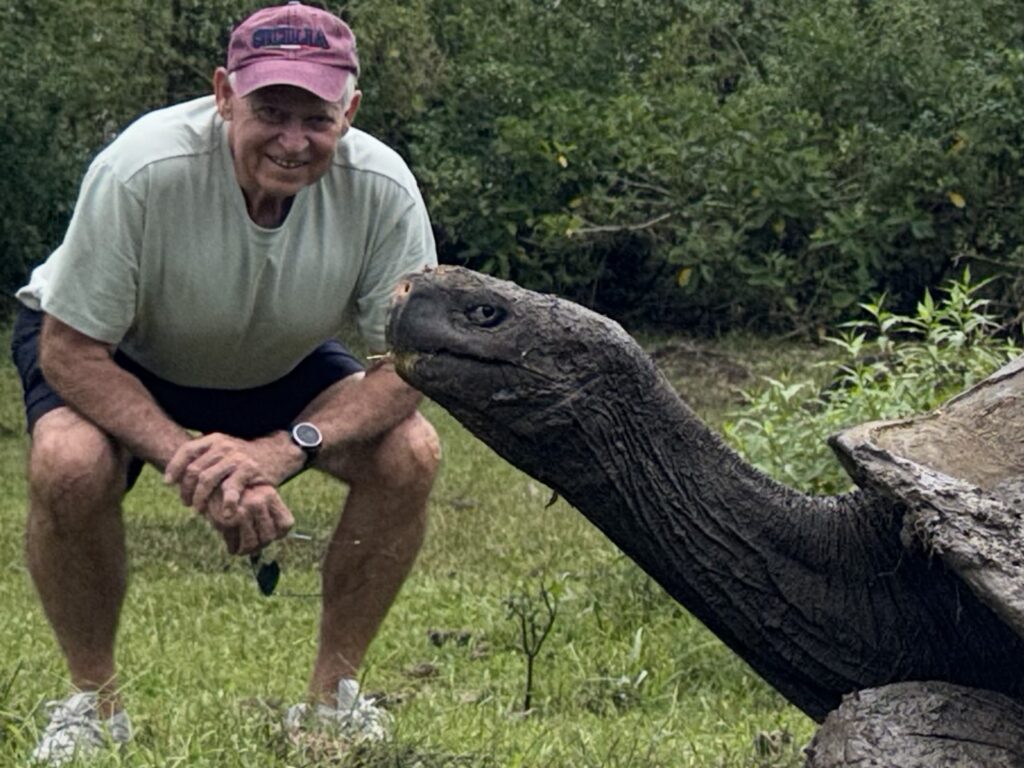
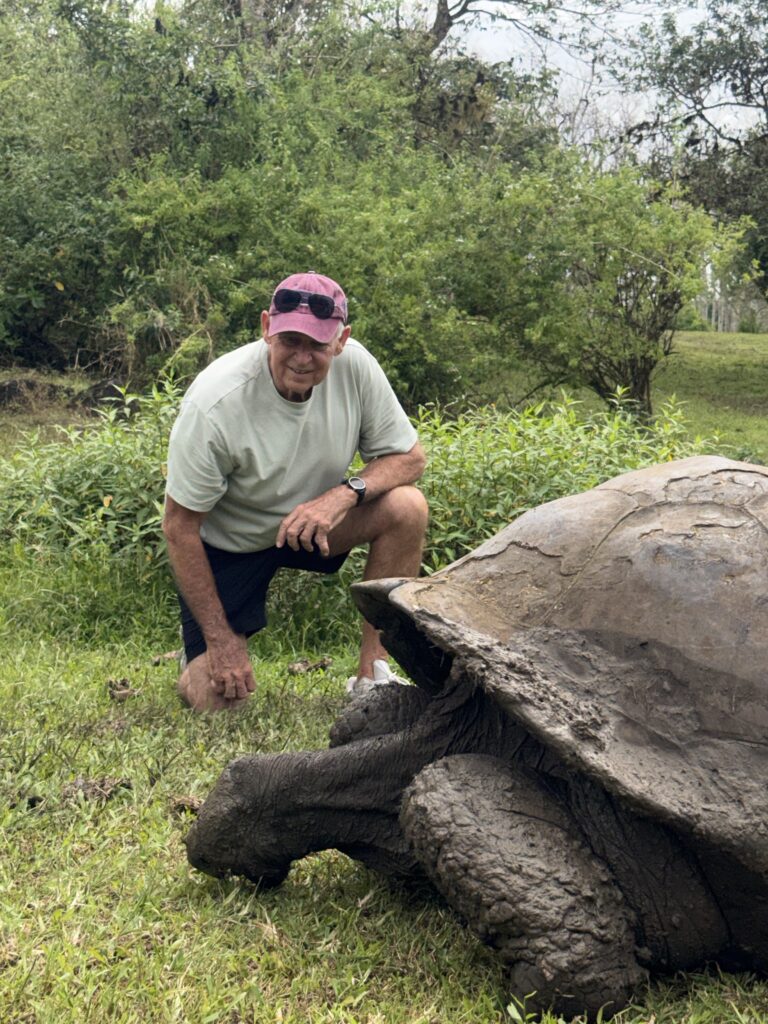
These large animals are everywhere, particularly males around 200 kgs and approaching 100 years of age. Historically they were hunted for their meat by British and American traders a practised which ceased in 1959 when the Galápagos Islands became a world heritage National Park. Consequently the balance between males and females remains a conservation problem with many more females required. Many think the look of ET Stephen Spielberg move came from the head of one on these animals.
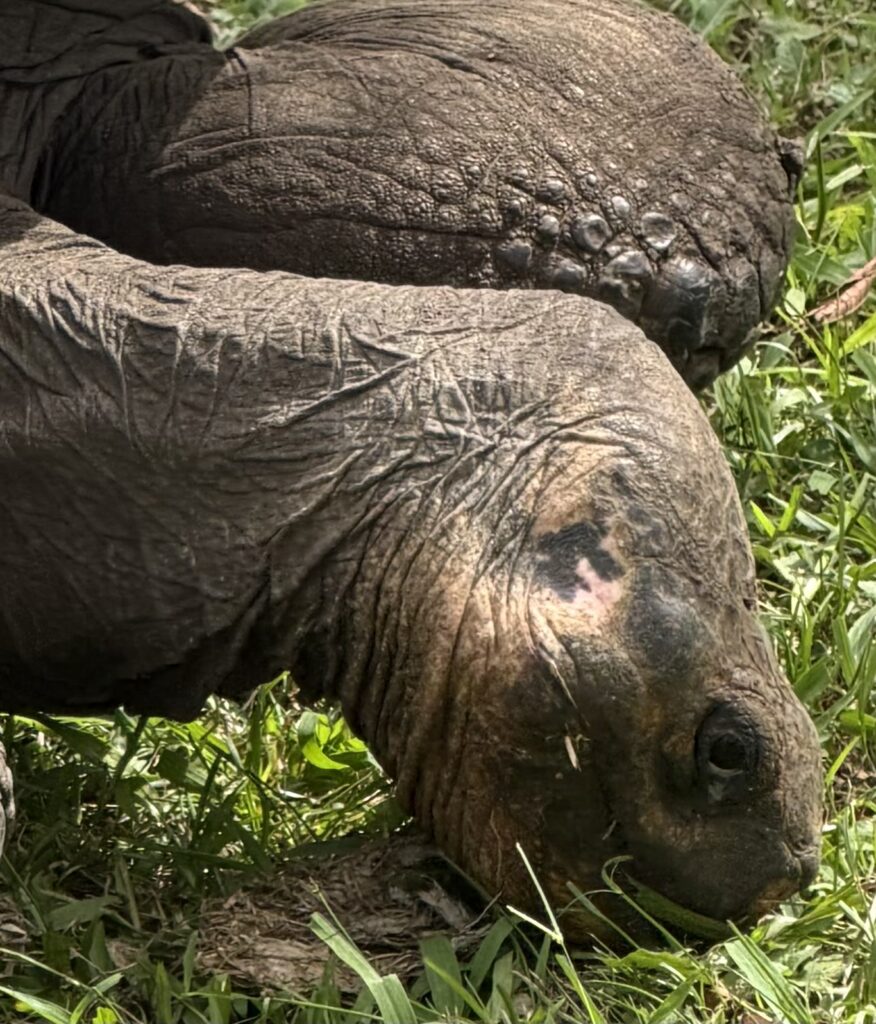
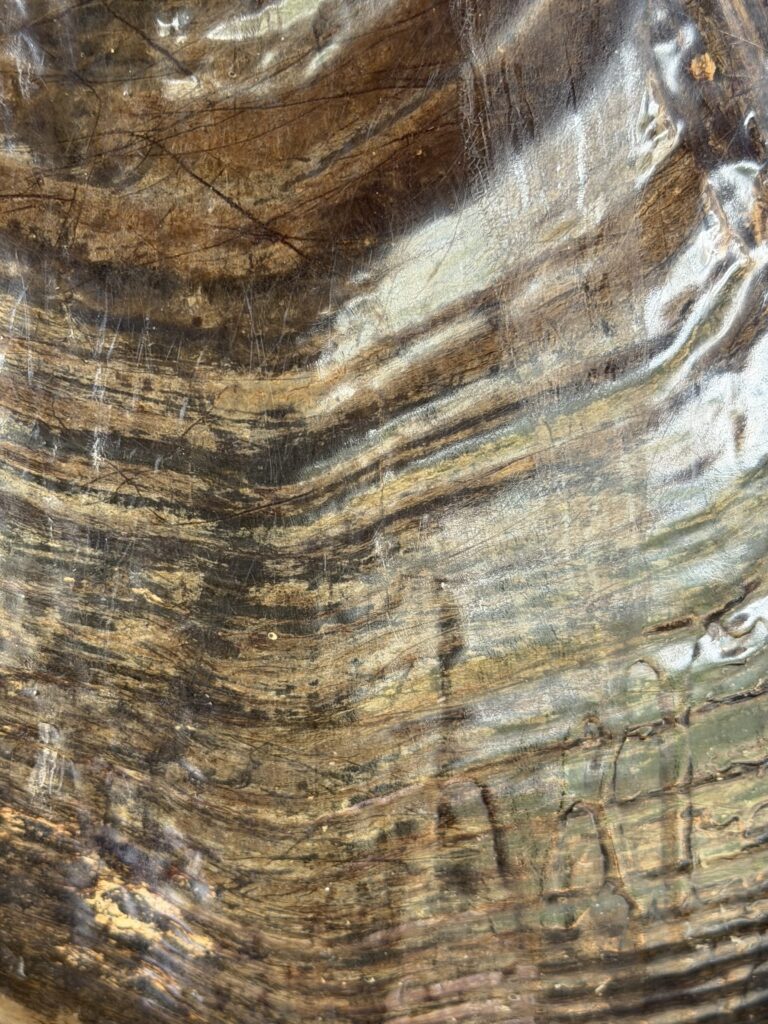
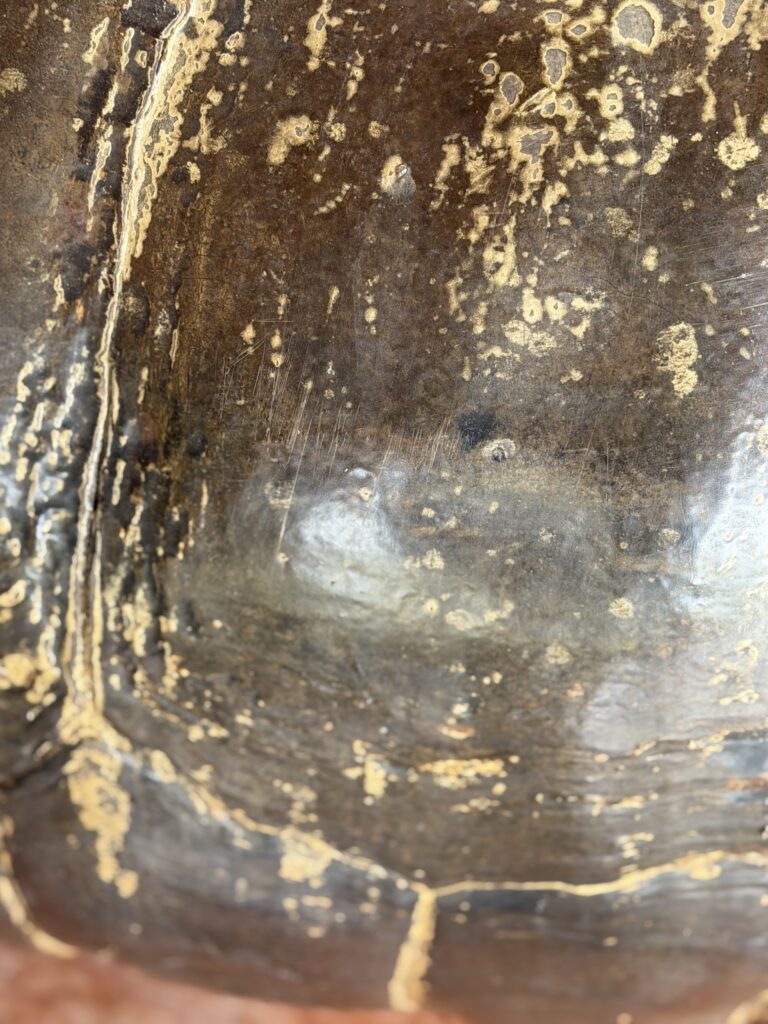
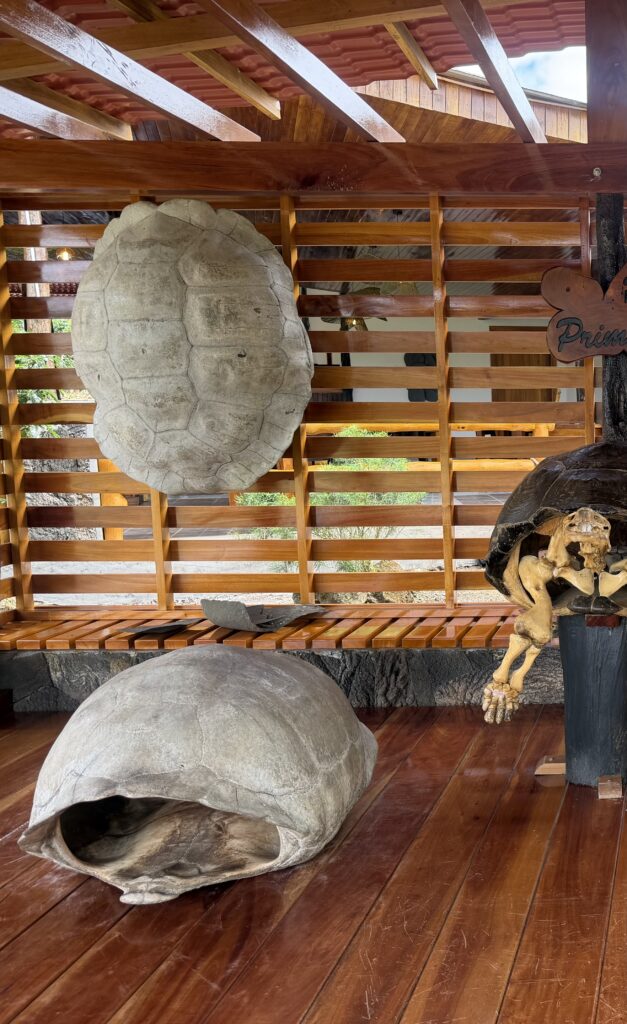
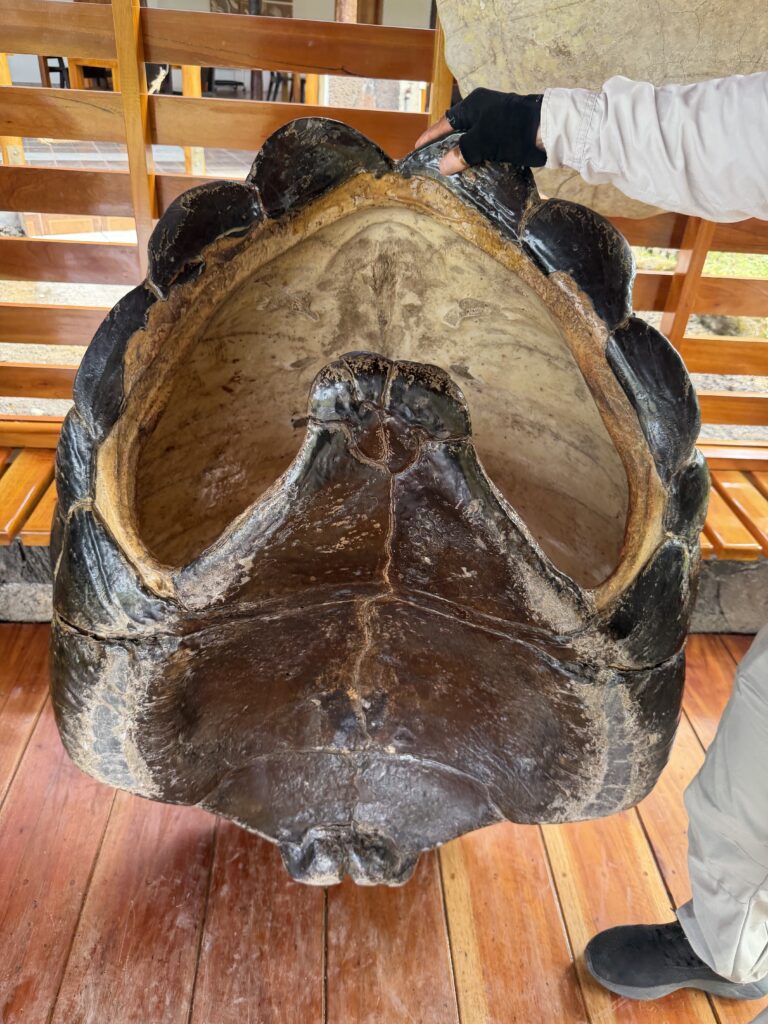
The shell is an interesting make up. Basically an exoskeleton with the outside 5mms like our hair. The patterns on the shell will show rings (like a tree) indicating age. However when they reach about 70 the shell starts to go totally black and rings disappear. We go gray. After the tortoise dies the hair drops of the exoskeleton after a few months and you are left with bone. You can also note the male shell is also a concavity enabling mating with much smaller female.
Monday January 20
I took a screen shot of the tour I went on today. I walked along the main bay side road visited the tour operator as shown and paid $40 US for this exact same tour.
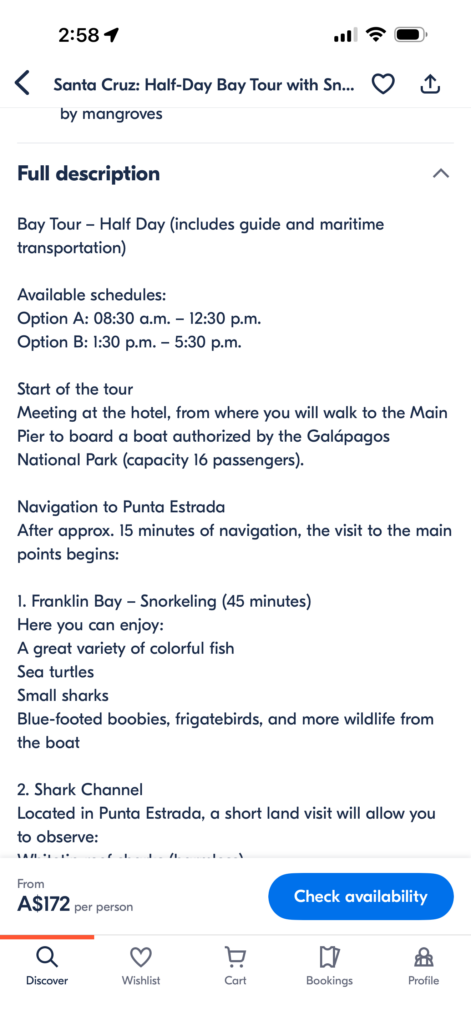
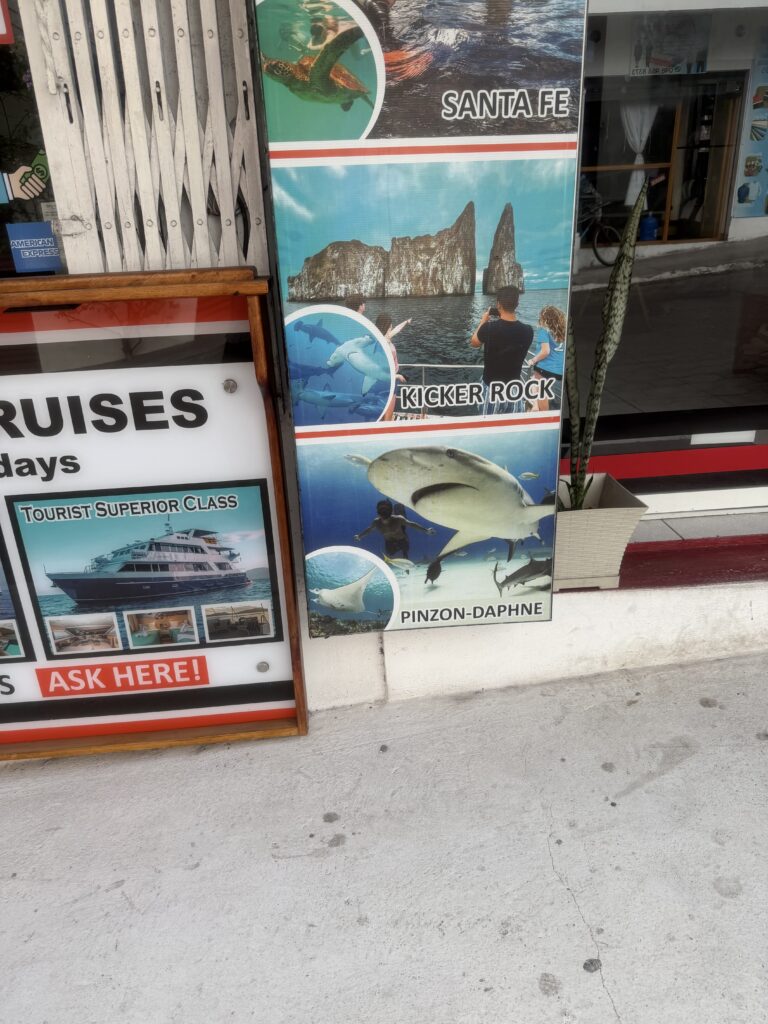
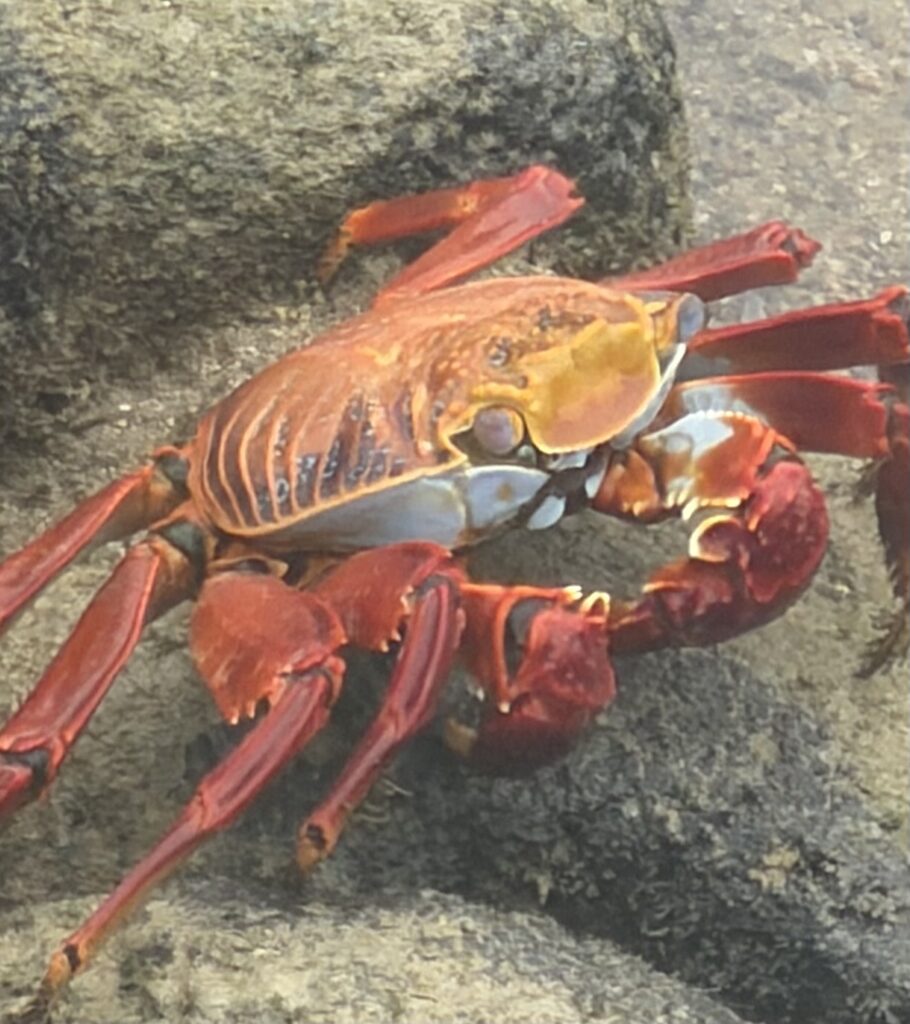
Our boat left the harbour around 9:00am and arrived for our first stop over where we walked to Canal del amor looking at the sharks below. Easy to see shadows of them but the water was not clear. This rock crab made for a better photo.
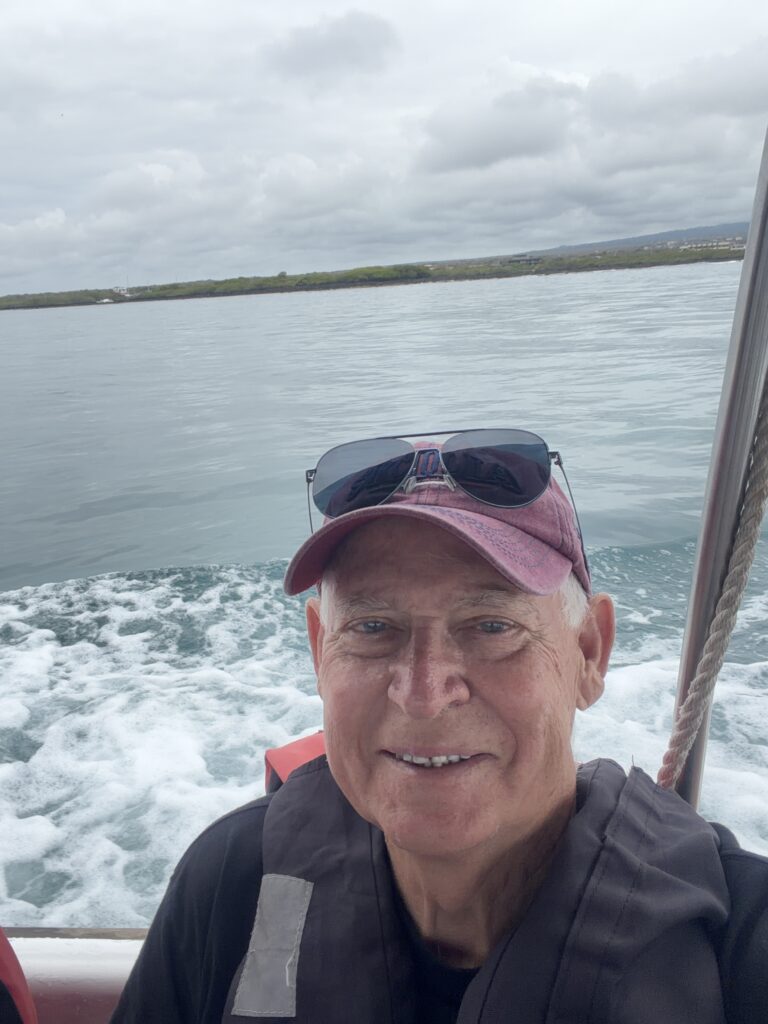
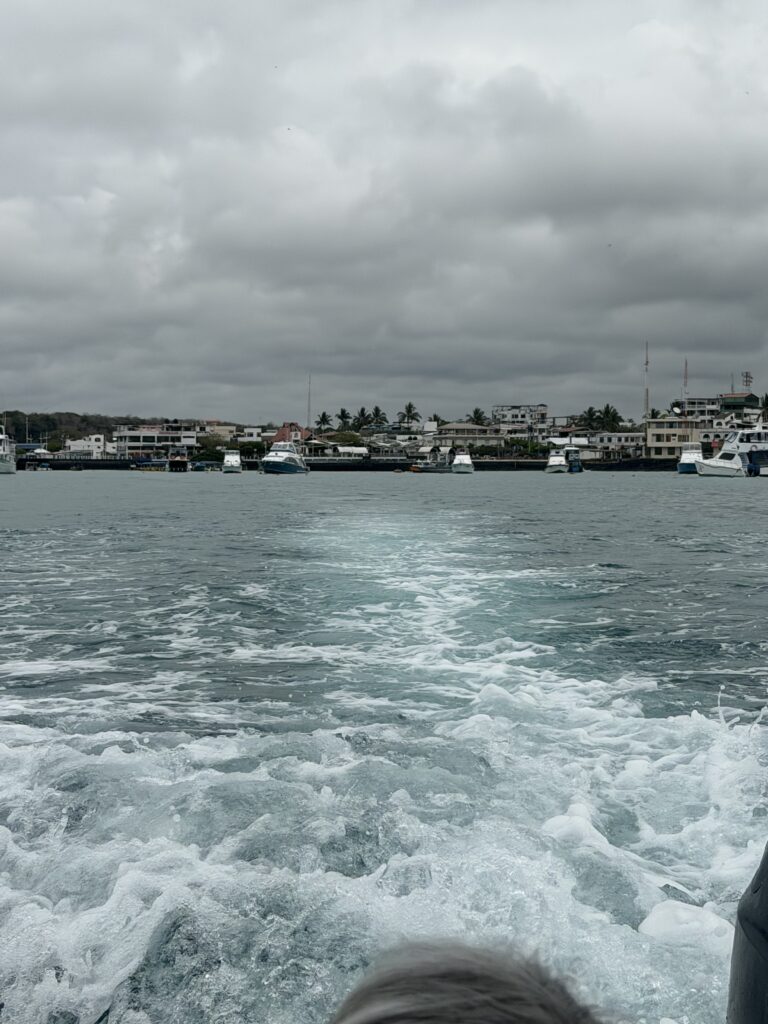
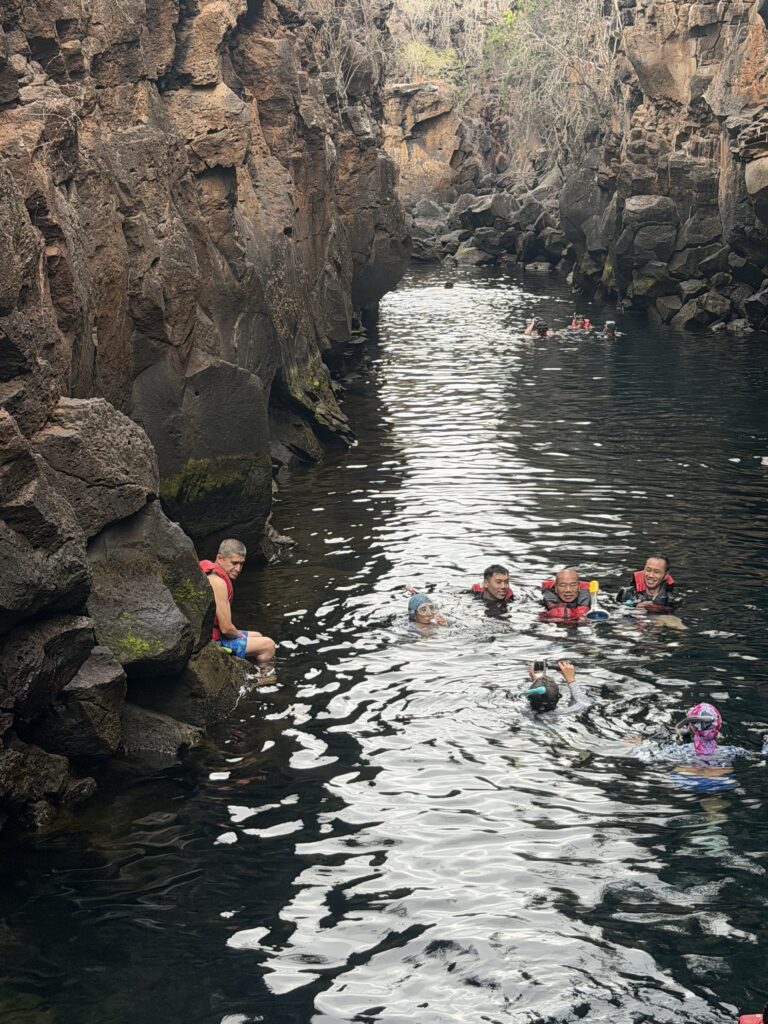
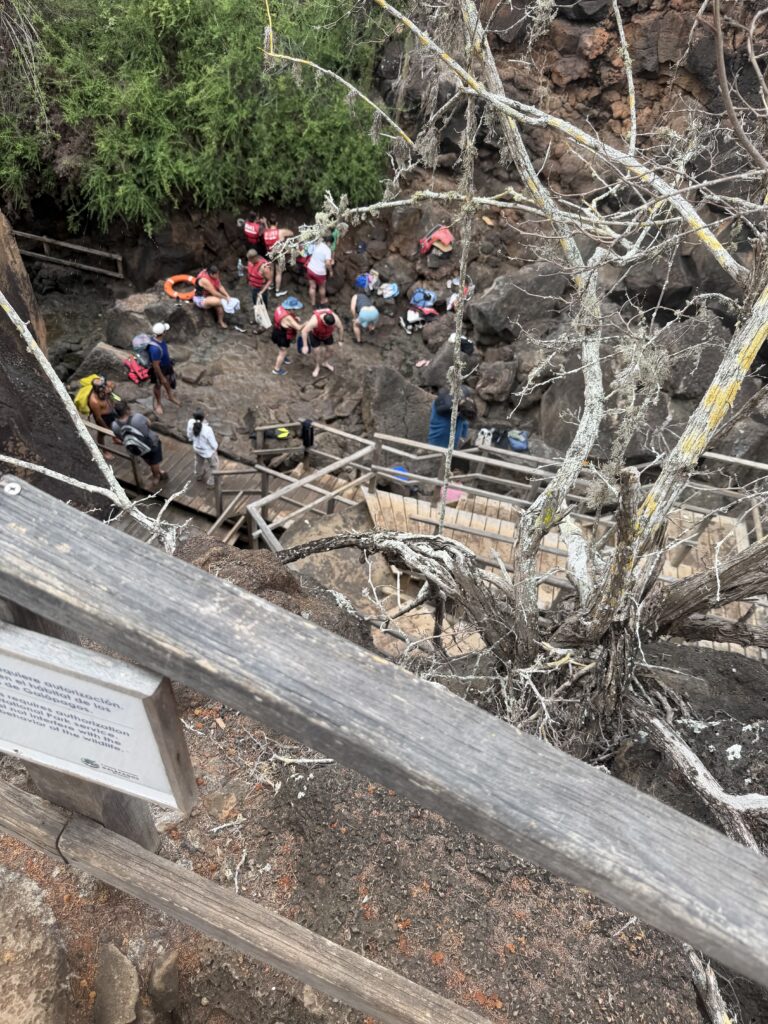
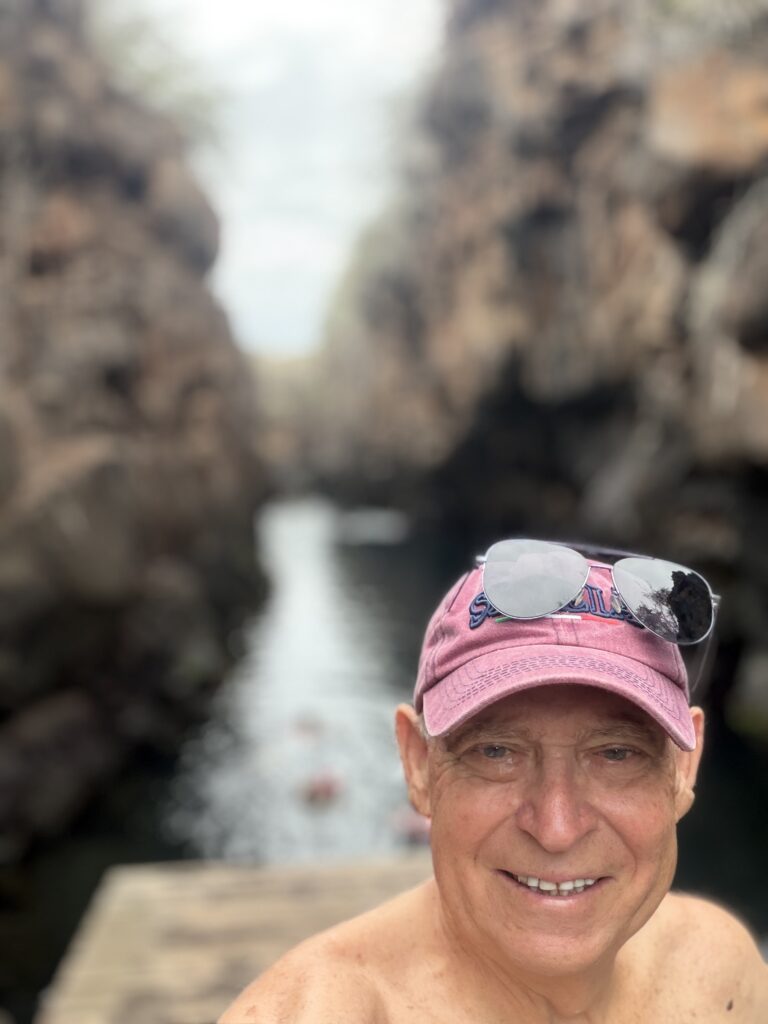
We then headed to a natural pool for a swim. This was carved out of rock when the “ earth moved”. A set of goggles and snorkel provided, we swam in the 75 by 10 metre pool. Easy to get in, hard on the feet to get out but I’m here.
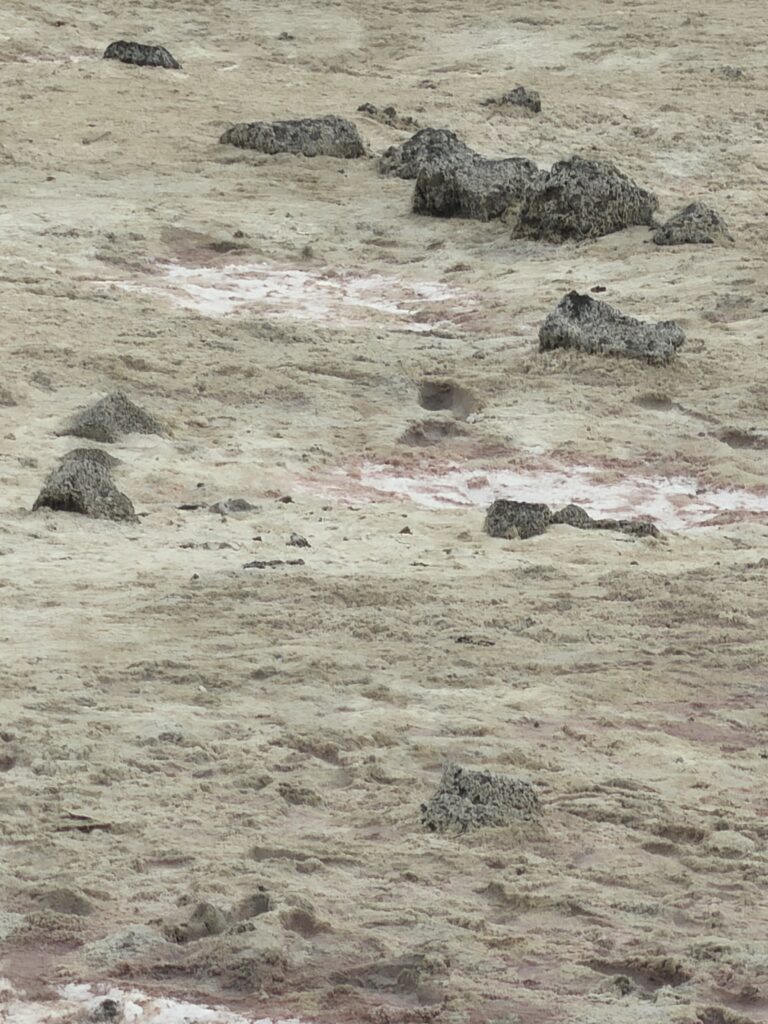
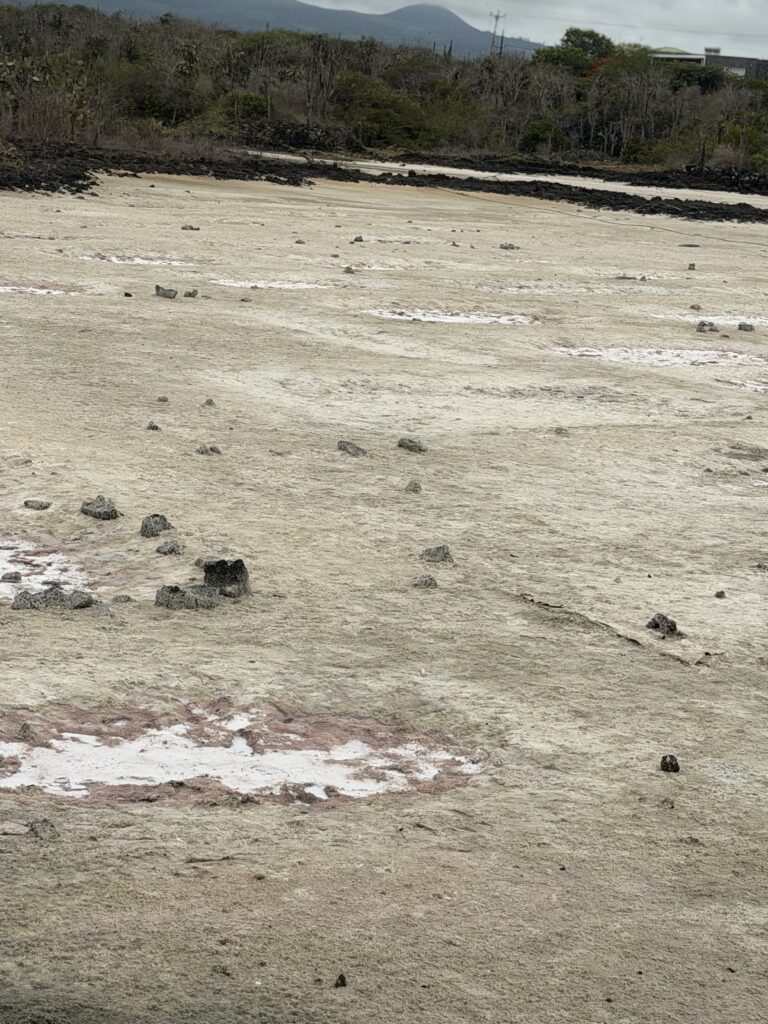
On return we walked by Las Greitas the inland salt lakes, where prior to modern harvesting, 2m by 2m pools were dugg enabling most of the water laden with salt to gather here as the lake dried.
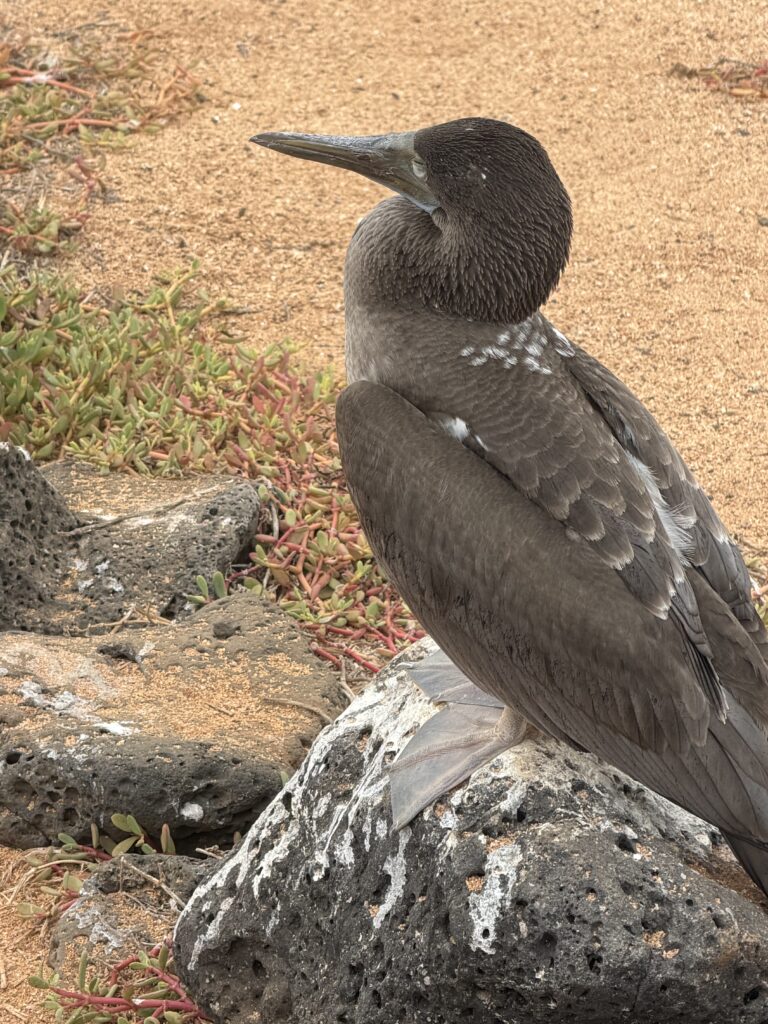
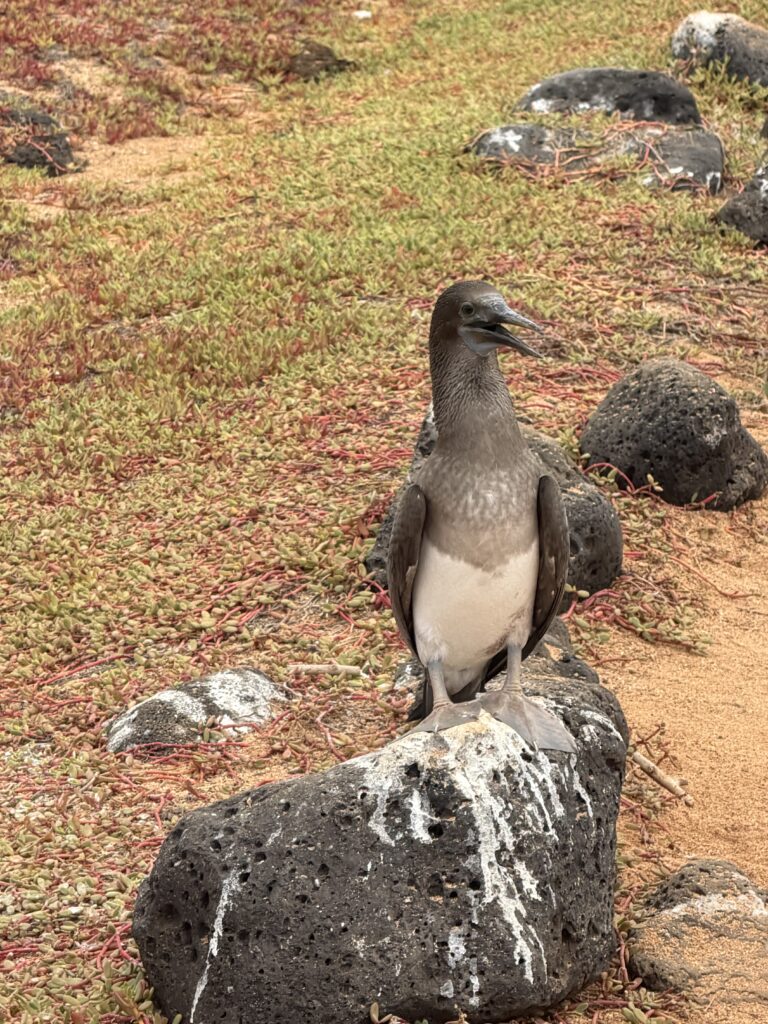
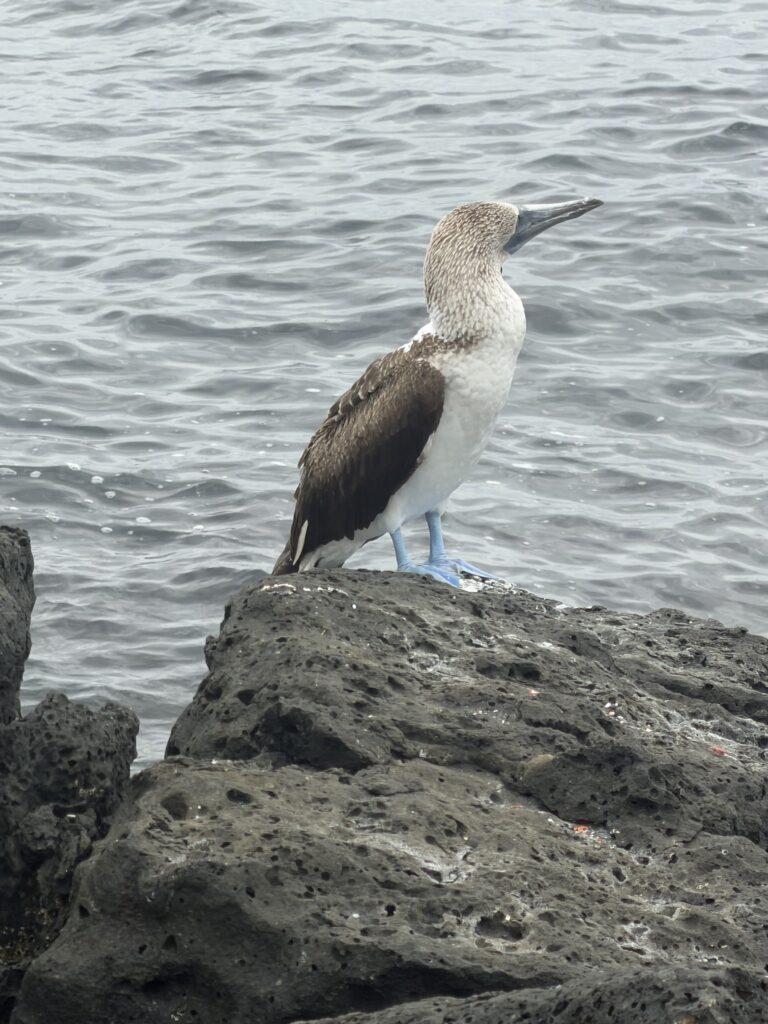
Finishing our trek we boarded once gin for a 10 minute journey, disembarked and another walk where we saw the stages of the famed blue footed boogie.
the first bird is around 4 months totally dependent on regurgitated sardines form mum and dad. The second is almost independent, can fly and will be all alone within 4 weeks as he learns to fend for himself. Note the feet ar a normal whitish hue. The we have th adult boogie with its blue feet and as he ages his beak will also become blue.
We are nearing mating season for iguanas when the male will release hormones and start acquiring bright red and green colourings. More noticeable next month.
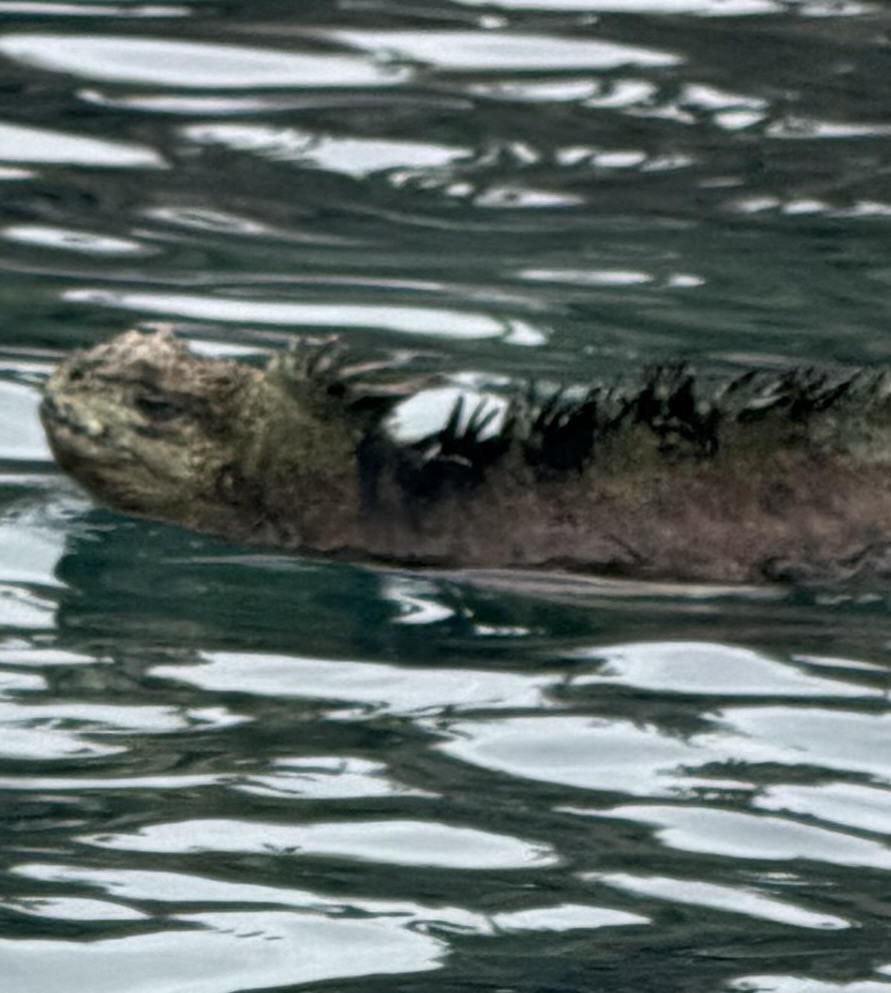
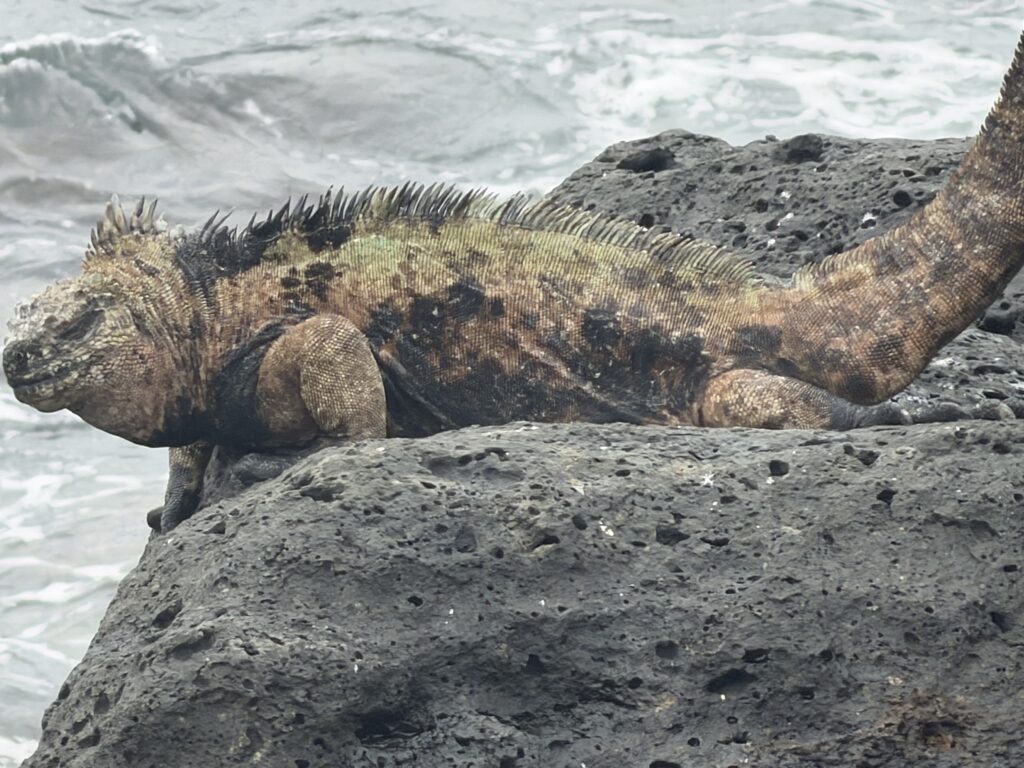
Back on board we moved to a secluded bay and went swimming. A beautiful array of brightly coloured fish and a number of small white tipped reef sharks all around the 1 metre mark were easily visible but no photos. Returning home around 12:45 with a very rewarding $40 US spend.
Afternoon nap, organised my washing, had a massage the out for dinner at a two story bar. this place is difficult to meet people to hav e a chat with as usually in groups occupying their own table and not in lrge numbers.
I
TuesdayJanuary 20
I used the morning to explore the town, in particular away from the ocean street frontage which Inws now family with. The town of Puerto Ayora on Santa Cruz is home to over 20 000 residents, almost two thirds of the totally Galápagos Islands population. The place feels incredibly safe, my hotel windows do not shut, but I am told almost zero crime. The Galapagos has a policy of zero immigration this most locals seem to know each other.
after a late lunch I walked to the Darwin Research centre. It’s interesting the importance of his name as he spent a total of only five weeks on the islands, and of course his form of conservation was to collect species and return to the UK with them.
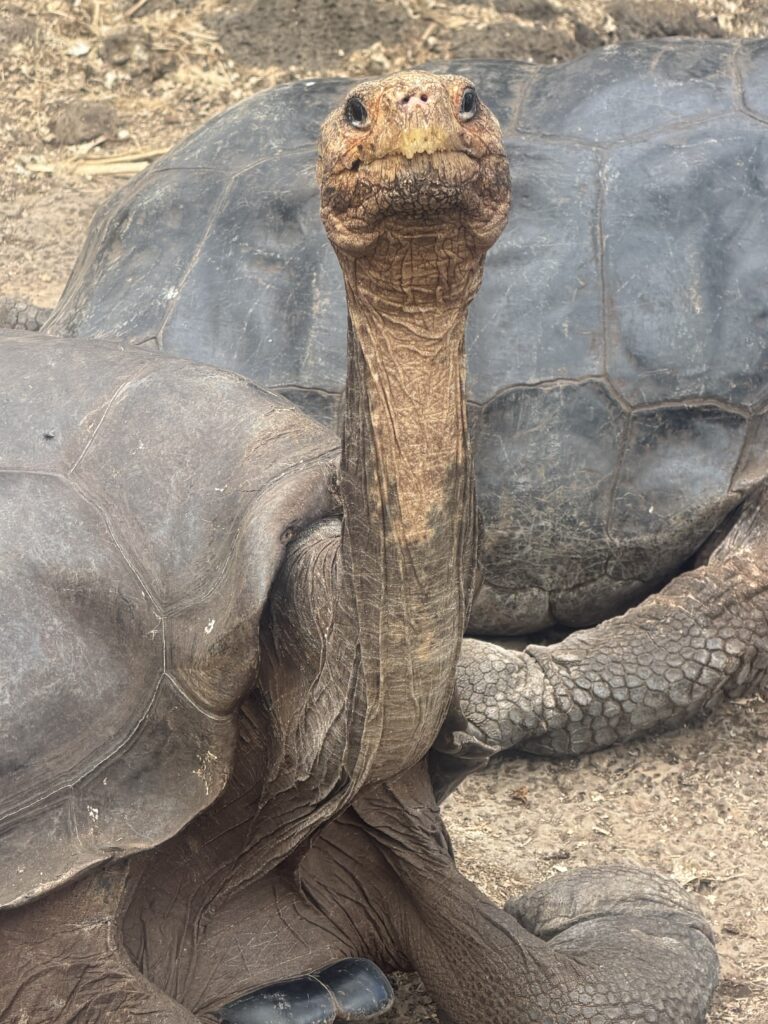
We met our guide Luis who has good English skills after learning some two years earlier. He showed us around the centre which is basically a breeding ground to ensure survival. The tortoises hear are of the saddle back variety and much smaller than those on the farm I visited two days earlier. We also learnt of the different iguana species relative to their native island.
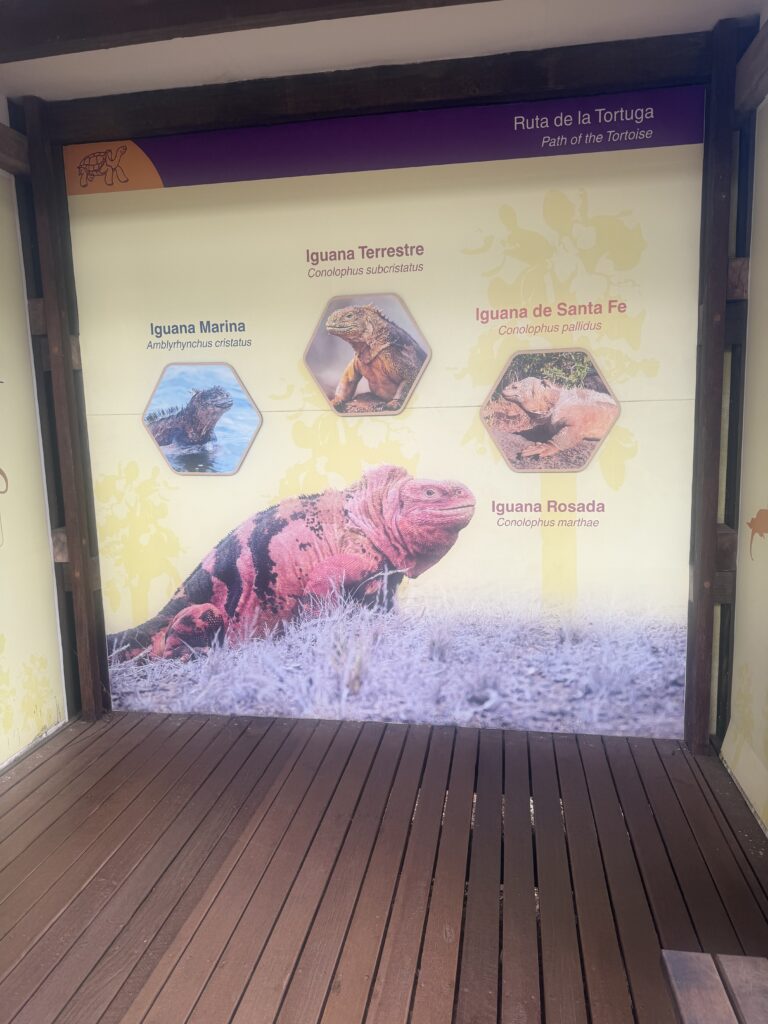
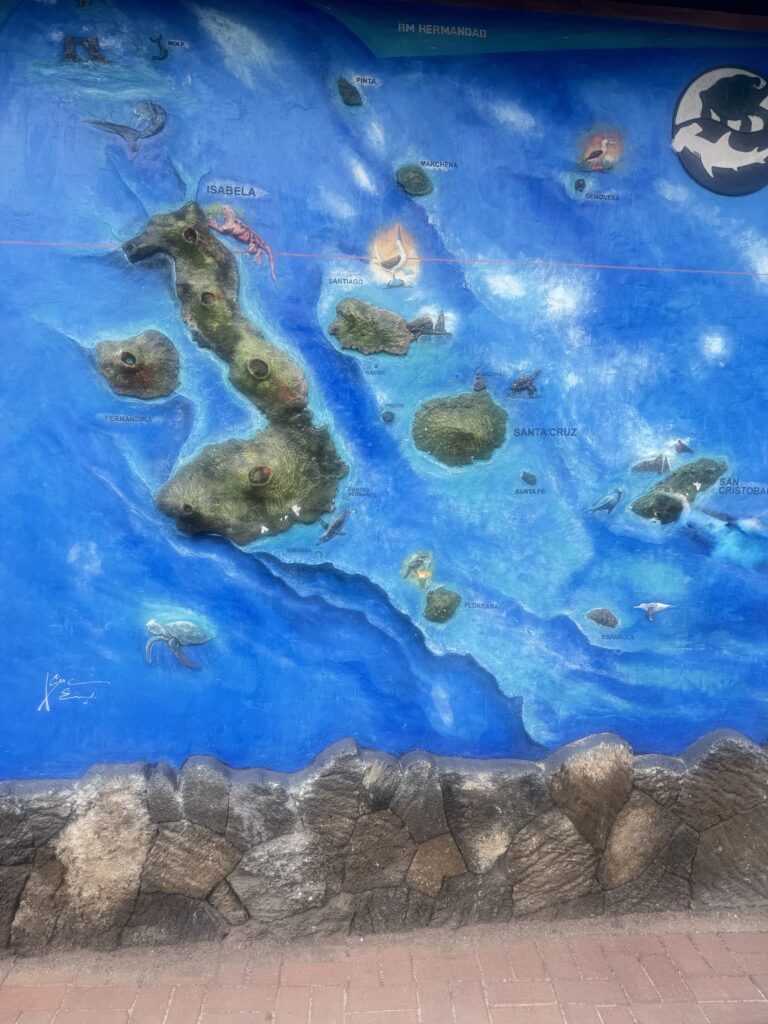
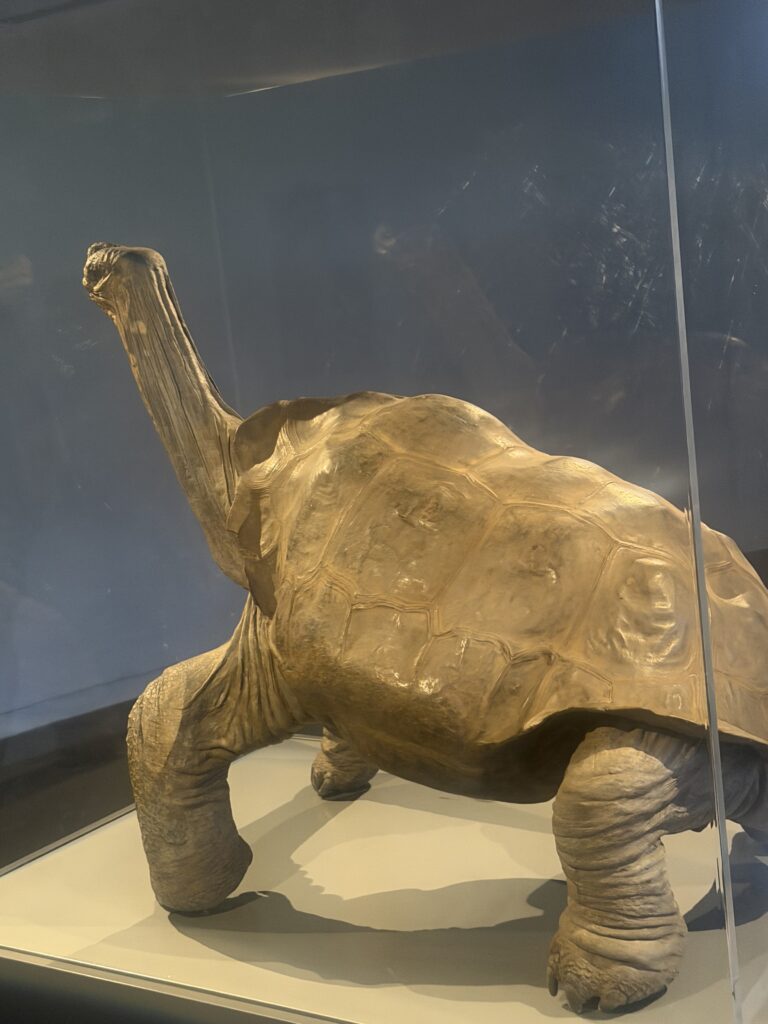
The centre is famous for sharing its endeavours to find a mate for “lonesome George” who was the last surviving Pinzon Island tortoise. However they were not successful and he died in 2012 with no survivors. The photo on the right is George stuffed and mounted, while the first photo is a saddleback at the centre. I must admit this tour was a let down, possibly because of the tortoise farm visit on Sunday which was much more spectacular.
I decided to fill my remaining days with snorkelling and visiting other islands. I paid $300 US for tours to Isabella, Floriana and Pinzon. While the first was a disappointment the Thursday was good and the Friday tour (all snorkelling) was excellent. By the time I returned to port on Friday I was regretting not spending money on an under water camera. The colours of fish, iguanas swimming by, surrounded by seals, huge sea turtles appearing next to you, sharks and rays provided wondrous experience but no photos.
Wednesday at Isabella Island
Almost two hours from the meeting point at 6:30am we set off on a two hour boat ride on the Siiligata. It could move.the landing pier is surrounded by a mangrove Forrest. I was provided with snorkelling gear and a towel and enjoyed 40 minutes of swimming, however our guide disappeared not to return; until 12:30. He took us to lunch, then back to the pier to board for return journey. I was not happy no tip.
Thursday off to Florianna
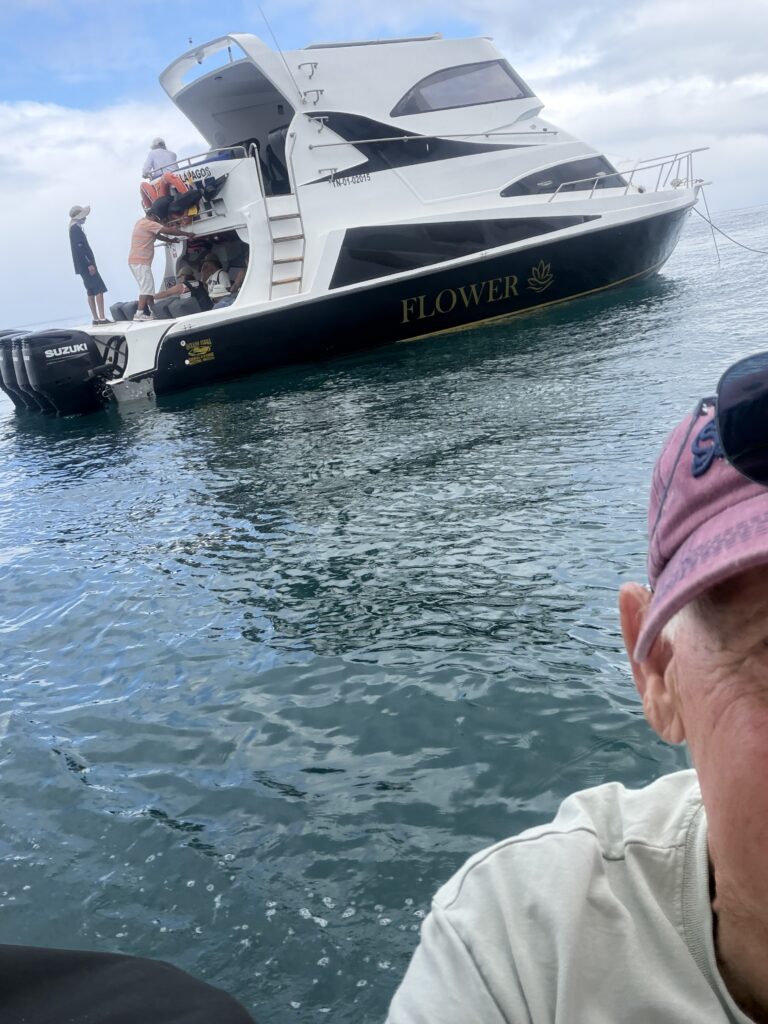
We boarded the Flower,an impressive boat with 4 times 300hp 4 stroke motors. It could fly and it was needed as the journey was 70 kms which we reached in 105 minutes. An island of 120 inhabitants, almost all national park except for the original freeholdings.
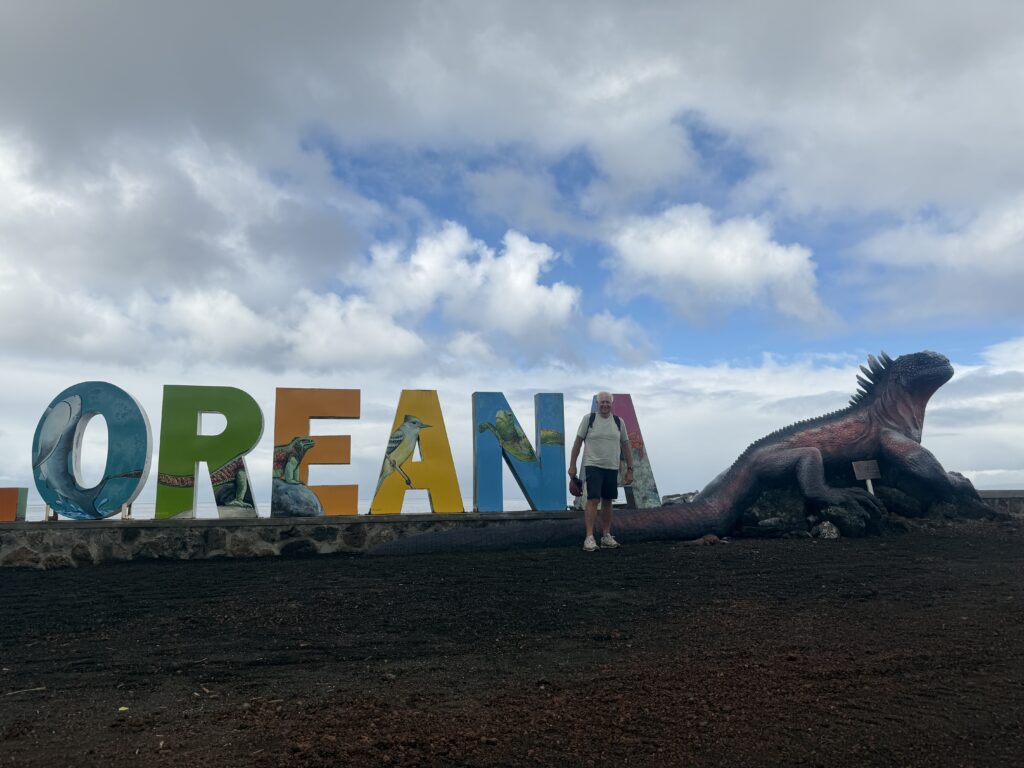
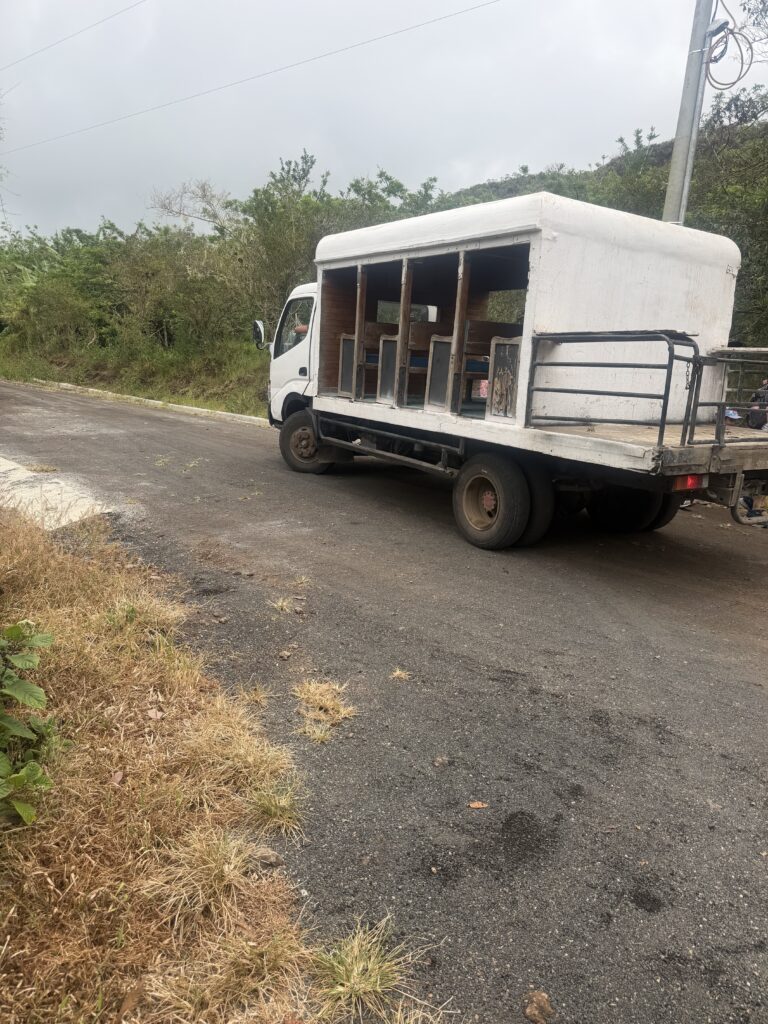
As you can see from our bus Island transport remains”olden days”. Iguanas are everywhere and it is the start of mating season. Testosterone from the males surges and their skin colour changes bringing reds and greens to their skin tone.
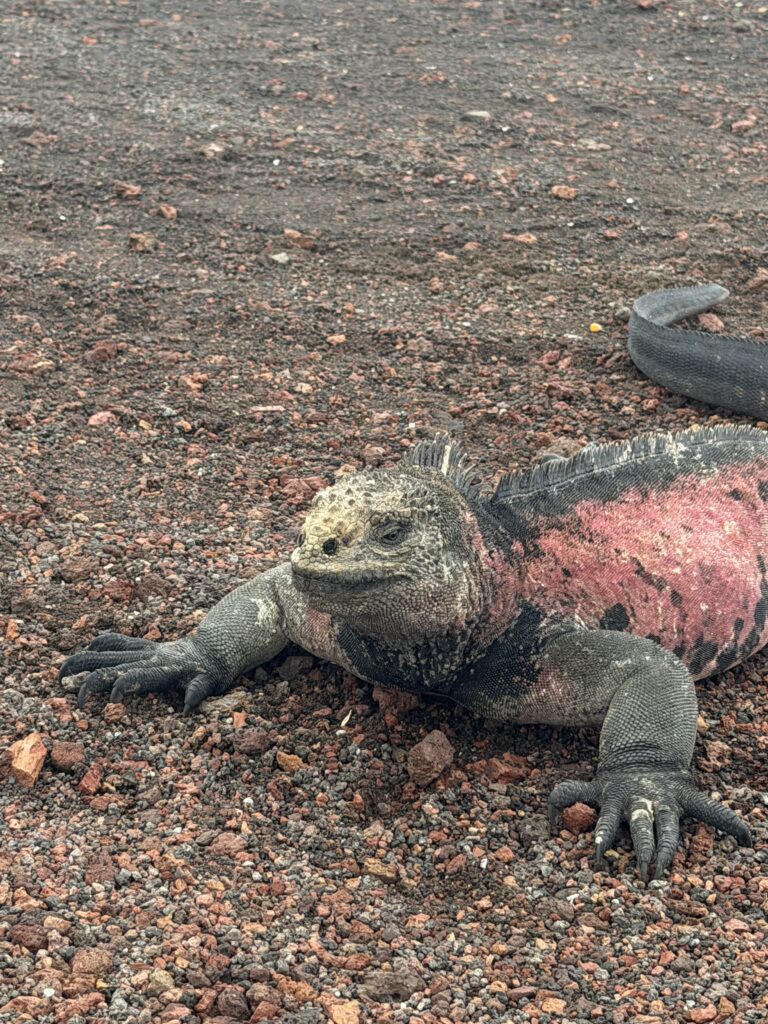
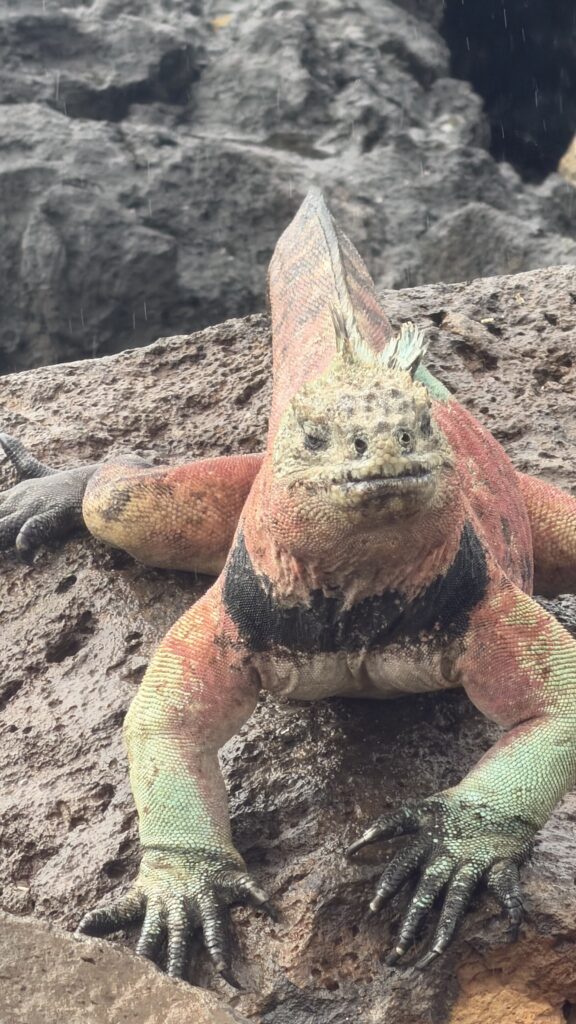
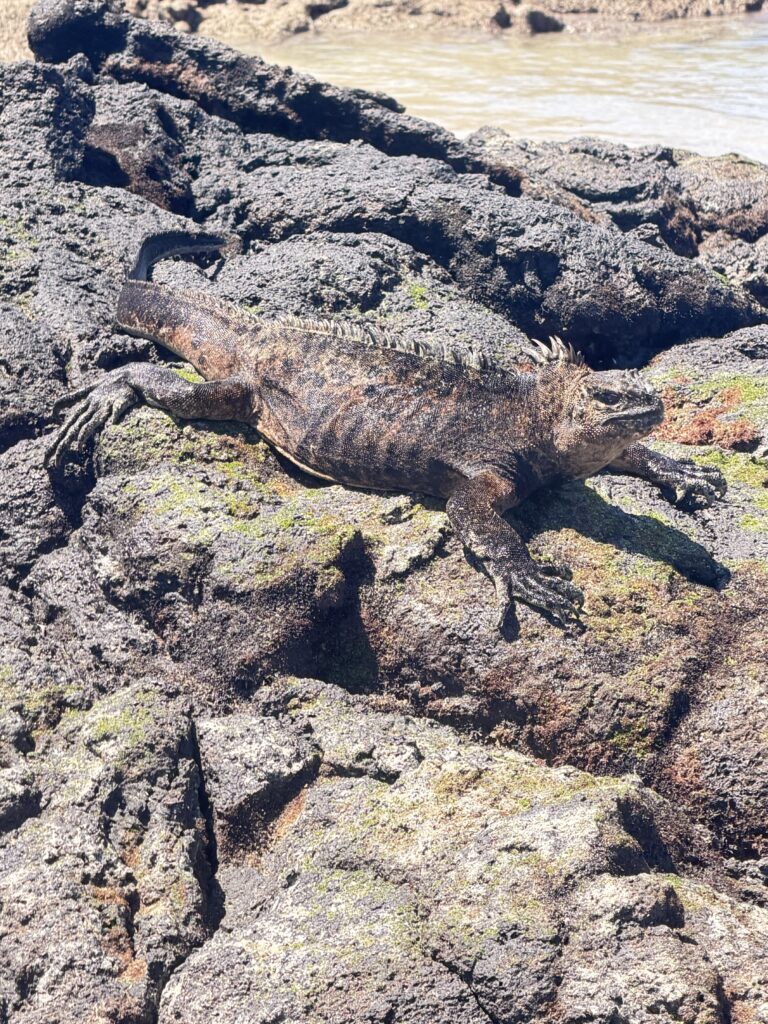
there is significant agriculture on the Island, particularly those equatorial fruits that thrive in this climate and on volcanic soils. The island also has its own breeding program and currently are 12 months away from releasing the first group of tortoises into the wilds of the island. In the higher parts of the islands, many caves and rock mazes are to be found. According to our guide a popular hiding place for pirates in the 18th century. One carving clearly shows an alternative culture was there. Inca or Polynesian?.
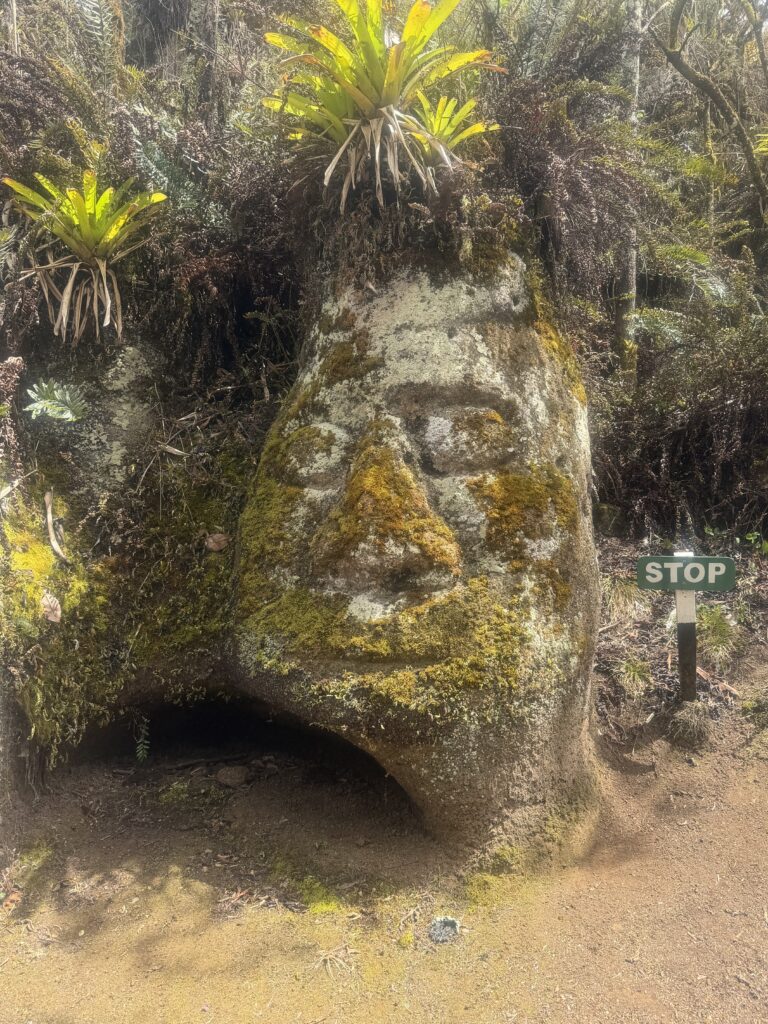
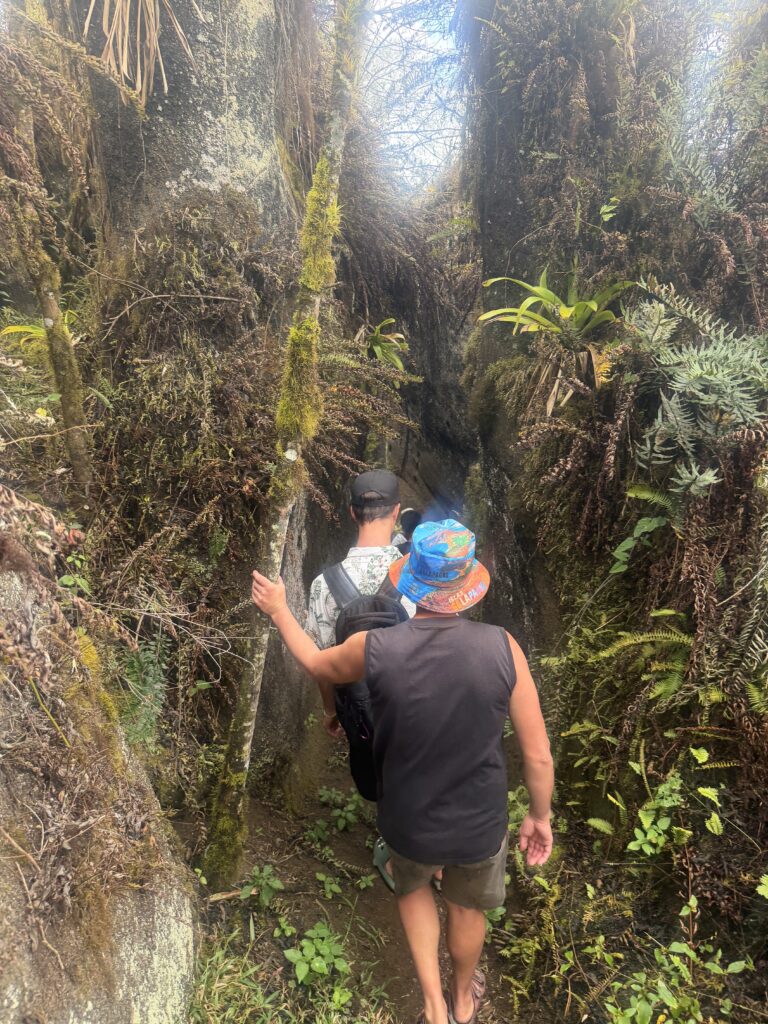
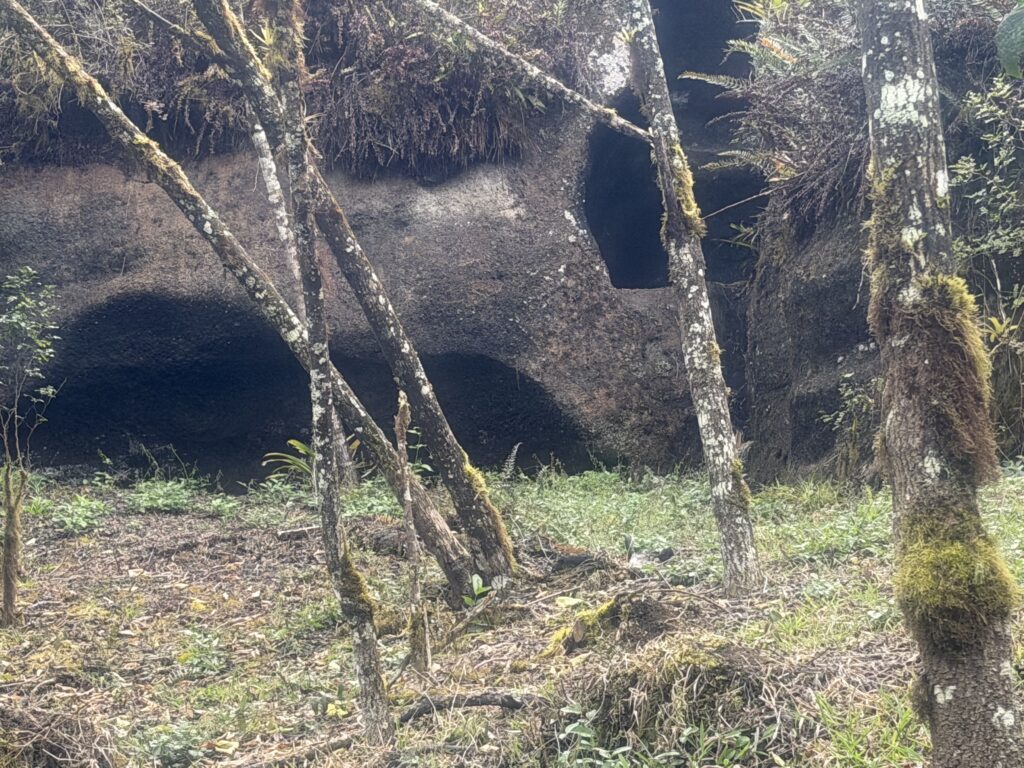
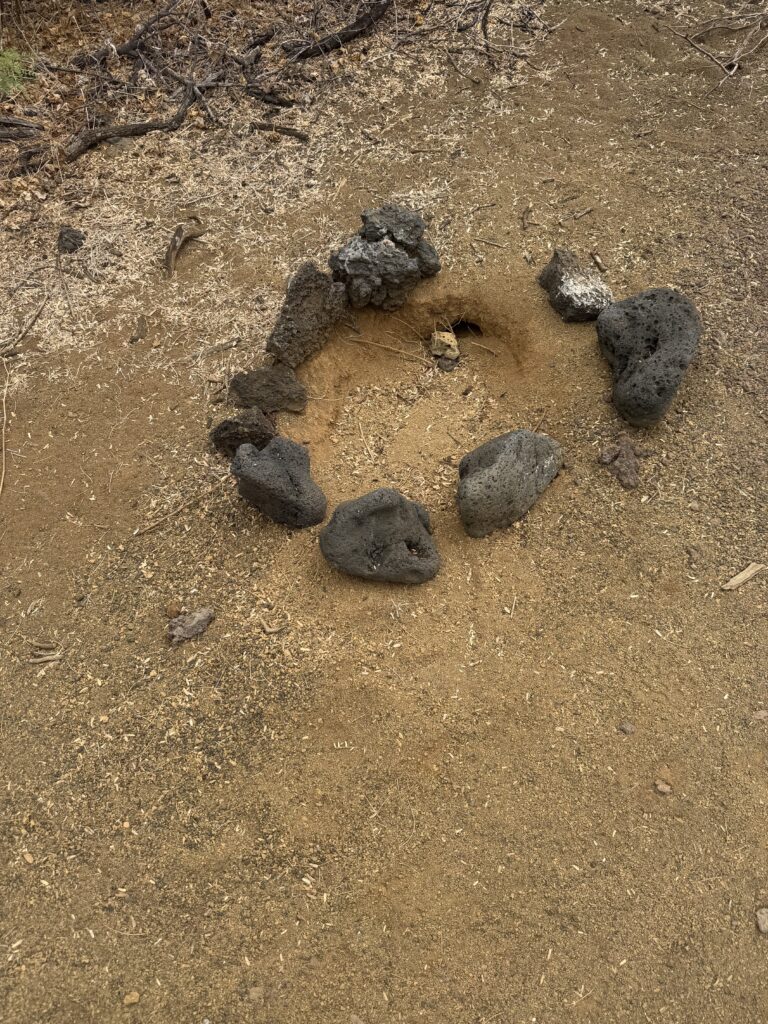
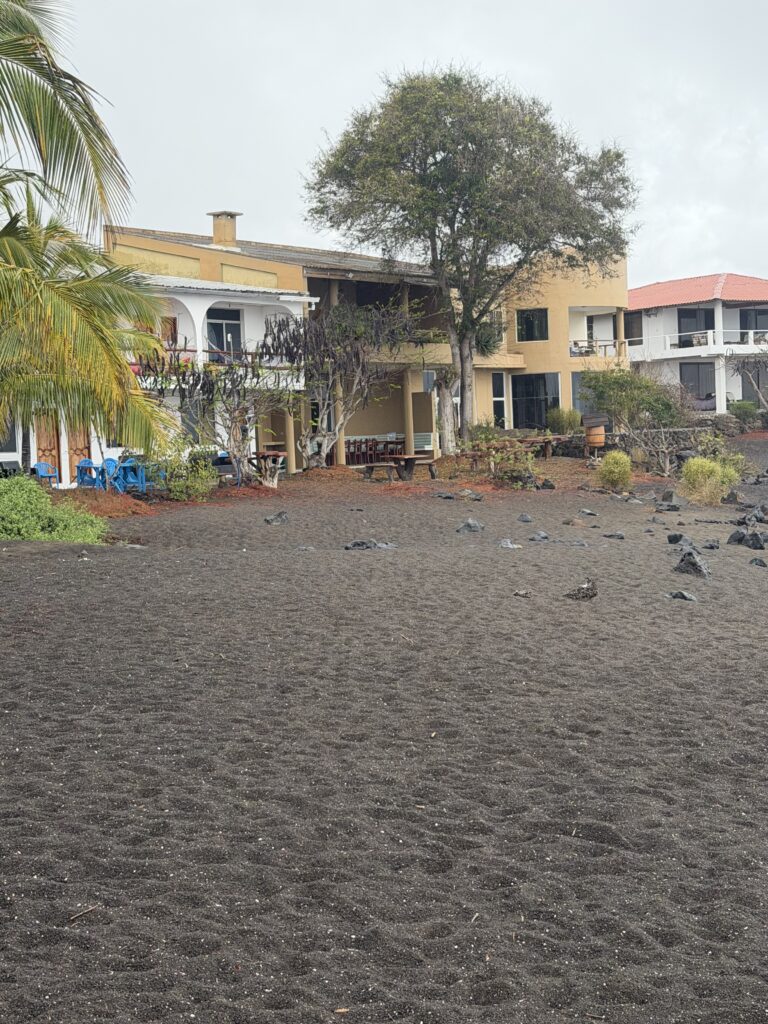
we were given a nice lunch at the only restaurant on the island the walked to “black beach”. Basically a beach covered in volcanic cinders and home to multiple iguanas. From here we waked some 500 metres for some snorkelling,. Along the pathway were many iguamna nests that the locals had placed rocks around so visitors would not tread. A stoney uncomfortable entrance to the sea but once out there beautiful underwater. Small sharks, sea lions and a variety of reef fish in many colours. On a distant beach, a sanctuary beach, I captured the outline of a massive bull seal, three times larger than ny female. Back to the bus and on board for our journey home arriving at 5:00pm.
Friday Pinzon Island
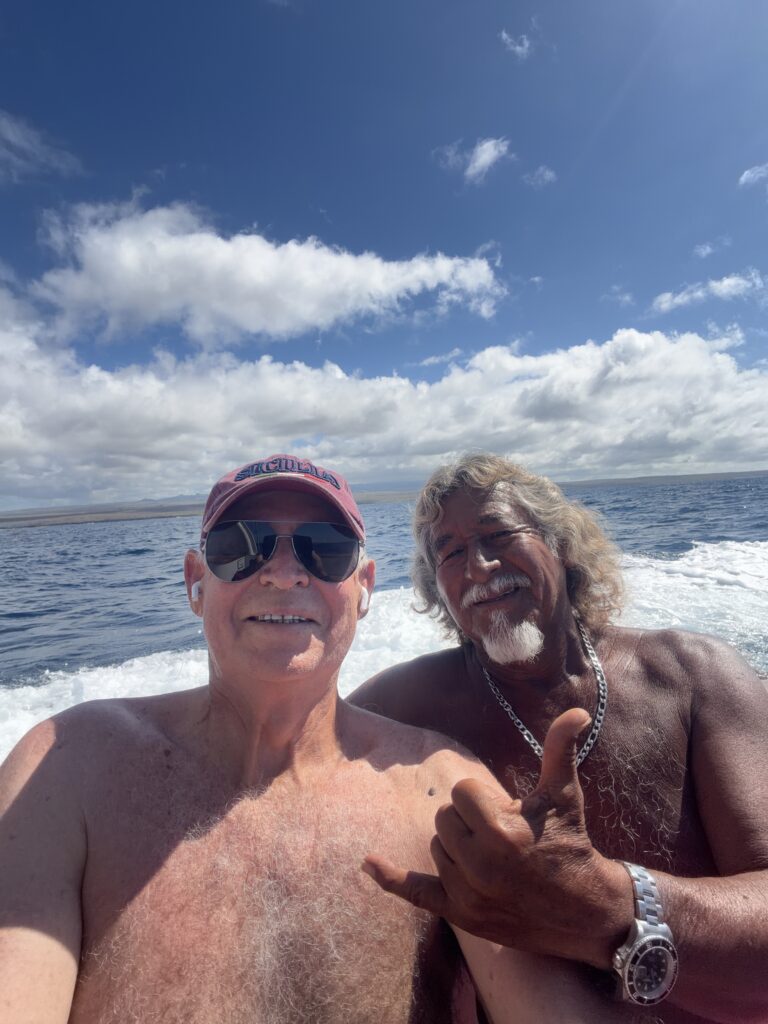
this was an excellent outing with a fantastic guide Jose, who is only two years younger than me. At each stop he was first in the water ensuring we could see all of the “specials” in his domain. Only nine of us in this group so we all got to know each other and helped out when needed. My only problem with this day is I was the only one not wearing a wet suit which I did not need. But the first time I have been sunburnt in many years as three hours of snorkelling exposing my back to a very hot sun.
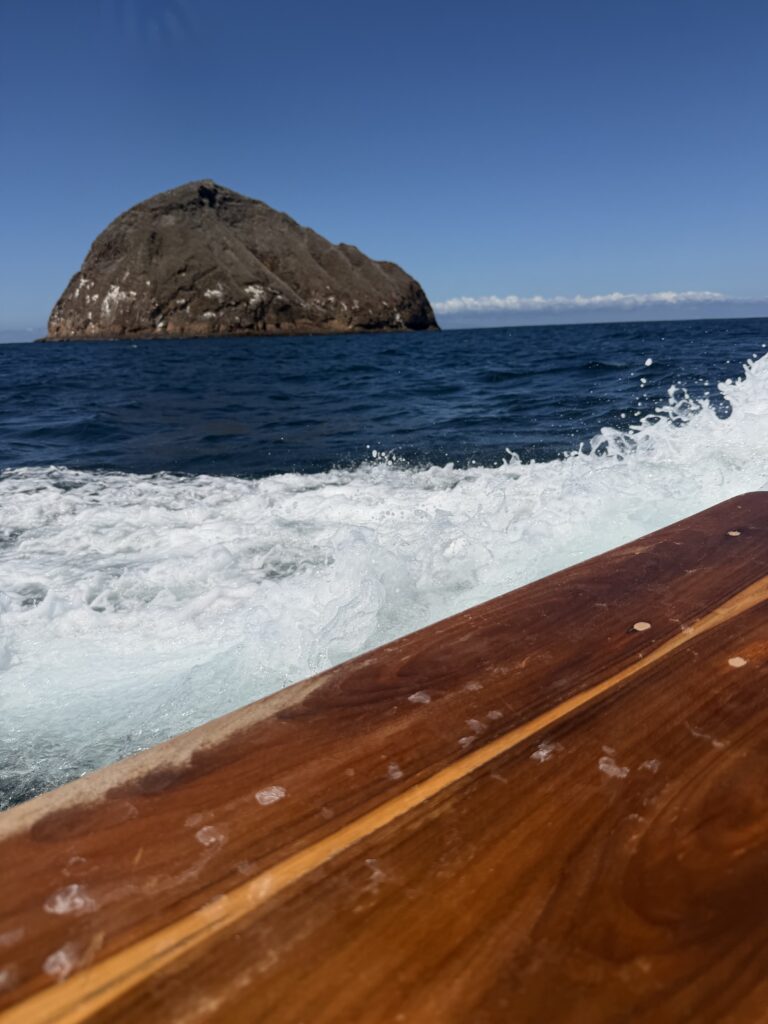
One of the visits included kicker rock which besides beautiful snorkelling provide a nesting place for blue footed boobies and a resting place for sea lions. If ever you visit this wonderful place but an underwater camera as so much of what one can do and see is underwater.
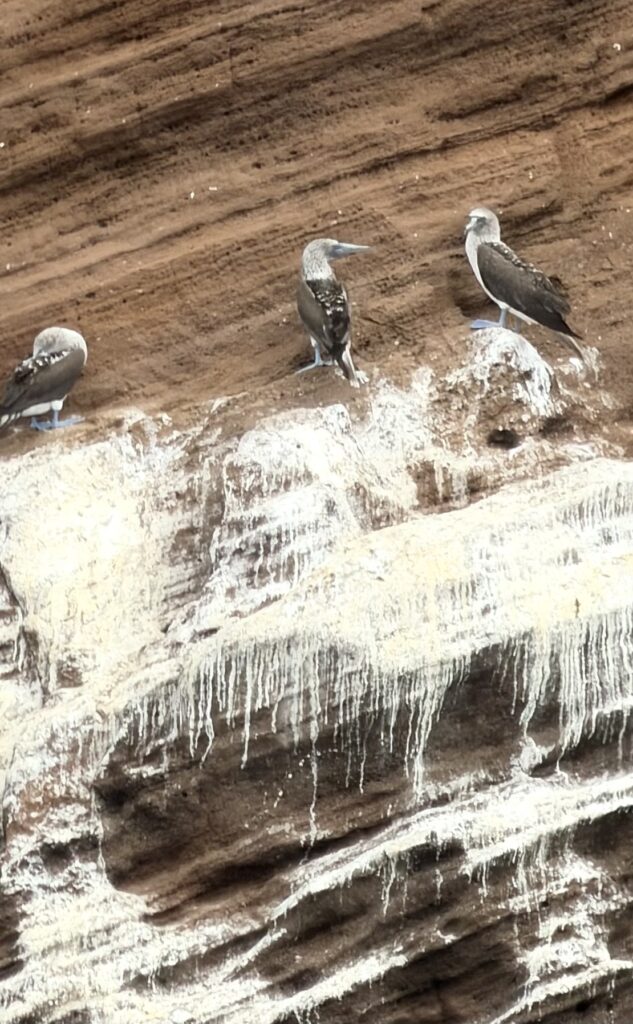
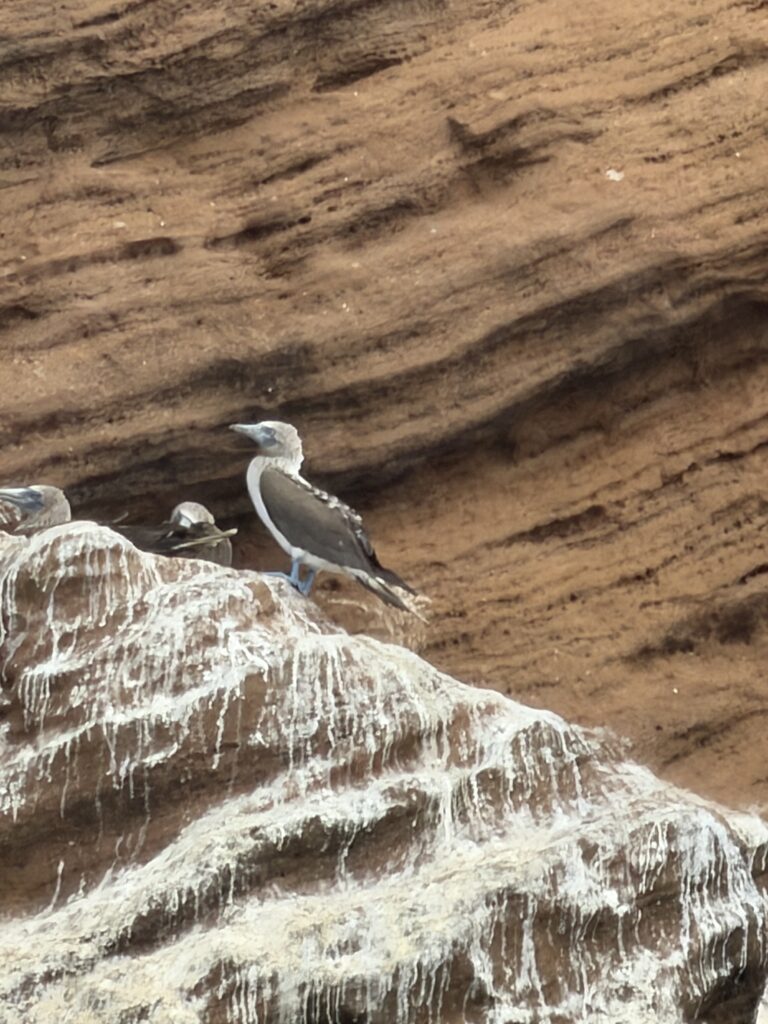
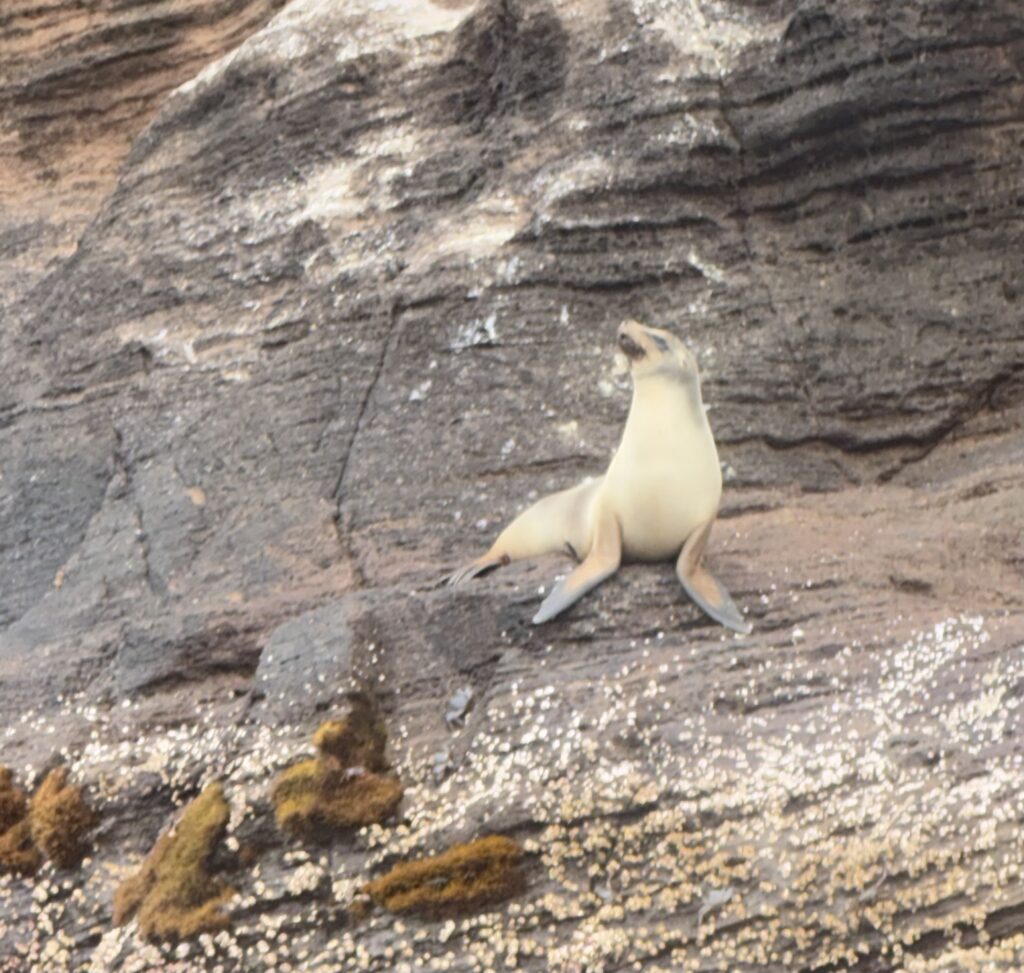
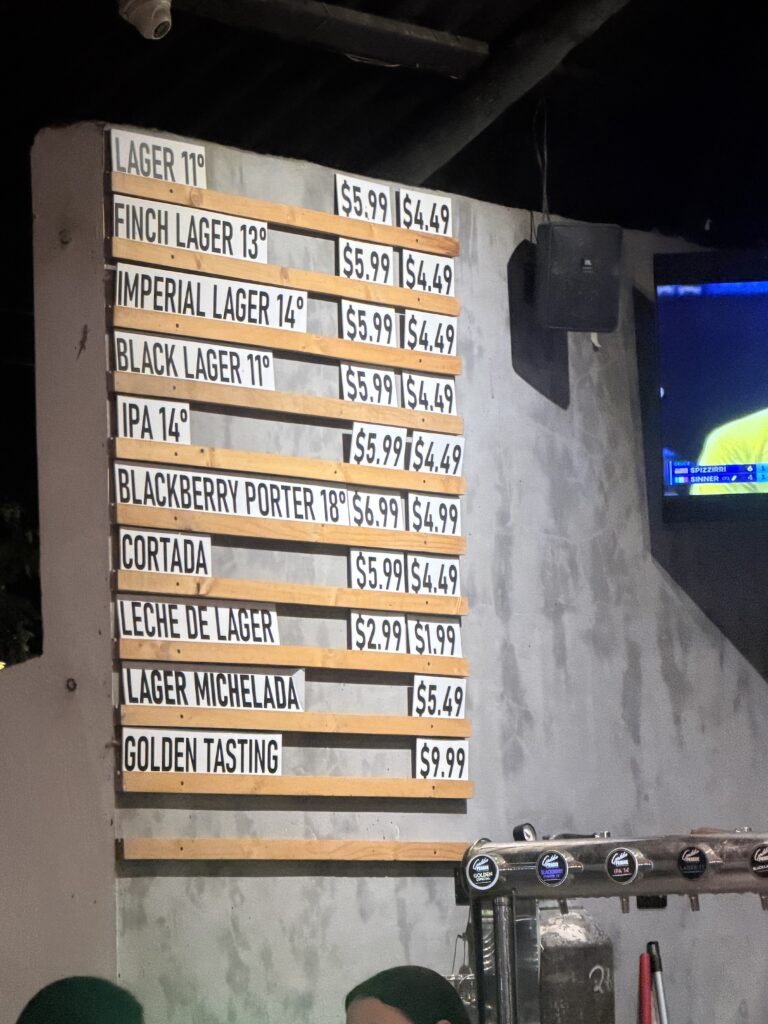
as this was my last day on the Islands I enjoyed a dinner with a couple of the days participants and planned my return to Santiago. Three flights and 12 hours later I was back in my same hotel “Sommelier Boutique”. Enjoyed a couple of craft beers – note the prices $US.
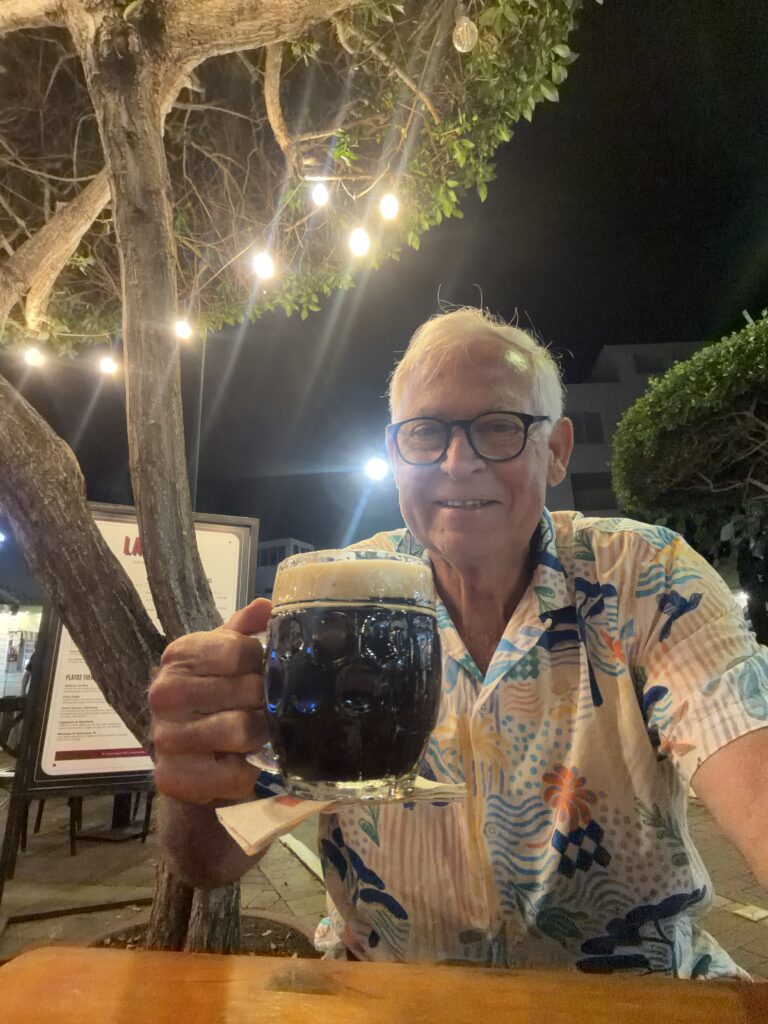
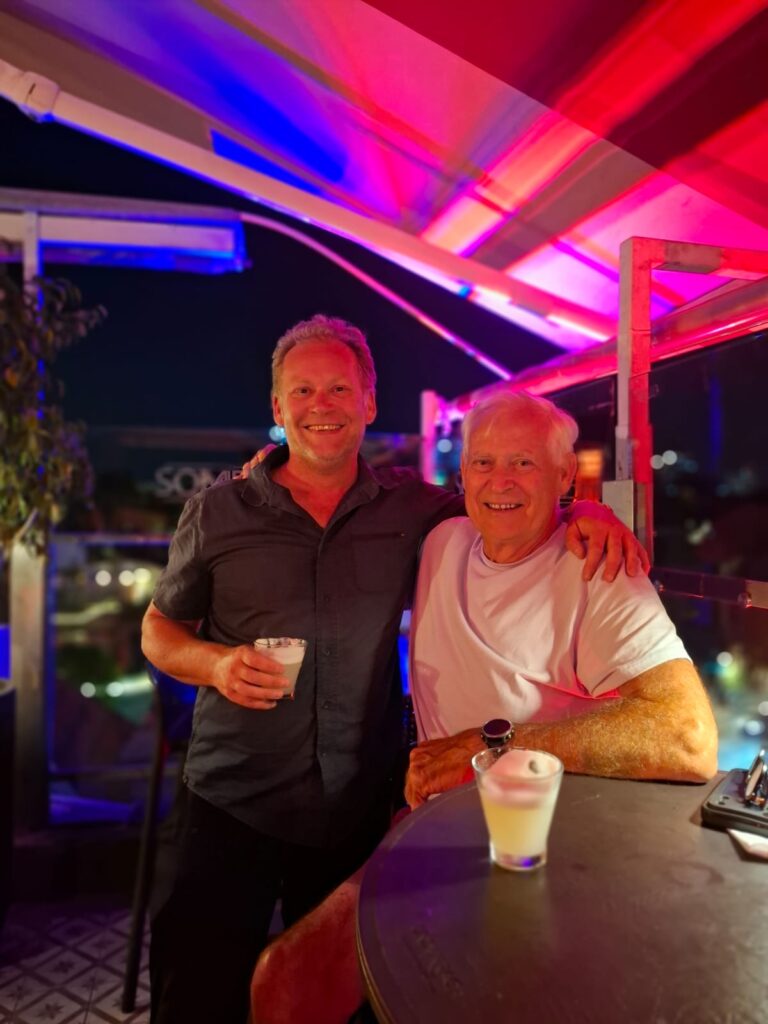
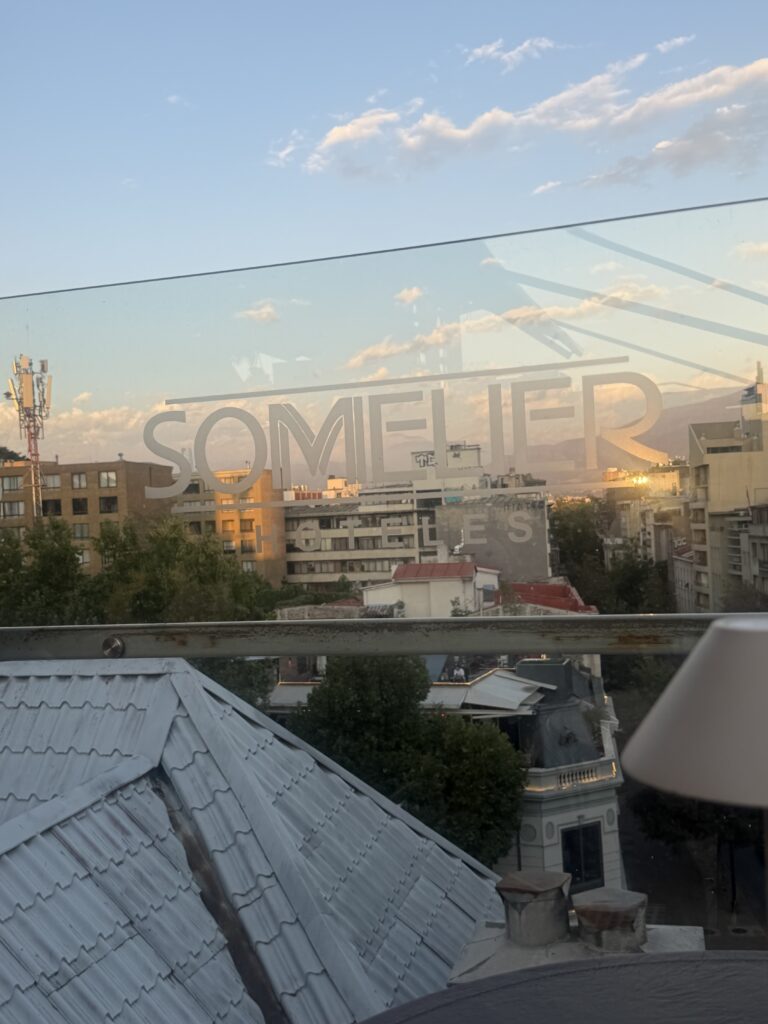
For my last day I visited Barrio Italia, an Italia; themed suburb som 45 minute walk from my hotel. I could live here if I spoke Spanish. Full of cafes, restaurants and Italian themed shops with trinkets jewellery, clothing and furniture. That evening Gary, ( my guide from 4 weeks earlier) joined me for dinner on my hotel rooftop. After a few beers and two good bottles of wine we solved the world’s problems. A unique cloud capture through glass balcony showed off my hotel name.
A fantastic tour with many memories now draws to an end.


+ There are no comments
Add yours